How much I love you, I can’t know How much I love you, I can’t know My love lies past all measure, free Higher even than the sun Oh higher even than the sun Far farther than the eye can see…
At first, it was a tiny spark A single drop of drizzling rain This spark became a raging fire This spark became a raging fire This tiny drop, a sea entire…
The love that ties us tight as one The love that ties us tight as one Will never feel the slightest sting For we are two refreshing sips or we are two refreshing sips Drawn from a single flowing spring…
At first, it was a tiny spark A single drop of drizzling rain This spark became a raging fire This spark became a raging fire This tiny drop, a sea entire…
A song by Apostolos Kaldaras with lyrics by Christos Argyropoulos
Δεν ξέρω πόσο σ’ αγαπώ Δεν ξέρω πόσο σ’ αγαπώ Μέτρο δεν έχει η αγάπη Είν’ απ’ τον ήλιο πιο ψηλά Είν’ απ’ τον ήλιο πιο ψηλά Και δεν τη φτάνει μάτι…
Ήταν μια σπίθα στην αρχή Και μιας βροχής ψιχάλα Κι έγιν’ η σπίθα πυρκαγιά Κι έγιν’ η σπίθα πυρκαγιά Και πέλαγος η στάλα…
Η αγάπη που μας έδεσε Η αγάπη που μας έδεσε Πόνο δε θα γνωρίσει Είμαστε δυο σταλαγματιές Είμαστε δυο σταλαγματιές Από την ίδια βρύση…
Ήταν μια σπίθα στην αρχή Και μιας βροχής ψιχάλα Κι έγιν’ η σπίθα πυρκαγιά Κι έγιν’ η σπίθα πυρκαγιά Και πέλαγος η στάλα…
“How Much I Love You, I Can’t Know” (“Δεν ξέρω πόσο σ’ αγαπώ” / “How Much I Love You, I Can’t Know”) is a song by Apostolos Kaldaras, with lyrics by Christos Argyropoulos.
First recorded by Vicky Moscholiou in 1966.
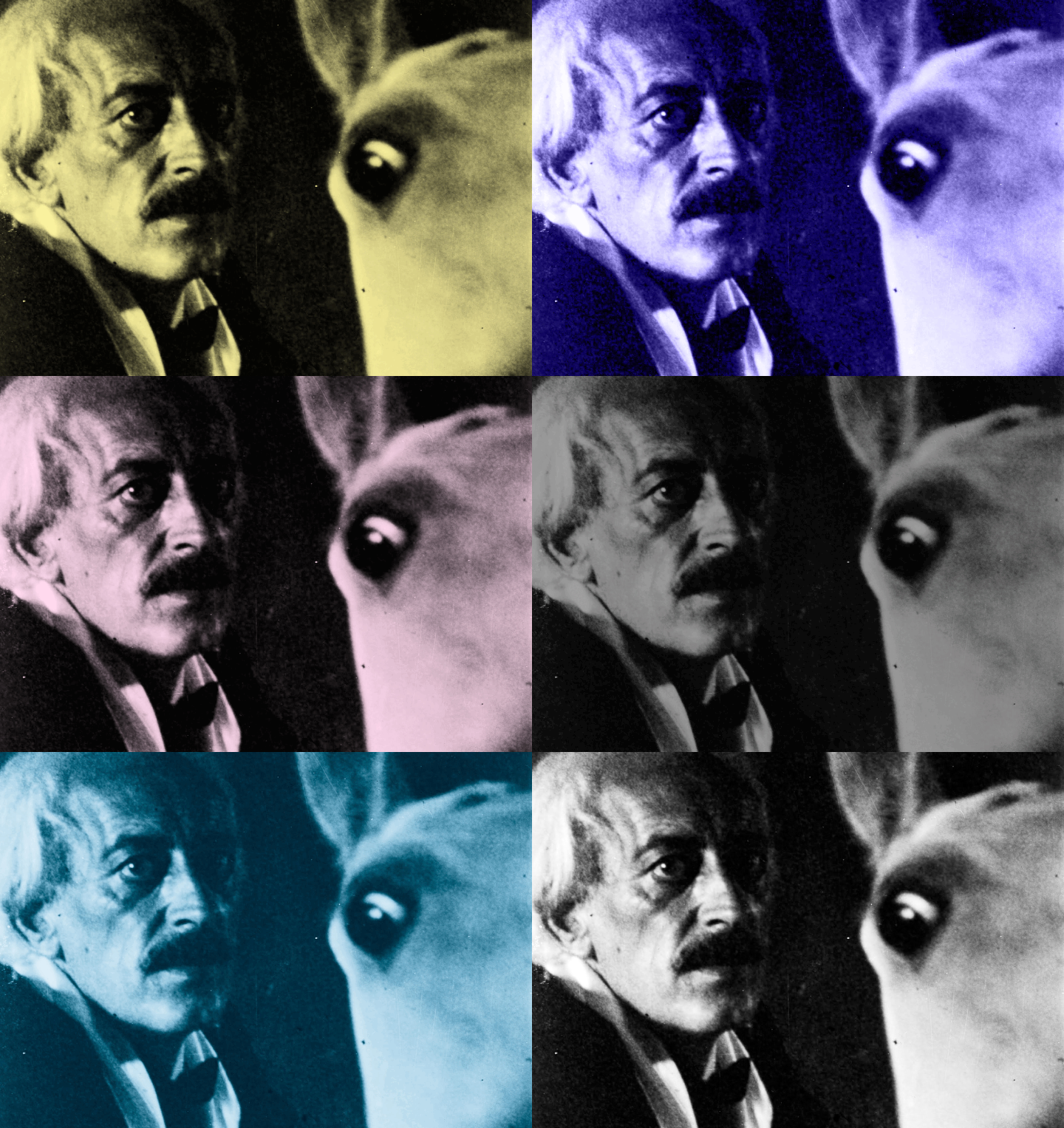
The moving images show the singer lip-syncing lovingly along to this original recording for the Hellenic Broadcasting Corporation (ERT) in 1983.
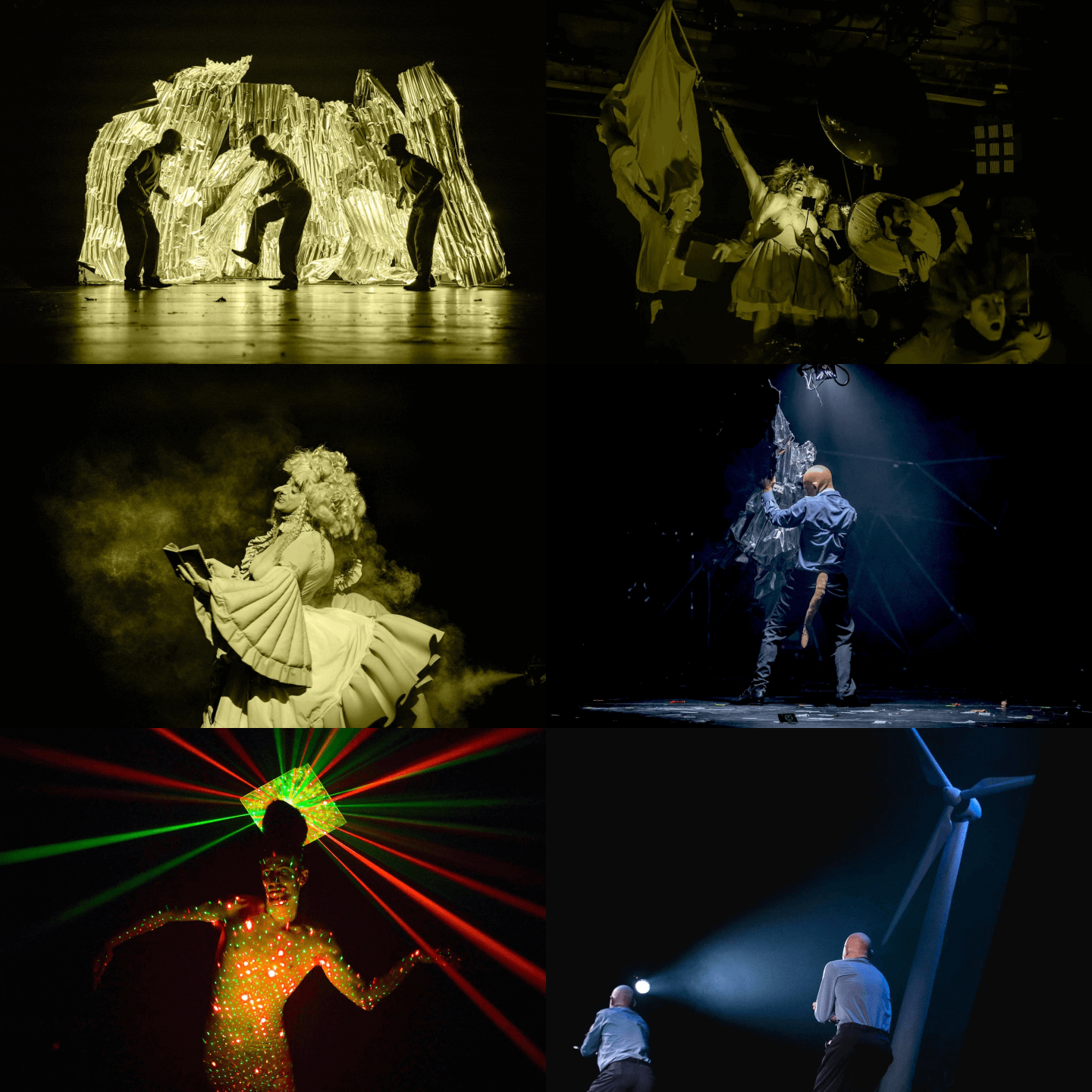
This is one of five songs performed by George Davlas during the musical interlude that lies at the heart of the Efthimis Filippou play Etymologies.
For another two, see the dubitanda “away ⋮ again” and “sparrow ⋮ harried” (listed below).
For the remaining two, see the transpolia “On a rainy ⋮ day.” and “Two broken homes left ⋮ clandestine.” (buttons below).
Translated for use as surtitles at the 2024 Athens Epidaurus Festival performances of this play.
Star of mine, moon of mine My budding shoot of spring To your side I’ll come again To your side I’ll come one dawn Just to have you kiss and fawn And make me yours again
My darling one, my darling one Away the night will take us soon As will the stars and sky above As will the cold, cold moon As will the stars and sky above As will the cold, cold moon
I’ll love you and live on in song You’ll love me and live with the birds I’ll love you and we’ll be made song You’ll love me and we’ll be made birds
My darling one, my darling one Away the night will take us soon As will the stars and sky above As will the cold, cold moon As will the stars and sky above As will the cold, cold moon
A song by Mikis Theodorakis with lyrics by Yiannis Theodorakis
Αστέρι μου, φεγγάρι μου Της άνοιξης κλωνάρι μου Κοντά σου θα ’ρθω πάλι Κοντά σου θα ’ρθω μιαν αυγή Για να σου πάρω ένα φιλί Και να με πάρεις πάλι
Αγάπη μου, αγάπη μου Η νύχτα θα μας πάρει Τ’ άστρα κι ο ουρανός Το κρύο το φεγγάρι Τ’ άστρα κι ο ουρανός Το κρύο το φεγγάρι
Θα σ’ αγαπώ, θα ζω μες στο τραγούδι Θα μ’ αγαπάς, θα ζεις με τα πουλιά Θα σ’ αγαπώ, θα γίνουμε τραγούδι Θα μ’ αγαπάς, θα γίνουμε πουλιά
Αγάπη μου, αγάπη μου Η νύχτα θα μας πάρει Τ’ άστρα κι ο ουρανός Το κρύο το φεγγάρι Τ’ άστρα κι ο ουρανός Το κρύο το φεγγάρι
“Star of Mine, Moon of Mine” (“Αστέρι μου, φεγγάρι μου” / “Astéri mou, fengári mou”) is the love theme from the 1962 film Phaedra directed by Jules Dassin and starring Melina Mercouri.
The music is by Mikis Theodorakis, with lyrics by his brother Yiannis Theodorakis.
As Phaedra (of myth, made then-modern), Melina sings to her step son and darling one, played by Anthony Perkins.
They both live on in (celluloid and) song.
The original recording was laid over the film’s original trailer (and strangely fit).
This is one of five songs performed by George Davlas during the musical interlude that lies at the heart of the Efthimis Filippou play Etymologies.
For another two, see the dubitanda “higher ⋮ farther” and “sparrow ⋮ harried” (listed below).
For the remaining two, see the transpolia “On a rainy ⋮ day.” and “Two broken homes left ⋮ clandestine.” (buttons below).
Translated for use as surtitles at the 2024 Athens Epidaurus Festival performances of this play.
THE VERY SHORT STORY OF AN ENORMOUS VINE THAT SPROUTED OUT OF NOWHERE AND IN THIS WAY BLOCKED THE BACK ENTRANCE OF A REGIONAL THEATRE FOR A SHORT TIME
: what those noh actors managed to achieve at that final performance/ was that on that night behind those masks there was no-one/ because while they themselves had arrived at the theatre quite late/ at a time entirely inadequate for them to prepare/ they had already nonetheless long since secured/ all that they required for their own disappearance/ because that night was the night of their disappearance/ and they had carefully planned for this night of disappearance from way back/ ever since childhood they had been planning for the night of disappearance/ day by day attaining the tools that would bring them ever closer to that night/ and even though they arrived at the theatre considerably delayed/ a turn of events for which they themselves were not at all responsible no/ forces entirely beyond their control were at play that night as they were temporarily denied access on account of force majeure/ because behind the building/ there had creeped and climbed completely out of the blue and in circumstances as yet unexplained/ an enormous wild vine/ that had enveloped the back entrance to the theatre/ blocking entry as a result for both actors and stagehands/ who were now forced exclusively to enter the theatre via the front entrance together with audiences and often/ precisely/ at the same time as them which was of course quite ridiculous yes and even though the noh actors arrived inside the theatre considerably delayed/ in the end they managed with quite spectacular ease/ to attain a state that was for them the ideal/ that was the state necessary for fulfilling their objectives/ because for these noh actors/ to be seen was not at all the objective no/ these noh actors never once said the way other actors say/ I exist only because you can see me/ instead they said/ I exist only because you cannot/ this reversal of the theatrical contract/ was core to all their abilities/ the noh actors raised their arms/ and you could not help but admire/ this perpetual upward motion/ that in its slowness/ simultaneously contained all possible variations of the movement yes the noh actors raised their arms/ with the greatest possible slowness/ and it took your breath away/ and when the noh actors fell/ they fell slowly/ and with grace/ the way/ trees fall/ even when falling/ they retained something of the grace of trees/ that always fall in ways most natural/ since this is something they cannot help/ as any and every tree/ even at the moment of its death/ retains its grace/ and is ever forced to fall in ways most natural/ a tree is never inelegant/ much like a noh actor/ the deaths of both/ are always executed with the greatest possible grace/ I saw a large pine tree painted on the wall/ the wooden noh stage exposed on its three sides supported only at its corners/ now seemed to hover in space at certain moments/ every entrance every exit shut/ in noh even the simplest of things take on an unfathomable depth and even the seemingly most insignificant objects/ take on an entirely different essence on stage and at once/ retain entire the element of transience/ the depth of things and transience are one and the same in noh/ here everything is transient and at the same time everything takes on an unfathomable depth even the simplest things take on this incredible depth and in the very same instant are transient and fragile on the cusp of being destroyed by the slightest shift of air and ready to tear down/ everything over the slightest thing yes exceptionally fragile yet utterly unassailable at the same time in this space are all things/
all things are in complete harmony with one another/ you would see the tree on that wall and at once see all trees see the bridge linking the preparation area to the main stage and see before you all bridges and all crossings hear one sound and so hear all sounds/ I lifted my gaze and saw the inner folds of the roof disappearing into their own darkness/ the first thing to disappear were the arms he said/ time is nothing more than a shift in position/ now I find myself/
now I find myself midway down the walkway and with each step I lose myself more and more/ you know you have refined an art to a fair degree when this art begins to extinguish you/ with each step he drew away from something but at the same time drew closer to something else he was well aware of that/ the tiniest of openings placed over his eyes were more than enough yes in fact in that moment he even thought them excessive/ he put on the mask of a demon and disappeared behind it I thought to myself/ I saw him before me disappearing behind the mask of a demon/ the art of disappearance is inextricably linked to beauty I thought to myself/ I traced his pacing with my gaze the music was different now becoming ever more austere ever more stark all things in noh are set at a distance from one another everything here is set apart noh is the theatre of distance the theatre of pacing I thought to myself all things here are set apart and are reaching for one another and amid the slowness and the stillness you see everything coexisting within one single unified movement noh is the theatre of distance I thought to myself and even though you sense that between even the most distant extremes/ there exists a connection so powerful/ that whatever might interpose itself within the distance between them is in essence altogether weak yes because this distance nullifies everything it encompasses and that is when all things want to reconnect and reach for one another through the darkness even across the greatest spans of distance/ the world is all things reaching out to one another through the darkness/ the start of the walkway he said marks the start of my disappearance/ my weight/
my weight in those moments seemed to dwindle dangerously/ all that I see from here on in is utterly unknown he said/ all things from here on in are now utterly unknown to me he said/ now I pass before the large pine tree/ look/
look/
I am now standing here for the first time across from you looking at you/ with the curiosity of a child gazing at snow/ or the eyes of someone/ who knows nothing of fire/ who has never before seen fire / and who suddenly sees a house aflame/ my sleeves are now empty/
my arms/
my arms he said–
.
Simon Riniotis
ΣΚΕΨΕΙΣ ΓΙΑ ΤΗ ΒΑΡΥΤΗΤΑ
Η ΠΟΛΥ ΣΥΝΤΟΜΗ ΙΣΤΟΡΙΑ ΕΝΟΣ ΓΙΓΑΝΤΙΑΙΟΥ ΚΛΗΜΑΤΟΣ ΠΟΥ ΞΕΦΥΤΡΩΣΕ ΑΠΟ ΤΟ ΠΟΥΘΕΝΑ ΚΑΙ ΕΜΠΟΔΙΣΕ ΕΤΣΙ ΓΙΑ ΛΙΓΟ ΤΗΝ ΠΙΣΩ ΕΙΣΟΔΟ ΕΝΟΣ ΠΕΡΙΦΕΡΕΙΑΚΟΥ ΘΕΑΤΡΟΥ
: αυτό που κατάφεραν οι ηθοποιοί τού νο σε εκείνη την τελευταία παράσταση/ ήταν ότι εκείνο το βράδυ πίσω από τις μάσκες δεν υπήρχε κανείς/ γιατί ενώ και οι ίδιοι έφτασαν στο θέατρο αργοπορημένοι/ και σε ώρα εντελώς ακατάλληλη για την προετοιμασία τους/ είχαν παρόλα αυτά εξασφαλίσει ήδη από καιρό/ όλα όσα τους ήταν απαραίτητα για την εξαφάνισή τους/ γιατί εκείνο το βράδυ ήταν το βράδυ της εξαφάνισης/ και το είχαν σχεδιάσει προσεχτικά εκείνο το βράδυ της εξαφάνισης από πολύ παλιά/ και ήδη από τα παιδικά τους χρόνια εκείνοι σχεδίαζαν το βράδυ της εξαφάνισης/ μέρα με τη μέρα αποκτούσαν τα εργαλεία τα οποία τους έφερναν όλο και πιο κοντά σε εκείνη τη νύχτα/ και παρότι έφτασαν στο θέατρο με σημαντική καθυστέρηση/ πράγμα για το οποίο καθόλου δεν ευθύνονταν οι ίδιοι/ αλλά δυνάμεις εντελώς εξωτερικές καθώς τους απαγορεύτηκε προσωρινά η πρόσβαση λόγω ανωτέρας βίας/ γιατί στο πίσω μέρος του κτηρίου/ είχε αναρριχηθεί εντελώς απροσδόκητα και κάτω από τις πιο αδιευκρίνιστες ακόμα συνθήκες/ ένα γιγαντιαίο άγριο κλήμα/ το οποίο είχε κυκλώσει την πίσω είσοδο του θεάτρου/ με αποτέλεσμα να εμποδίζει την είσοδο των ηθοποιών και των τεχνικών/ οι οποίοι τώρα ήταν αναγκασμένοι να εισέρχονται στο θέατρο μόνο από την μπροστινή είσοδο μαζί με τους θεατές και πολλές φορές/ εντελώς/ ταυτόχρονα με αυτούς πράγμα που φυσικά καταντούσε γελοίο ναι και παρόλο που οι ηθοποιοί του νο έφτασαν στο εσωτερικό του θεάτρου με σημαντική καθυστέρηση/ κατόρθωσαν εν τέλη με θεαματική ευκολία/ να προσεγγίσουν αυτή την ιδεώδη για αυτούς κατάσταση/ που ήταν η αναγκαία κατάσταση για την εκπλήρωση του σκοπού τους/ γιατί αυτοί οι ηθοποιοί του νο/ σε καμία περίπτωση δεν είχαν ως σκοπό τους τη θέαση όχι/ αυτοί οι ηθοποιοί του νο δεν έλεγαν όπως όλοι οι υπόλοιποι ηθοποιοί/ υπάρχω μόνο γιατί μπορείς να με δεις/ αλλά έλεγαν/ υπάρχω μόνο γιατί δεν μπορείς/ αυτή η αντιστροφή τής θεατρικής συνθήκης/ αποτελούσε τον πυρήνα όλων τους των δυνατοτήτων/ σήκωναν το χέρι οι ηθοποιοί του νο/ και δεν μπορούσες μόνο παρά να θαυμάσεις/ αυτή την αέναη κίνηση προς τα πάνω/ που μέσα στην βραδύτητά της/ συμπεριλάμβανε ταυτόχρονα όλες τις παραλλαγές τής κίνησης ναι σήκωναν το χέρι οι ηθοποιοί του νο/ με τη μεγαλύτερη βραδύτητα/ και σου κοβόταν η ανάσα/ και όταν έπεφταν οι ηθοποιοί του νο/ έπεφταν αργά/ και με χάρη/ όπως/ όταν πέφτει ένα δέντρο/ ακόμα και η πτώση τους/ διατηρούσε κάτι από τη χάρη των δέντρων/ τα οποία πέφτουνε πάντοτε με τη μεγαλύτερη φυσικότητα/ αφού δεν μπορούν να κάνουν και αλλιώς/ καθότι ένα οποιοδήποτε δέντρο/ ακόμα και τη στιγμή τού θανάτου του/ διατηρεί τη χάρη του/ και είναι αναγκασμένο να πέφτει πάντοτε με τη μεγαλύτερη φυσικότητα/ ένα δέντρο δεν είναι ποτέ αδέξιο/ όπως και ένας ηθοποιός του νο/ ο θάνατος και των δύο/ διεκπεραιώνεται πάντοτε με τη μεγαλύτερη δυνατή χάρη/ έβλεπα το μεγάλο πεύκο ζωγραφισμένο στον τοίχο/ την ξύλινη σκηνή του νο εκτεθειμένη από τις τρεις πλευρές της η οποία τώρα στηριζόμενη μόνο στις γωνίες της/ έμοιαζε ανά στιγμές να αιωρείται μέσα στο χώρο/ όλες οι είσοδοι και οι έξοδοι ήταν κλειστές/ στο νο ακόμα και τα πιο απλά πράγματα αποκτούν ασύλληπτο βάθος ακόμα και τα φαινομενικά πιο ασήμαντα αντικείμενα/ αποκτούν πάνω στη σκηνή εντελώς διαφορετική υπόσταση και ταυτόχρονα/ διατηρούν ακέραιο το στοιχείο της παροδικότητας/ το βάθος των πραγμάτων και η παροδικότητα είναι στο νο το ένα και το αυτό/ εδώ όλα είναι παροδικά και ταυτόχρονα όλα αποκτούν βάθος ασύλληπτο ακόμα και τα πιο απλά πράγματα αποκτούν απίστευτο βάθος και την ίδια πάλι στιγμή είναι παροδικά και εύθραυστα έτοιμα να καταστραφούν με την πιο μικρή κίνηση του αέρα έτοιμα να διαλύσουν/ με το παραμικρό τα πάντα εδώ είναι εξαιρετικά εύθραυστα και ταυτόχρονα εντελώς απροσπέλαστα όλα τα πράγματα/ όλα τα πράγματα βρίσκονται σε πλήρη αρμονία μεταξύ τους/ έβλεπες το δέντρο στον τοίχο και την ίδια στιγμή έβλεπες όλα τα δέντρα έβλεπες τη γέφυρα που ενώνει την αίθουσα της προετοιμασίας με την κεντρική σκηνή και έβλεπες μπροστά σου όλες τις γέφυρες και όλα τα περάσματα άκουγες έναν ήχο και είχες ακούσει όλους τους ήχους/ ανέβασα το βλέμμα μου πάνω και είδα τις εσωτερικές γωνίες της σκεπής να χάνονται μέσα στο ίδιο τους το σκοτάδι/ το πρώτο πράμα που εξαφανίστηκε ήταν τα χέρια μου είπε/ ο χρόνος δεν είναι τίποτε άλλο από την μετατόπιση της θέσης/ βρίσκομαι τώρα/ βρίσκομαι τώρα στη μέση του διαδρόμου και με κάθε μου βήμα χάνομαι όλο και περισσότερο/ καταλαβαίνεις ότι έχεις φτάσει μία τέχνη σε βαθμό ικανοποιητικό όταν αυτή η τέχνη αρχίζει να σε εξαφανίζει/ με κάθε του βήμα απομακρυνόταν από κάτι και την ίδια στιγμή πλησίαζε κάτι άλλο το γνώριζε αυτό καλά/ το ελάχιστο άνοιγμα που υπήρχε στη θέση των ματιών τού ήταν υπεραρκετό τού είχε φανεί μάλιστα εκείνη τη στιγμή μέχρι και υπερβολικό/ φόρεσε τη μάσκα τού δαίμονα και εξαφανίστηκε πίσω από αυτή σκέφτηκα/ τον έβλεπα μπροστά μου να εξαφανίζεται πίσω από τη μάσκα του δαίμονα/ η τέχνη της εξαφάνισης είναι άρρηκτα συνδεδεμένη με την ομορφιά σκέφτηκα/ ακολούθησα με το βλέμμα μου τον βηματισμό του η μουσική τώρα είχε αλλάξει γινότανε όλο και πιο αυστηρή όλο και πιο λιτή όλα τα πράγματα στο νο βρίσκονται σε απόσταση μεταξύ τους όλα τα πράγματα εδώ είναι χωρισμένα το νο είναι το θέατρο των αποστάσεων το θέατρο τού βηματισμού σκέφτηκα όλα τα πράγματα εδώ είναι χωρισμένα και αποζητάνε το ένα το άλλο και μέσα στην βραδύτητα και την ακινησία τα έβλεπες όλα να συνυπάρχουν σε μία ενιαία κίνηση το νο είναι το θέατρο των αποστάσεων σκέφτηκα και παρόλα αυτά καταλάβαινες ότι ακόμα και ανάμεσα στα πιο απομακρυσμένα άκρα/ υπάρχει μία σύνδεση τόσο ισχυρή/ που οτιδήποτε και να παραβληθεί στη μεταξύ τους απόσταση είναι στην ουσία του εντελώς αδύναμο ναι γιατί η απόσταση αυτή μηδενίζει όλα τα πράγματα που διέπει και όλα τότε θέλουν πάλι να συνενωθούν και αποζητάνε το ένα το άλλο μέσα στο σκοτάδι ακόμα και στις μεγαλύτερες αποστάσεις/ ο κόσμος είναι τα πράγματα που αποζητάνε το ένα το άλλο μέσα στο σκοτάδι/ η αρχή τού διαδρόμου είπε είναι η αρχή τής εξαφάνισής μου/ το βάρος μου/
το βάρος μου εκείνες τις στιγμές έμοιαζε να λιγοστεύει επικίνδυνα/ ό,τι βλέπω από εδώ και πέρα μού είναι παντελώς άγνωστο είπε/ όλα τα πράγματα από εδώ και πέρα μού είναι πλέον παντελώς άγνωστα είπε/ περνάω τώρα μπροστά από το μεγάλο πεύκο/ δείτε/ δείτε/
στέκομαι τώρα εδώ για πρώτη φορά απέναντί σας και σας κοιτάζω/ με την περιέργεια του παιδιού που κοιτάζει το χιόνι/ ή με τη ματιά του ανθρώπου/ που δεν ξέρει τί είναι φωτιά/ που δεν έχει κοιτάξει ποτέ του φωτιά/ και που ξαφνικά βλέπει ένα φλεγόμενο σπίτι/ τα μανίκια μου τώρα είναι άδεια/ τα χέρια μου/ τα χέρια μου είπε–
.
A complete performance text written by Simon Riniotis in 2023.
Translated for the love of it in 2026.
This English translation accompanied an application Simon made in partnership with the director Marilena Katranidou for a 2026 residency at Dimora Creative in Lomazzo, Italy.
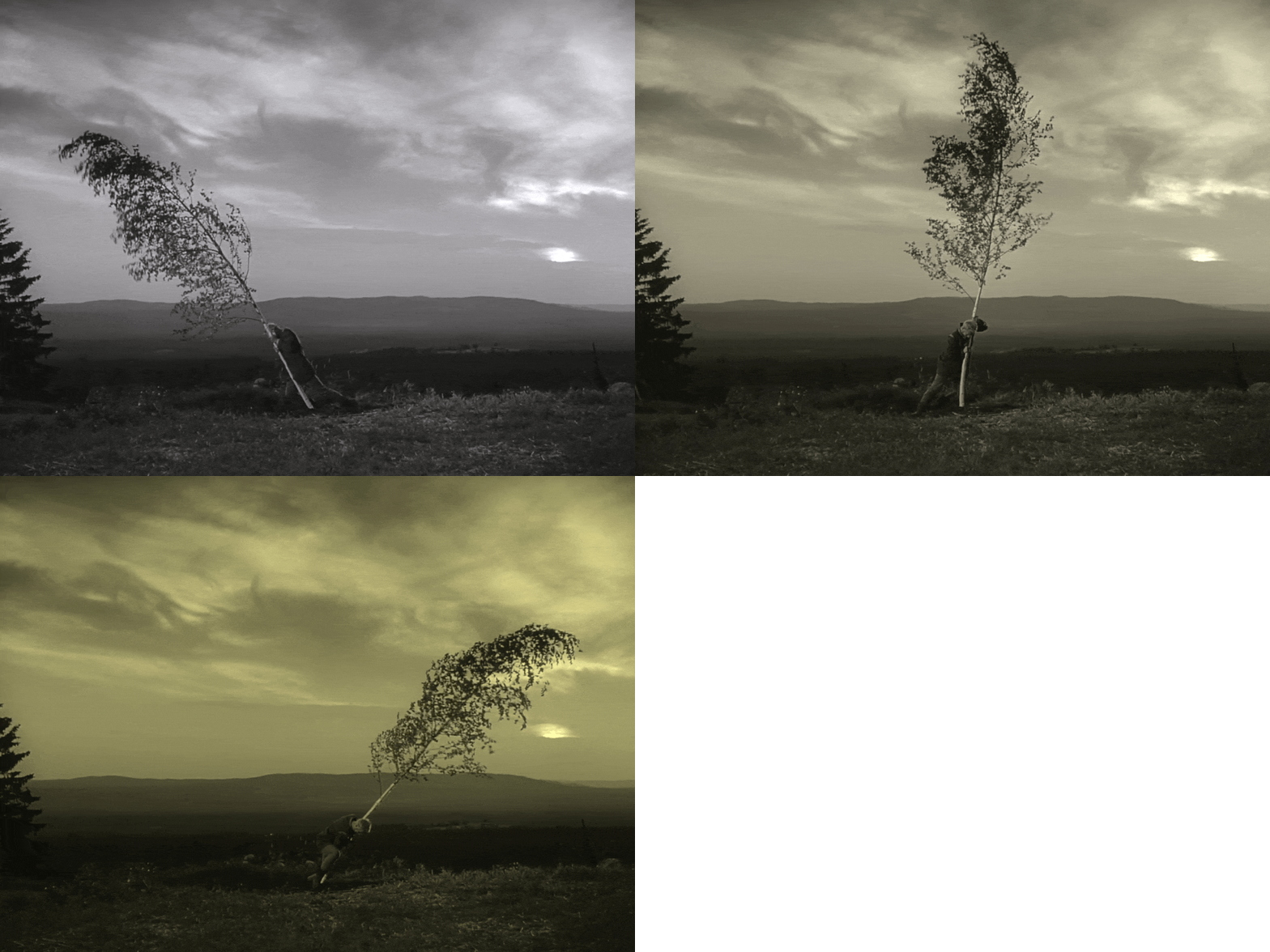
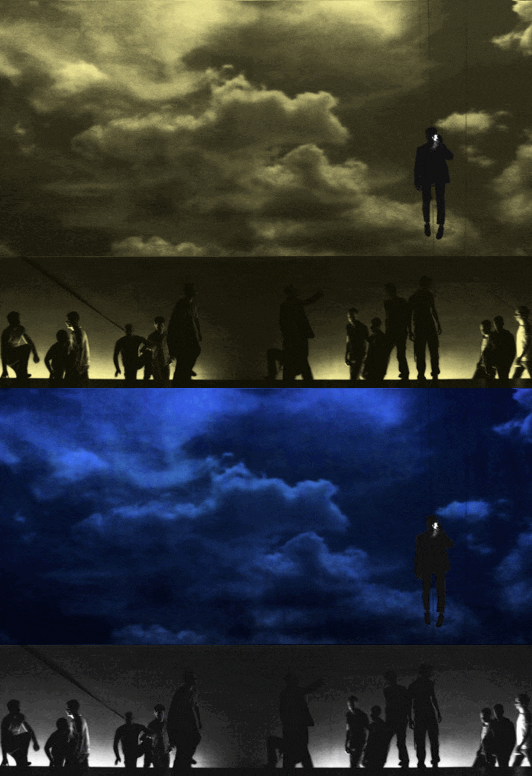
The looping scene (slowly seeping in and out of yellow) is taken from The Virgin Spring, a 1960 feature film by Ingmar Bergman.
Max von Sydow tussles here endlessly with gravity. The tall sapling shivers above him and in his grasp, ever graceful in its recurring fall (unable to exist otherwise).
This striking image (two bodies – arboreal and human – entwined) is movingly recreated live (also over and again) in Dimitris Papaioannou’s 2018 stage work Since She (Seit Sie), made for the Tanztheater Wuppertal Pina Bausch.
Να τη! Χαράζει η αυγή κι όλα τ’ αστέρια τ’ ουρανού σβήνουνε ένα-ένα.
Και να! Η αηδόνα κελαηδά, εκεί ψηλά στα δέντρα· κλαίει το παιδί της και θρηνεί, κλαίει θρηνεί κάθε πρωί ξανά, ξανά, ξανά: Ίτυ, Ίτυ (γλυκέ μου), Ίτυ (γιε μου), Ίτυ, Ίτυ…
Να κι οι βοσκοί μες στα βουνά μαζί με τα κοπάδια· ακούγεται η φλογέρα, βελάζουνε τ’ αρνιά, ξυπνούν και τα πουλάρια· αργά και νυσταγμένα, πάνε μαζί δυο-δυο να φαν’ χορτάρια τρυφερά.
Πιάνουν δουλειά κ’ οι κυνηγοί, ζώα πολλά να σφάξουν, ενώ δυο κύκνοι πλέουνε στα ήρεμα νερά…
Και ’κει! Πιο πέρα – βγαίνουνε οι βάρκες στ’ ανοιχτά· φυσά τ’ αεράκι απαλά, χαϊδεύει τα πανιά. Κι οι ναύτες ρίχνουν τα κουπιά κι αρχίζουν το τραγούδι:
«Αύρα, φύσα Αύρα, φύσα, πάρε με που ’χω γυναίκα και παιδί και περιμένουν».
Φουσκώνουν τα πανιά μεμιάς, με φόρα παν’ οι πλώρες…
Μα αυτά είναι έγνοιες αλλωνών. Εμάς το καθήκον –μα κι ο έρωτας, ο πόθος– μας θέλουν εδώ…
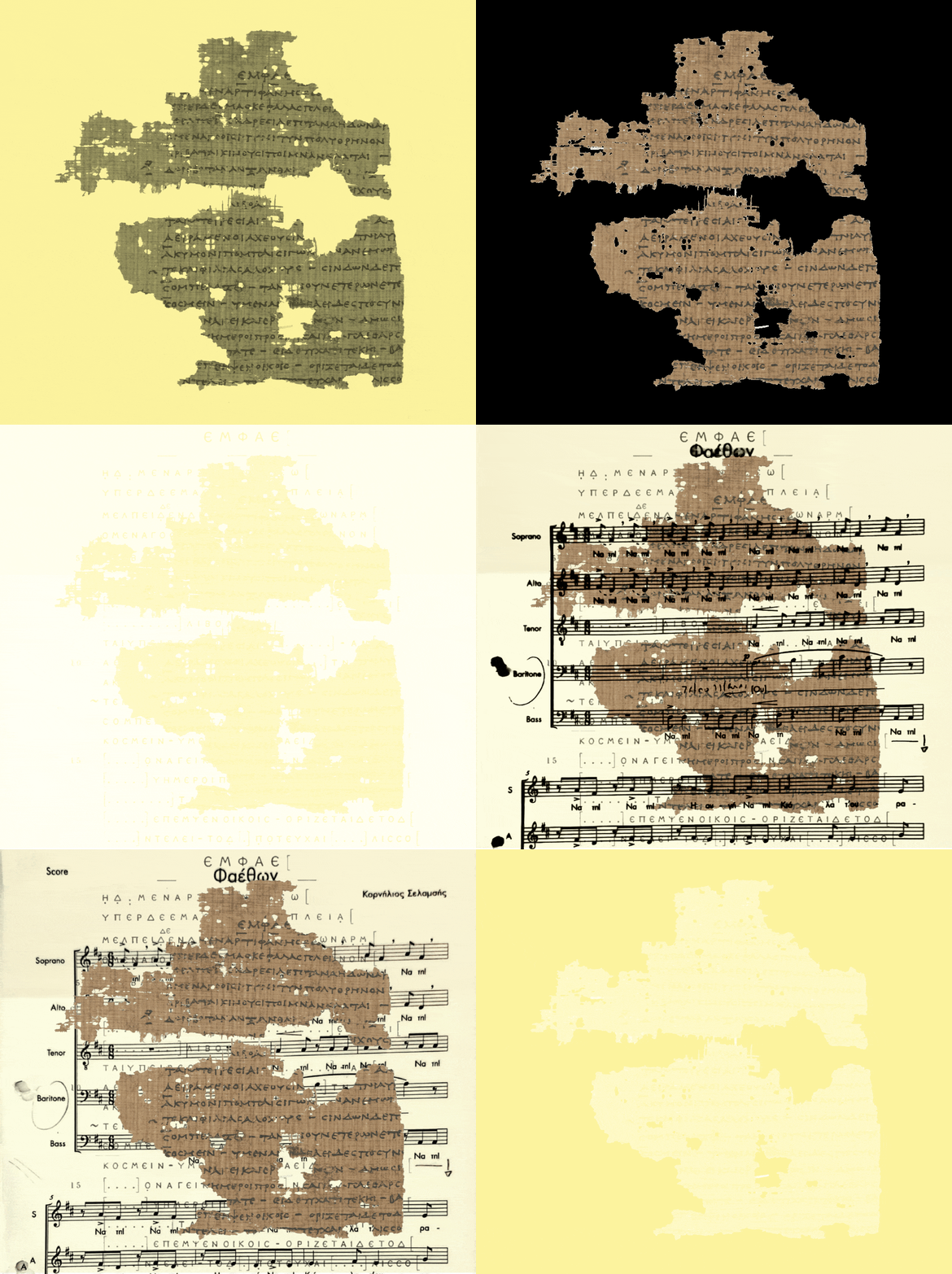
A fragment from the lost Euripides play Phaethon (circa 420 BCE), found in 1901 by the German archaeologist Otto Rubensohn at Al Ashmunein (ancient Hermopolis) in Egypt – a dawn chorus that rose over (and from) the earth.
Translated for (and taken from) the theatre / archaeology performance Fragments: Euripides created by Efthimis Theou in 2025 for the National Theatre of Greece as part of its “Introducing Greece’s Ancient Hidden-Gem Theatres” initiative organised in partnership with the Diazoma Association.
The composer Kornilios Selamsis set this new modern Greek translation of the ancient text to music for five voices (the five performer-archaeologists of Fragments: Euripides).
You can hear the opening line of this music (“look, there!”) in the video that lives inside the dubitandum “timeworn ⋮ timeless” (see below).
The moving image overlays three elements:
(one)
Berlin Papyrus number 9711 (written by an unknown ancient hand in the third century BCE).
(two)
A 1907 transcription of the ancient text (edited and published by Ulrich von Wilamowitz-Moellendorff and Wilhelm Schubart).
(three)
An excerpt from the modern score written by Kornilios Selamsis in 2025 (with handwritten notes by Fragments: Euripides director and performer Efthimis Theou).
A new English translation of the fragment is currently being prepared, to accompany the new modern Greek translation.
Beyond the known works of Euripides that survive complete, a smattering of more than 1,000 lines drawn from the rest of the tragedian’s oeuvre have come down to us: snippets written on pieces of papyrus buried beneath the ground of Egypt, or carved as Greek stone inscriptions, or occasionally dropped into the back-and-forth of a philosophical dialogue. There exist isolated scenes, scattered lines, or even just solitary words from works that are not widely known – such works as the revenge drama Ino or the existential play Polyidus, one hundred lines of which (many completely new) were unearthed from the soil fill of a tomb in the necropolis of Philadelphia, close by the River Nile, in 2022.
The Fragments: Euripides project is a poetic take on this material that, though fragmentary, still possesses great lyrical and dramatic power. It is an intensely musical and narrative-driven reformulation that incorporates these fragments of lost tragedies and satyr plays “as is,” set alongside the often-eventful tales of their discovery and excavation from the earth, the impression left by that echoing resonance of (actors’) voices not heard in thousands of years, and the potent tension of trying to glimpse and describe a long-gone world through its timeworn remains.
The performance will see a curious and existential archaeological excavation set on stage, except the finds of this dig are not remnants of pots or statuary or architecture but rather lines of verse – words spoken by actors, broken in pieces. Five performer-archaeologists, up on stage, will enact the nigh-on ritualistic process that is an archaeological excavation – including all the stereotypical behaviours and relationships it engenders, the almost choreographed movements of bodies through space it entails, and the singular vocabulary it employs – as it unfolds over the course of a single day. This peculiar dig will bring new findings to light and present them to its audience: entire dialogues or monologues drawn from the lost works of Euripides, as well musical compositions and actions created from the most fragmentary remains of these plays.
The work will also draw narrative materials from the excavation histories of the ancient theatres at which it is presented, thus enriching the performance text with true stories telling of the tireless manual work – sifting through and exploring the soil – that goes into archaeological research and discovery, actively and contextually incorporating the sites themselves into the theatrical praxis while also imparting something of their history to audiences.
Efthimis Theou
Πέρα από τα γνωστά εξ’ ολοκλήρου σωζόμενα έργα του Ευριπίδη, έχουν φτάσει ως εμάς και πάνω από 1000 στίχοι από το υπόλοιπο έργο του συγγραφέα: στίχοι γραμμένοι πάνω σε κομμάτια παπύρου θαμμένα στο έδαφος της Αιγύπτου, χαραγμένοι σε λίθινες επιγραφές στην Ελλάδα ή ενταγμένοι μέσα σε περιστασιακές αναφορές στις κουβέντες ενός φιλοσοφικού διαλόγου. Μια μεμονωμένη σκηνή, λίγες διάσπαρτες γραμμές ή και μια μόνο λέξη από έργα εν πολλοίς άγνωστα στο κοινό, όπως η ιστορία εκδίκησης της «Ινώς» και ο υπαρξιακός «Πολύειδος» – εκατό στίχοι από τα οποία βρέθηκαν για πρώτη φορά το 2022 στη νεκρόπολη της Φιλαδέλφειας κοντά στον Νείλο.
Η παράσταση «Θραύσματα: Ευριπίδης» θα είναι μια ποιητική προσέγγιση αυτού του αποσπασματικού, αλλά μεγάλης λυρικής και θεατρικής δύναμης υλικού. Μια έντονα μουσική και αφηγηματική ανασύνθεσή του που θα μεταφέρει αυτούσια κομμάτια από τις χαμένες τραγωδίες και τα σατυρικά δράματα, την περιπετειώδη πολλές φορές ιστορία της ανακάλυψής τους, αλλά και την αίσθηση που αφήνει ο απόηχος των φωνών όλων αυτών που έχουν πάψει να μιλάνε εδώ και χιλιετίες, την ένταση του να προσπαθείς να δεις και να περιγράψεις έναν κόσμο περασμένο, μέσα από τα φθαρμένα απομεινάρια του.
Για την παράσταση, θα στηθεί επί σκηνής μια παράδοξη και υπαρξιακή αρχαιολογική ανασκαφή που τα ευρήματά της δεν θα είναι αυτή τη φορά αγγεία, αγάλματα, ή αρχιτεκτονήματα, αλλά ποιητικοί στίχοι, λόγια ηθοποιών σπασμένα σε μικρά κομμάτια. Πέντε ερμηνευτές/αρχαιολόγοι θα πραγματοποιήσουν στη σκηνή τη σχεδόν τελετουργική διαδικασία μιας αρχαιολογικής ανασκαφής –με τις στερεοτυπικές συμπεριφορές και σχέσεις, τη σχεδόν χορογραφημένη κινησιολογία των σωμάτων στον χώρο, και την ιδιαίτερη γλώσσα– όπως εξελίσσεται κατά τη διάρκεια μιας ημέρας. Μέσα από αυτή την παράδοξη ανασκαφή είναι που θα έρθουν στο φως τα νέα ευρήματα και θα παρουσιαστούν στη σκηνή: ολόκληρες στιχομυθίες ή μονόλογοι από τα χαμένα έργα του Ευριπίδη, και μουσικές συνθέσεις και δράσεις βασισμένες στα πιο θραυσματικά αποσπάσματά του.
Η παράσταση θα αντλήσει, επίσης, αφηγηματικό υλικό από την ιστορία των ανασκαφών των αρχαίων θεάτρων όπου θα παρουσιαστεί το έργο, εμπλουτίζοντας έτσι το κείμενο με πραγματικές ιστορίες επίμονης αρχαιολογικής έρευνας και ανακάλυψης, ενσωματώνοντας ενεργά τους ίδιους τους αρχαιολογικούς χώρους στη θεατρική συνθήκη και μεταφέροντας, ταυτόχρονα, στο κοινό κάτι από την ιστορία τους.
This text (an extract) was written by Efthimis Theou during the writing and rehearsal process for Fragments: Euripides, his 2025 theatre / archaeology performance created for the National Theatre of Greece (NTG) as part of its “Introducing Greece’s Ancient Hidden-Gem Theatres” initiative organised in partnership with the Diazoma Association.
It was translated to accompany an application for the 2025 edition of the Nocturne Festival in Halifax, Canada (that year themed “Ground”). They were very supportive and kindly declined.
The video (shot for the NTG by Grigoris Panopoulos) shows the original cast of five performer-archaeologists – Efthimis Theou, Electra Nikolouzou, Katerina Papandreou, Yorgos Kritharas and Yorgos Syrmas – working tirelessly away, sifting through and exploring the soil on this peculiar dig.
They also sing – “look, there!” – a fragmentary choral ode written for the piece by Kornilios Selamsis.
Eleni Vergeti joined the performance-excavation team in 2026.
In a barren, desolate, dry, dusty landscape surrounded by sea, a flock of goats stand on rocks, run, eat, walk, gaze, fight.
A little before nightfall. A stone-built house in the same landscape. […]
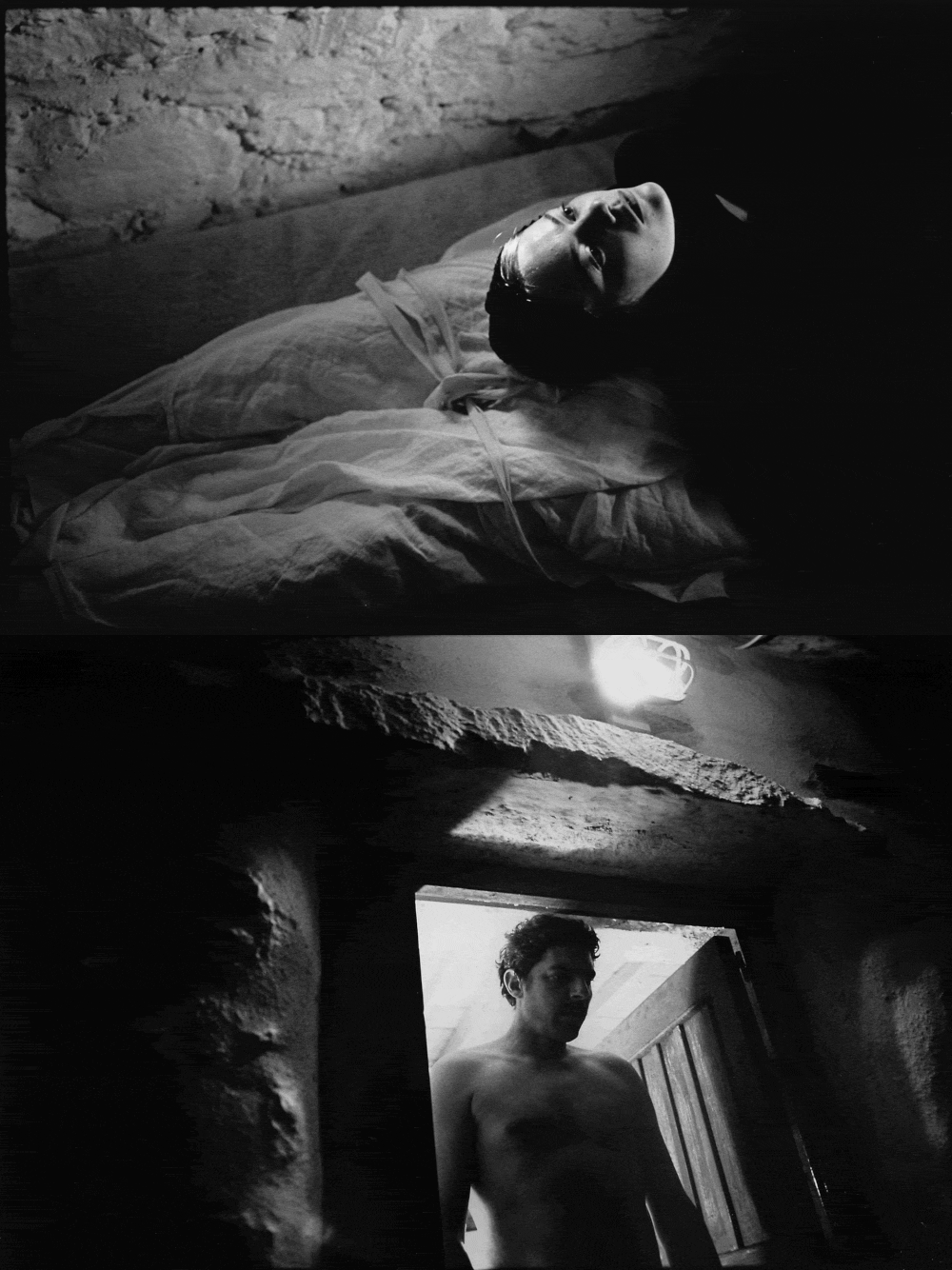
Feet heavy, the woman gets up and goes into the next room. On the bed lies a body, wrapped in a white sheet. She looks at it, oblivious to the passing of time. Then goes close and starts to unwind the sheet. First we see the face of a dead man, roughly her age, perhaps a little older. The pale, naked body is gradually revealed in its entirety. The woman rests her hand against his mouth. Opens it a little. Slips one of her fingers inside. Then another. Pulls both out again. They are dry. […]
The woman depicted on the icon looks a bit like her in some strange way. […]
excerpts from BLEAT by Yorgos Lanthimos
Σε ένα άγονο, έρημο, ξηρό, σκονισμένο τοπίο περιτριγυρισμένο από θάλασσα, κατσίκια στέκονται πάνω σε βράχια, τρέχουν, τρώνε, κοιτάνε, περπατάνε, παλεύουν.
Λίγο πριν νυχτώσει. Ένα πέτρινο σπίτι στο ίδιο τοπίο. […]
Με βαρύ βήμα η γυναίκα σηκώνεται και πάει στο διπλανό δωμάτιο. Επάνω στο κρεβάτι είναι ξαπλωμένο ένα ανθρώπινο σώμα, τυλιγμένο σε ένα άσπρο σεντόνι. Το κοιτάει χωρίς να καταλαβαίνει το χρόνο που περνάει. Πλησιάζει και αρχίζει να ξετυλίγει το σεντόνι. Στην αρχή διακρίνουμε το πρόσωπο ενός νεκρού άνδρα, περίπου στην ίδια ηλικία με αυτήν, ίσως λίγο μεγαλύτερος. Σταδιακά αποκαλύπτεται ολόκληρο το χλωμό, γυμνό του σώμα. Η γυναίκα ακουμπάει το χέρι της πάνω στο στόμα του. Το ανοίγει λίγο. Βάζει μέσα στο στόμα του το ένα της δάχτυλο. Μετά δύο. Τα βγάζει έξω. Είναι στεγνά. […]
H μορφή της γυναίκας στην εικόνα τής μοιάζει με έναν αλλόκοτο τρόπο. […]
Excerpts from the screenplay for Bleat, a film written, directed and produced by Yorgos Lanthimos.
Commissioned by the Greek National Opera (GNO) and NEON for their joint programme titled The Artist on the Composer.
This, then, is the artist Yorgos on the composers Johann Sebastian Bach / Knut Nystedt and Toshio Hosokawa.
Translated from the Greek (in 2019) to be shot on black-and-white film in silence (on Tinos Island, Greece in 2021, during post-production for Poor Things).
The short looping video shows the only footage from the film released digitally (online).
Bleat will only ever be presented as a 35mm projection accompanied by a live music ensemble and choir.
The woman depicted on the icon really does look a bit like Emma Stone in some strange way.
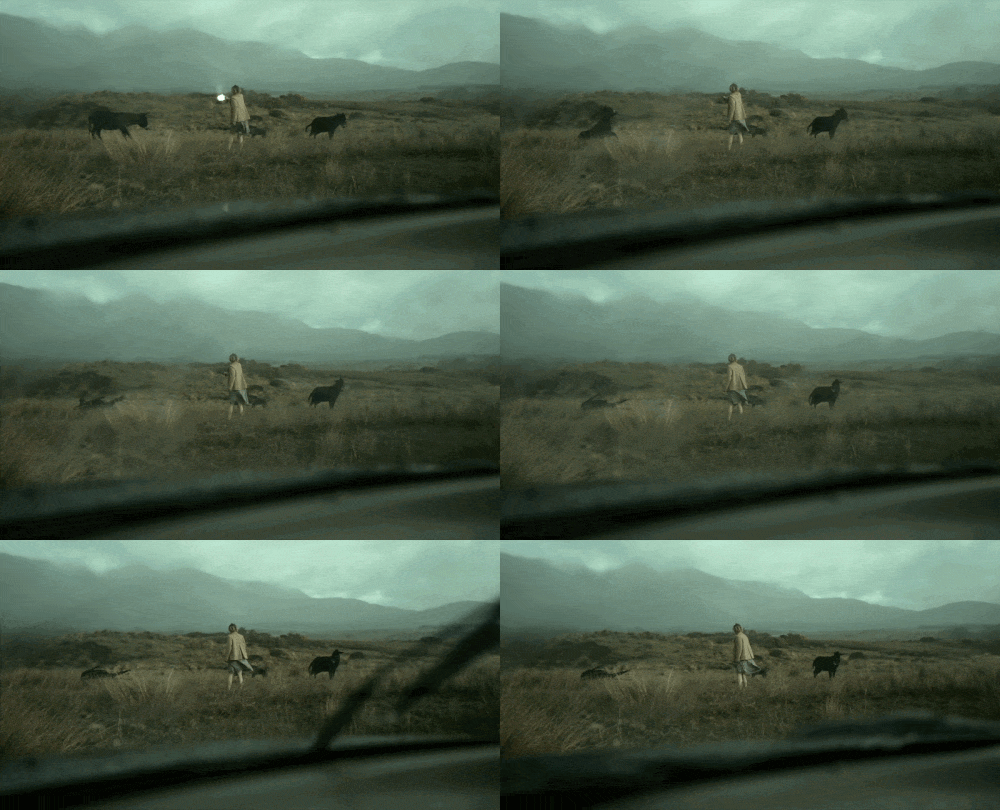
A WOMAN drives. She is on a country road, with fields on either side. She reaches a deserted spot where three donkeys stand on the right side of the road. The woman pulls over, puts on a pair of gloves, gets out of the car, checks to see if there is anyone nearby or if she is being watched, runs towards the donkeys, shoots one of them many times over, runs back to the car and drives away.
pre-title scene, THE LOBSTER written by Efthimis Filippou & Yorgos Lanthimos
ΕΞ. ΕΠΑΡΧΙΑΚΟΣ ΔΡΟΜΟΣ – ΜΕΡΑ
Μία ΓΥΝΑΙΚΑ οδηγεί σε έναν επαρχιακό δρόμο όπου αριστερά και δεξιά υπάρχουν χωράφια. Φτάνει σε ένα ερημικό σημείο όπου στο δεξί μέρος του δρόμου υπάρχουν τρεις γάιδαροι. Η γυναίκα σταματάει το αυτοκίνητο στην άκρη του δρόμου, φοράει στα χέρια της γάντια, κατεβαίνει από το αυτοκίνητο, κοιτάζει εάν υπάρχει κάποιος κοντά ή αν την παρακολουθούν, τρέχει προς τους γάιδαρους, πυροβολεί τον έναν από τους τρεις πολλές φορές, τρέχει ξανά προς το αμάξι και φεύγει.
Scene number one from the screenplay for The Lobster (2015), a feature film written by Efthimis Filippou and Yorgos Lanthimos, translated from the Greek (between 2011 and 2013) to be shot in English (in Ireland in 2014).
The translated English screenplay also appeared in The Lobster Screenplay Book published by A24 Films in 2022 (pp. 10–87).
Three sentences, two leads (Jacqueline Abrahams with donkey), one shot. No animals were harmed. Audiences were thrust into this world hard.
Incidentally, Jacqueline Abrahams was the film’s production designer.
oh (sparkling) sea (oh) my darling sea… take me down into you so i might drown
bereft of love, i want no more to live here, on dry land
but you, you lie there so ever-still, darling sea agleam, forever mirroring birds on high
but i, i am a wave.
…gentle calm waters…
oh (sparkling) sea darling sea, it’s me waiting this whole night through to be saved by you
let some tempest take me, fold me down into the darkest deep
but you, you lie there so ever-still, darling sea agleam, forever mirroring – outwardly – birds on high
but i, i am a wave.
A song by Marina Satti with lyrics by Lena Kitsopoulou
αχ θάλασσα θάλασσά μου εσύ… μέσα σου πάρε με για να πνιγώ
χωρίς αγάπη δεν θέλω εδώ να ζήσω στη στεριά
μα εσύ είσαι τόσο ατάραχη, θάλασσά μου γυαλί που καθρεφτίζεις πουλιά
μα εγώ είμαι κύμα.
…ήσυχα νερά…
αχ θάλασσα θάλασσά μου, εγώ για ένα θαύμα σου απόψε ζω
με μια τρικυμία να βυθιστώ μεσ’ στο μαύρο βυθό
μα εσύ είσαι τόσο ατάραχη, θάλασσά μου γυαλί που καθρεφτίζεις πάνω σου πουλιά
μα εγώ είμαι κύμα.
Translated for the love of it.
This is a 2024 song by Marina Satti that she dedicated to her father, who died that same year.
The music is by Marina Satti and Nikos Kodonas, with orchestration by Ermis.
The lyrics are by the actor, artist, director, and writer Lena Kitsopoulou.
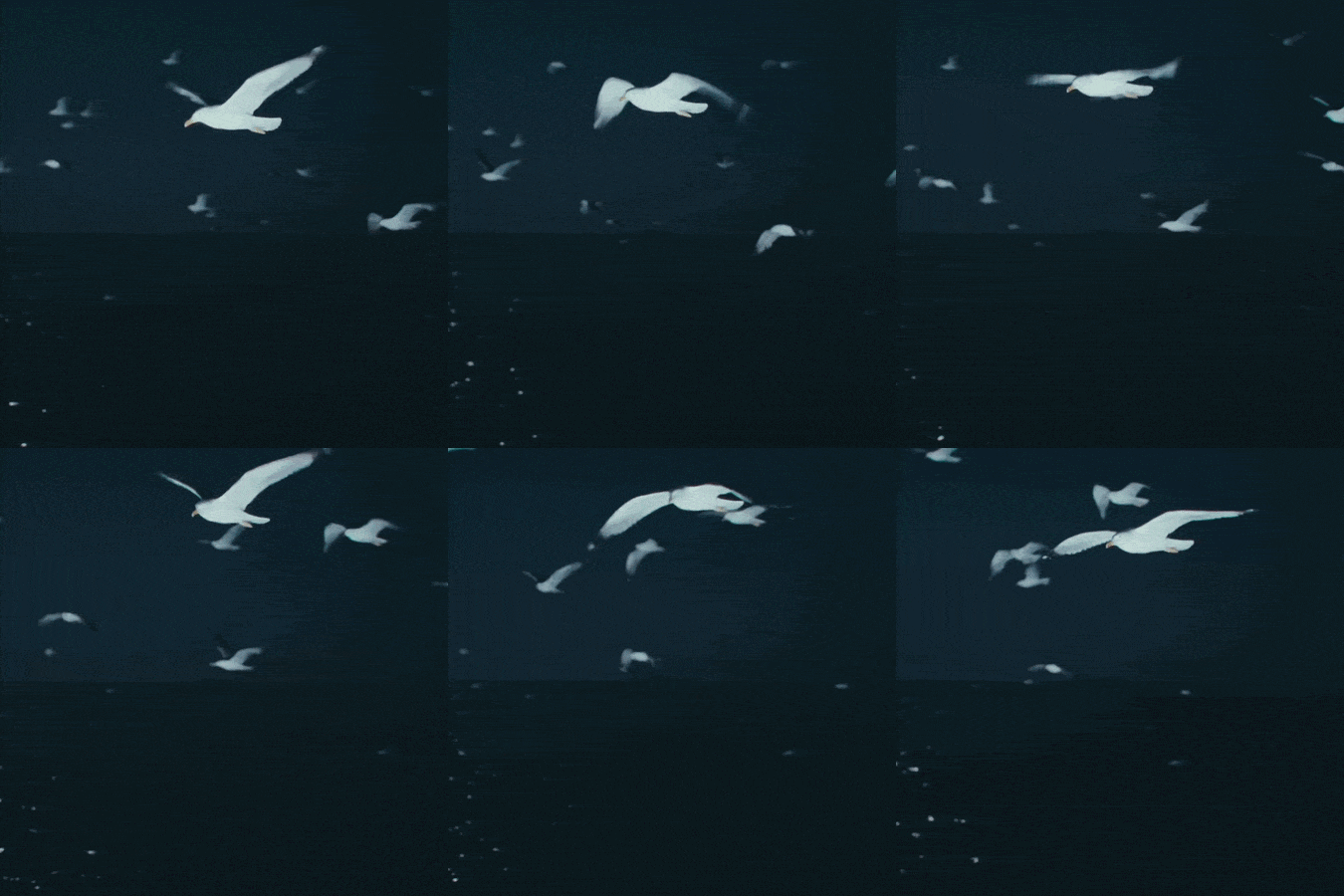
The extraordinary shot of gulls gliding over glittering dark seas is drawn from the atmospheric music video Σtella produced and directed for her song “Nomad” (edited by Isi Charbila, with Fanis Dalezios of Dolce Films behind the camera). This shot was spliced, fragmented, glitched, and looped to be set in dialogue with Satti here.
Consider “agleam ⋮ bereft” alongside two other dubitanda – “listing ⋮ sorrow” and “whisper ⋮ waves” – to find three figures calling out to various seas (Aegean, Caspian, otherworldly), aching for loves (child or parent or spouse) beyond reach.
A triptych of longing (via Kitsopoulou and Cavafy and Səfərli):
waiting this whole night through… one ear listing always to the wind… whisper it, whisper, oh waves…
These three translations informed one another (you can spot the ways).
Bitter risen bread Leaven steeped in red wine Monument aflame Warrior blood duplicate
The heroes have fallen, mother Rising no more from the earth All full with bones
Take, eat Orders the general Ripping the bitter bread Thick pieces from thick hands Rippling with veins That have stripped life From myriad beings Throngs of lifebreath severed
Bread redolent Crimson wine asteam in the mornlight A fox snickers, incessant Surly is this March
Drink from the blood that flows through my veins Orders the general
Filthy combatants close in to drink Yet to shake off the slaughter Hooked on their shoulders like a black crow
Feathers gall black Flying sky high Genocide circling Land demarking
Red snow falls, Sahara sent Crow blinded as it flies Falling with a thump, cawing on the redsoil
Umbra creeps over dark earth Barbaric rumble of memory The dawning breath of the maim mists the air Missing a leg, missing an arm The grave lies empty Freedom calls on missing limbs
It got eaten by the dark, so say the news agencies Ads for foaming liquid soap On beautiful bodies
Slava! Slava! shudders the soil Gospode, whispers the general Feet burying the desiccated carcass of a fox Bushy tail left unburied Red tuft
Onto soil falls a little wet bitter bread Soaked in red wine The general falls to his knees Licks the earth clean of the bitter bread Moist with the red fluids of the departed
Soil in mouth Soil and mouth Mouth of soil frothing Teeth gnashing hydrogen, carbon, oxygen Ethanol has a whiff of spring
Fighters toss a lit match where he licks Soil catches fire Mouth at once alight Gaze aflame Eyeing the Caucasus
ΙΙ
Sprout-surging from black soil The flowers of Tauris all bloom at once Asters, lychnis coronaria, carnations, dahlias, roses, lilies, geraniums, orchids, violets, sunflowers, honeysuckles Flowers of passion from the Crimea Amaryllis, lisianthuses, anemones, gladioli, begonias, crocuses, crown imperials Persephone’s asphodels Hyacinths, narcissi, tulips Black Sea-scented lavender Camellias, hibisci, lilacs, magnolias, rhododendrons, freesias, gardenias, gerbera daisies, heliconias Hortensias from Odessa Irises, snapdragons, liliums, peonies, meadow buttercups, wayfarers, chrysanthemums, fleur-de-lis Immortelles, everlasting like the dead Laceleafs Shellflowers
Sweetest death rises tall Cherries thicken into lips more beautiful than any ever made The honeyed hearts of humankind burst open with a bang
Krakatoa of sighs The Euxine Sea Kneads an extra-fragrant end-time prince A golem of dark days Smiling faintly, coming closer Pacing slow toward the homes and to their riddled front doors Landing up languid from the Caucasus
Thirteen brothers call out in Slavic tongue: Mama, mama, mama Svoboda!
Jacob grips tight the heel of Esau Firstborn covetous Birthed maim Half twin
ΙΙΙ
My hands hold your blond head And I stroke your chestnut beard With my thick hands My general… My hand-veins swell with love For those lips of yours I never tire to kiss
Love’s lexicon are the many sum hazel hairs on my body Where you laid yourself down over and again After battle
I hold your blond head, my love For the last time Grieving for the Caucasus took you as its prize Those great mountains Where the sun came up today
He got eaten by the dark, weep my hand-veins Brimming with your blood
Foreign veins fought beside you From neighbouring lands For you For me
Everywhere I looked, the two of us
I am left a broken twin in two equal parts Forged of hollow bone Gospode With no general With no friend
Our fickle spring got eaten by the dark Broken down on the front lines Crumbling like stale bread Foundering A sign of mourning
Your short-cropped head beside mine Fighter clasping fighter My final kiss on your lips Lips locked on lips The little fox we raised together After killing its mother Hungry intertwines my legs Like mine yours
I so wanted to live a normal life By your side We were robbed, my darling They tore us from our bed Soiling our sheets with combat boots Like ours Brothers in arms
We were wrong
What remains: The warmth of my chest clinging to the chill of yours My heart beats monotone without your heart My fair-haired boy, every last heartbeat of mine Is for you Meanwhile gifts from you Are all my coming agonies
Victorious I shall return to my homeland heavily defeated A refugee
Orphaned of you
Manolis Tsipos
ΑΣΤΑΘΗΣ ΑΝΟΙΞΗ
Ι
Ψωμί ζυμωμένο πικρό Προζύμι πνιγμένο σε κόκκινο κρασί Φλογισμένο μνημείο Αντίγραφο του αίματος των μαχητών
Έπεσαν οι ήρωες, μητέρα Δεν αναδύονται πλέον από τη γη Γέμισε κόκκαλα
Πάρτε φάτε Προστάζει ο στρατηγός Κόβει το πικρό ψωμί Χοντρά κομμάτια από χοντρά χέρια Συσπώνται οι φλέβες πάνω τους Έχουν αφαιρέσει τη ζωή Από τόσα πλάσματα Πλήθος οι ανάσες που κόπηκαν
Μοσχοβολά το ψωμί Αχνίζει το άλικο κρασί στο πρωινό φως Μια αλεπού γελάει ακατάπαυστα Δύστροπος ο φετινός Μάρτης
Πιείτε το αίμα που κυλά στις φλέβες μου Προστάζει ο στρατηγός
Βρώμικοι μαχητές πλησιάζουν να πιούν Δεν έχουν αποτινάξει τη σφαγή Γαντζώθηκε στους ώμους τους σαν μαύρος κόρακας
Φτερά από μαύρο θράσος Πετούν ψηλά στον ουρανό Κυκλώνουν τη γενοκτονία Σημειώνουν τον τόπο
Χιονίζει κόκκινο φερμένο από τη Σαχάρα Τυφλώνεται ο κόρακας καθώς πετά Πέφτει με γδούπο κράζοντας πάνω στο κοκκινόχωμα
Σέρνεται σκιά πάνω στη σκούρα γη Ο βάρβαρος αχός της μνήμης Ατμός η πρωινή ανάσα των σακατεμένων Λείπει το πόδι, λείπει το χέρι Κενός ο τάφος Προσκλητήριο απόντων μελών η Ελευθερία
It got eaten by the dark, λένε τα ειδησεογραφικά πρακτορεία Διαφημίσεις υγρού κρεμοσάπουνου Πάνω σε όμορφα σώματα
Σλάβα! Σλάβα! ανατριχιάζει το χώμα Γκόσποντε, ψιθυρίζει ο στρατηγός Θάβει με τα πόδια του ένα στεγνό τομάρι αλεπούς Η φουντωτή ουρά της παραμένει άθαφτη Κόκκινος θύσανος
Πέφτει στο χώμα λίγο υγρό πικρό ψωμί Βουτηγμένο στο κόκκινο κρασί Πέφτει στα γόνατα ο στρατηγός Γλύφει το χώμα να το καθαρίσει από το πικρό ψωμί Νοτισμένο με το κόκκινο υγρό των κεκοιμημένων
Χώμα στο στόμα Χώμα και στόμα Στόμα χωμάτινο που αφρίζει Τα δόντια αλέθουν υδρογόνο, άνθρακα και οξυγόνο Μύρισε άνοιξη η αιθανόλη
Ρίχνουν οι μαχητές αναμμένο σπίρτο εκεί που γλύφει Αρπάζει φωτιά το χώμα Ανάβει μονομιάς το στόμα Φλόγα στο βλέμμα Βλέπει τον Καύκασο
ΙΙ
Ορμητικά βλασταίνουν μέσα από το μαύρο χώμα Ανθίζουν όλα μαζί τα λουλούδια της Ταυρίδας Αστέρες, λυχνίδια, γαρύφαλλα, ντάλιες, τριαντάφυλλα, κρίνοι, γεράνια, ορχιδέες, βιολέτες, ηλίανθοι, αγιοκλήματα Λουλούδια του πάθους από την Κριμαία Αμαρυλλίδες, λυσίανθοι, ανεμώνες, γλαδιόλες, μπιγκόνιες, κρόκοι, κορώνες αυτοκρατορικές Ασφόδελοι της Περσεφόνης Υάκινθοι, νάρκισσοι, τουλίπες Λεβάντες που μυρίζουν Μαύρη Θάλασσα Καμέλιες, ιβίσκοι, πασχαλιές, μανόλιες, ροδόδενδρα, φρέζες, γαρδένιες, ζέρμπερες, ελικόνιες Ορτανσίες από την Οδησσό Ίριδες, σκυλάκια, λίλιουμ, παιώνιες, νεραγκούλες, βιβούρνα, χρυσάνθεμα, λειριά Αμάραντοι, όπως οι πεθαμένοι Ανθούρια Μολουσέλες
Ορθώνεται ο γλυκύτερος θάνατος Πυκνώνονται κεράσια και γίνονται τα πιο όμορφα χείλη που φτιάχτηκαν ποτέ Σπάζουν με κρότο γλυκασμένες οι καρδιές των ανθρώπων
Κρακατόα στεναγμών Ο Εύξεινος Πόντος Πλάθει τον ευωδέστερο πρίγκιπα του τέλους Γκόλεμ του σκοτεινού καιρού Πλησιάζει χαμογελώντας ελάχιστα Βαδίζει αργά προς τις διάτρητες πόρτες των σπιτιών Νωθρά καταφθάνει από τον Καύκασο
Σε γλώσσα Σλαβική φωνάζουν δεκατρία αδέλφια: Μάμα, μάμα, μάμα Σβομπόντα!
Ο Ιακώβ γραπώνει τη φτέρνα του Ησαύ Φθονεί τα πρωτοτόκια Γεννιέται ανάπηρος Μισός δίδυμος
ΙΙΙ
Κρατώ το ξανθό σου κεφάλι στα χέρια μου Χαϊδεύω το καστανό μούσι στο πρόσωπο Με τα χοντρά μου χέρια Στρατηγέ μου Οι φλέβες των χεριών μου φουσκώνουν από έρωτα Για τα χείλη σου που δεν χορταίνω να φιλώ
Λεξικό της αγάπης όλες μαζί οι πολλές καστανές τρίχες στο σώμα μου Εκεί όπου ξάπλωσες τόσες φορές Μετά τη μάχη
Κρατώ το ξανθό σου κεφάλι, αγάπη μου Για τελευταία φορά Θρηνώ γιατί σε κέρδισε ο Καύκασος Το μεγάλο βουνό Απ’ όπου ανέτειλε σήμερα ο ήλιος
He got eaten by the dark, κλαίνε οι φλέβες στα χέρια μου Γεμάτες με το αίμα σου
Πολέμησαν ξένες δίπλα σου Από γειτονική πατρίδα Για σένα Για μένα
Εμάς τους δύο έβλεπα παντού
Απόμεινα δίδυμος σπασμένος σε δύο ίσα κομμάτια Φτιαγμένος από κούφιο κόκκαλο Γκόσποντε Δίχως στρατηγό Δίχως φίλο
Φαγώθηκε από το σκοτεινό η ασταθής μας άνοιξη Χωνεύτηκε στις γραμμές του μετώπου Θρυμματίστηκε σαν το ξερό ψωμί Παραπαίει Σε ένδειξη πένθους
Το κοντοκουρεμένο κεφάλι μου δίπλα στο δικό σου Μαχητής αγκαλιάζει μαχητή Το τελευταίο μου φιλί στα χείλη σου Χείλη κολλούν σε χείλη Το αλεπουδάκι που μεγαλώσαμε μαζί Αφού σκοτώσαμε τη μάνα του Πεινασμένο μπερδεύεται στα πόδια μου Όπως εγώ στα δικά σου
Ήθελα τόσο πολύ να ζήσω ζωή κανονική Δίπλα σου Μας έκλεψαν, καλέ μου Μας έβγαλαν από το κρεβάτι μας με βία Λέρωσαν τα σεντόνια μας με τις αρβύλες τους Όμοιες με τις δικές μας Αδέρφια
Κάναμε λάθος
Αυτό που μένει: Η θέρμη του στήθους μου κολλημένη στο κρύο του δικού σου Καρδιά που χτυπά μονότονα δίχως τη δική σου καρδιά Όλοι οι χτύποι που απέμειναν, ξανθέ μου Είναι για σένα Δώρα δικά σου Τα μελλοντικά μου βάσανα
Νικητής Θα επιστρέψω στη χώρα μου βαριά ηττημένος Πρόσφυγας
Ορφανός από εσένα
This poem was written by Manolis Tsipos in the spring of 2025 (March).
It was translated from the Greek for the love of it that same spring (April).
Note the (word) garden that blooms at its heart.
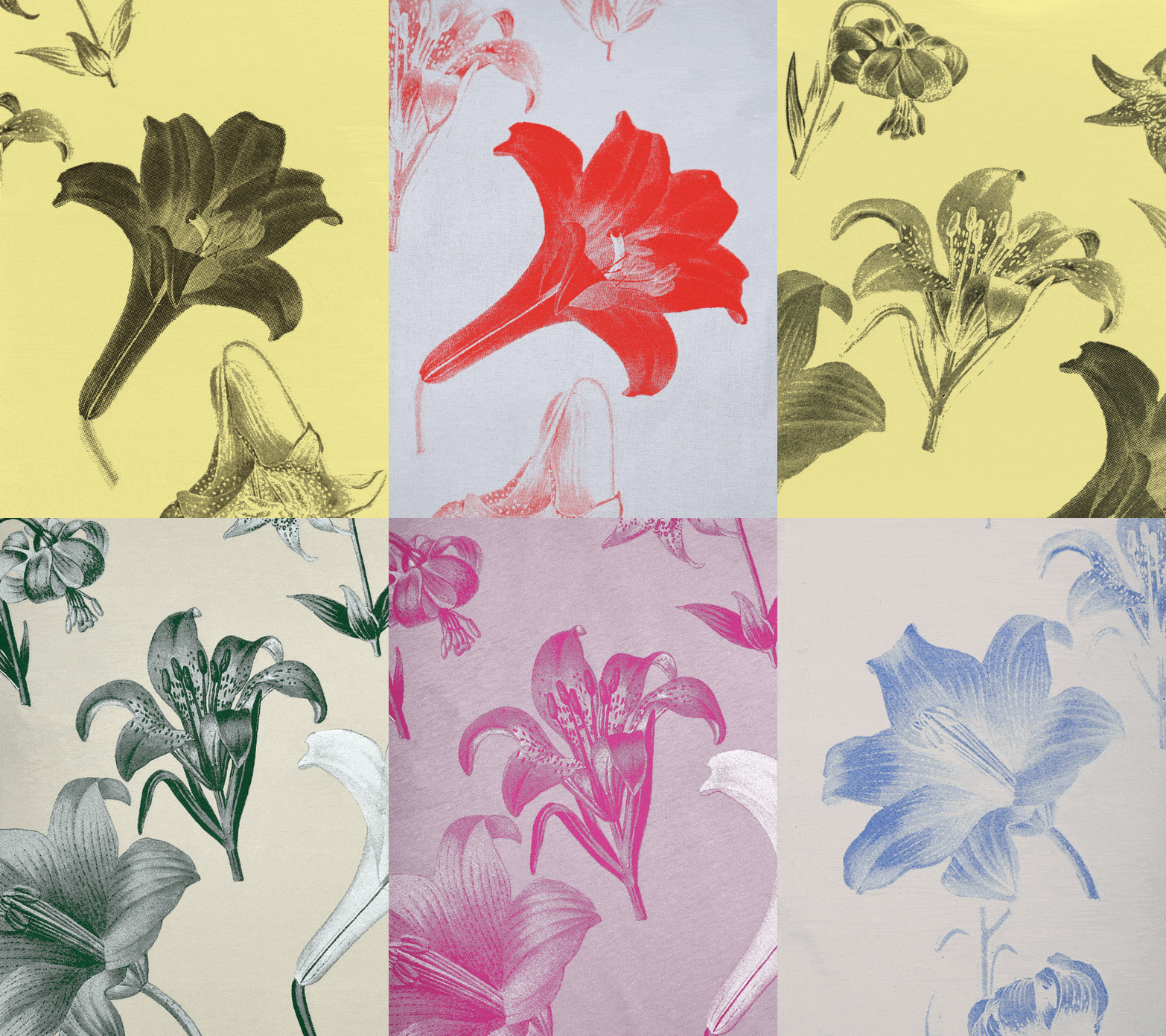
The image shows a different lush garden created by Ralou OK for Niáta. Various lovely lilies – διάφορα (μη-διάφανα) κρίνα – silkscreened and sewn to be worn on back and breast.
Long ago, when you still loved me, one early morning you asked me, just in passing as we chatted: what is life, what can it be… So I turned to you and whispered: wine for many is the key, some seek glory, others riches but my love, it’s you for me.
…some seek glory, others riches but my love, it’s you for me…
Since your heart now loves another and has turned its back on me I am told you often wonder how this heart of mine still beats. Like there were not many of us, many others just like me: dead and buried on the inside, only living outwardly.
…dead and buried on the inside, only living outwardly…
Attik
ΑΠΟ ΜΕΣΑ ΠΕΘΑΜΕΝΟΙ
Τον καιρό που μ’ αγαπούσες με ρωτάς ένα πρωί στην κουβέντα μας απάνω: τι ’ναι άραγε η ζωή… Τότε γύρισα και σου είπα: γι’ άλλους είναι το κρασί, γι’ άλλους δόξα, γι’ άλλους πλούτη μα για μένα είσαι εσύ.
…γι’ άλλους δόξα, γι’ άλλους πλούτη μα για μένα είσαι εσύ…
Τώρα που άλλαξε η καρδιά σου κι έναν άλλον αγαπάς απορείς μου λεν ακόμα η δική μου πώς χτυπά. Μήπως τάχα σαν κι εμένα δεν είν’ άνθρωποι πολλοί: από μέσα πεθαμένοι και απόξω ζωντανοί.
…από μέσα πεθαμένοι και απόξω ζωντανοί…
Music and lyrics written in 1925 (or possibly 1917) by Attik (Kleon Triantafyllou) in Kislovodsk (Russia) and dedicated to a certain Nikos Kokólin.
Movingly (once again) used by Yorgos Lanthimos in his 2015 film The Lobster: loners hunted down in the Irish woods (shot in 2014) to the plaintive tones of Danae (recorded in 1965, accompanied by the Belarusian jazz pianist Lev).
See the dubitandum “hearts ⋮ touched” (in list below) for details on how Danae is further connected to this film.
The Lobster screenplay (written by Yorgos with Efthimis Filippou) was translated from the Greek to be shot in English (their English-language debut). Song lyrics translated for the love of it.
Αυτό εδώ που πας να διαβάσεις είναι για ανθρώπους που πρέπει να έχουν κάποιο κοινό χαρακτηριστικό, να βρουν ένα ταίρι μην τους μετατρέψουν σε κάποιο ζώο της επιλογής τους ζώο άλλο απ’ αυτό που ήδη είναι.
πολύ λίγα πράγματα μπορούν να σε κάνουν να γελάς και ταυτόχρονα να σου φέρνουν εμετό.
δεμένος αυτός με χειροπέδες στη ζώνη του και με τα ρούχα του όλα σούπερ ταιριαστά μπαίνει αυτή και κάθεται και του λέει να μην το πάρει κατάκαρδα γιατί απλά έτσι είναι οι κανόνες· σουρεάλ κι αστείο μαζί.
κι όταν το σώμα της κείτεται αφύσικα στο έδαφος απ’ την απόπειρα αυτοκτονίας που έκανε επειδή είναι μες στην απόγνωση και μες τη μοναξιά και δεν θα βρει ποτέ τον έρωτα που χρειάζεται για να ζήσει (κυριολεκτικά μιλώ) αρρωσταίνουμε και είναι αστείο.
όταν σκοτώνει τον σκύλο με κλοτσιές για να αποδείξει πως δεν τη νοιάζει τίποτα είναι άκαρδη και θέλει να τον τεστάρει, να δει αν είναι αρκετός, αντάξιός της είναι όλο τραγελαφικό και είναι αστείο.
όταν χτυπάει στο τραπέζι το κεφάλι του ξανά και ξανά για να ανοίξει η μύτη του να δει να τρέχει αίμα, να της μοιάσει ώστε να βρει αυτός ελπίδα και αυτή συντροφιά καταλαβαίνεις που το πάω.
μια στο τόσο εμφανίζεται κάποιος που βλέπει τα πράγματα όπως είναι, σουρεάλ και αρρωστημένα και τραγελαφικά και αστεία. χαίρομαι που τα βλέπει έτσι. που τα βλέπουν έτσι.
έχουν μια σκοπιά (ο γιώργος και ο ευθύμης – για τους συγγραφείς μιλώ) κι αυτός μια ματιά (ο γιώργος – είναι και ο σκηνοθέτης) που μου έχουν αλλάξει το τρόπο που βλέπω που κατανοώ κι αυτό δεν ισχύει μόνο για μένα, αλλιώς δεν θα ήσουν και εσύ εδώ να το διαβάζεις όλο αυτό. δεν είναι σουρεάλ; δεν είναι αστείο; δεν είναι αληθινό;
όταν μιλώ σπασμένα ελληνικά ή γράφω ένα ποίημα ή γελάω με κάτι που θα ’πρεπε να μου ραγίσει την καρδιά ή κλαίω με μια διαφήμιση στην προσπάθειά μου κι εγώ να μοιραστώ κάποιο κοινό χαρακτηριστικό να συναντηθούμε κάπου στη μέση να μη γίνω κάποιο ζώο νιώθω σαν ζώο πιο πολύ από ποτέ και ίσως μερικές φορές να είναι καλύτερα έτσι.
είναι όμως κι εκείνο το άλογο με τα πανέμορφα μαλλιά. αστείο. σκέτο.
αυτό είναι «ο αστακός».
Emma Stone
what you are about to read is about people who must share a trait, find a mate or they will be turned into an animal of their choosing from the animals they already are.
there is very little that can make you laugh and retch all at once.
he is handcuffed to his belt and has all matching clothes she comes in and sits and tells him not to let it get him down for these are the rules surreal, and funny.
and when her body lies contorted on the ground from a suicide attempt because she’s desperate and lonely and she’s never going to find the love she needs to live (this is literal) we are sick and it is funny.
when she kicks the dog to death to prove she does not care at all she is heartless and wants to test him, see if he’s up to snuff it is grotesque and it is funny.
when he bangs his head on the table over and over to break his nose to watch it bleed and be like her so he can find hope, and she, companionship you know what I am saying.
once in a while somebody comes along that sees things as they are, surreal and sick and grotesque and funny. I am glad he does. they do.
they have a vantage (yorgos and efthimis – I am talking about the writers) and he the eyes (yorgos – he is also the director) that have changed the way I see and understand and that’s not just me or else you wouldn’t be here reading this. isn’t it surreal? isn’t it funny? isn’t it true?
when I speak broken greek or write a poem or laugh at something that should break my heart or cry at a commercial to try to share a trait to meet in the middle to not become an animal I feel more animal than ever and maybe sometimes that’s better.
and then there’s the horse with the beautiful hair. just funny.
this is “the lobster.”
The actor and producer Emma Stone wrote this poem as a foreword to The Lobster Screenplay Book published by A24 Films in 2022 (pp. 6–7).
It is incisive and animal and aware. And it is funny.
Poem translated into Greek for the love of it. Greek translation edited by Yorgos Syrmas.
The Lobster screenplay – written by Efthimis Filippou and Yorgos Lanthimos, and directed by the latter – was translated from the Greek to be shot in English (their English-language debut).
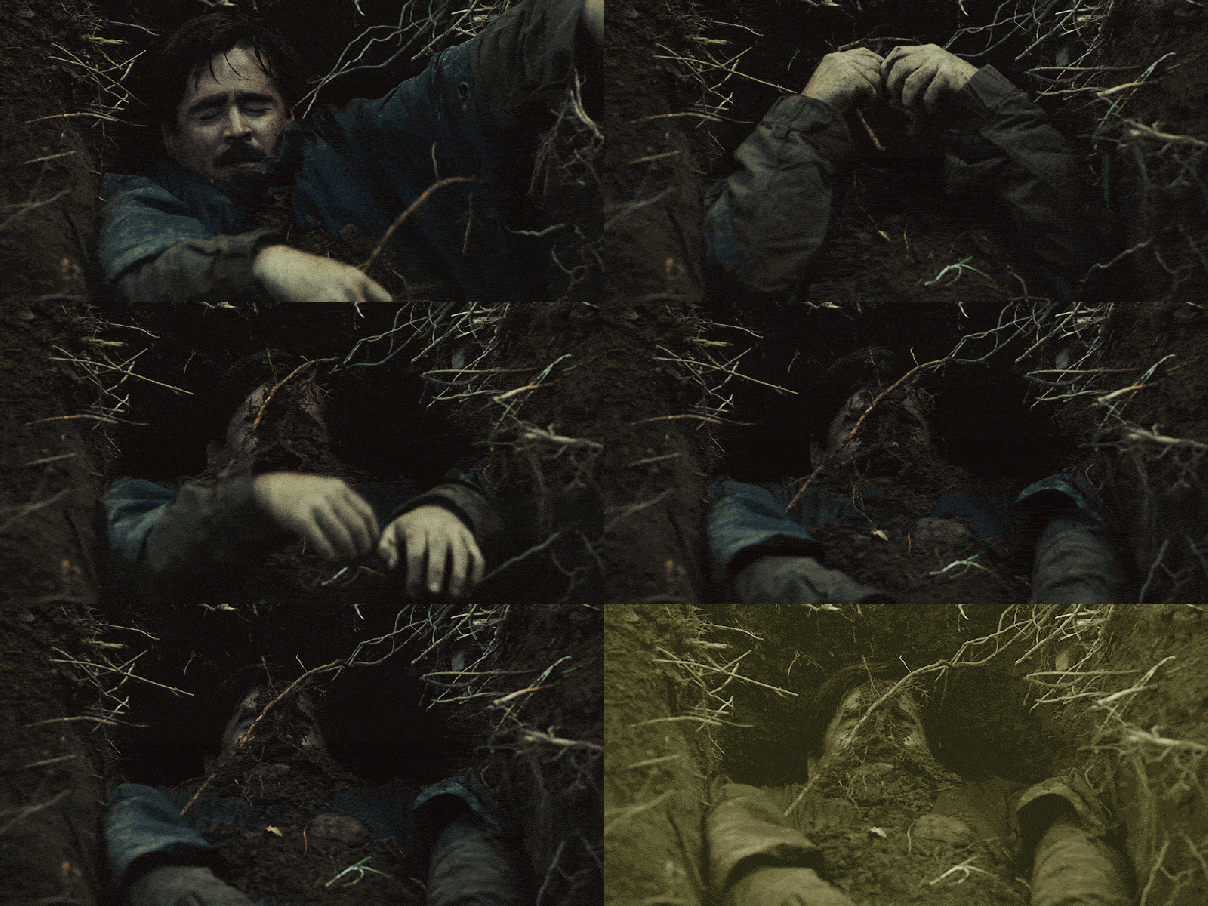
The moving image shows Colin Farrell as David, trying out his own grave. A still image from this scene appears on the cover of the screenplay book.
A collection of ritual texts, parables, and performances from one of the most singular voices in contemporary theatre.
A conference where linguists reveal the “true” origins of Greek words. A midnight rite on the Elefsina waterfront where two siblings graft their parents’ bodies onto their own. A laboratory of mourning that turns letters to the dead into perfume. A cool, lethal tale about a man forewarned – by machine and committee – that he will be stabbed.
In { Etymologies and Other Rites }, language, family, and fate are laid bare on the slab. Efthimis Filippou – acclaimed screenwriter of Dogtooth, The Lobster, and The Killing of a Sacred Deer – moves between lecture, cabaret, and liturgy with a poker face that leaves space for awe. His stage world is one of rituals disguised as bureaucracies, where saints and civil servants coexist, where grief becomes procedure and humour a form of prayer. Songs flare, knives appear, miracles are audited like minutes from a meeting.
The result is hilarious, brutal, and unexpectedly tender – a theatre of reason and revelation, where etymology proves to be another form of storytelling, and where the stories we tell about words, parents, and gods are the stories that make us. Taken together, these four works form a darkly luminous cycle about belief and substitution – of tongues, bodies, and meanings – played out between the sacred and the absurd.
Includes: Etymologies (a play), Big and Small Ships (a ritual performance), Eau de Cologne (a choral device), and George (a narrative).
ON A { PHANTOM BOOK } by ERIS Press
Efthimis Filippou is a Greek writer, playwright, and screenwriter known for his audacious blending of the bureaucratic with the mythic. He has gained broad international recognition through his collaboration with director Yorgos Lanthimos, co-writing the scripts for Dogtooth, Alps, The Lobster, The Killing of a Sacred Deer, and, more recently, Kinds of Kindness. His work is characterised by a dry, deadpan voice that fuses satire, ritual, and emotional violence. In { Etymologies and Other Rites }, he extends that sensibility into a hybrid territory of lecture, cabaret, and liturgy.
A book blurb and bio written and released online by ERIS Press ahead of the proposed publication of a { phantom book } gathering together English translations of four texts by Efthimis Filippou:
Big and Small Ships (a ritual performance); Eau de Cologne (a choral device); Etymologies (a play); and George (a narrative).
{ Etymologies and Other Rites } was not published on 3 March 2026, as announced. It sadly fell through (how to reach agreement with the goddess of contention?) but lives on spectrally here.
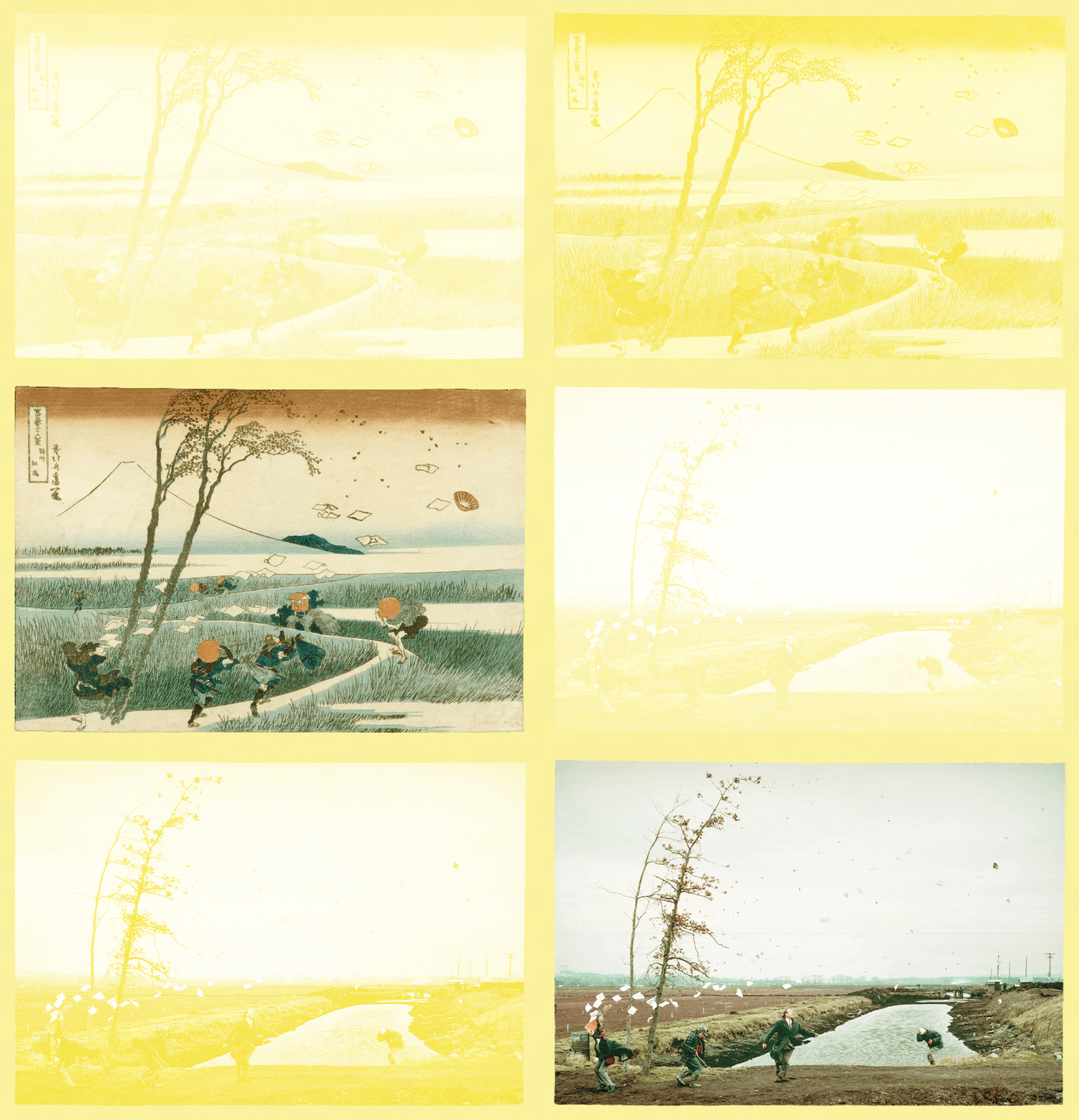
The static/animated graphic interchange format file embraces the images behind the ERIS-envisioned cover: A Sudden Gust of Wind (after Hokusai) by Jeff Wall (1993) inspired by Yejiri Station, Province of Suruga by Katsushika Hokusai (circa 1832).
A sheaf of papers blown away (across centuries).
Perhaps a revealing rite in itself – a disappearance forewarned, letters scattered to the wind, the pages of this { phantom book } whipped from reach.
He is a man of many laurels. From that beautiful city beset with reeds, set beside the sea – that is, Cannes. From the hol(l)y wood. From the upside-down forest, id est Venice. In place of words, I would rather string together many pointed, pungent, bitter laurel leaves into a wreath and crown him too in turn, this man I know so little yet understand so much.
What I understand from personal experience is that, no matter how much he has read, no matter how many films he has seen and how much music he has heard (and I am certain he has done such things in abundance), more than anything this artist has looked inside himself in ways tortuous, in ways agonising and sustained. To recover from such deep dives, once he rises worn and weary to the surface again, it tickles him to perform the following restorative exercise: to observe the tiniest of details in the people around him. And who has not felt uncomfortable when subjected to his seemingly mild and sweet brown-velvet gaze that flicks into piercing x-ray vision when turned on the person he is speaking to, or on the unsuspecting patrons of some establishment where he takes in the very nature of others as he takes his coffee.
This is how he has constructed such a personal style that pulverises its influences so completely; scholars studying this style of his meet only dead ends when seeking some provenance or some affinity. Only in painting can one perhaps find some correlation: in the tonal coldness of Edward Hopper’s colours or in the labyrinthine complexity of Hieronymus Bosch’s forms.
Distant. Not so much from an innate humility but rather the result of routine introspection – an outcome of his interiority. He is an avid diver. The physique of such solitary explorers is marked by a particular muscle tone, a tightly-wound readiness to spring into action, a call to the abyss. He does not much like labels. I asked him once: “How does it feel to be called a loghotékhnis?” [Greek akin to “wordsmith” or “litterateur.”] His answer: “These two words lóghos and tékhni [‘the word’ and ‘art’] stuck together leave me uneasy. I prefer the lightness of the word kímeno [‘text’]. There aren’t any nice [Greek] words to describe those who write. Senariográfos [‘screenwriter’] isn’t nice. Syngraféas [‘author’] isn’t nice either. Isn’t it tragic? To write, but for the words that describe what you do to be horrible? Whereas khoreftís, for example, now that’s a lovely word to describe those who dance – simple, with a nice ring to it, it’s a word that only makes them want to dance more.”
His language feels alien and yet is so simple, so familiar. Drained of every superfluous form, any pompous turn of phrase, all pretension, left relentless, unsparing, airless to the point where the words become invisible – where scenes, images and characters spring instead from the page, fully rounded and in full sound. Each piece of his writing ready to burst open like some budding enactment.
The appearance of plants and fruits and animals is something of a tonic for the reader – they leaven any human presence, which usually hides some unpleasant surprise.
There is a latent deity in the world of Efthimis Filippou: irony. Eating away at what is good but also undermining evil. Relativising things. Resituating them. Guiding you to a wry smile, to a sigh and an exclamation: I can breathe. And so, as you read or watch, love those things you hide away inside and, ultimately, love the darkness that lies inside others too. What did you ever gain by stowing it away? There she blows, look – there! Bursting out all over the place, out of every crevice, flooding us fully, sweeping both inwards and outwards, finding mimics, finding critics, and ever spreading – creeping like a spot of ink across a handkerchief. In the time of Seferis, this was ennui. In our own times, it is horror that creeps.
Certain Greek authors write so beautifully as to render themselves untranslatable. The texts of Efthimis Filippou prove promising for translation because they are written without any tricks, as natural as breathing. He has a way of hiding beauty – true art is to conceal art, as the Latin proverb goes. And his books had the good fortune to be published in the English so handsomely. They are addressed to those happy few of Stendahl.
I very much like the title Noon. A time when the light falls straight down and life’s details are intensified, overly so. But also a time when the hordes come out to play, as my mother used to say – entire battalions of dæmons.
Here tonight, in the tender embrace of Hyper Hypo, and with the propulsive backing of Alex Stavrakas, I feel those few are to be multiplied, perhaps even made many.
WHY READ EFTHIMIS FILIPPOU IN TRANSLATION? by Julia Tsiakiris
Είναι πολλές οι δάφνες του. Από την όμορφη πόλη με τους καλαμιώνες πλάι στη θάλασσα. Από το Ιερό Δάσος. Από τη Βενετία. Αντί για λόγια θα προτιμούσα να αρμαθιάσω σε μια κλωστή πολλά μυτερά, μυρωδάτα, πικρά φύλλα δάφνης και να τον στεφανώσω, και εγώ, που τον ξέρω τόσο λίγο αλλά τον καταλαβαίνω τόσο πολύ.
Εκείνο που καταλαβαίνω με τα εμπειρικά μου μέσα είναι ότι ο δημιουργός αυτός, όσο κι αν έχει διαβάσει, όσο κι αν έχει δει έργα στο σινεμά ή ακούσει μουσική —και είμαι σίγουρη ότι όλα αυτά τα έχει κάνει με το παραπάνω— πιο πολύ απ’ όλα όμως έχει κοιτάξει μέσα του βασανιστικά, επίπονα, και διαρκώς. Και, για να ξεκουραστεί από αυτές τις καταβυθίσεις, όταν ανέρχεται στην επιφάνεια κατάκοπος κάνει με πολύ κέφι μια άσκηση θεραπευτική που είναι να παρατηρεί γύρω του τις παραμικρές λεπτομέρειες των συνανθρώπων του. Και ποιος δεν έχει νιώσει άβολα μπροστά σε αυτό το φαινομενικά πράο και γλυκό βλέμμα από καστανό βελούδο που μετατρέπεται σε ακτίνες Χ όταν επικεντρώνεται στον συνομιλητή ή στους ανυποψίαστους θαμώνες του μαγαζιού όπου αυτός πίνει το καφεδάκι του ρουφώντας ταυτόχρονα τις προσωπικότητες των άλλων.
Έτσι έχτισε αυτό το τόσο προσωπικό ύφος που έχει κονιορτοποιήσει τις επιρροές, και ο μελετητής του ύφους αυτού βρίσκεται σε αδιέξοδο αν γυρέψει κάποια καταγωγή ή κάποια συγγένεια. Μόνο στη ζωγραφική μπορείς να πεις ότι βρίσκεις μια σχέση με τους τόνους ψυχρότητας από τα χρώματα του Edward Hopper ή με τη δαιδαλώδη πολυπλοκότητα των μορφών του Ιερώνυμου Μπος.
Απόμερος. Όχι τόσο από φυσική σεμνότητα όσο από την συχνή ενδοσκόπηση, την εσωτερικότητα. Είναι μανιώδης δύτης. Στον σωματότυπο αυτών των μοναχικών εξερευνητών του βυθού διαπιστώνουμε έναν ιδιαίτερο μυϊκό τόνο, μια συμπιεσμένη ετοιμότητα εκτόξευσης, ένα κάλεσμα της αβύσσου. Δεν του αρέσουν και πολύ οι χαρακτηρισμοί. Μια φορά που τον είχα ρωτήσει «Πώς σου φαίνεται αν σε αποκαλούν λογοτέχνη;» αποκρίθηκε: «Αυτά τα λόγος και τέχνη κολλημένα μου προκαλούν δυσφορία. Μου αρέσει πιο πολύ η ελαφρότητα της λέξης κείμενο… Δεν υπάρχουν ωραίες λέξεις γι’ αυτούς που γράφουν. Ούτε το σεναριογράφος είναι ωραίο ούτε το συγγραφέας. Δεν είναι τραγικό να γράφεις και οι λέξεις που περιγράφουν την ιδιότητά σου να είναι άσχημες; Ενώ για παράδειγμα το χορευτής είναι μια ωραία λέξη γι’ αυτούς που χορεύουν, εύηχη, απλή τους κάνει να θέλουν να χορέψουν κι άλλο».
Η γλώσσα του μοιάζει αγνώριστη, ενώ είναι τόσο απλή και οικεία. Στραγγισμένη από κάθε περιττό σχήμα, κάθε κορόνα, κάθε ακκισμό, άτεγκτη, αμείλικτη, αποπνικτική, τόσο ώστε να γίνονται αόρατες οι λέξεις και να ξεπηδούν από τη σελίδα οι σκηνές, οι εικόνες και τα πρόσωπα σαν τρισδιάστατα και με ήχους. Κάθε γραπτό του είναι έτοιμο να σκάσει σαν το μπουμπούκι μιας αναπαράστασης.
Ευεργετική για τον αναγνώστη είναι η παρουσία των φυτών, των καρπών και των ζώων, αυτά απαλύνουν λίγο την ανθρώπινη παρουσία που συνήθως κρύβει μια δυσάρεστη έκπληξη.
Λανθάνουσα θεότητα στο σύμπαν του Ευθύμη Φιλίππου η ειρωνεία. Υπονομεύει το καλό, υποσκάπτει και το κακό όμως. Σχετικοποιεί. Αναδιατάσσει. Οδηγεί προς ένα στραβό χαμόγελο και ένα επιφώνημα: ουφ, αναπνέω. Αγάπα λοιπόν, αναγνώστη ή θεατή, αυτό που κρύβεις μέσα σου, και, στην τελική, αγάπησε και τη σκοτεινιά των άλλων. Τόσο που την καταχώνιαζες, τι κέρδισες; Να τη, πετιέται, να τη. Βγαίνει από παντού, από κάθε κόχη, και μας κατακλύζει, λαβαίνει έκταση και προς τα μέσα, και έξω, βρίσκει μιμητές, βρίσκει τιμητές κι όλο απλώνεται, απλώνεται σαν μια στάλα μελάνι στο μαντίλι. Στον καιρό του Σεφέρη ήταν η πλήξη. Στον δικό μας καιρό απλώνεται η φρίκη.
Ορισμένοι Έλληνες συγγραφείς γράφουν τόσο ωραία που καθίστανται αμετάφραστοι. Τα κείμενα του Ευθύμη Φιλίππου είναι πρόσφορα στη μετάφραση γιατί είναι γραμμένα χωρίς κόλπα. Είναι φυσικά όπως η αναπνοή. Έχει τον τρόπο να κρύβει το ωραίο, τέχνη είναι να κρύβεις την τέχνη, που λέγαν και οι Λατίνοι. Και είχαν τύχη αγαθή τα βιβλία του να εκδοθούν και στα αγγλικά τόσο αισθητικά. Απευθύνονται στους ευτυχείς ολίγους, τους happy few του Σταντάλ.
Μου αρέσει πολύ ο τίτλος Noon. Μεσημέρι, η ώρα που το φως πέφτει κάθετα και οι λεπτομέρειες υπερμεγεθύνονται, αλλά και η ώρα που βγαίνουν τα φουσάτα, όπως έλεγε η μάνα μου, οι στρατιές των δαιμόνων.
Στην τρυφερή εδώ αγκαλιά του «Hyper Hypo» απόψε, και με την ωστική δύναμη του Αλέξη Σταύρακα, μου φαίνεται πως οι λίγοι αυτοί θα γίνουνε αρκετοί, αν όχι πολλοί.
This insightful text (translated for the love of it) was written by Julia Tsiakiris, founder of To Rodakió Editions, to introduce the work of Efthimis Filippou – in person – at the book launch of his Noon book collection.
First published in 2022 by De Filmfreak (Amsterdam), this six-volume collector’s edition was subsequently taken on by Alex Stavrakas to be published by his Eris Press (London & New York) in 2025.
The Eris Press event was held at Hyper Hypo on Thursday, 27 February 2025 and hosted by the bookstore’s owners, Andreas Kokkinos and Stathis Mitropoulos.
Julia offered up a close life study of a writer who studies life closely. Her correlations of Efthimis’s work to the tonal coldness of Hopper and the labyrinthine complexity of Bosch feel apt and ring somehow true (at least to my translation experience).
Julia was joined by others. Angeliki Papoulia read extracts from the original Greek texts. Katerina Papanagiotou of MNP (Athens) talked us through the design process behind the publication. I spoke a bit about translation. Efthimis kept himself hidden away.
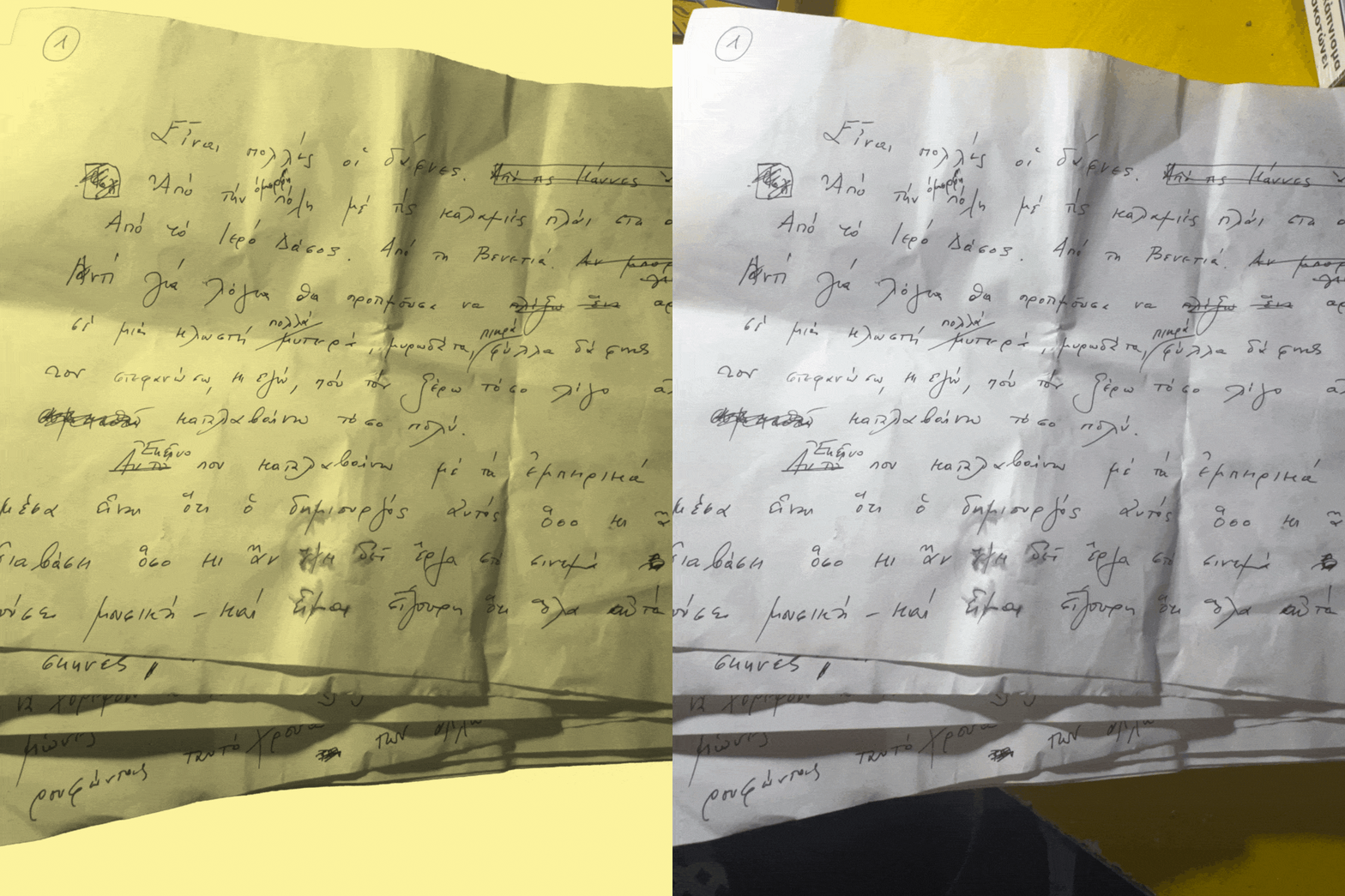
The image shows Julia’s handwritten notes on the night of the presentation. Words arrayed as entire battalions of dæmons.
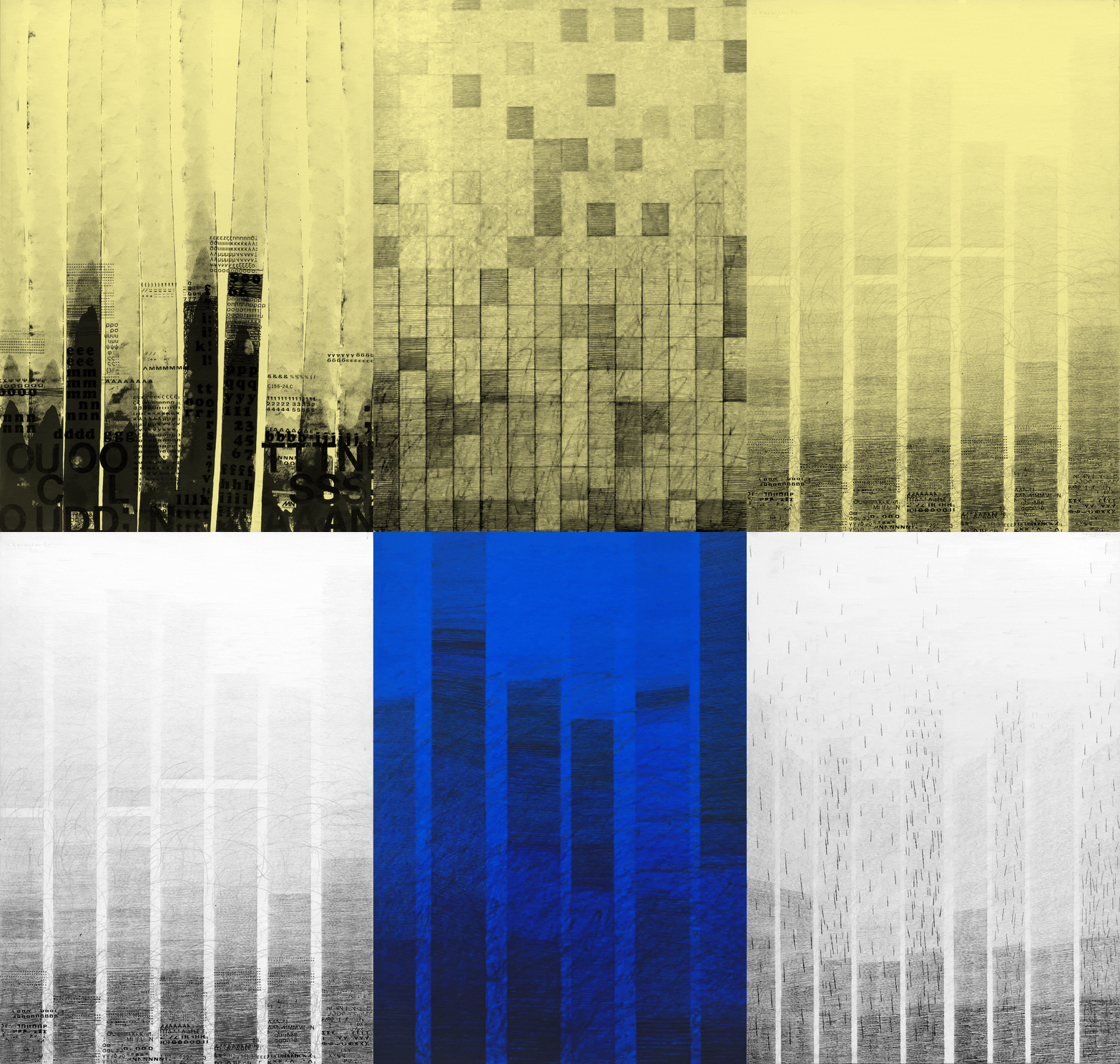
The Manuscripts body of work, embarked upon in 1974, is one of the most important series in Niki Kanagini’s output. It revolves around a stable and lasting axis: the systematic interrogation of writing as a visual, artistic act. The artist approaches writing not as a vehicle for meaning but as a realm of gesture, rhythm, and materiality to develop a personal, non-readable form of visual language.
As dissected by the poet Manto Aravantinou, “Kanagini’s painted manuscripts offer up an opportunity for communication that is both seductive and mysterious, the tenor of which lies beyond the alphabet and precedes syntax.”
Kanagini divides these works into Manuscripts, where abstract compositions dominate, and Illustrated Manuscripts, where her writing exists alongside recognisable figurative forms. What she describes as her “obsession” with the notion of writing “as a symbol of recording human thought” can be traced all the way back to early works created during her student years in London, where her engagement with the modernist, typographic, and experimental approaches of the time laid the groundwork for her later linguistic explorations.
As she herself notes: “I find a plaque of hieroglyphics and a modern neon sign equally fascinating.”
Manto Aravanitou and Niki Kanagini punctuating a text by Tina Pandi
Η ενότητα Χειρόγραφα, που ξεκινά από το 1974, αποτελεί μία από τις σημαντικότερες σειρές έργων της Νίκης Καναγκίνη. Συγκροτείται γύρω από έναν σταθερό και διαρκή άξονα: τη συστηματική διερεύνηση της γραφής ως εικαστικής πράξης. Η καλλιτέχνιδα προσεγγίζει τη γραφή όχι ως φορέα νοήματος, αλλά ως πεδίο χειρονομίας, ρυθμού και υλικότητας, αναπτύσσοντας μια προσωπική, μη αναγνώσιμη μορφή οπτικής γλώσσας.
Όπως αναλύει η ποιήτρια Μαντώ Αραβαντινού: «Τα ζωγραφικά χειρόγραφα της Καναγκίνη, μου προσφέρουν τη δυνατότητα μιας σαγηνευτικής όσο και μυστηριώδους επικοινωνίας, που το στίγμα της βρίσκεται πέρα απ’ το αλφάβητο και πριν απ’ το συντακτικό».
Η Καναγκίνη διακρίνει τα έργα της σε Χειρόγραφα, όπου κυριαρχεί η αφηρημένη σύνθεση, και σε Εικονογραφημένα Χειρόγραφα, στα οποία η γραφή συνυπάρχει με αναγνωρίσιμα εικονιστικά στοιχεία. Η «εμμονή» όπως την ονομάζει η ίδια πάνω στην ιδέα τη γραφής «ως σύμβολο καταγραφής της ανθρώπινης σκέψης», ανιχνεύεται ήδη σε πρώιμα έργα της περιόδου των σπουδών της στο Λονδίνο, όπου η επαφή με τον μοντερνισμό, την τυπογραφία και τις πειραματικές προσεγγίσεις της εποχής διαμόρφωσε το έδαφος για τις μετέπειτα γλωσσικές της διερευνήσεις.
Όπως σημειώνει η ίδια: «Με γοητεύει το ίδιο μια πλάκα με ιερογλυφικά και μια σύγχρονη επιγραφή νέον».
Translated for (and taken from) the Niki Kanagini retrospective titled An Ode to Things.
This exhibition was held at the National Museum of Contemporary Art Athens (EMΣT) in 2026 and curated by Tina Pandi.
The images show examples of Kanagini’s Manuscripts dating to the 1970s. The artist was born in 1933 and died in 2008.
A man in the apartment across the way opens the fridge, a woman slices bread on a board. Are they real people? Or people pretending to be people? Set inside the frame of this lit window, their movements are no longer absorbed in their tasks; they seem instead to be playing a role for the sake of some voyeur. It seems these ingenious little beings are so cunning that they can trick the very business they’re attending to. In which case they must be laughing at me too, for watching them. Or maybe they’re offering to enter into an agreement with their audience: we’ll let you stare at us so long as you keep your window bare too.
Vassilis Karabostolis “Part III – The Nights”, Handcrafted City: Athens Amid Yeses and Nos
Ένας άνδρας στο αντικρυνό διαμέρισμα ανοίγει το ψυγείο, μία γυναίκα κόβει ψωμί πάνω στο ξύλο. Είναι άνθρωποι ή κάποιοι που τους μιμούνται; Μέσα στο φωτισμένο κάδρο του παραθύρου, οι κινήσεις τους παύουν να είναι προσηλωμένες στο σκοπό τους και μοιάζουν να υπηρετούν ένα ρόλο για χάρη κάποιων που κρυφοκοιτάνε. Αυτά τα μικροσκοπικά και πολυμήχανα όντα είναι, φαίνεται, τόσο πονηρά, που μπορούν να κοροϊδεύουν τις ίδιες τους τις ασχολίες. Τότε θα γελάνε και με μένα που τους παρακολουθώ. Εκτός αν προτείνουν ένα συμβόλαιο με τους θεατές τους: σας αφήνουμε να μας παρατηρείτε υπό τον όρο να αφήσετε και σεις ανοιχτό το παράθυρό σας.
An excerpt from part three (“The Nights” / «Οι νύχτες») of the 1995 Vassilis Karabostolis book titled Handcrafted City: Athens Amid Yeses and Nos [Χειροποίητη πόλη: Η Αθήνα ανάμεσα στο ναι και το όχι] (Athens: Alexandria Press, third edition, pp. 187–188).
On how life becomes performance, and performance life.
Translated for (and taken from) the 2011 programme book for Dimitris Papaioannou’s Inside.
Meanwhile, peek inside the frame of this lit window:
Inside captured in a single take (by Stelios Kammitsis and Thodoris Michopoulos) on its final night (15 May 2011), looping (living on) endlessly.
Do it as a kind of meditation. And maybe keep your window bare too.
Banana falls down, no matter. Melon falls down, it’s over.
Play basketball on a tennis court and you’re bound to lose.
Seas in summer are warm, but cold in winter.
Sleeping parrotshave no need of knives.
You never ever know who will wear your jacket once you’re dead and gone.
Walk on sand and you’ll be late.
ED You know, I really like thinking up proverbs and sayings that are all my own. Often these proverbs make no sense and I get a thrill from people’s expressions when they hear them, acting like they understand when really they don’t understand at all. I’m also thrilled by the idea that one of these proverbs I’ve created might live on, still spouted by people one hundred years from now.
Efthimis Filippou
ΕΠΙΛΕΓΜΕΝΑ ΓΝΩΜΙΚΑ ΤΟΥ ΕΝΤΟΥΑΡΝΤ ΤΕΪΛΟΡ (1991–2024)
Όσο το βούτυρο λιώνει από τη ζέστη τόσο το ψωμί σκληραίνει.
Αν πέσει μια μπανάνα στο έδαφος δεν πειράζει, αν πέσει όμως ένα καρπούζι τότε πειράζει.
Καταδικασμένος όποιος παίζει μπάσκετ σε ένα γήπεδο του τένις.
Το καλοκαίρι η θάλασσα είναι ζεστή ενώ τον χειμώνα κρύα.
Ένα μαχαίρι είναι άχρηστο σε έναν παπαγάλο που κοιμάται.
Όταν πεθάνεις κανείς δεν ξέρει ποιος θα φοράει το μπουφάν σου μετά.
Αν περπατάς στην άμμο είσαι αργοπορημένος στα ραντεβού.
ΕΝΤ Ξέρετε μου αρέσει πολύ να δημιουργώ μόνος μου παροιμίες και γνωμικά. Πολλές φορές αυτές οι παροιμίες δεν βγάζουν νόημα και με ενθουσιάζει το ύφος όλων όσων τις ακούν, που συμπεριφέρονται πάντα σαν να τις καταλαβαίνουν ενώ δεν καταλαβαίνουν τίποτα. Επίσης, με ενθουσιάζει η ιδέα ότι μπορεί να μείνει για πάντα μία από αυτές τις παροιμίες που έχω δημιουργήσει και να τη λένε οι άνθρωποι εκατό χρόνια μετά.
A selection of sayings taken from the film Rosebush Pruning (2026), all written by Efthimis Filippou to be spoken by a character called Ed.
Inspired by Marco Bellocchio’s Fists in the Pocket (1965), this feature was directed by Karim Aïnouz.
Spurious proverbs and heartfelt words all translated for (and pruned from) the screenplay.
In place of overvaluing closeness: the spanning of distance. In place of history: genealogy. The close-up not as some tool for understanding or for empathy but as a means of recognition. Close reading and the anatomy of the image as an antidote to phantasmagoria. In place of twists: only turns. The lines that link our blind spots delineate – quite unexpectedly – the face of our common future.
Geli Mademli
#7 ΤΟ CLOSE-UP ΩΣ PLOT TWIST
Αντί της υπεραξία της εγγύτητας, η διάνυση της απόστασης. Αντί της ιστορίας, η γενεαλογία. Το κοντινό πλάνο όχι ως εργαλείο κατανόησης ή ενσυναίσθησης, αλλά ως μέσο αναγνώρισης. Η κοντινή ανάγνωση και η ανατομία της εικόνας ως αντίδοτο στη φαντασμαγορία. Αντί της ανατροπής, η τροπή. Οι γραμμές που ενώνουν τα τυφλά μας σημεία σχηματίζουν απρόσμενα το πρόσωπο του κοινού μας μέλλοντος.
Translated for (and taken from) an essay by Geli Mademli titled “Kinds of Close-Ups: Proximity as a Plan of Action” («Είδη κοντινών: Η εγγύτητα ως πλάνο εργασίας») written in 2025 for Plot Twist – Beyond the Sixth Sense, a special edition published for the Thessaloniki International Film Festival (TIFF66).
The flicking film still shows cinephile Hossain Sabzian (as himself) in the Abbas Kiarostami film Close-Up (1990). A flicker of confusion, a tentative hope.
Day would break in three hours. She stepped under the shower and let the hot water beat down hard. After a time, she thought of him. She turned to face the mirror – the green of her eyes had dimmed and her red hair seemed black and longer now, like seaweed gripping a rock. On the shelf under the mirror, the grey battered plastic shone in the harsh light. She reached out her hand and fingered the small buttons. Closed her eyes. And pressed REC.
●REC by Yorgos Syrmas
●1
Σε τρεις ώρες ξημέρωνε. Στάθηκε κάτω από το ντουζ κι άφησε το καυτό νερό να τρέξει με πίεση. Κάποια στιγμή τον σκέφτηκε. Γύρισε στον καθρέφτη – το πράσινο στα μάτια της είχε θολώσει, τα κόκκινα μαλλιά της έδειχναν μαύρα και μακρύτερα τώρα, σαν φύκια κολλημένα σε βράχο. Πάνω στο ράφι του καθρέφτη, το ταλαιπωρημένο γκρίζο πλαστικό γυάλιζε στο σκληρό φως. Άπλωσε το χέρι της και χάιδεψε τα μικρά κουμπιά. Έκλεισε τα μάτια. Και πάτησε REC.
Chapter One. Thursday, 15 November 2012.
Taken from the translation-in-progress of Yorgos Syrmas’ debut crime novel ●REC, published in the original Greek by Ikaros Books in 2025.
Yorgos was named Best Debut Author at the Public Book Awards 2026 for ●REC, and was shortlisted in the same category at the Anagnóstis [Reader] Literary Awards that same year.
Sample translation into English selected by the Hellenic Foundation for Books and Culture to be supported by its GreekLit programme in 2026.
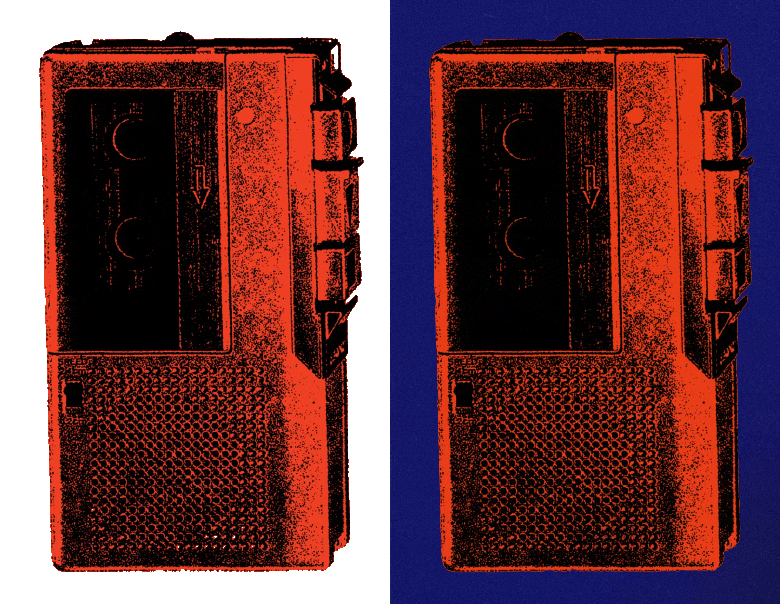
Image taken from the book cover designed by Laios Papazoglou. Dictaphone rendered primary.
[…] I did something this afternoon something secret everyone had gone for a nap I got told to go take a nap too by mum that is she said I should go nap and auntie would come by after she said auntie would come and we’d all swing by the snack bar and I said sure mum let’s all go get ice-cream after so I go and pretend I’m sleeping lay down on my bed lay like I was out cold and pressed my face deep into the pillows like I do at night but I couldn’t sleep of course because I couldn’t stop thinking about it actually it was all I could think about non-stop since yesterday non-stop seriously non-stop like this morning when I was eating breakfast I was thinking about it then too but of course he wouldn’t let me out which is just typical and so I just sat and watched TV cos it was so hot so there I was waiting in bed till they both started snoring cos I knew that when they start snoring they never wake up and when the snoring started I waited just a little longer and got up real slow so as not to wake them I passed by their open door they were sleeping on their backs with the fan on full I hadn’t put my flip-flops on so that I wouldn’t make a sound I was barefoot no flip-flops I pulled half the beads aside super carefully so that they wouldn’t bang together and make noise and slipped into the kitchen and then let them go again super carefully and the curtain swayed a bit but didn’t make any noise I went over to the door and opened it super super soft and closed it behind me super super soft then made my way down the steps it was really very hot I took the path but the paving was so hot that I ended up walking on the grass which was cool under my feet the street was deserted there was no-one about everyone must’ve been shut away at home sleeping the whole neighbourhood was taking a siesta like my parents were doing that’s what I was thinking I was the only one awake I walked over to the acacia tree and things felt better there cos there was a little shade I had a good look and I’m pretty sure I found the same thorn from yesterday this big thorn sat alongside some smaller ones [silence] I think I figured out which thorn it was I put my finger on it and pressed I pressed it and it pricked me it hurt a little I pressed a little harder and blood just bloomed a little more blood than yesterday I let my finger hang loose and the blood trickled down and a little of it dripped to the ground and a tiny bit of blood flowed round the edges of my fingernail and I saw that there was this perfect bead of blood left on the thorn and then I pressed my finger against the thorn again and it was like yesterday maybe even a little better today but yes it felt good like yesterday so very good […]
●REC by Yorgos Syrmas
ΤΜ014 / 1989-06-28 / 00:01:27–00:03:37
[…] έκανα κάτι κρυφά το μεσημέρι είχανε πέσει για ύπνο μού είχανε πει να πέσω κι εγώ για ύπνο η μαμά μού το είχε πει να πέσω για ύπνο και θα έρθει η θεία πιο μετά θα έρθει η θεία να πάμε στο αναψυκτήριο ναι μαμά τής λέω να πάρουμε παγωτό πάω κι έκανα ότι κοιμόμουν έπεσα στο κρεβάτι μου δήθεν ξερή έπεσα και έχωσα τη μούρη μου στο μαξιλάρι όπως το χώνω κάθε βράδυ αλλά εννοείται δεν κοιμήθηκα το σκεφτόμουν συνέχεια από χτες συνέχεια συνέχεια και το πρωί που έτρωγα το πρωινό πάλι το σκεφτόμουνα αλλά δεν με άφηνε ο άλλος να βγω έξω και έβλεπα τηλεόραση γιατί είχε πολλή ζέστη περίμενα στο κρεβάτι να περάσει λίγο η ώρα να αρχίσουν τα ροχαλητά που τους έχω καταλάβει όταν αρχίζουνε όταν αρχίζουνε να ροχαλίζουνε δεν ξυπνάνε ποτέ ακούω τα ροχαλητά περίμενα και λίγο ακόμα όχι πολύ και σηκώθηκα πολύ αργά για να μην τους ξυπνήσω πέρασα από την πόρτα τους κοιμόντουσαν ανάσκελα με τον ανεμιστήρα στο δυνατό δεν είχα βάλει σαγιονάρες μην κάνω θόρυβο ξυπόλυτη ήμουν δεν είχα βάλει σαγιονάρες μάζεψα τις μισές λουρίδες πολύ πολύ προσεκτικά μη χτυπήσουν μεταξύ τους και κάνουν θόρυβο πέρασα μέσα στην κουζίνα και τις ξανάφησα πολύ πολύ προσεκτικά λίγο κουνήθηκε η κουρτίνα αλλά δεν έκανε καθόλου θόρυβο πήγα στην πόρτα και άνοιξα την πόρτα πάρα πάρα πολύ σιγά την έκλεισα πάρα πάρα πολύ σιγά κατέβηκα τα σκαλιά έκανε πάρα πολλή ζέστη πήγα από το μονοπάτι και οι πέτρες ήταν ζεστές και μετά πήγα από το γρασίδι που ήτανε δροσερό στον δρόμο δεν υπήρχε κανένας θα ήταν όλοι στα σπίτια τους και θα κοιμόντουσαν όλοι στη γειτονιά σαν τους γονείς μου αυτό σκέφτηκα μόνο εγώ ήμουν ξύπνια πήγα στη γαζία κάπως καλύτερα ήταν γιατί είχε και λίγο ίσκιο κοίταξα νομίζω βρήκα το αγκάθι αυτό που ήταν και εχτές ήτανε ένα μεγάλο δίπλα σε κάτι πιο μικρά [σιωπή] νομίζω το κατάλαβα ποιο ήταν το αγκάθι έβαλα πάνω το δάχτυλό μου πίεσα πίεσα και με τρύπησε πόνεσε λίγο πίεσα λίγο ακόμα κι έτρεξε λίγο αίμα πιο πολύ από εχτές μετά το γύρισα προς τα κάτω το δάχτυλο και το αίμα έτρεξε και έπεσε λίγο κάτω και λίγο αίμα έτρεξε πάνω στο δάχτυλο και χώθηκε μέσα στο νύχι μου και πάνω στο αγκάθι είδα που είχε μείνει λίγο αίμα και το ξαναπίεσα μετά το δάχτυλο στο αγκάθι και ήτανε έτσι όπως χτες λίγο καλύτερα ήταν σήμερα αλλά ήτανε πάλι όπως χτες ωραία […]
First documented recording of the voice of Myrsíni Myloná.
Taken from the translation-in-progress of Yorgos Syrmas’ debut crime novel ●REC, published in the original Greek by Ikaros Books in 2025.
Yorgos was named Best Debut Author at the Public Book Awards 2026 for ●REC, and was shortlisted in the same category at the Anagnóstis [Reader] Literary Awards that same year.
Sample translation into English selected by the Hellenic Foundation for Books and Culture to be supported by its GreekLit programme in 2026.
Image by Miwasatoshi, pricked and bloomed into blood red.
Daybreak Christmas Eve her waters broke. An ambulance birth. Her joy brought tears. Christmas Day she is returned to find a festive cot inside her cell.
Yorgos Syrmas
Παραμονή ξημέρωμα έσπασαν τα νερά. Γέννησε στο ασθενοφόρο, πόση χαρά, την έπιασαν τα κλάματα. Ανήμερα τη γύρισαν στη Θήβα – βρήκε μια κούνια στολισμένη στο κελί της.
Twenty-six (Greek) words to tell a story, commissioned from Yorgos Syrmas by ελculture.gr to mark the holiday season in the run-up to (twenty-)twenty-six.
First published online on Christmas Eve in twenty-twenty-five.
Image by Cristina Gottardi, selected by ελc to accompany all eight commissioned flash fictions: a bold, expectant form set in a blanket-blankness broken only by a cot of sorts.
Translated (using twenty-six English words) for the love of it (and for the love of him).
Whisper, whispering waves… I have hope – hope that you know and can tell me: My life’s one love is way out there, drilling deep for oil Will he return to me from the sea’s embrace?
I just put our baby to bed Moonlight streams in silver, bathes her cradle Send me quiet word of him (how else am I to know?) Whisper it, whisper, oh waves…
This night goes on (and on), the moon roams far away A distant breeze sweeps over the Caspian sea-blue Oh waters, hurry, please… I long for my love Waves, break the good news (how my heart races!)
Swathes of blue, give my love safe passage Let him come again, smooth-browed, resplendent For the sons of Absheron, of our golden land Oftentimes return in gleaming glory
Whisper, whispering waves… I have hope – hope that you know and can tell me: My life’s one love is way out there, drilling deep for oil Will he return to me from the sea’s embrace?
I just put our baby to bed Moonlight streams in silver, bathes her cradle Send me quiet word of him (how else am I to know?) Whisper it, whisper, oh waves…
An Azerbaijani song sung by Şövkət Ələkbərova
Pıçıldaşın, pıçıldaşın, ləpələr Bəlkə mənə bir sözünüz var sizin Buruq qazır mənim ömür yoldaşım Qayıdırmı qucağından denizin?
Körpemizi yatırmışam indice Beşiyine Ay nurunu sepeler Sevgilimden xeber verib gizlice Pıçıldaşın, pışıldaşın, lepeler
Gece keçir Ay dolanıb üfüqde Göy Xezerin sinesinde meh esir Ah tez olun darıxıram, ey sular Müjde verin seven qelbim telesir
Mavi sular sevgilime yol verin O qayıtsın alnı açıq üzü ağ Çünki qızıl Abşeronun oğlunda Bir adetdir zeferlerle qayıtmaq
Pıçıldaşın, pıçıldaşın, ləpələr Bəlkə mənə bir sözünüz var sizin Buruq qazır mənim ömür yoldaşım Qayıdırmı qucağından denizin?
Körpemizi yatırmışam indice Beşiyine Ay nurunu sepeler Sevgilimden xeber verib gizlice Pıçıldaşın, pışıldaşın, lepeler
Translated for the love of it.
This Azerbaijani song – “Whisper, Waves” [“Pıçıldaşın, Ləpələr”] – was recorded by the legendary singer Şövkət Ələkbərova (1922–1993), likely during the 1960s.
The music is by Andrey Babayev (1923–1964).
The lyrics are by the poet İslam Səfərli (1923–1974).
Discovered during team research for the Opening Ceremony of the First European Games held in Baku, on the shores of the Caspian, in 2015 – that is, for a work titled Origins, conceived and directed by Dimitris Papaioannou (in which this song did not appear, but its beauty is hard to forget. How my heart races!).
The image – snapped on said shores of the Caspian on 13 March 2017 (early afternoon) – slowly fades into full colour from yellow. “Full colour” here means a panoply of greys, with but the faintest bruise of sky-blue breaking through (near the top).
Consider “whisper ⋮ waves” alongside two other dubitanda – “agleam ⋮ bereft” and “listing ⋮ sorrow” – to find three figures calling out to various seas (Aegean, Caspian, otherworldly), aching for loves (child or parent or spouse) beyond reach.
A triptych of longing (via Kitsopoulou and Cavafy and Səfərli):
waiting this whole night through… one ear listing always to the wind… whisper it, whisper, oh waves…
These three translations informed one another (you can spot the ways).
– Yes? Yes? Yes? Yes? – Hey. Hey, can you hear me? – Yes? – Want to come over? – Yes? Where? How do I get there?
– In 150 metres, turn right. – Yes? – In 120 metres, turn left. In 70 metres, make a u-turn. – Yes? – In 221 metres, turn right.
– Yes? Hang on… I’m lost. – You’re on your way. Coming? – Yes? – In 180 metres, turn right. In 80 metres… …turn right again. In 50 metres, go straight on.
– I’m at your door. – Come up. – It won’t open. – Don’t force it. Push gently.
– Στα 150 μέτρα, στρίψε δεξιά. – Ναι; – Στα 120 μέτρα, στρίψε αριστερά. Στα 70 μέτρα, κάνε αναστροφή. – Ναι; – Στα 221 μέτρα, στρίψε δεξιά.
– Ναι; Κάτσε… Χάθηκα. – Έρχεσαι. – Ναι; – Στα 180 μέτρα, στρίψε δεξιά. Στα 80 μέτρα… …στρίψε πάλι δεξιά. Στα 50 μέτρα συνέχισε ευθεία.
– Είμαι στην πόρτα σου. – Ανέβα πάνω. – Δεν ανοίγει. – Δεν θέλει δύναμη. Σπρώξε μαλακά.
This disconnected dialogue reminds me of a journey once made to reach a door in Athens.
Compare with the fragment below, by the Persian poet Rumi (translated by Coleman Barks and Kadio Kolymva respectively):
I have lived on the lip of insanity,
wanting to know reasons, knocking on a door.
It opens. I’ve been knocking from the inside!
Για χρόνια χτυπούσα την πόρτα κι είδα όταν άνοιξε πως χτυπούσα από μέσα.
Translated for (and taken from) the 2007 subtitles made to accompany the digital versatile disc of the stage work Two by Dimitris Papaioannou, directed for the screen by Athina Rachel Tsangari.
The Rumi fragments appear in the DVD booklet.
The black-and-white image (now popping with a blue sky) was collaged by Dimitris to be the final (performance) image of this same booklet.
During the sexual act, […] all bodies retreat into themselves, withdrawing into that most unadulterated form of all personal silences: pleasure.
Yorgos Himonas
Kατά την ερωτική του δράση, […] το κάθε σώμα αποχωρεί, αποσύρεται στην πιο απόλυτη δική του σιωπή, που είναι η ηδονή.
Excerpt from an article by Yorgos Himonas titled “The Desolate Loneliness of Men” [«Η αβοήθητη μοναξιά του άντρα»] first published in Prosopa, a section of the Greek Ta Nea newspaper.
Translated for (and taken from) the 2007 booklet made to accompany the DVD of the stage work Two by Dimitris Papaioannou, directed for the screen by Athina Rachel Tsangari.
Images by Peter Hujar – Orgasmic Man I, II & III (1969). Eyes glazed.
Isolated from all other human bodies, never consciously enjoying a blood connection with another body as does a female of the species with her foetus, nor even experiencing the outflow of blood, as she does, unless his body is subjected to violence, the male body is left solitary…
Yorgos Himonas
Αποκλεισμένος από το άλλο ανθρώπινο σώμα, μη έχοντας ποτέ καμιά ενσυνείδητη συγκοινωνία αίματος με το άλλο σώμα, όπως έχει η γυναίκα με το κύημά της – ούτε καν έξοδο αίματος, όπως εκείνη, παρά μονάχα όταν το σώμα του εκτεθεί στη βία, έχει ένα σώμα μοναχικό…
Excerpt from an article by Yorgos Himonas titled “The Desolate Loneliness of Men” («Η αβοήθητη μοναξιά του άντρα») first published in Prosopa, a section of the Greek Ta Nea newspaper.
Translated for (and taken from) the 2007 booklet made to accompany the DVD of the stage work Two by Dimitris Papaioannou, directed for the screen by Athina Rachel Tsangari.
Looping image shows Nikos Dragonas and Yiannis Nikolaidis running and reaching endlessly to spark a touch. Taken from “TWO / DIRECTIONS” (a segment of Dimitris’ Two).
HAEMATA Dimitris Kalafatis & Yorgos Simopoulos: A Correspondence (1990–1993)
Dimitris Kalafatis, a man of around 40, gashes his neck by accident in July 1989. The quite average wound that opens never heals. Yorgos Simopoulos is his closest friend at the time.
The letters exchanged between these two men over a three-year period (1990–1993) were found in pristine condition by Kalafatis’ daughter, Anna Kalafati. Their perfectly legible handwriting meant the documents could be read without any difficulty. All were written in black ballpoint pen, apart from two.
The subject matter of this written exchange does not provide a snapshot of the socio-political climate of the times in which it took place. Descriptions of places and events are often inaccurate. This may be due to the effects of certain prescription drugs or to an intentional misrepresentation of events, conversations, and dates, however neither scenario has been proven thus far.
The two men stopped corresponding suddenly in December 1993 for reasons unknown. Kalafatis died on 14 April 2001, Simopoulos four days later.
Ο Δημήτρης Καλαφάτης, σαράντα περίπου ετών, σκίζει κατά λάθος τον λαιμό του τον Ιούλιο του 1989. Η μέτρια πληγή που δημιουργείται δεν κλείνει. Ο Γιώργος Σιμόπουλος είναι επιστήθιος φίλος του εκείνη την περίοδο.
Τα γράμματα που αντάλλαξαν οι δύο άντρες την τριετία 1990–1993 βρέθηκαν ανέπαφα από την κόρη του Καλαφάτη, την Άννα Καλαφάτη. Οι γραφικοί χαρακτήρες τους ήταν απόλυτα ευανάγνωστοι, συνεπώς δεν δυσκόλεψαν καθόλου την ανάγνωση των χειρόγραφων. Όλα ήταν γραμμένα με μαύρο στυλό διαρκείας, εκτός από δύο.
Η θεματολογία της γραπτής αυτής συνομιλίας δεν σκιαγραφεί τον πολιτικό ή τον κοινωνικό χαρακτήρα της εποχής όπου έλαβε χώρα και οι περιγραφές τόπων και περιστατικών πολλές φορές είναι ανακριβείς. Αυτό μπορεί να οφείλεται σε παρενέργειες κάποιας φαρμακευτικής αγωγής ή σε εσκεμμένη αλλοίωση γεγονότων, διαλόγων και ημερομηνιών, αλλά τίποτα από τα δύο δεν έχει εξακριβωθεί μέχρι σήμερα.
Η επικοινωνία των δύο αντρών σταμάτησε αιφνίδια τον Δεκέμβριο του 1993 για άγνωστους λόγους. Ο Καλαφάτης πέθανε στις 14 Απριλίου του 2001 και ο Σιμόπουλος τέσσερεις μέρες αργότερα.
“Haemata” is blood and lots of it. Think haemorrhage and stigmata. Accent on the em.
Written by Efthimis Filippou in 2014 for the Vasistas theatre group.
Directed by Argyro Chioti to première as Emata / Bloods at Onassis Stegi.
Translated for the love of it. Later appeared as Haemata in the Noon book collection.
The image (shot by Vassilis Makris) shows blood underfoot. Blood that seeps suddenly.
These feet belong to Efthimis Theou – in black(red) shoes – and Eleni Vergeti – in white(red) shoes.
On the warm and rainy night of 7 July 1994, a 44-year-old woman suffered a tragic accident. Losing control of the moped she was riding, this woman was seriously injured when she fell on a sharp object lying on the tarmac that pierced her liver. She was immediately taken to hospital, in a coma. All the days she was there, the man she loved more than anything else in her life was constantly by her side. A man of 62, plump and in good health. Each night, the man would lay down and sleep alongside her on the hospital bed. For those few hours, until dawn, it seemed like they were both in a coma, or like they were both just sleeping. The night nurses never woke him, they would only cover him up if some foot of his slipped out from under the white hospital blanket. This is the final conversation between the organs and limbs of the man and woman’s bodies, as recorded by medical equipment a little before she died of a heart attack on 18 July 1994. This re-enactment of the conversation stays completely faithful to the one that actually took place.
LIVER by Efthimis Filippou
Το βροχερό και ζεστό βράδυ της 7ης Ιουλίου του 1994, μια γυναίκα 44 ετών είχε ένα τραγικό ατύχημα. Το δίκυκλο στο οποίο επέβαινε έχασε την πορεία του και η γυναίκα τραυματίστηκε σοβαρά καθώς, πέφτοντας στο οδόστρωμα, ένα αιχμηρό αντικείμενο διαπέρασε το συκώτι της. Μεταφέρθηκε άμεσα στο νοσοκομείο σε κώμα. Όσες μέρες παρέμεινε εκεί, ήταν συνεχώς δίπλα της ο άντρας που αγάπησε όσο τίποτε άλλο στη ζωή της. Ένας άντρας 62 ετών, υγιής και εύσωμος. Κάθε βράδυ αυτός ο άντρας ξάπλωνε δίπλα της στο κρεβάτι του νοσοκομείου και κοιμόταν μαζί της. Αυτές τις λίγες ώρες, μέχρι να ξημερώσει, έμοιαζαν σαν να ήταν και οι δύο σε κώμα ή σαν να κοιμούνται απλώς και οι δύο. Οι νυχτερινές νοσοκόμες δεν τον ξυπνούσαν, μόνο τον σκέπαζαν αν τύχαινε κάποιο πόδι του να βγει έξω από την άσπρη νοσοκομειακή κουβέρτα. Αυτή είναι η τελευταία συζήτηση ανάμεσα στα όργανα και στα μέλη των σωμάτων του άντρα και της γυναίκας, όπως καταγράφηκε στα ιατρικά μηχανήματα λίγο πριν αυτή πεθάνει στις 18 Ιουλίου του 1994 από ανακοπή καρδιάς. Η αναπαραγωγή της συνομιλίας είναι απόλυτα πιστή στην πραγματική.
When organs and limbs talk (and act).
Excerpt from Liver by Efthimis Filippou (2020) – the story’s set-up.
Translated from the Greek to be performed on stage / on screen in English (with some German dialogue) at the Greek National Opera / on GNO TV.
Performed the Ictus Ensemble alongside Angeliki Papoulia and Christos Passalis, who also directed.
Maria Dourou and Yorgos Stefanakos made guest appearances as the 44-year-old woman and the 62-year-old man respectively.
The image, collaged from photographs shot by Andreas Simopoulos, shows Yorgos in unceasing silent vigil over a comatose Maria as their body parts chat away. (In red is Angeliki, playing the woman’s liver.)
In 2022, this English translation would also be included in the Noon collection.
“Do kisses blacken tears” refers to the Duchess of Plaisance (Sophie de Marbois-Lebrun, 1785–1854) and is also an Athens metro station (built on land once hers) that took her name.
The images show (a) the sign at said station and (b) the actress Elli Afentaki performing as the French socialite in a 1916 play of her life.
what’s this thing, oh this thing they call love? oh this thing, what’s this thing… secretly driving our hearts longed for by all it has touched
what’s this thing, oh this thing they call love? oh this thing, what’s this thing… tears and laughter, sunshine and rain our life’s end, its beginning again
oh no never were there any lips that could say it once then not say it again for good…
what’s this thing, oh this thing they call love? oh this thing, what’s this thing… that makes us all sing the same tune: I love you, I love you, I love you…
Sophia Loren & Tonis Maroudas
ΤΙ ΕΙΝ’ ΑΥΤΟ ΠΟΥ ΤΟ ΛΕΝΕ ΑΓΑΠΗ
τι είν’ αυτό που το λένε αγάπη; τι είν’ αυτό, τι είν’ αυτό… που κρυφά τις καρδιές οδηγεί κι όποιος το ’νιωσε το νοσταλγεί
τι είν’ αυτό που το λένε αγάπη; τι είν’ αυτό, τι είν’ αυτό… γέλιο, δάκρυ, λιακάδα, βροχή της ζωής μας και τέλος κι αρχή
ποτέ, ποτέ κανένα στόμα δεν το ’βρε και δεν το ’πε ακόμα…
τι είν’ αυτό που το λένε αγάπη; τι είν’ αυτό, τι είν’ αυτό… που σε κάνει να λες το σκοπό σ’ αγαπώ, σ’ αγαπώ, σ’ αγαπώ…
Sophia Loren longs after Alan Ladd across a table laid with wine (sipped), olives (toothpicked), cigarettes (stubbed). Tonis Maroudas strums and sings along, tenderly too.
Clip taken from Boy on a Dolphin (1957), directed by Jean Negulesco and shot on the island of Hydra (a Hollywood first for Greece).
Music by Takis Morakis. Lyrics by Danae Stratigopoulou and Yannis Fermanoglou. Song first recorded by Keti Denis (no relation to Cathy Dennis, sadly) in 1955.
Movingly used (as cinematically sung by Loren and Maroudas) by Yorgos Lanthimos over the closing credits of his 2015 film The Lobster, over black.
The voice of Danae, who co-wrote (or perhaps wrote?) the Greek lyrics here, is heard earlier in The Lobster – see the dubitandum “only ⋮ outwardly” for more details (in list below).
The Lobster screenplay (written by Yorgos with Efthimis Filippou) translated from the Greek to be shot in English (their own English-language debut). Song lyrics translated for the love of it.
Before he gets the chance to properly bloom, he wilts upon contact with a reality that is brutal and anything but benevolent. Today, a young man must come of age before his time! And this is an early passing of his youth. He must taste, as soon as possible, the forbidden fruit and be cast out in order to face down the world in which he is called upon to live. But it is a bumpy landing, more often than not. Most youths are not yet ready when forced to adapt, and so fall victim to all those avenues that promise them escape and redemption. And this is a premature death.
Stelios Lydakis
Πριν προλάβει καλά-καλά να ανθίσει μαραίνεται στην πρόσκρουσή της με μία πραγματικότητα τραχιά και καθόλου ευνοϊκή. Σήμερα ο νέος πρέπει να μεγαλώσει πριν την ώρα του! Και αυτός είναι ένας πρώιμος θάνατος της νιότης του. Πρέπει να δοκιμάσει, όσο γίνεται γρηγορότερα, τον απαγορευμένο καρπό και να υποστεί την έξωση για να ανταποκριθεί στον κόσμο που καλείται να ζήσει. Όμως η προσγείωση είναι ανώμαλη τις περισσότερες φορές. Πολλοί νέοι δεν είναι ώριμοι για την επιτακτική προσαρμογή κι έτσι γίνονται θύματα όλων των μέσων που τους υπόσχονται φυγή και λύτρωση. Και αυτό είναι ένας πρόωρος θάνατος.
Extract from a review by Stelios Lydakis of the performance Memorial for Youths Who Died Too Soon by Costas Evangelatos (1987).
Translated for (and taken from) the essay “Our Army of Lovers” by Mare Spanoudaki that appeared in Issue One of Octopus, the EMΣT magazine.
The image shows the actor Takis Loukatos in Evangelatos’ performance, sprawled out in the vein of Phocion Roque’s fallen warrior relief at the Tomb of the Unknown Soldier on Syntagma Square in Athens. Flesh not stone rendered vulnerable.
Queer performativities emerged from a point of disconnect and deep-rooted schism from traditional (gay) codes and aesthetics, but this ‘emotive turn’ was only made possible once artists adopted irony, volatility, and ‘monstrosity’ as tools for overturning older ‘incarnations’ and aesthetic performances of the body.
[…]
Political strategies for the ‘normalisation’ of lesbian and gay lives in accordance with prevailing heteronormative values (monogamy, marriage, family) constitute a move away from the ‘freer’ queer biopolitics of the 1980s and ’90s, delineating a powerful line of resistance between the ‘diseased’ past and the ‘healthy’ present of a new existential mode within ‘heteronormative tyranny’ that seeks to present homosexuals as normal persons integrated into the ‘realm of dominant ideology.’
George Sampatakakis
Οι κουίρ παραστασιακότητες προέκυψαν σε ένα σημείο αποσύνδεσης και ριζικού σχίσματος από τους παραδοσιακούς (gay) κανόνες και αισθητικές, αλλά αυτή η «συγκινησιακή στροφή» κατέστη δυνατή μόνο όταν οι καλλιτέχνες υιοθέτησαν την ειρωνεία, την αστάθεια και την «τερατωδία» ως εργαλεία αναίρεσης των παλιών «σωματοποιήσεων» και αισθητικών επιτελέσεων του σώματος.
[…]
Οι πολιτικές στρατηγικές «κανονικοποίησης» των λεσβιακών και γκέι ζωών σύμφωνα με κυρίαρχες ετεροκανονικές αξίες (της μονογαμίας, του γάμου και της οικογένειας) συνιστούν μια απομάκρυνση από τις περισσότερο «ελεύθερες» κουίρ βιοπολιτικές του 1980-1990, ορίζοντας μια ισχυρή αντίσταση μεταξύ του «μολυσμένου» παρελθόντος και της «υγιούς» νέας κατάστασης της ύπαρξης μέσα στην «ετεροκανονική τυραννία», που θέλει να παρουσιάζει τους ομοφυλόφιλους ως κανονικούς και εναρμονισμένους στο «πεδίο της δεσπόζουσας ιδεολογίας».
Two extracts from the book HIV / AIDS: Theatre and Trauma in Greece (2021) by George Sampatakakis (pp. 35 & 123).
Translated for (and taken from) the essay “Our Army of Lovers” by Mare Spanoudaki that appeared in Issue One of Octopus, the EMΣT magazine.
The image shows the performers Christina Karagianni, Christina Reinhardt, and Haris Doumouras in Nova Melancholia’s Sebastian (2024).
Performing with them (projected): moving images from Le Sang d’un poète (The Blood of a Poet) by Jean Cocteau.
One small part of a layering of sources to create a queer performative palimpsest.
Remainders, nestled close, milling about, together pressed.
video made for the DIVERSITY FESTIVAL
Post-party balloons shot at Watermill.
This video was created in 2011 for the Diversity Festival – “We, the Other” [«Εμείς, ο άλλος»] – held in Athens and curated by its artistic directors Eleni Roumpani and Gerasimos Evangelatos.
It uses footage shot at the Watermill Center in the Hamptons (NY) the previous July, when a participant of Robert Wilson’s Summer Program, in the calm after the Annual Summer Benefit.
These white balloons were remainders, nestled close, milling about, together pressed. The Festival logo come to life.
K.BHTA kindly (sweetly) supported the Festival by letting his track “The Kid” be used – an early draft of music he had written for the Dimitris Papaioannou staged installation Inside that same year.
Medea, twice barbarian – in lineage and in love. […]
Now she withdraws deeper and deeper into the darkness that is love – love must contain darkness if the absence of the other is to remain unseen; the barbarian love of Medea must have contained great darkness since Jason was never with her: not now, and so not ever. But she was always there, she will be there till the end […]; she never emerged from her darkness – and her ultimate act of love towards Jason is to violently force him to face her inside the pain he feels for his murdered children. She is not to blame, she has no other means – there is no other emotion of his to use: his pain for his children is her final, her sole contrivance to yoke him into a most tortured and most true (for no other truth remains in their marriage) union with her. She does not care. Jason enters into darkness.
…the fundamental rule that governs and gives structure to Greek thought and Greek art [is] due measure. When considering this concept, we must fully comprehend the way in which this due measure is utilised and applied by Greek artists – for whom due measure means not constriction, curtailment, or inhibition; it means, above all else, danger: to make measured that which is beyond measure.
Greek tragedy is the sole literary form in the history of art that manages – at least with such clarity, such logic – to walk the agonisingly fine line between (and to combine) the cosmos and chaos, order and anarchy – and moreover to do so while placidly hiding its anguish behind the grand, robust forms of its structures…
Yorgos Himonas
…ὁ θεμελιώδης κανονισμός ποὺ διέπει καὶ οργανώνει την ελληνική σκέψη καὶ την ελληνική τέχνη [εἶναι] τὸ μέτρο. Μὲ τον όρο, νὰ εννοήσουμε πλήρως τὸν τρόπο χρήσης, ἐφαρμογῆς αύτοῦ τοῦ μέτρου από τὸν Ἕλληνα δημιουργό – γιὰ τον ὁποῖο μέτρο δὲν σημαίνει συμπίεση, ἀναχαίτιση, ἀπαγόρευση· σημαίνει προπάντων κίνδυνο: νὰ έπιβάλει μέτρο σ᾽ ἐκεἶνο ποὺ δὲν ἔχει μέτρο.
Ἡ ἑλληνικὴ τραγωδία εἶναι ὁ μοναδικός – τουλάχιστον τόσο καθαρά, τόσο λογικά – στὴν ἰστορία τῆς τέχνης λόγος ποὺ ἐπιτυγχάνει αὐτὴν τὴν ἀγωνιώδη άκροβασία (καὶ συνεργασία) ἀνάμεσα στὸν κόσμο καὶ στὸ χάος, στὴν τἀξη καὶ τὴν ἀναρχία – καὶ μάλιστα κρύβοντας ἀτάραχα τὴν ἀγωνία του, πίσω ἀπὸ τοὺς μεγάλους, ἁδροὺς ὄγκους τῶν κατασκευῶν του…
Text drawn from part one of Yorgos Himonas’ introduction to his iconic 1989 modern Greek version of Euripides’ Medea.
Translated for (and taken from) the 2008 printed programme created for the Athens performances of the stage work Medea2 by Dimitris Papaioannou.
The image, shot by Alexandros Niagos, shows Nikos Alexiou’s masterfully measured (paper-walled, water-floored) set placed – most delicately – at the Athens Epidaurus Festival (nestled inside Peiraios 260’s Hall H).
black mud, soft wet and thick white arms, hairy fat and stiff tree with little purple flowers on branches soaring high
secretly we water it with water, milk and sperm so that there’s shade in early morn at dawn in which the dog can sit and lick most carefully its belly and both ears
so that we too can lick ourselves when you yourselves head off can sit and stay out late just like two mountains or two moons can sit and say it cannot be or can it be? who can it be?
it cannot be, or can it be? who can it be? it cannot be, or can it be? who can it be? it cannot be, or can it be? who can it be? it cannot be, or can it be? who can it be? let it be us or else it cannot be nobody ever.
Efthimis Filippou
ΚΕΡΚΙΣ Η ΚΕΡΑΤΙΝΟΕΙΔΗΣ, ΚΟΥΤΣΟΥΠΙΑ
λάσπη μαύρη, μαλακή και υγρή και πηχτή χέρια άσπρα τριχωτά και χοντρά και σκληρά δέντρο με άνθη μωβ μικρά και κλαδιά ως ψηλά
το ποτίζουμε κρυφά γάλα, σπέρμα και νερά να έχει ίσκιο το πρωί την αυγή το σκυλί για να γλείφεται καλά στην κοιλιά, στα αυτιά
να γλειφόμαστε κι εμείς όταν φεύγετε εσείς να καθόμαστε ως αργά, δυο φεγγάρια, δυο βουνά και να λέμε δεν μπορεί, ή μπορεί, ποιος μπορεί?
δεν μπορεί, ή μπορεί, ποιος μπορεί; δεν μπορεί, ή μπορεί, ποιος μπορεί; δεν μπορεί, ή μπορεί, ποιος μπορεί; δεν μπορεί, ή μπορεί, ποιος μπορεί; ή εμείς, ή κανείς δεν μπορεί ποτέ.
Song lyrics written by Efthimis Filippou for Larry Gus (Panagiotis Melidis).
Song released on DFA Records (New York) in 2019 as a vinyl single.
Translated from the Greek to accompany the music video directed by Matvey Fiks and released in 2024.
Efthimis notes:
“The lyrics for ‘Cercis’ are about how a Judas tree was transported from Athens to the island of Hydra, where it was planted alongside some (deathless) agaves. No-one knows if this plant is still alive, or what condition it’s in. The lyrics for ‘Cercis’ express my love for Yorgos – this love also inspired Panagiotis, who set them to music.”
[«Οι στίχοι της “Κουτσουπιάς” περιγράφουν τη μεταφορά μιας κουτσουπιάς από την Αθήνα στην Ύδρα και τη φύτευσή της στον κήπο του Γιώργου δίπλα στους αθάνατους. Κανείς δεν ξέρει αν υπάρχει ακόμα ζωντανό αυτό το φυτό και σε τι κατάσταση βρίσκεται. Οι στίχοι της “Κουτσουπιάς” εκφράζουν την αγάπη μου στον Γιώργο που αποτέλεσε την έμπνευση και στον Παναγιώτη που τους μελοποίησε».]
Between two hills, beyond a river and beside a temple of luck, ancient Athenians ran their races. Once outside the city walls, today this stadium lies bang in the heart of a vast urban sprawl.
A place for all Athens (“Panathenaic”) and beautifully marbled (“Kallimarmaro”), the stadium was rebuilt by a Zappa (Evangelos not Frank) to host the first modern Olympic Games in 1896. Here too lies the finish line of the classic marathon, which sets out from a town some 26 miles outside Athens that gave the race (also run around the world) its name.
The river, now hidden under a road, still runs its course. And the city still runs its race. In the heat of the day, tourists come take victory laps around the stadium’s bottom track while locals run along the horseshoe rim at its top. In the cool of the night teenagers break in and bring the love, sitting on the steps to drink and kiss. Hearts beat faster here, breathless from sport or love or wonder.
“The Race” traces the pulse of this place. The blood-pumping thrill of the chase to get higher, faster, harder. And the desire to get far from it all: to escape, from yourself or with someone else.
The track inspired a loving video-look at all kinds of athletes as they train across the city of Athens. It’s got it all: a veritable alphabet of sports (archery, boxing, crossfit, dance, equestrian, fencing and golf), pole-dancers and ping-pong players, horse riders and rock climbers, contenders under water (rugby) and on wheels (skateboarding), sporting women and men in all their sweat-steaming, heart-racing beauty.
“The Race” is Σtella’s second release on Arbutus Records. Run with it.
thoughts on THE RACE, a song by Σtella
Video directed by Σtella.
Hearts beat faster here, breathless from sport or love or wonder.
Text written for the release of Σtella’s second single for her Canadian label Arbutus Records in 2019, off her third album The Break.
The video is directed by Σtella, who co-edited it with Isi Charbila.
Shot by Isi Charbila, Petros Ioannidis, and Yorgos Mufatsa Athanasiou across Athens in the spring of 2019.
It features sporting women and men in all their sweat-steaming, heart-racing beauty:
The sea folded a sailor into her deep. His mother —how could she know?— goes and lights before the Virgin, at her icon, a tall candle for his quick return and for kind skies— one ear listing always to the wind. She prays. She implores. Meanwhile the likeness listens, solemn and in sorrow, knowing he will never come, her longed-for son.
Personal and ongoing translation project – another English take on Cavafy (to add to the countless many). Translated for the love of it.
Choice of English words inevitably affected by the music of Lena Platonos, the voice of Yiannis Palamidas, and the visuals of Dimitris Papaioannou, from their 2010 staged work K.K. featuring thirteen poems by Constantine Cavafy.
Dimitris shot and edited this footage, setting three silhouettes (dressed in black, top to toe) against the sea, alongside an arm (mechanical) desperately plunging the depths.
Consider “listing ⋮ sorrow” alongside two other dubitanda – “agleam ⋮ bereft” and “whisper ⋮ waves” – to find three figures calling out to various seas (Aegean, Caspian, otherworldly), aching for loves (child or parent or spouse) beyond reach.
A triptych of longing (via Kitsopoulou and Cavafy and Səfərli):
waiting this whole night through… one ear listing always to the wind… whisper it, whisper, oh waves…
These three translations informed one another (you can spot the ways).
A black-wrapped body toys with artefacts – cyan gel, smoke puff, bulb dangle, nylon sliver, perspectival mirror – against an industrial whiteness.
A photographic lens snatches instants and instances of movement – gravities and air flows and breaths made manifest, Bacon-esque distortions of bodily form, streak traces of light – as only it can.
A seemingly real-time editing process reanimates one-thousand-plus images before our eyes to make a post-engineered stop-motion choreography.
Three outlooks – a performer interacting with objects and space across time in illusory ways, captured by an active and shifting photographer in flashes that are then layered and cut anew by an editor – combined to create a sc(re)enic event.
The playful post-production process has ultimate power over the proceedings. Elements are isolated, resized and reframed, glitched and swiped and spliced, intensified, contrasted and collapsed. We hear the keyboard tap of the creator, correlations coughed into place. See windows into windows hiding windows over windows chasing windows.
Singular objects, from myriad places and moments, are conjured into the construct of a singular on-screen timeline and setting. Other bodies are recomposed from fragments of the same body, its chorus of movements multiplied, remixed and reimagined. Actions are set free from their own times and spaces to dance in concert.
Light and illusion, space and time made continuous across timeframes and perceptions, in parallel with actions, movements and positions.
L.I.S.T./ing – light and illusion, space and time, made motion.
thoughts on L.I.S.T./ING by Michalis Theophanous
A video dance piece.
A text written for the video dance work L.I.S.T./ing by Michalis Theophanous in 2021.
Conceived, directed, and performed by Michalis, photographs by Nikolas Louka were edited together by Arianna Balestrieri. The sound design is by K.BHTA.
See windows into windows hiding windows over windows chasing windows.
give me a coin I’ll make a fortune out of nothing at all I’ll go through deserts but you won’t see me crawl and if I meet you on the way I’ll be whole
somebody said you had to leave so you packed up your bag went overseas out to Libya land you started off by making holes in the sand
LIBYA by Σtella
A music video.
Blue-clouded sky becomes desert dreamscape.
Video created for the song “Libya” off Σtella’s debut self-titled album (on her Greek label Inner Ear Records) in 2015. Rejected by the label, accepted by the artist.
This is it. The moment of truth. Isn’t it wonderful?
Efthimis Filippou & Yorgos Lanthimos
Έφτασε η κρίσιμη στιγμή. Δεν είναι καταπληκτικό;
Teaser (isn’t it wonderful?) for the 2024 feature film Kinds of Kindness written by Efthimis Filippou and Yorgos Lanthimos, and directed by the latter.
Screenplay translated from the Greek to be shot in English.
water / birth / babe / floating with eyes open / without remembrance but with knowledge / DROWNING IN A TEASPOON OF WATER / little one / first in first dive first swim / armbands, grandmas, grandpas / sea pebbles for toys, sea urchins for food / dive under / holding our breath, a contest, counting up / one two three four five six seven eight nine ten and on / water in our ears / two pebbles clacked near eardrums, heads waggled / daddy / dinghy, towel, hugged tight / sea-rinsed peach / brother / bathtub for a homeland, bare in the water / mummy / the water, you and me, us three / out in the rain, mouths open, heads cricked skyward / DROWNING IN A TEASPOON OF WATER / a little later / rivers lakes boats isles riverboats caiques nets masks flippers / dives off high rocks / caves low in said rocks / sea strata / sandy shore and shingle / fishes and frogs / even later / bathtub still a homeland / warm water, on the cusp of sleep / dive under / whole world underwater / no fish live on land nor flowers in sand (this is a song) / tap / morning / hands and eyes and mouth all washed with water / first breath / first life / soap toothpaste / someone waters lemon trees, plants in flower, the vegetable patch / DROWNING IN A TEASPOON OF WATER / water fight summertime water pistols / splashing in fountain in square / black fish in bowl / bad luck / aquarium / a glass of water quick a glass of water / later still / the sea, night / no moon / phytoplankton from phyto and plankton meaning plant and wandering adrift / every move a luminescence / water brims stars, stars fringe body / a wellspring of dreams in actuality / DROWNING IN A TEASPOON OF WATER
Dimitra Kolokytha
νερό / γέννηση / μωρό / επιπλέω και ανοίγω τα μάτια / δεν θυμάμαι αλλά γνωρίζω / ΠΝΙΓΟΜΑΙ ΣΕ ΜΙΑ ΚΟΥΤΑΛΙΑ ΝΕΡΟ / παιδί / η πρώτη βουτιά το πρώτο κολύμπι / μπρατσάκια , γιαγιάδες και παππούδες / οι πέτρες παιχνίδια, οι αχινοί φαγητό / μακροβούτι / κρατάμε την αναπνοή όσο πιο πολύ μπορούμε και μετράμε / ένα, δύο, τρία, τέσσερα, πέντε, έξι, εφτά, οκτώ, εννιά, δέκα… / νερό στα αυτιά / χτυπάμε δυνατά δύο πέτρες κοντά στο αυτιά και κουνάμε το κεφάλι / μπαμπάς / βάρκα φουσκωτή, πετσέτα και αγκαλιά / ροδάκινο πλυμένο στην θάλασσα / αδερφός / η μπανιέρα ο τόπος μας , γυμνοί μέσα στο νερό / μαμά / το νερό, εσύ και εγώ , εμείς / βγαίνουμε έξω στην βροχή και ανοίγουμε το στόμα μας με το κεφάλι προς τον ουρανό / ΠΝΙΓΟΜΑΙ ΣΕ ΜΙΑ ΚΟΥΤΑΛΙΑ ΝΕΡΟ / αργότερα / ποτάμια λίμνες καράβια νησιά ποταμόπλοια καΐκια δίχτυα μάσκες και βατραχοπέδιλα / βουτιά από ψηλά βράχια / σπηλιές μέσα στα βράχια / στρώματα θαλάσσης / άμμος και βότσαλα / ψάρια και βατράχια / λίγο πιο μετά / ν μπανιέρα συνεχίζει να είναι ο τόπος μας / ζεστό νερό, παραλίγο ύπνος / κατάδυση / ο κόσμος κάτω από το νερό / στην στεριά δεν ζει το ψάρι ούτε ο ανθός στην αμμουδιά (τραγούδι) / βρύση / πρωί / πλένω χέρια πλένω μάτια πλένω στόμα πλένω με νερό / η πρώτη αναπνοή / η πρώτη ζωή / σαπούνι οδοντόκρεμα / κάποιος ποτίζει λεμονιές και λουλούδια και λαχανικά / ΠΝΙΓΟΜΑΙ ΣΕ ΜΙΑ ΚΟΥΤΑΛΙΑ ΝΕΡΟ / μπουγέλο καλοκαίρι νεροπίστολα / βουτιά στο σιντριβάνι στην πλατεία / μαύρο ψάρι μες στην γυάλα / γρουσουζιά / ενυδρείο / ένα ποτήρι νερό γρήγορα ένα ποτήρι νερό… / ακόμα πιο μετά / θάλασσα, νύχτα / χωρίς φεγγάρι / φυτοπλαγκτόν «φυτό» και «πλαγκτός» που σημαίνει ταξιδευτής-περιπλανώμενος / κάθε κίνηση και λάμψη / αστέρια μέσα στο νερό ,αστέρια γύρω από το σώμα / πηγή ονείρων στην αλήθεια / ΠΝΙΓΟΜΑΙ ΣΕ ΜΙΑ ΚΟΥΤΑΛΙΑ ΝΕΡΟ
Text written by the actor and artist Dimitra Kolokytha to accompany a final project video she created in 2021 for a diploma in Performance Theory and Practice at the University of Patras (Lifelong Learning Center).
Translated from the Greek in 2025 for the love of it.
Watch Dimitra do anything but drown in these waters (all depths):
PEOPLE (SORT OF) SAID: A HAIKU PANORAMA ABOUT ELENIT
animal babble never seen anything worse if this is art then
GEORGIA
ό,τι χειρότερο έχω παρακολουθήσει ποτέ στο θέατρο δεν ήξερα τι είδα αν εκτυλίχθηκε στο τρελοκομείο ή κάπου αλλού κοντοί παραμορφωμένοι τύποι που έκραζαν σε μια διάλεκτο κότας αν αυτό είναι τέχνη τότε δεν μου κάνει ΤΖΩΡΤΖΙΑ
really quite pleasant made me laugh and think things through as it held me tight
MARKOS
πολύ ευχάριστη παράσταση διασκέδασα και με έκανε να σκεφτώ ΜΑΡΚΟΣ
sound lights sets costumes such attention to detail freedom in chaos
CHRISTINA
υπέροχη παράσταση όλα ήταν υπέροχα με τρομερή προσοχή στη λεπτομέρεια η στιγμή που το κοινό συνειδητοποιεί ότι καλείται να συμμετέχει στο χάος και αποενοχοποιείται το γέλιο του είναι απελευθερωτική πέρα από τους άψογους επί σκηνής συντελεστές αξίζουν πολλά συγχαρητήρια και σε όσους επιμελήθηκαν ήχο, φωτισμό, σκηνικά και κουστούμια ΧΡΙΣΤΙΝΑ
stuffed full made me mad learned to love simplicity when it was over
HARA
μετά την παράσταση εκτίμησα την απλότητα εκνευριστικό μπούκωμα από ερεθίσματα ΧΑΡΑ
athens has not seen movements and images made so challengingly
LEONIDAS
δημιουργία εικόνα κίνηση δύσκολη παράσταση πρωτόγνωρη στο αθηναϊκό κοινό ΛΕΩΝΙΔΑΣ
a pinched pretend blurred triumph of confused foul art barbican my arse (OR: boo a ha ha ha)
ONE-TWO-THREE
«ο δημιουργός που ταρακούνησε το μπάρμπικαν και το παλαί ντε τοκυό» μπουάχαχαχα τσιμπάμε ωρέ κλεφτόπουλα; ό,τι πιο θολοκουλτουριάρικο, συγχυσμένο και καρακαταψωνισμένο παράγεται εντός ψωροκώσταινας θα βρει στέγη στη… στέγη ανακηρύσσεται πανηγυρικά σε μαικήνα των κακών τεχνών ε δεν είναι και λίγο ΕΝΑ-ΔΥΟ-ΤΡΙΑ
atmosphere like glue jodorowsky lynch fever with japanese subs
MANOS
υπήρχαν και κάποιες καλές στιγμές εντυπωσιακής εικονοπλασίας υπήρχαν στιγμές που φωτισμός και μουσική δημιουργούσαν μια καθηλωτική ατμόσφαιρα αλλά για το ενενήντα πέντε τοις εκατό της παράστασης και του χρόνου που παρακολουθούσα ένιωθα ότι ήταν σαν να έβαλαν τον σεφερλή με τριάντα-εννιά πυρετό να δει χοντορόφσκι και λιντς με ιαπωνικούς υπότιτλους και να του είπαν καν᾽ το τώρα επιθεώρηση αυτά ΜΑΝΟΣ
one thing is for sure no dance no sense no nothing fake acting fake art
LINA
το σίγουρο είναι ότι δεν θα δείτε χορό μόνο ακαταλαβίστικη φλυαρία, τίποτα το πρωτότυπο δήθεν τέχνη, δήθεν θέατρο μακριά ΛΙΝΑ
worth a look this thing cutting edgy pioneer few are those who dare
PANAYIOTA
πρωτοπορία αξίζει να δείτε τέτοια παράσταση γιατί σε αυτή την χώρα λίγοι τολμούν ΠΑΝΑΓΙΩΤΑ
got no idea almost twigged but then was lost pretty’s not enough
PANAYIOTIS
ειλικρινά δεν ξέρω τι είδα φύγαμε με πονοκέφαλο πλίνθοι και κέραμοι ατάκτως ερριμμένα εκεί που νομίζεις ότι κάποιο νόημα έβγαλες, εκεί το χάνεις το εύρημα με τους διάλογους, να μιλάνε ακαταλαβίστικα ώστε να περνάνε τα αισθήματα στον θεατή, δεν λειτουργεί καθόλου έχει δυο-τρεις στιγμές που αυτό που βλέπεις σε ικανοποιεί έστω αισθητικά αλλά δεν είναι ικανές να σε αποζημιώσουν για όλο το υπόλοιπο προσωπικά το έργο με έχασε όταν βγήκε ο ρόλος της νοικοκυράς με καρέ μαλλί και μουστάκι, αντιγραφή των vermillions από τη σειρά legion εκεί συνειδητοποίησα και γιατί ο σκηνοθέτης επέλεξε ο πρωταγωνιστικός ρόλος να ακούγεται με auto-tune οι ηθοποιοί είναι ήρωες που κατάφεραν να υπηρετήσουν αυτό το «θέαμα» όσο καλύτερα μπορούσαν και μόνο για αυτό χειροκρότησα στο τέλος και έβαλα δύο αστέρια ΠΑΝΑΓΙΩΤΗΣ
what a show my god genius exceptional congratulations
EMMA
καταπληκτική παράσταση ευφυής σκηνοθέτης, εξαιρετικοί συντελεστές συγχαρητήρια σε όλους ΕΜΜΑ
went wary but wait singular special vision left warmed by a dream
NIKOS
πήγα στην παράσταση διστακτικός το θέαμα όμως ήταν τελικά πολύ ιδιαίτερο και ξεχωριστό σε σχέση με ό,τι άλλο έχω παρακολουθήσει έφυγα και αισθανόμουν ότι παρακολούθησα την τρέλα και τη ζεστασιά ενός ονείρου χαίρομαι που το είδα εν τέλει ΝΙΚΟΣ
kunst carcinogen call it meat but it’s still fish under the glitter
SOPHOCLES
χορευτική περφόρμανς δεν το λες εκτός κι αν στις έννοιες χορός και περφόρμανς μπορεί στην βλαχοεντόπια μεταμοντέρνα ημιμάθεια να βαφτίζουμε το ψάρι κρέας, κολλώντας ταμπελάκια μεγαλείου «διεθνής», «σημαντικών» και τα λοιπά είναι μια παράσταση δραματουργικά αντιδάνειο ανάμικτων στιγμιότυπων παραστατικής δηθενιάς με γκλίτερ ωνασείου και επικοινωνιακής θολούρας kunst καρκινογόνο υλικό κατεδαφίσεως της άκριτης μετακρίσης που βιώνει η καλλιτεχνία των στενών ορίων ΣΟΦΟΚΛΗΣ
Text written in 2020 for the love of Elenit but specifically for Multiplex, a proposed but unrealised print project on the work of Euripides Laskaridis.
A translation-rooted exercise, taking (verbatim) all thirteen Greek audience reviews of the 2019 work Elenit posted on the (often vitriolic) Athinorama online entertainment guide and attempting to make English summaries out of them as haiku (a three-line format with seventeen syllables arranged in a five–seven–five pattern).
An attempt to filter a found mini-archive (as is, with its extremes) lovingly into a set textual form.
Photography by Andreas Simopoulos, Elina Giounanli, Geli Kalampaka, and Julian Mommert.
Ten years ago, Ciriaco Tiso and I wrote this little manifesto together. It is one I still subscribe to.
We Declare:
Cinema is not the work of big budgets.
Cinema is not the work of film stars.
Cinema is not spectacle made by multinational companies.
Cinema is not videotape recording.
Cinema is not films made to play on television.
Cinema is not the didactic sermons of specialists.
Cinema is not the work of gorgeous cinematography, perfectly framed shots, crystal clear and conventional soundtracks, lavish production design.
Cinema does not exist without film stock. And a film only exists when a filmmaker takes stock of things deep down inside and NOT when dumb decisions are taken by arts programmers and cultural string-pullers, by bullshit producers, business executives, and sundry officials, by bankers, bureaucrats, and subordinates.
Cinema is films that are our own.
Cinema is the rejection of jargon and semiotics.
Cinema is the place where you and I meet, where the Self embraces the Other.
Cinema is all the films never made but still ecstatically seen in the great big bang of existence.
Cinema is the liberating preoccupation of the marginalized seeking out their own cosmos.
Cinema is a place of damnation and intoxication.
Cinema is ongoing reflection on being.
Cinema is society propagating itself on the basis of just one condition: to allow Being and (cosmic) Time to emerge through the prism of contemplation.
Cinema is a point of conflictive convergence between the real and the inconceivable, the imaginary and the unachievable.
Cinema is at once the following promise and threat: the return of all that is elusive, the daring of all that is unexpected.
May 1987
Stavros Tornes
ΓΙΑΤΙ ΚΑΝΩ ΚΙΝΗΜΑΤΟΓΡΑΦΟ;
Πέρασαν δέκα χρόνια πού συντάξαμε μαζί με τον Τσιριάκο Τίζο τούτο το μικρό μανιφέστο. Ακόμα το πιστεύω.
Ισχυρισμός:
Ο κινηματογράφος δεν είναι το έργο των δισεκατομμυρίων.
Ο κινηματογράφος δεν είναι έργο αστέρων.
Ο κινηματογράφος δεν είναι το θέαμα των πολυεθνικών.
Ο κινηματογράφος δεν είναι εγγραφή βιντεοταινίας.
Ο κινηματογράφος δεν είναι οι ταινίες που παίζονται στην τηλεόραση.
Ο κινηματογράφος δεν είναι τα δασκαλέματα των ειδικών.
Ο κινηματογράφος δεν είναι έργο της όμορφης φωτογραφίας, του τέλειου πλαισίου, της καθαρής και κατά συνθήκη ηχητικής μπάντας της πλούσιας σκηνογραφίας.
Ο κινηματογράφος δεν υπάρχει χωρίς φιλμ. Αλλά φιλμ υπάρχει μόνο όταν ξεκινά από την απόφαση βαθιά μέσ’ απ’ τα σπλάχνα εκείνου που το κάνει και ΟXΙ από την ηλίθια αποφασιστικότητα των προγραμματιστών, χειριστών της κουλτούρας, παραγωγών της ψωλής, στελεχών επιχειρήσεων, λειτουργών διαφόρων, τραπεζιτών, γραφειοκρατών, βοηθητικών.
Ο κινηματογράφος είναι τα δικά μας φιλμ.
Ο κινηματογράφος είναι η άρνηση του τεχνικισμού και του σημειολογισμού.
Ο κινηματογράφος είναι ο τόπος που εσύ και εγώ γνωριζόμαστε, «εγώ» και άλλοι αγκαλιαζόμαστε.
Ο κινηματογράφος είναι όλα τα έργα που δεν έγιναν αλλά θεάθηκαν εκστατικά μέσα στην έκρηξη της ύπαρξης.
Ο κινηματογράφος είναι ή απελευθερωτική προσήλωση του περιθωρίου στην αναζήτηση του ατομικού του κόσμου.
Ο κινηματογράφος είναι ο χώρος της κατάρας και της μέθης.
Ο κινηματογράφος είναι αιώνια αναλογία του Είναι.
Ο κινηματογράφος είναι η κοινωνία που αναπαράγεται κάτω από μια μοναδική συνθήκη: να αφήσει να διαφανεί το είναι, ο Χρόνος (Κόσμος), πίσω από της πλευρές του λογισμού.
Ο κινηματογράφος είναι το σημείο συνάντησης-σύγκρουσης μεταξύ του πραγματικού και του αδιανόητου, του φανταστικού και του αδύνατου.
Ο κινηματογράφος είναι αυτή η υπόσχεση-απειλή: η επιστροφή του ασύλληπτου, η τόλμη του απρόβλεπτου.
Μάϊος 1987
Translated from the Greek for (and taken from) the Thessaloniki Documentary Festival publication Manifestos (TiDF26).
The image shows Stavros Tornes in his 1982 Balamos. Eyes wide.
Σtella makes her Sub Pop debut with the mesmerizing Up and Away, an old-school pop paean to the pangs and raptures of love. From the Greek folk-inflected get-go, we’re caught in Σtella’s world – and she delivers.
For her fourth album, the singer-songwriter joined forces with artist and producer Tom Calvert (aka Redinho). Theirs was a match made in Athens and the results are heavenly. Tom caught one of Σtella’s gigs on a visit to the city. He reached out, they started hanging out, and the pair soon clicked creatively. Both mention chemistry when asked about their collaboration and it’s clear, from what we hear, they had it in spades. The meld is seamless.
Σtella’s songs have always riffed on American and Greek mid-century pop but Up and Away doubles down on the vintage aesthetic. Tom says he styled the record “as if it was a rare gem from the ’60s found in a box of records in Athens,” and Σtella notes she was ready for a more “deeply Greek touch – it felt comfortable and right, smoothly fusing with the pop.” The bouzouki appears on a full five tracks played by Christos Skondras who, she says, “was brilliant at improvising,” while Sofia Labropoulou on the kanun “brought an insane amount of dreaminess to the last two songs. Having these amazing musicians play for Up and Away – I couldn’t be more grateful.”
While not exclusively a confessional artist, Σtella is always intimate – when she sings, it’s personal. She says she writes “about things I feel passion for. Stories about me, about others, about all that’s there in love and war.” Though she won’t be drawn on more private inspirations for this album (“There were one or two interesting things going on in my life, but we won’t be going into those…”), Σtella will say she was “in a very emotional state at the time, which came through in the lyrics and vocals.” And it’s true, her honeyed voice – layered in those unmistakable harmonies of hers – thrillingly runs the gamut from tender to terse, by turns bracing and smitten, aching and forlorn.
But it’s the lyrics that feel key. Across her output, Σtella has proven herself a strong storyteller, and Up and Away is no exception (the guise of the medieval bard she assumes on the cover is telling). Past releases have been studded with gem-like vignettes – a diverse array of stories set tightly together to form non-linear narratives unified by emotion. Her latest feels singular in that it seems to trace a longer-form tale across songs, with each track escalating the record’s erotic arc. Rollicking album opener “Up and Away” launches us headlong into an all-consuming affair. She’s caught, she shivers, thrilled by a new beginning, the sweetness of her vocals offset by vertiginous, blistering blasts of bouzouki. And so the sensual scene is set.
Languorous “Nomad” sees her fall deeper, groove slower into love. Imbued with a tender urge to understand the other, and tinged with sadness, the song ends with the rhythmic thrum of cicadas – nature too is calling out, courting a mate. “Manéros,” meanwhile, is a foreboding instrumental interlude threaded with driving virtuoso runs of improvised bouzouki shimmers. An 1881 study defines the manéros form as “a ballad of erotic passion bursting from a heart on fire, or a deeply charged lament for the loss of one’s beloved.” Consider this a spoiler for what’s to come.
“Charmed” opens with a disarming sixties “shoop” and lolls delightfully along, its feel-good surface bop hiding more melancholy truths – and insecurities. Not so “Another Nation,” which boasts all the strut and swagger of an artist happy to be stepping out. Here’s how love can feel: as joyous and beautiful and ridiculous as a flamingo galumphing forward to take flight. Boisterous “Black and White” drives home the vagaries of love (“you redirected, you changed your mind”) with a cyclical guitar riff at the song’s heart mirroring the lover’s spiraling complaint.
And then it hits: “Titanic” relays the relationship’s end in ways unexpectedly hopeful, plucking a constellation of endearing bygone names (John Borie, Laura Mae, and the like) from a list of the sunken liner’s survivors. With a breezy whistle, and propelled by bouncing staccato strums, Σtella makes it safe to shore, alone.
The album’s final three tracks are left to deal with the aftermath. Heartfelt “The Truth Is” leaps forward to a time where she feels “alright, but still I miss you every night.” Unable to justify why they’re apart, most everything falls away as the song builds to an emotional climax that has no need of words, with Σtella’s affecting voice left to melt into the bouzouki as she gives us an ever-surging series of sensational “ooos” that compellingly make her case.
Infectiously bassline-led “Who Cares” takes a more petulant, finger-pointing approach before toppling cheerfully into a boozy coping mechanism (“in a bottle we all fell”). But it’s mellow and reflective outro “Is It Over” that perhaps best distills Up and Away’s core concerns: the conflicting and conflicted emotions inherent in love, that live on in ways we can’t always understand or control. Love is like this record: when it’s over, you feel it still for time to come.
thoughts on UP AND AWAY, an album by Σtella
This video is (very) unofficial.
Text written for the release of Σtella’s fourth album Up and Away on her U.S. label Sub Pop Records in 2022.
Video created for the album’s title track for the fun of it using footage from the film Mermaids and Rascals (1968), directed by Yiannis Dalianis and choreographed by Yiannis Flery.
The woman in orange is Mary Chronopoulou. The man in white is Lakis Komninos. The man in blue Vangelis Seilinos. The woman in green is Nora Valsami. The woman in black is Marinella.
Every when the dusk falls dangerously, your voice rouses inside to ravage me; and when the night ousts every last sweet image, there looms within me your sordid beauty to wipe away God’s splendour from my eyes.
And it’s then that I give in to the crime of loneliness, for years now have I readied it inside me, and there is no more heavenly radiance, no more cherubic choirs, only a soliciting of spasms, night cash crumpled.
Σtella was born beside the sea and raised by a Canadian nanny who waterskied topless.
She writes songs that walk a razor thin line between happy and sad. Keeps things simple: naked arrangements, spacey synths, earworm riffs, sparkly smooth vocals.
People have been talking about her:
Bold, streamlined pop [said Paste Magazine].
Enticing [said Clash Magazine].
Her lyrics are moody and compelling on their own, but I was buying whatever she was selling as soon as I heard her blend of video game-flavored electro-pop paired with deep lady vocals. Swoon [said Bitch Media].
Σtella’s honey-rich vocals overlie a crisp, no-frills backing that has echoes of classic ’60s pop [said The Line of Best Fit].
The fact that her range is on the lower end of the spectrum gives Σtella this regal quality to her music, similar to what Annie Lennox did for the Eurythmics [said Earmilk].
With dirt under her fingernails, a whole decade of grit in her voice, and an endless supply of bass licks, the Athens-based singer-songwriter will get any room moving [said MTV Iggy].
Σtella is always working on new music.
thoughts on being Σtella
A (little) bio.
Taken from a bio text written for the Greek pop artist Σtella in 2018.
The projector-light image shows Σtella in the guise of piano saint, with guitar and football.
Σtella really always is working on new music.
The Canadian nanny who waterskied topless is really true too.