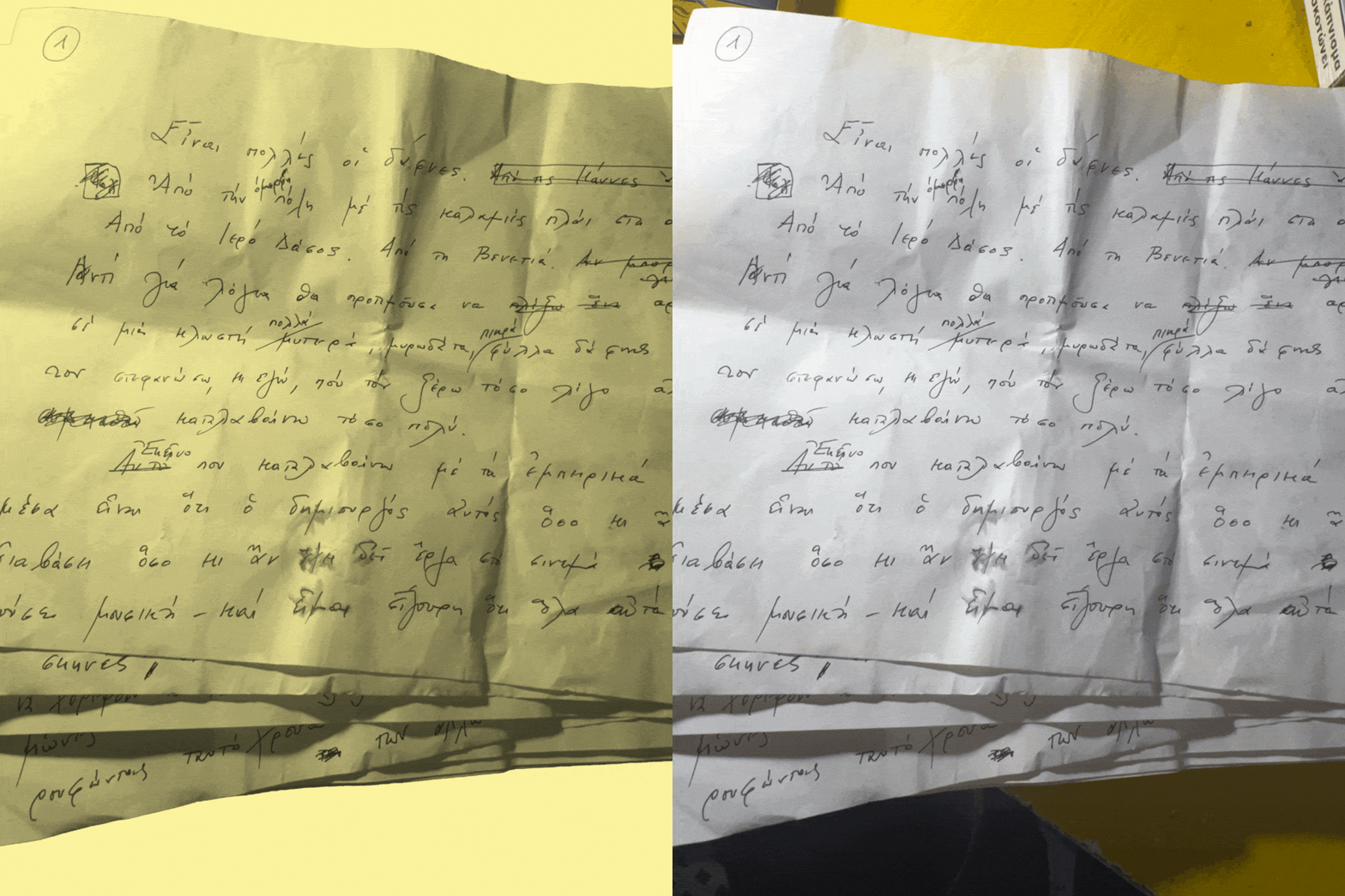
He is a man of many laurels. From that beautiful city beset with reeds, set beside the sea – that is, Cannes. From the hol(l)y wood. From the upside-down forest, id est Venice. In place of words, I would rather string together many pointed, pungent, bitter laurel leaves into a wreath and crown him too in turn, this man I know so little yet understand so much.
What I understand from personal experience is that, no matter how much he has read, no matter how many films he has seen and how much music he has heard (and I am certain he has done such things in abundance), more than anything this artist has looked inside himself in ways tortuous, in ways agonising and sustained. To recover from such deep dives, once he rises worn and weary to the surface again, it tickles him to perform the following restorative exercise: to observe the tiniest of details in the people around him. And who has not felt uncomfortable when subjected to his seemingly mild and sweet brown-velvet gaze that flicks into piercing x-ray vision when turned on the person he is speaking to, or on the unsuspecting patrons of some establishment where he takes in the very nature of others as he takes his coffee.
This is how he has constructed such a personal style that pulverises its influences so completely; scholars studying this style of his meet only dead ends when seeking some provenance or some affinity. Only in painting can one perhaps find some correlation: in the tonal coldness of Edward Hopper’s colours or in the labyrinthine complexity of Hieronymus Bosch’s forms.
Distant. Not so much from an innate humility but rather the result of routine introspection – an outcome of his interiority. He is an avid diver. The physique of such solitary explorers is marked by a particular muscle tone, a tightly-wound readiness to spring into action, a call to the abyss. He does not much like labels. I asked him once: “How does it feel to be called a loghotékhnis?” [Greek akin to “wordsmith” or “litterateur.”] His answer: “These two words lóghos and tékhni [‘the word’ and ‘art’] stuck together leave me uneasy. I prefer the lightness of the word kímeno [‘text’]. There aren’t any nice [Greek] words to describe those who write. Senariográfos [‘screenwriter’] isn’t nice. Syngraféas [‘author’] isn’t nice either. Isn’t it tragic? To write, but for the words that describe what you do to be horrible? Whereas khoreftís, for example, now that’s a lovely word to describe those who dance – simple, with a nice ring to it, it’s a word that only makes them want to dance more.”
His language feels alien and yet is so simple, so familiar. Drained of every superfluous form, any pompous turn of phrase, all pretension, left relentless, unsparing, airless to the point where the words become invisible – where scenes, images and characters spring instead from the page, fully rounded and in full sound. Each piece of his writing ready to burst open like some budding enactment.
The appearance of plants and fruits and animals is something of a tonic for the reader – they leaven any human presence, which usually hides some unpleasant surprise.
There is a latent deity in the world of Efthimis Filippou: irony. Eating away at what is good but also undermining evil. Relativising things. Resituating them. Guiding you to a wry smile, to a sigh and an exclamation: I can breathe. And so, as you read or watch, love those things you hide away inside and, ultimately, love the darkness that lies inside others too. What did you ever gain by stowing it away? There she blows, look – there! Bursting out all over the place, out of every crevice, flooding us fully, sweeping both inwards and outwards, finding mimics, finding critics, and ever spreading – creeping like a spot of ink across a handkerchief. In the time of Seferis, this was ennui. In our own times, it is horror that creeps.
Certain Greek authors write so beautifully as to render themselves untranslatable. The texts of Efthimis Filippou prove promising for translation because they are written without any tricks, as natural as breathing. He has a way of hiding beauty – true art is to conceal art, as the Latin proverb goes. And his books had the good fortune to be published in the English so handsomely. They are addressed to those happy few of Stendahl.
I very much like the title Noon. A time when the light falls straight down and life’s details are intensified, overly so. But also a time when the hordes come out to play, as my mother used to say – entire battalions of dæmons.
Here tonight, in the tender embrace of Hyper Hypo, and with the propulsive backing of Alex Stavrakas, I feel those few are to be multiplied, perhaps even made many.
WHY READ EFTHIMIS FILIPPOU IN TRANSLATION? by Julia Tsiakiris
Είναι πολλές οι δάφνες του. Από την όμορφη πόλη με τους καλαμιώνες πλάι στη θάλασσα. Από το Ιερό Δάσος. Από τη Βενετία. Αντί για λόγια θα προτιμούσα να αρμαθιάσω σε μια κλωστή πολλά μυτερά, μυρωδάτα, πικρά φύλλα δάφνης και να τον στεφανώσω, και εγώ, που τον ξέρω τόσο λίγο αλλά τον καταλαβαίνω τόσο πολύ.
Εκείνο που καταλαβαίνω με τα εμπειρικά μου μέσα είναι ότι ο δημιουργός αυτός, όσο κι αν έχει διαβάσει, όσο κι αν έχει δει έργα στο σινεμά ή ακούσει μουσική —και είμαι σίγουρη ότι όλα αυτά τα έχει κάνει με το παραπάνω— πιο πολύ απ’ όλα όμως έχει κοιτάξει μέσα του βασανιστικά, επίπονα, και διαρκώς. Και, για να ξεκουραστεί από αυτές τις καταβυθίσεις, όταν ανέρχεται στην επιφάνεια κατάκοπος κάνει με πολύ κέφι μια άσκηση θεραπευτική που είναι να παρατηρεί γύρω του τις παραμικρές λεπτομέρειες των συνανθρώπων του. Και ποιος δεν έχει νιώσει άβολα μπροστά σε αυτό το φαινομενικά πράο και γλυκό βλέμμα από καστανό βελούδο που μετατρέπεται σε ακτίνες Χ όταν επικεντρώνεται στον συνομιλητή ή στους ανυποψίαστους θαμώνες του μαγαζιού όπου αυτός πίνει το καφεδάκι του ρουφώντας ταυτόχρονα τις προσωπικότητες των άλλων.
Έτσι έχτισε αυτό το τόσο προσωπικό ύφος που έχει κονιορτοποιήσει τις επιρροές, και ο μελετητής του ύφους αυτού βρίσκεται σε αδιέξοδο αν γυρέψει κάποια καταγωγή ή κάποια συγγένεια. Μόνο στη ζωγραφική μπορείς να πεις ότι βρίσκεις μια σχέση με τους τόνους ψυχρότητας από τα χρώματα του Edward Hopper ή με τη δαιδαλώδη πολυπλοκότητα των μορφών του Ιερώνυμου Μπος.
Απόμερος. Όχι τόσο από φυσική σεμνότητα όσο από την συχνή ενδοσκόπηση, την εσωτερικότητα. Είναι μανιώδης δύτης. Στον σωματότυπο αυτών των μοναχικών εξερευνητών του βυθού διαπιστώνουμε έναν ιδιαίτερο μυϊκό τόνο, μια συμπιεσμένη ετοιμότητα εκτόξευσης, ένα κάλεσμα της αβύσσου. Δεν του αρέσουν και πολύ οι χαρακτηρισμοί. Μια φορά που τον είχα ρωτήσει «Πώς σου φαίνεται αν σε αποκαλούν λογοτέχνη;» αποκρίθηκε: «Αυτά τα λόγος και τέχνη κολλημένα μου προκαλούν δυσφορία. Μου αρέσει πιο πολύ η ελαφρότητα της λέξης κείμενο… Δεν υπάρχουν ωραίες λέξεις γι’ αυτούς που γράφουν. Ούτε το σεναριογράφος είναι ωραίο ούτε το συγγραφέας. Δεν είναι τραγικό να γράφεις και οι λέξεις που περιγράφουν την ιδιότητά σου να είναι άσχημες; Ενώ για παράδειγμα το χορευτής είναι μια ωραία λέξη γι’ αυτούς που χορεύουν, εύηχη, απλή τους κάνει να θέλουν να χορέψουν κι άλλο».
Η γλώσσα του μοιάζει αγνώριστη, ενώ είναι τόσο απλή και οικεία. Στραγγισμένη από κάθε περιττό σχήμα, κάθε κορόνα, κάθε ακκισμό, άτεγκτη, αμείλικτη, αποπνικτική, τόσο ώστε να γίνονται αόρατες οι λέξεις και να ξεπηδούν από τη σελίδα οι σκηνές, οι εικόνες και τα πρόσωπα σαν τρισδιάστατα και με ήχους. Κάθε γραπτό του είναι έτοιμο να σκάσει σαν το μπουμπούκι μιας αναπαράστασης.
Ευεργετική για τον αναγνώστη είναι η παρουσία των φυτών, των καρπών και των ζώων, αυτά απαλύνουν λίγο την ανθρώπινη παρουσία που συνήθως κρύβει μια δυσάρεστη έκπληξη.
Λανθάνουσα θεότητα στο σύμπαν του Ευθύμη Φιλίππου η ειρωνεία. Υπονομεύει το καλό, υποσκάπτει και το κακό όμως. Σχετικοποιεί. Αναδιατάσσει. Οδηγεί προς ένα στραβό χαμόγελο και ένα επιφώνημα: ουφ, αναπνέω. Αγάπα λοιπόν, αναγνώστη ή θεατή, αυτό που κρύβεις μέσα σου, και, στην τελική, αγάπησε και τη σκοτεινιά των άλλων. Τόσο που την καταχώνιαζες, τι κέρδισες; Να τη, πετιέται, να τη. Βγαίνει από παντού, από κάθε κόχη, και μας κατακλύζει, λαβαίνει έκταση και προς τα μέσα, και έξω, βρίσκει μιμητές, βρίσκει τιμητές κι όλο απλώνεται, απλώνεται σαν μια στάλα μελάνι στο μαντίλι. Στον καιρό του Σεφέρη ήταν η πλήξη. Στον δικό μας καιρό απλώνεται η φρίκη.
Ορισμένοι Έλληνες συγγραφείς γράφουν τόσο ωραία που καθίστανται αμετάφραστοι. Τα κείμενα του Ευθύμη Φιλίππου είναι πρόσφορα στη μετάφραση γιατί είναι γραμμένα χωρίς κόλπα. Είναι φυσικά όπως η αναπνοή. Έχει τον τρόπο να κρύβει το ωραίο, τέχνη είναι να κρύβεις την τέχνη, που λέγαν και οι Λατίνοι. Και είχαν τύχη αγαθή τα βιβλία του να εκδοθούν και στα αγγλικά τόσο αισθητικά. Απευθύνονται στους ευτυχείς ολίγους, τους happy few του Σταντάλ.
Μου αρέσει πολύ ο τίτλος Noon. Μεσημέρι, η ώρα που το φως πέφτει κάθετα και οι λεπτομέρειες υπερμεγεθύνονται, αλλά και η ώρα που βγαίνουν τα φουσάτα, όπως έλεγε η μάνα μου, οι στρατιές των δαιμόνων.
Στην τρυφερή εδώ αγκαλιά του «Hyper Hypo» απόψε, και με την ωστική δύναμη του Αλέξη Σταύρακα, μου φαίνεται πως οι λίγοι αυτοί θα γίνουνε αρκετοί, αν όχι πολλοί.