dubitanda (ever in doubt)

look ⋮ there!

Να τη! Χαράζει η αυγή
κι όλα τ’ αστέρια τ’ ουρανού
σβήνουνε ένα-ένα.

Και να! Η αηδόνα κελαηδά, εκεί ψηλά στα δέντρα·
κλαίει το παιδί της και θρηνεί,
κλαίει θρηνεί κάθε πρωί
ξανά, ξανά, ξανά:
Ίτυ, Ίτυ (γλυκέ μου), Ίτυ (γιε μου), Ίτυ, Ίτυ…

Να κι οι βοσκοί μες στα βουνά μαζί με τα κοπάδια·
ακούγεται η φλογέρα, βελάζουνε τ’ αρνιά,
ξυπνούν και τα πουλάρια· αργά και νυσταγμένα,
πάνε μαζί δυο-δυο να φαν’ χορτάρια τρυφερά.

Πιάνουν δουλειά κ’ οι κυνηγοί, ζώα πολλά να σφάξουν,
ενώ δυο κύκνοι πλέουνε στα ήρεμα νερά…

Και ’κει! Πιο πέρα – βγαίνουνε οι βάρκες στ’ ανοιχτά·
φυσά τ’ αεράκι απαλά, χαϊδεύει τα πανιά.
Κι οι ναύτες ρίχνουν τα κουπιά κι αρχίζουν το τραγούδι:

«Αύρα, φύσα Αύρα, φύσα, πάρε με
που ’χω γυναίκα και παιδί και περιμένουν».

Φουσκώνουν τα πανιά μεμιάς, με φόρα παν’ οι πλώρες…

Μα αυτά είναι έγνοιες αλλωνών.
Εμάς το καθήκον
–μα κι ο έρωτας, ο πόθος–
μας θέλουν εδώ…

parados from the lost play
PHAETHON by Euripides

ἤδη μὲν ἀρτιφανὴς
Ἀὼς ἱ[ππεύει] κατὰ γᾶν,
ὑπὲρ δ᾽ ἐμᾶς κεφαλᾶς
Πλειά[δων πέφευγε χορός],
μέλπει δ᾽ἐν δένδρεσι λεπτὰν ἀηδὼν ἁρμονίαν
ὀρθρευομένα γόοις
Ἴτυν Ἴτυν πολυθρόνον.

σύριγγας δ᾽ οὐριβάται
κινοῦσιν ποιμνᾶν ἐλάται,
ἔγρονται δ᾽εἰς βοτάναν
ξανθᾶν πώλων συζυγίαι·
ἤδη δ᾽εἰς ἔργα κυναγοὶ στείχουσιν θηροφόνοι,
παγαῖς τ᾽ἐπ᾽ Ὠκεανοῦ
μελιβόας κύκνος ἀχεῖ.

ἄκατοι δ᾽ ἀνάγονται ὑπ᾽εἰρεσίας
ἀνέμων τ᾽ εὐαέσσιν ῥοθίοις,
ἀνὰ δ᾽ ἱστία ν[αῦται] ἀειράμενοι
ἀχοῦσιν ῾[Ἕπου,] πότνι᾽ αὔρ[α],
[ἡμῖν ὑπ᾽] ἀκύμονι πομπᾷ
σιγώντων ἀνέμων
[ποτὶ τέκνα] τε καὶ φιλίας ἀλόχους.᾽
σινδών δὲ πρότονον ἐπὶ μέσον πελάζει.

τὰ μὲν οὖν ἑτέροισι μέριμνα πέλει,
[…]
ἐμὲ καὶ τὸ δίκαιον ἄγει καὶ ἔρως…
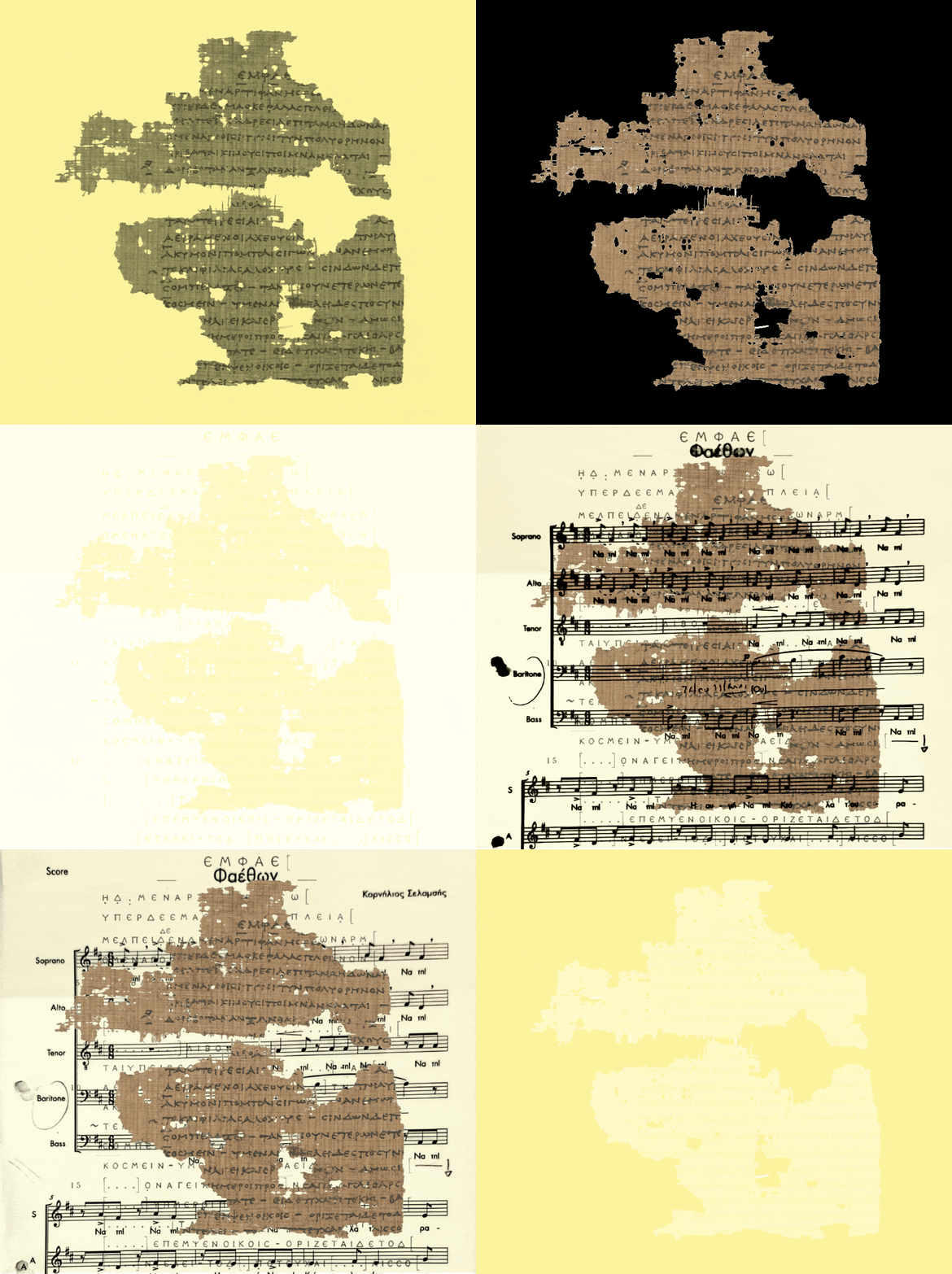
A fragment from the lost Euripides play Phaethon (circa 420 BCE), found in 1901 by the German archaeologist Otto Rubensohn at Al Ashmunein (ancient Hermopolis) in Egypt – a dawn chorus that rose over (and from) the earth.


Translated for (and taken from) the theatre / archaeology performance Fragments: Euripides created by Efthimis Theou in 2025 for the National Theatre of Greece as part of its “Introducing Greece’s Ancient Hidden-Gem Theatres” initiative organised in partnership with the Diazoma Association.


The composer Kornilios Selamsis set this new modern Greek translation of the ancient text to music for five voices (the five performer-archaeologists of Fragments: Euripides).


You can hear the opening line of this music (“look, there!”) in the video that lives inside the dubitandum “timeworn ⋮ timeless” (see below).


The moving image overlays three elements:


(one)
Berlin Papyrus number 9711 (written by an unknown ancient hand in the third century BCE).


(two)
A 1907 transcription of the ancient text (edited and published by Ulrich von Wilamowitz-Moellendorff and Wilhelm Schubart).


(three)
An excerpt from the modern score written by Kornilios Selamsis in 2025 (with handwritten notes by Fragments: Euripides director and performer Efthimis Theou).


A new English translation of the fragment is currently being prepared, to accompany the new modern Greek translation.


see also
timeworn ⋮ tireless


arkhæio
FRAGMENTS (EURIPIDES) FRAGMENTS (EURIPIDES) GATHERED


transpolia
Boughs ⋮ like ink (Egyptian).