falling ⋮ grace

THOUGHTS ON GRAVITY


THE VERY SHORT STORY OF AN ENORMOUS VINE THAT SPROUTED OUT OF NOWHERE AND IN THIS WAY BLOCKED THE BACK ENTRANCE OF A REGIONAL THEATRE FOR A SHORT TIME


: what those noh actors managed to achieve at that final performance/ was that on that night behind those masks there was no-one/ because while they themselves had arrived at the theatre quite late/ at a time entirely inadequate for them to prepare/ they had already nonetheless long since secured/ all that they required for their own disappearance/ because that night was the night of their disappearance/ and they had carefully planned for this night of disappearance from way back/ ever since childhood they had been planning for the night of disappearance/ day by day attaining the tools that would bring them ever closer to that night/ and even though they arrived at the theatre considerably delayed/ a turn of events for which they themselves were not at all responsible no/ forces entirely beyond their control were at play that night as they were temporarily denied access on account of force majeure/ because behind the building/ there had creeped and climbed completely out of the blue and in circumstances as yet unexplained/ an enormous wild vine/ that had enveloped the back entrance to the theatre/ blocking entry as a result for both actors and stagehands/ who were now forced exclusively to enter the theatre via the front entrance together with audiences and often/ precisely/ at the same time as them which was of course quite ridiculous yes and even though the noh actors arrived inside the theatre considerably delayed/ in the end they managed with quite spectacular ease/ to attain a state that was for them the ideal/ that was the state necessary for fulfilling their objectives/ because for these noh actors/ to be seen was not at all the objective no/ these noh actors never once said the way other actors say/ I exist only because you can see me/ instead they said/ I exist only because you cannot/ this reversal of the theatrical contract/ was core to all their abilities/ the noh actors raised their arms/ and you could not help but admire/ this perpetual upward motion/ that in its slowness/ simultaneously contained all possible variations of the movement yes the noh actors raised their arms/ with the greatest possible slowness/ and it took your breath away/ and when the noh actors fell/ they fell slowly/ and with grace/ the way/ trees fall/ even when falling/ they retained something of the grace of trees/ that always fall in ways most natural/ since this is something they cannot help/ as any and every tree/ even at the moment of its death/ retains its grace/ and is ever forced to fall in ways most natural/ a tree is never inelegant/ much like a noh actor/ the deaths of both/ are always executed with the greatest possible grace/ I saw a large pine tree painted on the wall/ the wooden noh stage exposed on its three sides supported only at its corners/ now seemed to hover in space at certain moments/ every entrance every exit shut/ in noh even the simplest of things take on an unfathomable depth and even the seemingly most insignificant objects/ take on an entirely different essence on stage and at once/ retain entire the element of transience/ the depth of things and transience are one and the same in noh/ here everything is transient and at the same time everything takes on an unfathomable depth even the simplest things take on this incredible depth and in the very same instant are transient and fragile on the cusp of being destroyed by the slightest shift of air and ready to tear down/ everything over the slightest thing yes exceptionally fragile yet utterly unassailable at the same time in this space are all things/

all things are in complete harmony with one another/ you would see the tree on that wall and at once see all trees see the bridge linking the preparation area to the main stage and see before you all bridges and all crossings hear one sound and so hear all sounds/ I lifted my gaze and saw the inner folds of the roof disappearing into their own darkness/ the first thing to disappear were the arms he said/ time is nothing more than a shift in position/ now I find myself/

now I find myself midway down the walkway and with each step I lose myself more and more/ you know you have refined an art to a fair degree when this art begins to extinguish you/ with each step he drew away from something but at the same time drew closer to something else he was well aware of that/ the tiniest of openings placed over his eyes were more than enough yes in fact in that moment he even thought them excessive/ he put on the mask of a demon and disappeared behind it I thought to myself/ I saw him before me disappearing behind the mask of a demon/ the art of disappearance is inextricably linked to beauty I thought to myself/ I traced his pacing with my gaze the music was different now becoming ever more austere ever more stark all things in noh are set at a distance from one another everything here is set apart noh is the theatre of distance the theatre of pacing I thought to myself all things here are set apart and are reaching for one another and amid the slowness and the stillness you see everything coexisting within one single unified movement noh is the theatre of distance I thought to myself and even though you sense that between even the most distant extremes/ there exists a connection so powerful/ that whatever might interpose itself within the distance between them is in essence altogether weak yes because this distance nullifies everything it encompasses and that is when all things want to reconnect and reach for one another through the darkness even across the greatest spans of distance/ the world is all things reaching out to one another through the darkness/ the start of the walkway he said marks the start of my disappearance/ my weight/

my weight in those moments seemed to dwindle dangerously/ all that I see from here on in is utterly unknown he said/ all things from here on in are now utterly unknown to me he said/ now I pass before the large pine tree/ look/

look/

I am now standing here for the first time across from you looking at you/ with the curiosity of a child gazing at snow/ or the eyes of someone/ who knows nothing of fire/ who has never before seen fire / and who suddenly sees a house aflame/ my sleeves are now empty/

my arms/

my arms he said–

.

Simon Riniotis

ΣΚΕΨΕΙΣ ΓΙΑ ΤΗ ΒΑΡΥΤΗΤΑ


Η ΠΟΛΥ ΣΥΝΤΟΜΗ ΙΣΤΟΡΙΑ ΕΝΟΣ ΓΙΓΑΝΤΙΑΙΟΥ ΚΛΗΜΑΤΟΣ ΠΟΥ ΞΕΦΥΤΡΩΣΕ ΑΠΟ ΤΟ ΠΟΥΘΕΝΑ ΚΑΙ ΕΜΠΟΔΙΣΕ ΕΤΣΙ ΓΙΑ ΛΙΓΟ ΤΗΝ ΠΙΣΩ ΕΙΣΟΔΟ ΕΝΟΣ ΠΕΡΙΦΕΡΕΙΑΚΟΥ ΘΕΑΤΡΟΥ


: αυτό που κατάφεραν οι ηθοποιοί τού νο σε εκείνη την τελευταία παράσταση/ ήταν ότι εκείνο το βράδυ πίσω από τις μάσκες δεν υπήρχε κανείς/ γιατί ενώ και οι ίδιοι έφτασαν στο θέατρο αργοπορημένοι/ και σε ώρα εντελώς ακατάλληλη για την προετοιμασία τους/ είχαν παρόλα αυτά εξασφαλίσει ήδη από καιρό/ όλα όσα τους ήταν απαραίτητα για την εξαφάνισή τους/ γιατί εκείνο το βράδυ ήταν το βράδυ της εξαφάνισης/ και το είχαν σχεδιάσει προσεχτικά εκείνο το βράδυ της εξαφάνισης από πολύ παλιά/ και ήδη από τα παιδικά τους χρόνια εκείνοι σχεδίαζαν το βράδυ της εξαφάνισης/ μέρα με τη μέρα αποκτούσαν τα εργαλεία τα οποία τους έφερναν όλο και πιο κοντά σε εκείνη τη νύχτα/ και παρότι έφτασαν στο θέατρο με σημαντική καθυστέρηση/ πράγμα για το οποίο καθόλου δεν ευθύνονταν οι ίδιοι/ αλλά δυνάμεις εντελώς εξωτερικές καθώς τους απαγορεύτηκε προσωρινά η πρόσβαση λόγω ανωτέρας βίας/ γιατί στο πίσω μέρος του κτηρίου/ είχε αναρριχηθεί εντελώς απροσδόκητα και κάτω από τις πιο αδιευκρίνιστες ακόμα συνθήκες/ ένα γιγαντιαίο άγριο κλήμα/ το οποίο είχε κυκλώσει την πίσω είσοδο του θεάτρου/ με αποτέλεσμα να εμποδίζει την είσοδο των ηθοποιών και των τεχνικών/ οι οποίοι τώρα ήταν αναγκασμένοι να εισέρχονται στο θέατρο μόνο από την μπροστινή είσοδο μαζί με τους θεατές και πολλές φορές/ εντελώς/ ταυτόχρονα με αυτούς πράγμα που φυσικά καταντούσε γελοίο ναι και παρόλο που οι ηθοποιοί του νο έφτασαν στο εσωτερικό του θεάτρου με σημαντική καθυστέρηση/ κατόρθωσαν εν τέλη με θεαματική ευκολία/ να προσεγγίσουν αυτή την ιδεώδη για αυτούς κατάσταση/ που ήταν η αναγκαία κατάσταση για την εκπλήρωση του σκοπού τους/ γιατί αυτοί οι ηθοποιοί του νο/ σε καμία περίπτωση δεν είχαν ως σκοπό τους τη θέαση όχι/ αυτοί οι ηθοποιοί του νο δεν έλεγαν όπως όλοι οι υπόλοιποι ηθοποιοί/ υπάρχω μόνο γιατί μπορείς να με δεις/ αλλά έλεγαν/ υπάρχω μόνο γιατί δεν μπορείς/ αυτή η αντιστροφή τής θεατρικής συνθήκης/ αποτελούσε τον πυρήνα όλων τους των δυνατοτήτων/ σήκωναν το χέρι οι ηθοποιοί του νο/ και δεν μπορούσες μόνο παρά να θαυμάσεις/ αυτή την αέναη κίνηση προς τα πάνω/ που μέσα στην βραδύτητά της/ συμπεριλάμβανε ταυτόχρονα όλες τις παραλλαγές τής κίνησης ναι σήκωναν το χέρι οι ηθοποιοί του νο/ με τη μεγαλύτερη βραδύτητα/ και σου κοβόταν η ανάσα/ και όταν έπεφταν οι ηθοποιοί του νο/ έπεφταν αργά/ και με χάρη/ όπως/ όταν πέφτει ένα δέντρο/ ακόμα και η πτώση τους/ διατηρούσε κάτι από τη χάρη των δέντρων/ τα οποία πέφτουνε πάντοτε με τη μεγαλύτερη φυσικότητα/ αφού δεν μπορούν να κάνουν και αλλιώς/ καθότι ένα οποιοδήποτε δέντρο/ ακόμα και τη στιγμή τού θανάτου του/ διατηρεί τη χάρη του/ και είναι αναγκασμένο να πέφτει πάντοτε με τη μεγαλύτερη φυσικότητα/ ένα δέντρο δεν είναι ποτέ αδέξιο/ όπως και ένας ηθοποιός του νο/ ο θάνατος και των δύο/ διεκπεραιώνεται πάντοτε με τη μεγαλύτερη δυνατή χάρη/ έβλεπα το μεγάλο πεύκο ζωγραφισμένο στον τοίχο/ την ξύλινη σκηνή του νο εκτεθειμένη από τις τρεις πλευρές της η οποία τώρα στηριζόμενη μόνο στις γωνίες της/ έμοιαζε ανά στιγμές να αιωρείται μέσα στο χώρο/ όλες οι είσοδοι και οι έξοδοι ήταν κλειστές/ στο νο ακόμα και τα πιο απλά πράγματα αποκτούν ασύλληπτο βάθος ακόμα και τα φαινομενικά πιο ασήμαντα αντικείμενα/ αποκτούν πάνω στη σκηνή εντελώς διαφορετική υπόσταση και ταυτόχρονα/ διατηρούν ακέραιο το στοιχείο της παροδικότητας/ το βάθος των πραγμάτων και η παροδικότητα είναι στο νο το ένα και το αυτό/ εδώ όλα είναι παροδικά και ταυτόχρονα όλα αποκτούν βάθος ασύλληπτο ακόμα και τα πιο απλά πράγματα αποκτούν απίστευτο βάθος και την ίδια πάλι στιγμή είναι παροδικά και εύθραυστα έτοιμα να καταστραφούν με την πιο μικρή κίνηση του αέρα έτοιμα να διαλύσουν/ με το παραμικρό τα πάντα εδώ είναι εξαιρετικά εύθραυστα και ταυτόχρονα εντελώς απροσπέλαστα όλα τα πράγματα/


όλα τα πράγματα βρίσκονται σε πλήρη αρμονία μεταξύ τους/ έβλεπες το δέντρο στον τοίχο και την ίδια στιγμή έβλεπες όλα τα δέντρα έβλεπες τη γέφυρα που ενώνει την αίθουσα της προετοιμασίας με την κεντρική σκηνή και έβλεπες μπροστά σου όλες τις γέφυρες και όλα τα περάσματα άκουγες έναν ήχο και είχες ακούσει όλους τους ήχους/ ανέβασα το βλέμμα μου πάνω και είδα τις εσωτερικές γωνίες της σκεπής να χάνονται μέσα στο ίδιο τους το σκοτάδι/ το πρώτο πράμα που εξαφανίστηκε ήταν τα χέρια μου είπε/ ο χρόνος δεν είναι τίποτε άλλο από την μετατόπιση της θέσης/ βρίσκομαι τώρα/


βρίσκομαι τώρα στη μέση του διαδρόμου και με κάθε μου βήμα χάνομαι όλο και περισσότερο/ καταλαβαίνεις ότι έχεις φτάσει μία τέχνη σε βαθμό ικανοποιητικό όταν αυτή η τέχνη αρχίζει να σε εξαφανίζει/ με κάθε του βήμα απομακρυνόταν από κάτι και την ίδια στιγμή πλησίαζε κάτι άλλο το γνώριζε αυτό καλά/ το ελάχιστο άνοιγμα που υπήρχε στη θέση των ματιών τού ήταν υπεραρκετό τού είχε φανεί μάλιστα εκείνη τη στιγμή μέχρι και υπερβολικό/ φόρεσε τη μάσκα τού δαίμονα και εξαφανίστηκε πίσω από αυτή σκέφτηκα/ τον έβλεπα μπροστά μου να εξαφανίζεται πίσω από τη μάσκα του δαίμονα/ η τέχνη της εξαφάνισης είναι άρρηκτα συνδεδεμένη με την ομορφιά σκέφτηκα/ ακολούθησα με το βλέμμα μου τον βηματισμό του η μουσική τώρα είχε αλλάξει γινότανε όλο και πιο αυστηρή όλο και πιο λιτή όλα τα πράγματα στο νο βρίσκονται σε απόσταση μεταξύ τους όλα τα πράγματα εδώ είναι χωρισμένα το νο είναι το θέατρο των αποστάσεων το θέατρο τού βηματισμού σκέφτηκα όλα τα πράγματα εδώ είναι χωρισμένα και αποζητάνε το ένα το άλλο και μέσα στην βραδύτητα και την ακινησία τα έβλεπες όλα να συνυπάρχουν σε μία ενιαία κίνηση το νο είναι το θέατρο των αποστάσεων σκέφτηκα και παρόλα αυτά καταλάβαινες ότι ακόμα και ανάμεσα στα πιο απομακρυσμένα άκρα/ υπάρχει μία σύνδεση τόσο ισχυρή/ που οτιδήποτε και να παραβληθεί στη μεταξύ τους απόσταση είναι στην ουσία του εντελώς αδύναμο ναι γιατί η απόσταση αυτή μηδενίζει όλα τα πράγματα που διέπει και όλα τότε θέλουν πάλι να συνενωθούν και αποζητάνε το ένα το άλλο μέσα στο σκοτάδι ακόμα και στις μεγαλύτερες αποστάσεις/ ο κόσμος είναι τα πράγματα που αποζητάνε το ένα το άλλο μέσα στο σκοτάδι/ η αρχή τού διαδρόμου είπε είναι η αρχή τής εξαφάνισής μου/ το βάρος μου/

το βάρος μου εκείνες τις στιγμές έμοιαζε να λιγοστεύει επικίνδυνα/ ό,τι βλέπω από εδώ και πέρα μού είναι παντελώς άγνωστο είπε/ όλα τα πράγματα από εδώ και πέρα μού είναι πλέον παντελώς άγνωστα είπε/ περνάω τώρα μπροστά από το μεγάλο πεύκο/ δείτε/

δείτε/

στέκομαι τώρα εδώ για πρώτη φορά απέναντί σας και σας κοιτάζω/ με την περιέργεια του παιδιού που κοιτάζει το χιόνι/ ή με τη ματιά του ανθρώπου/ που δεν ξέρει τί είναι φωτιά/ που δεν έχει κοιτάξει ποτέ του φωτιά/ και που ξαφνικά βλέπει ένα φλεγόμενο σπίτι/ τα μανίκια μου τώρα είναι άδεια/

τα χέρια μου/


τα χέρια μου είπε


.

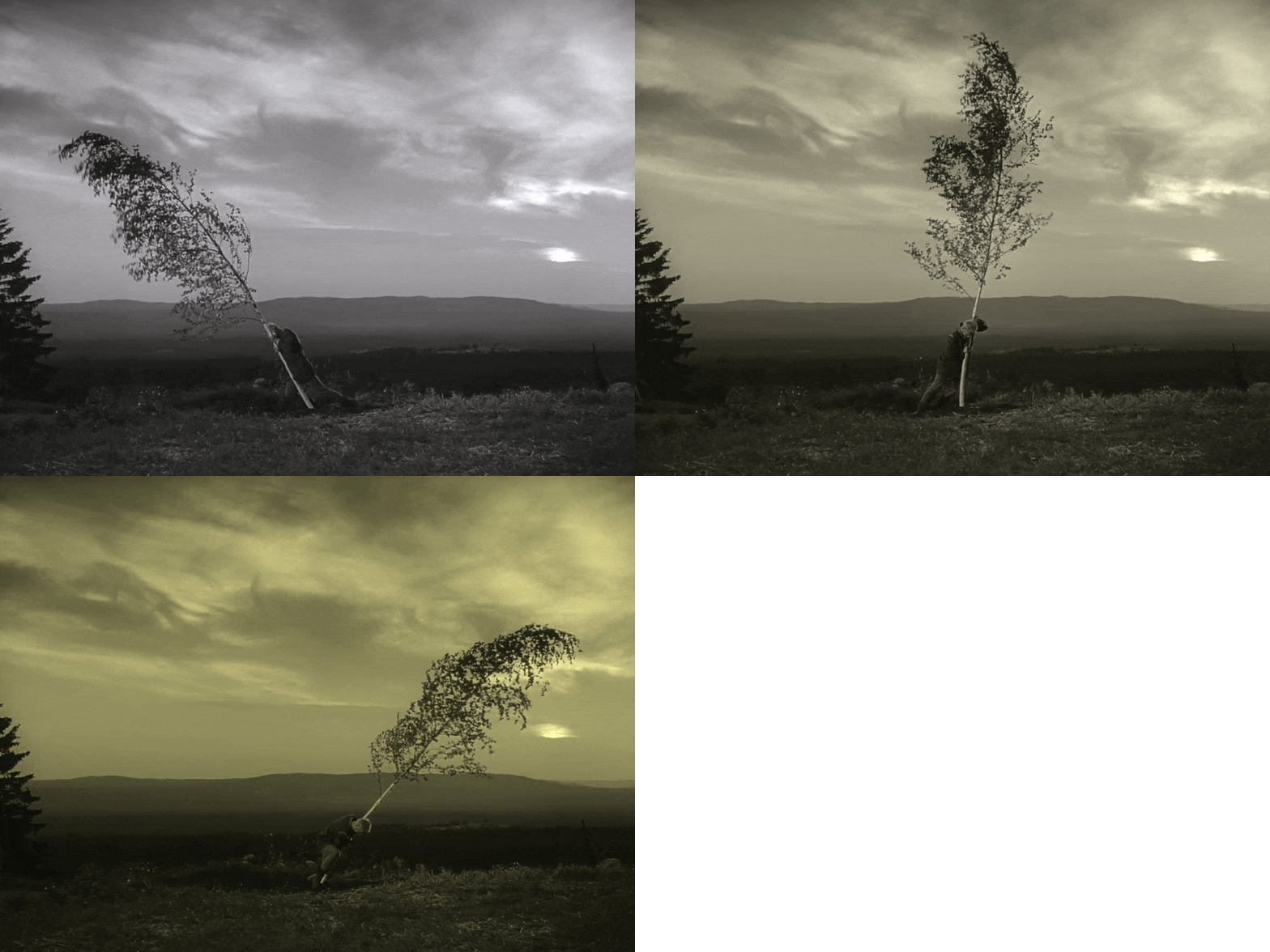
A man wrestles with a tall sapling three times his height, bending it this way and that, trying to fell it to the ground. The leaves on the tree shiver beautifully in this scene shot by Ingmar Bergman.

A complete performance text written by Simon Riniotis in 2023.


Translated for the love of it in 2026.


This English translation accompanied an application Simon made in partnership with the director Marilena Katranidou for a 2026 residency at Dimora Creative in Lomazzo, Italy.


The looping scene (slowly seeping in and out of yellow) is taken from The Virgin Spring, a 1960 feature film by Ingmar Bergman.


Max von Sydow tussles here endlessly with gravity. The tall sapling shivers above him and in his grasp, ever graceful in its recurring fall (unable to exist otherwise).


This striking image (two bodies – arboreal and human – entwined) is movingly recreated live (also over and again) in Dimitris Papaioannou’s 2018 stage work Since She (Seit Sie), made for the Tanztheater Wuppertal Pina Bausch.


see also
(this dubitandum lives alone)


arkhæio
THOUGHTS ON GRAVITY

look ⋮ there!

Να τη! Χαράζει η αυγή
κι όλα τ’ αστέρια τ’ ουρανού
σβήνουνε ένα-ένα.

Και να! Η αηδόνα κελαηδά, εκεί ψηλά στα δέντρα·
κλαίει το παιδί της και θρηνεί,
κλαίει θρηνεί κάθε πρωί
ξανά, ξανά, ξανά:
Ίτυ, Ίτυ (γλυκέ μου), Ίτυ (γιε μου), Ίτυ, Ίτυ…

Να κι οι βοσκοί μες στα βουνά μαζί με τα κοπάδια·
ακούγεται η φλογέρα, βελάζουνε τ’ αρνιά,
ξυπνούν και τα πουλάρια· αργά και νυσταγμένα,
πάνε μαζί δυο-δυο να φαν’ χορτάρια τρυφερά.

Πιάνουν δουλειά κ’ οι κυνηγοί, ζώα πολλά να σφάξουν,
ενώ δυο κύκνοι πλέουνε στα ήρεμα νερά…

Και ’κει! Πιο πέρα – βγαίνουνε οι βάρκες στ’ ανοιχτά·
φυσά τ’ αεράκι απαλά, χαϊδεύει τα πανιά.
Κι οι ναύτες ρίχνουν τα κουπιά κι αρχίζουν το τραγούδι:

«Αύρα, φύσα Αύρα, φύσα, πάρε με
που ’χω γυναίκα και παιδί και περιμένουν».

Φουσκώνουν τα πανιά μεμιάς, με φόρα παν’ οι πλώρες…

Μα αυτά είναι έγνοιες αλλωνών.
Εμάς το καθήκον
–μα κι ο έρωτας, ο πόθος–
μας θέλουν εδώ…

parados from the lost play
PHAETHON by Euripides

ἤδη μὲν ἀρτιφανὴς
Ἀὼς ἱ[ππεύει] κατὰ γᾶν,
ὑπὲρ δ᾽ ἐμᾶς κεφαλᾶς
Πλειά[δων πέφευγε χορός],
μέλπει δ᾽ἐν δένδρεσι λεπτὰν ἀηδὼν ἁρμονίαν
ὀρθρευομένα γόοις
Ἴτυν Ἴτυν πολυθρόνον.

σύριγγας δ᾽ οὐριβάται
κινοῦσιν ποιμνᾶν ἐλάται,
ἔγρονται δ᾽εἰς βοτάναν
ξανθᾶν πώλων συζυγίαι·
ἤδη δ᾽εἰς ἔργα κυναγοὶ στείχουσιν θηροφόνοι,
παγαῖς τ᾽ἐπ᾽ Ὠκεανοῦ
μελιβόας κύκνος ἀχεῖ.

ἄκατοι δ᾽ ἀνάγονται ὑπ᾽εἰρεσίας
ἀνέμων τ᾽ εὐαέσσιν ῥοθίοις,
ἀνὰ δ᾽ ἱστία ν[αῦται] ἀειράμενοι
ἀχοῦσιν ῾[Ἕπου,] πότνι᾽ αὔρ[α],
[ἡμῖν ὑπ᾽] ἀκύμονι πομπᾷ
σιγώντων ἀνέμων
[ποτὶ τέκνα] τε καὶ φιλίας ἀλόχους.᾽
σινδών δὲ πρότονον ἐπὶ μέσον πελάζει.

τὰ μὲν οὖν ἑτέροισι μέριμνα πέλει,
[…]
ἐμὲ καὶ τὸ δίκαιον ἄγει καὶ ἔρως…

A fragment from the lost Euripides play Phaethon (circa 420 BCE), found in 1901 by the German archaeologist Otto Rubensohn at Al Ashmunein (ancient Hermopolis) in Egypt – a dawn chorus that rose over (and from) the earth.


Translated for (and taken from) the theatre / archaeology performance Fragments: Euripides created by Efthimis Theou in 2025 for the National Theatre of Greece as part of its “Introducing Greece’s Ancient Hidden-Gem Theatres” initiative organised in partnership with the Diazoma Association.


The composer Kornilios Selamsis set this new modern Greek translation of the ancient text to music for five voices (the five performer-archaeologists of Fragments: Euripides).


You can hear the opening line of this music (“look, there!”) in the video that lives inside the dubitandum “timeworn ⋮ timeless” (see below).


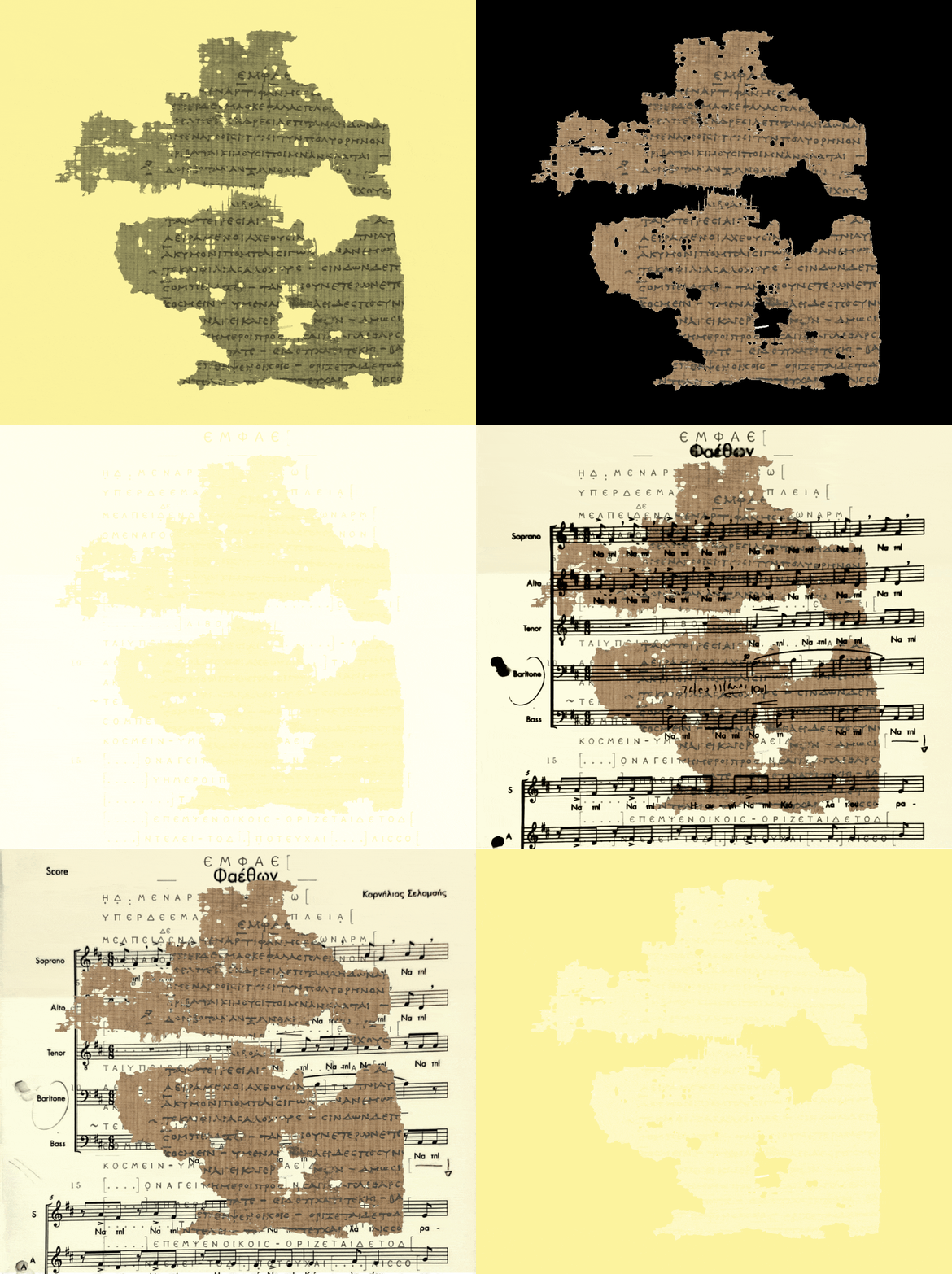
The moving image overlays three elements:


(one)
Berlin Papyrus number 9711 (written by an unknown ancient hand in the third century BCE).


(two)
A 1907 transcription of the ancient text (edited and published by Ulrich von Wilamowitz-Moellendorff and Wilhelm Schubart).


(three)
An excerpt from the modern score written by Kornilios Selamsis in 2025 (with handwritten notes by Fragments: Euripides director and performer Efthimis Theou).


A new English translation of the fragment is currently being prepared, to accompany the new modern Greek translation.


see also
timeworn ⋮ tireless


arkhæio
FRAGMENTS (EURIPIDES) FRAGMENTS (EURIPIDES) GATHERED


transpolia
Boughs ⋮ like ink (Egyptian).

timeworn ⋮ tireless

Beyond the known works of Euripides that survive complete, a smattering of more than 1,000 lines drawn from the rest of the tragedian’s oeuvre have come down to us: snippets written on pieces of papyrus buried beneath the ground of Egypt, or carved as Greek stone inscriptions, or occasionally dropped into the back-and-forth of a philosophical dialogue. There exist isolated scenes, scattered lines, or even just solitary words from works that are not widely known – such works as the revenge drama Ino or the existential play Polyidus, one hundred lines of which (many completely new) were unearthed from the soil fill of a tomb in the necropolis of Philadelphia, close by the River Nile, in 2022.

The Fragments: Euripides project is a poetic take on this material that, though fragmentary, still possesses great lyrical and dramatic power. It is an intensely musical and narrative-driven reformulation that incorporates these fragments of lost tragedies and satyr plays “as is,” set alongside the often-eventful tales of their discovery and excavation from the earth, the impression left by that echoing resonance of (actors’) voices not heard in thousands of years, and the potent tension of trying to glimpse and describe a long-gone world through its timeworn remains.

The performance will see a curious and existential archaeological excavation set on stage, except the finds of this dig are not remnants of pots or statuary or architecture but rather lines of verse – words spoken by actors, broken in pieces. Five performer-archaeologists, up on stage, will enact the nigh-on ritualistic process that is an archaeological excavation – including all the stereotypical behaviours and relationships it engenders, the almost choreographed movements of bodies through space it entails, and the singular vocabulary it employs – as it unfolds over the course of a single day. This peculiar dig will bring new findings to light and present them to its audience: entire dialogues or monologues drawn from the lost works of Euripides, as well musical compositions and actions created from the most fragmentary remains of these plays.

The work will also draw narrative materials from the excavation histories of the ancient theatres at which it is presented, thus enriching the performance text with true stories telling of the tireless manual work – sifting through and exploring the soil – that goes into archaeological research and discovery, actively and contextually incorporating the sites themselves into the theatrical praxis while also imparting something of their history to audiences.

Efthimis Theou

Πέρα από τα γνωστά εξ’ ολοκλήρου σωζόμενα έργα του Ευριπίδη, έχουν φτάσει ως εμάς και πάνω από 1000 στίχοι από το υπόλοιπο έργο του συγγραφέα: στίχοι γραμμένοι πάνω σε κομμάτια παπύρου θαμμένα στο έδαφος της Αιγύπτου, χαραγμένοι σε λίθινες επιγραφές στην Ελλάδα ή ενταγμένοι μέσα σε περιστασιακές αναφορές στις κουβέντες ενός φιλοσοφικού διαλόγου. Μια μεμονωμένη σκηνή, λίγες διάσπαρτες γραμμές ή και μια μόνο λέξη από έργα εν πολλοίς άγνωστα στο κοινό, όπως η ιστορία εκδίκησης της «Ινώς» και ο υπαρξιακός «Πολύειδος» – εκατό στίχοι από τα οποία βρέθηκαν για πρώτη φορά το 2022 στη νεκρόπολη της Φιλαδέλφειας κοντά στον Νείλο.

Η παράσταση «Θραύσματα: Ευριπίδης» θα είναι μια ποιητική προσέγγιση αυτού του αποσπασματικού, αλλά μεγάλης λυρικής και θεατρικής δύναμης υλικού. Μια έντονα μουσική και αφηγηματική ανασύνθεσή του που θα μεταφέρει αυτούσια κομμάτια από τις χαμένες τραγωδίες και τα σατυρικά δράματα, την περιπετειώδη πολλές φορές ιστορία της ανακάλυψής τους, αλλά και την αίσθηση που αφήνει ο απόηχος των φωνών όλων αυτών που έχουν πάψει να μιλάνε εδώ και χιλιετίες, την ένταση του να προσπαθείς να δεις και να περιγράψεις έναν κόσμο περασμένο, μέσα από τα φθαρμένα απομεινάρια του.

Για την παράσταση, θα στηθεί επί σκηνής μια παράδοξη και υπαρξιακή αρχαιολογική ανασκαφή που τα ευρήματά της δεν θα είναι αυτή τη φορά αγγεία, αγάλματα, ή αρχιτεκτονήματα, αλλά ποιητικοί στίχοι, λόγια ηθοποιών σπασμένα σε μικρά κομμάτια. Πέντε ερμηνευτές/αρχαιολόγοι θα πραγματοποιήσουν στη σκηνή τη σχεδόν τελετουργική διαδικασία μιας αρχαιολογικής ανασκαφής –με τις στερεοτυπικές συμπεριφορές και σχέσεις, τη σχεδόν χορογραφημένη κινησιολογία των σωμάτων στον χώρο, και την ιδιαίτερη γλώσσα– όπως εξελίσσεται κατά τη διάρκεια μιας ημέρας. Μέσα από αυτή την παράδοξη ανασκαφή είναι που θα έρθουν στο φως τα νέα ευρήματα και θα παρουσιαστούν στη σκηνή: ολόκληρες στιχομυθίες ή μονόλογοι από τα χαμένα έργα του Ευριπίδη, και μουσικές συνθέσεις και δράσεις βασισμένες στα πιο θραυσματικά αποσπάσματά του.

Η παράσταση θα αντλήσει, επίσης, αφηγηματικό υλικό από την ιστορία των ανασκαφών των αρχαίων θεάτρων όπου θα παρουσιαστεί το έργο, εμπλουτίζοντας έτσι το κείμενο με πραγματικές ιστορίες επίμονης αρχαιολογικής έρευνας και ανακάλυψης, ενσωματώνοντας ενεργά τους ίδιους τους αρχαιολογικούς χώρους στη θεατρική συνθήκη και μεταφέροντας, ταυτόχρονα, στο κοινό κάτι από την ιστορία τους.

This text (an extract) was written by Efthimis Theou during the writing and rehearsal process for Fragments: Euripides, his 2025 theatre / archaeology performance created for the National Theatre of Greece (NTG) as part of its “Introducing Greece’s Ancient Hidden-Gem Theatres” initiative organised in partnership with the Diazoma Association.


It was translated to accompany an application for the 2025 edition of the Nocturne Festival in Halifax, Canada (that year themed “Ground”). They were very supportive and kindly declined.


The video (shot for the NTG by Grigoris Panopoulos) shows the original cast of five performer-archaeologists – Efthimis Theou, Electra Nikolouzou, Katerina Papandreou, Yorgos Kritharas and Yorgos Syrmas – working tirelessly away, sifting through and exploring the soil on this peculiar dig.


They also sing – “look, there!” – a fragmentary choral ode written for the piece by Kornilios Selamsis.


Eleni Vergeti joined the performance-excavation team in 2026.


see also
look ⋮ there!


arkhæio
FRAGMENTS (EURIPIDES) FRAGMENTS (EURIPIDES) GATHERED


transpolia
Boughs ⋮ like ink (Egyptian).

fingers ⋮ dry

In a barren, desolate, dry, dusty landscape surrounded by sea, a flock of goats stand on rocks, run, eat, walk, gaze, fight.

A little before nightfall. A stone-built house in the same landscape. […]

Feet heavy, the woman gets up and goes into the next room. On the bed lies a body, wrapped in a white sheet. She looks at it, oblivious to the passing of time. Then goes close and starts to unwind the sheet. First we see the face of a dead man, roughly her age, perhaps a little older. The pale, naked body is gradually revealed in its entirety. The woman rests her hand against his mouth. Opens it a little. Slips one of her fingers inside. Then another. Pulls both out again. They are dry. […]

The woman depicted on the icon looks a bit like her in some strange way. […]

excerpts from BLEAT by Yorgos Lanthimos

Σε ένα άγονο, έρημο, ξηρό, σκονισμένο τοπίο περιτριγυρισμένο από θάλασσα, κατσίκια στέκονται πάνω σε βράχια, τρέχουν, τρώνε, κοιτάνε, περπατάνε, παλεύουν.

Λίγο πριν νυχτώσει. Ένα πέτρινο σπίτι στο ίδιο τοπίο. […]

Με βαρύ βήμα η γυναίκα σηκώνεται και πάει στο διπλανό δωμάτιο. Επάνω στο κρεβάτι είναι ξαπλωμένο ένα ανθρώπινο σώμα, τυλιγμένο σε ένα άσπρο σεντόνι. Το κοιτάει χωρίς να καταλαβαίνει το χρόνο που περνάει. Πλησιάζει και αρχίζει να ξετυλίγει το σεντόνι. Στην αρχή διακρίνουμε το πρόσωπο ενός νεκρού άνδρα, περίπου στην ίδια ηλικία με αυτήν, ίσως λίγο μεγαλύτερος. Σταδιακά αποκαλύπτεται ολόκληρο το χλωμό, γυμνό του σώμα. Η γυναίκα ακουμπάει το χέρι της πάνω στο στόμα του. Το ανοίγει λίγο. Βάζει μέσα στο στόμα του το ένα της δάχτυλο. Μετά δύο. Τα βγάζει έξω. Είναι στεγνά. […]

H μορφή της γυναίκας στην εικόνα τής μοιάζει με έναν αλλόκοτο τρόπο. […]

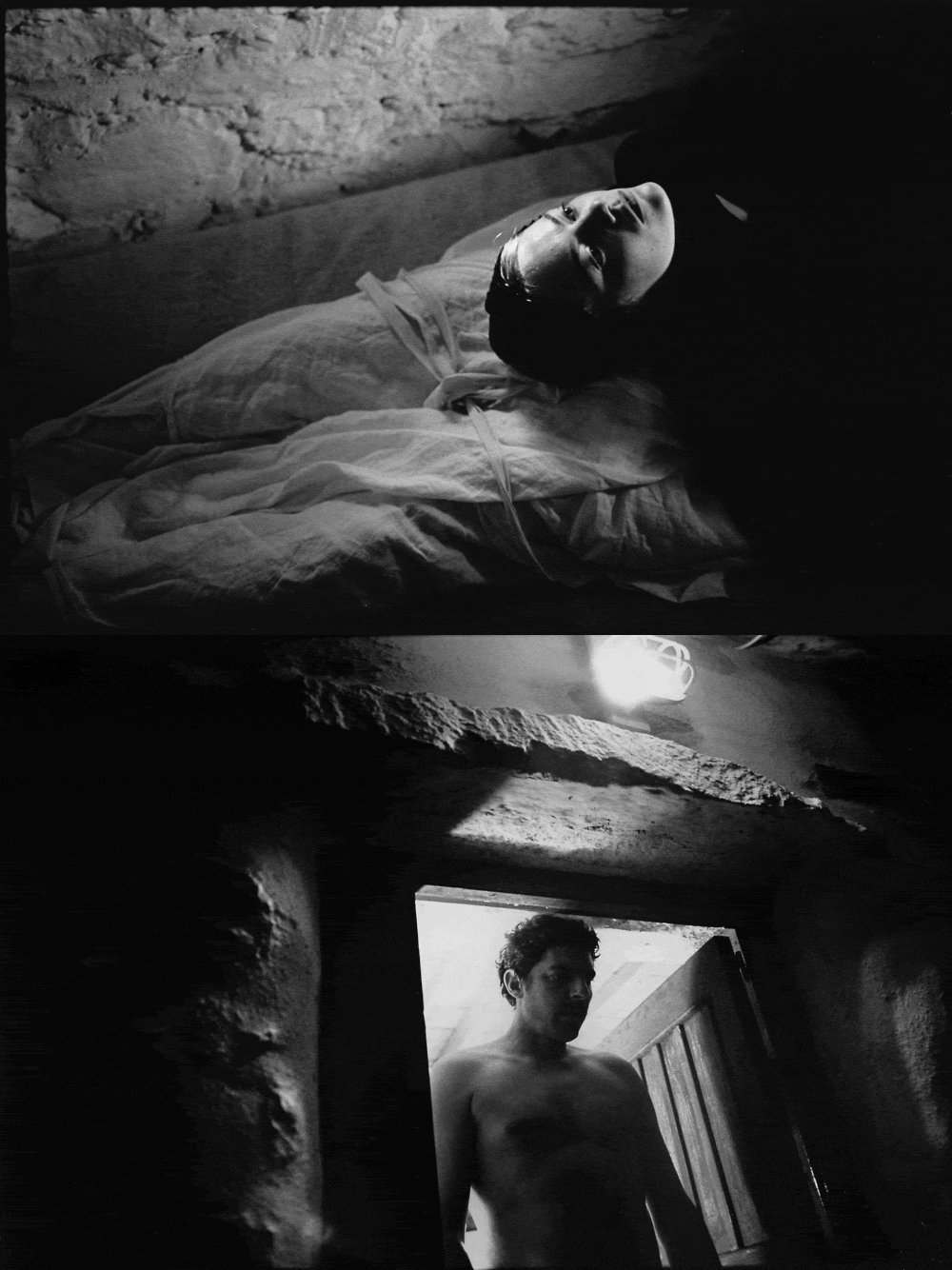
A woman (Emma Stone) wearing a black headscarf lies on a shrouded body. A bare-chested man (Damien Bonnard) stands in a doorway. Scenes from a film shot by Yorgos Lanthimos.

Excerpts from the screenplay for Bleat, a film written, directed and produced by Yorgos Lanthimos.


Commissioned by the Greek National Opera (GNO) and NEON for their joint programme titled The Artist on the Composer.


This, then, is the artist Yorgos on the composers Johann Sebastian Bach / Knut Nystedt and Toshio Hosokawa.


Translated from the Greek (in 2019) to be shot on black-and-white film in silence (on Tinos Island, Greece in 2021, during post-production for Poor Things).


The short looping video shows the only footage from the film released digitally (online).


Bleat will only ever be presented as a 35mm projection accompanied by a live music ensemble and choir.


The woman depicted on the icon really does look a bit like Emma Stone in some strange way.


see also
fields ⋮ donkeys
hearts ⋮ touched
only ⋮ outwardly
stone ⋮ lobster
truth ⋮ wonderful


arkhæio
BLEAT