whisper ⋮ waves

Whisper, whispering waves…
I have hope – hope that you know and can tell me:
My life’s one love is way out there, drilling deep for oil
Will he return to me from the sea’s embrace?

I just put our baby to bed
Moonlight streams in silver, bathes her cradle
Send me quiet word of him (how else am I to know?)
Whisper it, whisper, oh waves…

This night goes on (and on), the moon roams far away
A distant breeze sweeps over the Caspian sea-blue
Oh waters, hurry, please… I long for my love
Waves, break the good news (how my heart races!)

Swathes of blue, give my love safe passage
Let him come again, smooth-browed, resplendent
For the sons of Absheron, of our golden land
Oftentimes return in gleaming glory

Whisper, whispering waves…
I have hope – hope that you know and can tell me:
My life’s one love is way out there, drilling deep for oil
Will he return to me from the sea’s embrace?

I just put our baby to bed
Moonlight streams in silver, bathes her cradle
Send me quiet word of him (how else am I to know?)
Whisper it, whisper, oh waves…

An Azerbaijani song sung by Şövkət Ələkbərova

Pıçıldaşın, pıçıldaşın, ləpələr
Bəlkə mənə bir sözünüz var sizin
Buruq qazır mənim ömür yoldaşım
Qayıdırmı qucağından denizin?

Körpemizi yatırmışam indice
Beşiyine Ay nurunu sepeler
Sevgilimden xeber verib gizlice
Pıçıldaşın, pışıldaşın, lepeler
Gece keçir Ay dolanıb üfüqde
Göy Xezerin sinesinde meh esir
Ah tez olun darıxıram, ey sular
Müjde verin seven qelbim telesir

Mavi sular sevgilime yol verin
O qayıtsın alnı açıq üzü ağ
Çünki qızıl Abşeronun oğlunda
Bir adetdir zeferlerle qayıtmaq

Pıçıldaşın, pıçıldaşın, ləpələr
Bəlkə mənə bir sözünüz var sizin
Buruq qazır mənim ömür yoldaşım
Qayıdırmı qucağından denizin?

Körpemizi yatırmışam indice
Beşiyine Ay nurunu sepeler
Sevgilimden xeber verib gizlice
Pıçıldaşın, pışıldaşın, lepeler
Translated for the love of it.


This Azerbaijani song – “Whisper, Waves” [“Pıçıldaşın, Ləpələr”] – was recorded by the legendary singer Şövkət Ələkbərova (1922–1993), likely during the 1960s.


The music is by Andrey Babayev (1923–1964).


The lyrics are by the poet İslam Səfərli (1923–1974).


Discovered during team research for the Opening Ceremony of the First European Games held in Baku, on the shores of the Caspian, in 2015 – that is, for a work titled Origins, conceived and directed by Dimitris Papaioannou (in which this song did not appear, but its beauty is hard to forget. How my heart races!).


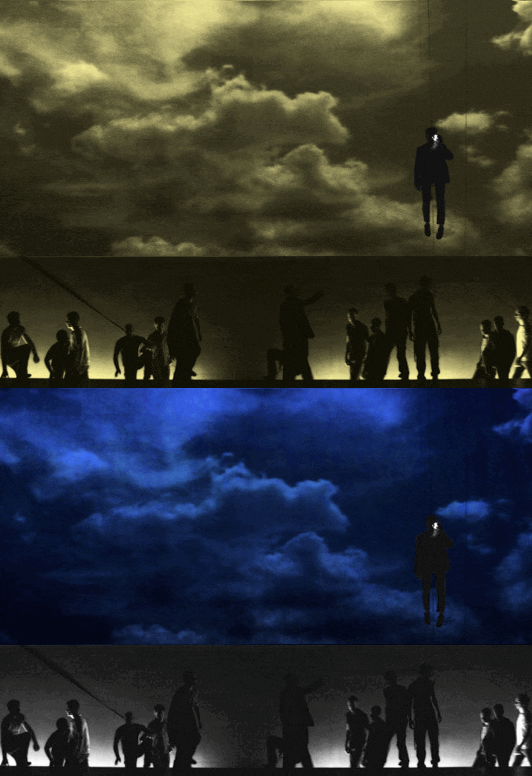
The image – snapped on said shores of the Caspian on 13 March 2017 (early afternoon) – slowly fades into full colour from yellow. “Full colour” here means a panoply of greys, with but the faintest bruise of sky-blue breaking through (near the top).


Consider “whisper ⋮ waves” alongside two other dubitanda – “agleam ⋮ bereft” and “listing ⋮ sorrow” – to find three figures calling out to various seas (Aegean, Caspian, otherworldly), aching for loves (child or parent or spouse) beyond reach.


A triptych of longing (via Kitsopoulou and Cavafy and Səfərli):


waiting this whole night through
one ear listing always to the wind
whisper it, whisper, oh waves


These three translations informed one another (you can spot the ways).


see also
agleam ⋮ bereft
listing ⋮ sorrow

coming ⋮ gently

LONG DISTANCE

– Yes? Yes? Yes? Yes?
– Hey. Hey, can you hear me?
– Yes?
– Want to come over?
– Yes? Where? How do I get there?

– In 150 metres, turn right.
– Yes?
– In 120 metres, turn left. In 70 metres, make a u-turn.
– Yes?
– In 221 metres, turn right.

– Yes? Hang on… I’m lost.
– You’re on your way. Coming?
– Yes?
– In 180 metres, turn right. In 80 metres…
…turn right again. In 50 metres, go straight on.

– I’m at your door.
– Come up.
– It won’t open.
– Don’t force it. Push gently.

Dimitris Papaioannou

– Ναι; Ναι; Ναι; Ναι;
– Έλα. Έλα, μ’ ακούς;
– Ναι;
– Έρχεσαι άπο ’δω;
– Ναι; Που; Πως να ’ρθω;

– Στα 150 μέτρα, στρίψε δεξιά.
– Ναι;
– Στα 120 μέτρα, στρίψε αριστερά. Στα 70 μέτρα, κάνε αναστροφή.
– Ναι;
– Στα 221 μέτρα, στρίψε δεξιά.

– Ναι; Κάτσε… Χάθηκα.
– Έρχεσαι.
– Ναι;
– Στα 180 μέτρα, στρίψε δεξιά. Στα 80 μέτρα…
…στρίψε πάλι δεξιά. Στα 50 μέτρα συνέχισε ευθεία.

– Είμαι στην πόρτα σου.
– Ανέβα πάνω.
– Δεν ανοίγει.
– Δεν θέλει δύναμη. Σπρώξε μαλακά.

This disconnected dialogue reminds me of a journey once made to reach a door in Athens.


Compare with the fragment below, by the Persian poet Rumi (translated by Coleman Barks and Kadio Kolymva respectively):


I have lived on the lip of insanity,
wanting to know reasons, knocking on a door.
It opens. I’ve been knocking from the inside!


Για χρόνια χτυπούσα την πόρτα
κι είδα όταν άνοιξε
πως χτυπούσα από μέσα.


Translated for (and taken from) the 2007 subtitles made to accompany the digital versatile disc of the stage work Two by Dimitris Papaioannou, directed for the screen by Athina Rachel Tsangari.


The Rumi fragments appear in the DVD booklet.


The black-and-white image (now popping with a blue sky) was collaged by Dimitris to be the final (performance) image of this same booklet.


see also
human ⋮ connection
personal ⋮ pleasure


arkhæio
DIGITAL VERSATILE (TWO) DISC TWO TOME

personal ⋮ pleasure

During the sexual act, […] all bodies retreat into themselves,
withdrawing into that most unadulterated form of all personal silences: pleasure.

Yorgos Himonas

Kατά την ερωτική του δράση, […] το κάθε σώμα αποχωρεί,
αποσύρεται στην πιο απόλυτη δική του σιωπή, που είναι η ηδονή.

Excerpt from an article by Yorgos Himonas titled “The Desolate Loneliness of Men” [«Η αβοήθητη μοναξιά του άντρα»] first published in Prosopa, a section of the Greek Ta Nea newspaper.


Translated for (and taken from) the 2007 booklet made to accompany the DVD of the stage work Two by Dimitris Papaioannou, directed for the screen by Athina Rachel Tsangari.


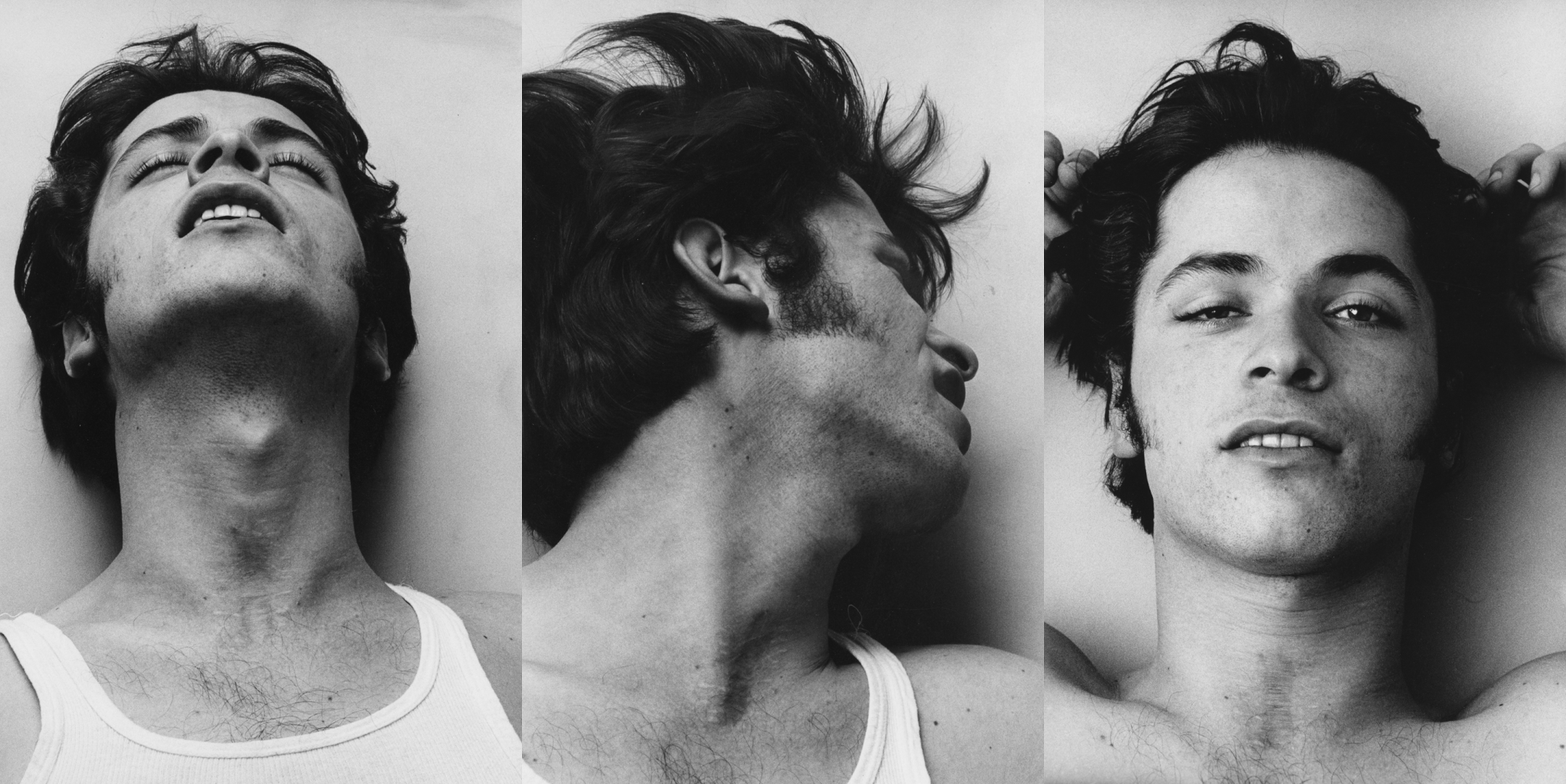
Images by Peter Hujar – Orgasmic Man I, II & III (1969). Eyes glazed.


see also
coming ⋮ gently
human ⋮ connection


arkhæio
DIGITAL VERSATILE (TWO) DISC TWO TOME

human ⋮ connection

Isolated from all other human bodies, never consciously enjoying a blood connection with another body as does a female of the species with her foetus, nor even experiencing the outflow of blood, as she does, unless his body is subjected to violence, the male body is left solitary…

Yorgos Himonas

Αποκλεισμένος από το άλλο ανθρώπινο σώμα, μη έχοντας ποτέ καμιά ενσυνείδητη συγκοινωνία αίματος με το άλλο σώμα, όπως έχει η γυναίκα με το κύημά της – ούτε καν έξοδο αίματος, όπως εκείνη, παρά μονάχα όταν το σώμα του εκτεθεί στη βία, έχει ένα σώμα μοναχικό…

Excerpt from an article by Yorgos Himonas titled “The Desolate Loneliness of Men” («Η αβοήθητη μοναξιά του άντρα») first published in Prosopa, a section of the Greek Ta Nea newspaper.


Translated for (and taken from) the 2007 booklet made to accompany the DVD of the stage work Two by Dimitris Papaioannou, directed for the screen by Athina Rachel Tsangari.


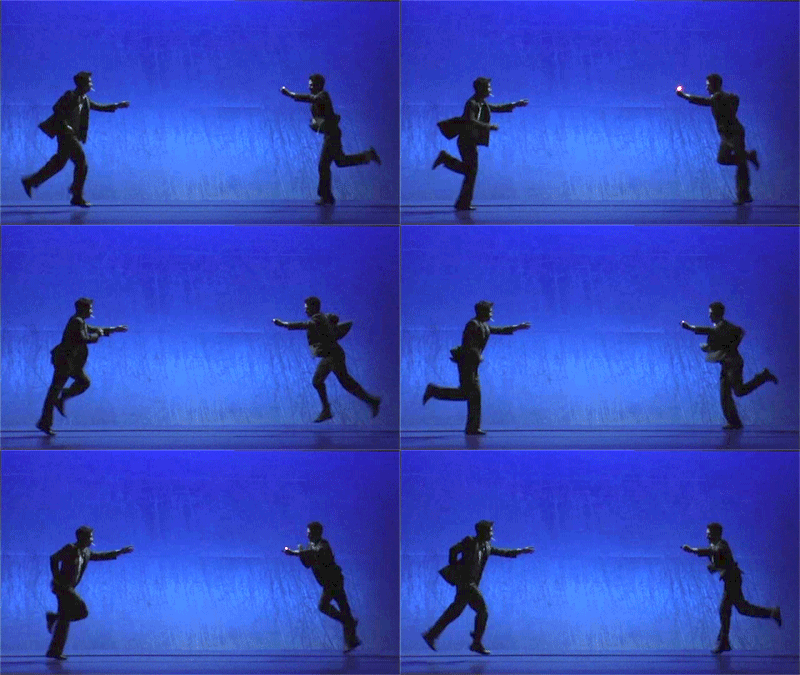
Looping image shows Nikos Dragonas and Yiannis Nikolaidis running and reaching endlessly to spark a touch. Taken from “TWO / DIRECTIONS” (a segment of Dimitris’ Two).


see also
coming ⋮ gently
personal ⋮ pleasure


arkhæio
DIGITAL VERSATILE (TWO) DISC TWO TOME

documents ⋮ inaccurate

HAEMATA
Dimitris Kalafatis & Yorgos Simopoulos: A Correspondence (1990–1993)


Dimitris Kalafatis, a man of around 40, gashes his neck by accident in July 1989. The quite average wound that opens never heals. Yorgos Simopoulos is his closest friend at the time.

The letters exchanged between these two men over a three-year period (1990–1993) were found in pristine condition by Kalafatis’ daughter, Anna Kalafati. Their perfectly legible handwriting meant the documents could be read without any difficulty. All were written in black ballpoint pen, apart from two.

The subject matter of this written exchange does not provide a snapshot of the socio-political climate of the times in which it took place. Descriptions of places and events are often inaccurate. This may be due to the effects of certain prescription drugs or to an intentional misrepresentation of events, conversations, and dates, however neither scenario has been proven thus far.

The two men stopped corresponding suddenly in December 1993 for reasons unknown. Kalafatis died on 14 April 2001, Simopoulos four days later.

Efthimis Filippou

AIMATA
Αλληλογραφία: Δημήτρη Καλαφάτη–Γιώργου Σιμόπουλου (1990–1993)
 

Ο Δημήτρης Καλαφάτης, σαράντα περίπου ετών, σκίζει κατά λάθος τον λαιμό του τον Ιούλιο του 1989. Η μέτρια πληγή που δημιουργείται δεν κλείνει. Ο Γιώργος Σιμόπουλος είναι επιστήθιος φίλος του εκείνη την περίοδο.
 
Τα γράμματα που αντάλλαξαν οι δύο άντρες την τριετία 1990–1993 βρέθηκαν ανέπαφα από την κόρη του Καλαφάτη, την Άννα Καλαφάτη. Οι γραφικοί χαρακτήρες τους ήταν απόλυτα ευανάγνωστοι, συνεπώς δεν δυσκόλεψαν καθόλου την ανάγνωση των χειρόγραφων. Όλα ήταν γραμμένα με μαύρο στυλό διαρκείας, εκτός από δύο.

Η θεματολογία της γραπτής αυτής συνομιλίας δεν σκιαγραφεί τον πολιτικό ή τον κοινωνικό χαρακτήρα της εποχής όπου έλαβε χώρα και οι περιγραφές τόπων και περιστατικών πολλές φορές είναι ανακριβείς. Αυτό μπορεί να οφείλεται σε παρενέργειες κάποιας φαρμακευτικής αγωγής ή σε εσκεμμένη αλλοίωση γεγονότων, διαλόγων και ημερομηνιών, αλλά τίποτα από τα δύο δεν έχει εξακριβωθεί μέχρι σήμερα.

Η επικοινωνία των δύο αντρών σταμάτησε αιφνίδια τον Δεκέμβριο του 1993 για άγνωστους λόγους. Ο Καλαφάτης πέθανε στις 14 Απριλίου του 2001 και ο Σιμόπουλος τέσσερεις μέρες αργότερα.

“Haemata” is blood and lots of it. Think haemorrhage and stigmata. Accent on the em.


Written by Efthimis Filippou in 2014 for the Vasistas theatre group.


Directed by Argyro Chioti to première as Emata / Bloods at Onassis Stegi.


Translated for the love of it. Later appeared as Haemata in the Noon book collection.


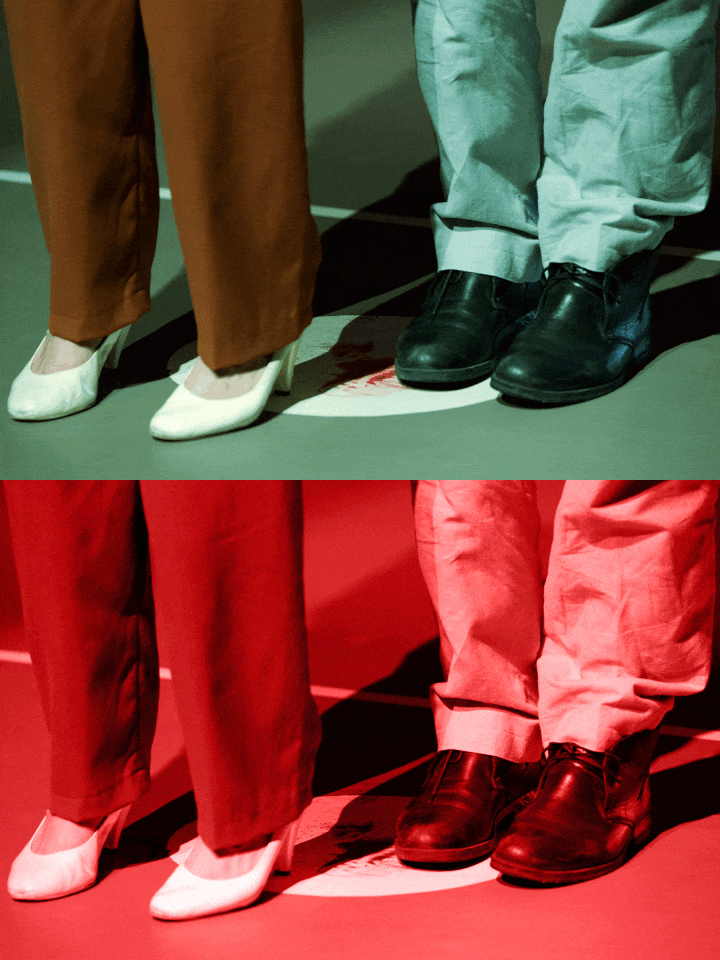
The image (shot by Vassilis Makris) shows blood underfoot. Blood that seeps suddenly.


These feet belong to Efthimis Theou – in black(red) shoes – and Eleni Vergeti – in white(red) shoes.


see also
coldness ⋮ complexity
constantly ⋮ faithful


arkhæio
HAEMATA NOON


transpolia
I asked him ⋮ to dance more. Noon ⋮ lies ahead. This here ⋮ (from Brazil.)

constantly ⋮ faithful

On the warm and rainy night of 7 July 1994, a 44-year-old woman suffered a tragic accident. Losing control of the moped she was riding, this woman was seriously injured when she fell on a sharp object lying on the tarmac that pierced her liver. She was immediately taken to hospital, in a coma. All the days she was there, the man she loved more than anything else in her life was constantly by her side. A man of 62, plump and in good health. Each night, the man would lay down and sleep alongside her on the hospital bed. For those few hours, until dawn, it seemed like they were both in a coma, or like they were both just sleeping. The night nurses never woke him, they would only cover him up if some foot of his slipped out from under the white hospital blanket. This is the final conversation between the organs and limbs of the man and woman’s bodies, as recorded by medical equipment a little before she died of a heart attack on 18 July 1994. This re-enactment of the conversation stays completely faithful to the one that actually took place.

LIVER by Efthimis Filippou

Το βροχερό και ζεστό βράδυ της 7ης Ιουλίου του 1994, μια γυναίκα 44 ετών είχε ένα τραγικό ατύχημα. Το δίκυκλο στο οποίο επέβαινε έχασε την πορεία του και η γυναίκα τραυματίστηκε σοβαρά καθώς, πέφτοντας στο οδόστρωμα, ένα αιχμηρό αντικείμενο διαπέρασε το συκώτι της. Μεταφέρθηκε άμεσα στο νοσοκομείο σε κώμα. Όσες μέρες παρέμεινε εκεί, ήταν συνεχώς δίπλα της ο άντρας που αγάπησε όσο τίποτε άλλο στη ζωή της. Ένας άντρας 62 ετών, υγιής και εύσωμος. Κάθε βράδυ αυτός ο άντρας ξάπλωνε δίπλα της στο κρεβάτι του νοσοκομείου και κοιμόταν μαζί της. Αυτές τις λίγες ώρες, μέχρι να ξημερώσει, έμοιαζαν σαν να ήταν και οι δύο σε κώμα ή σαν να κοιμούνται απλώς και οι δύο. Οι νυχτερινές νοσοκόμες δεν τον ξυπνούσαν, μόνο τον σκέπαζαν αν τύχαινε κάποιο πόδι του να βγει έξω από την άσπρη νοσοκομειακή κουβέρτα. Αυτή είναι η τελευταία συζήτηση ανάμεσα στα όργανα και στα μέλη των σωμάτων του άντρα και της γυναίκας, όπως καταγράφηκε στα ιατρικά μηχανήματα λίγο πριν αυτή πεθάνει στις 18 Ιουλίου του 1994 από ανακοπή καρδιάς. Η αναπαραγωγή της συνομιλίας είναι απόλυτα πιστή στην πραγματική.

When organs and limbs talk (and act).


Excerpt from Liver by Efthimis Filippou (2020) – the story’s set-up.


Translated from the Greek to be performed on stage / on screen in English (with some German dialogue) at the Greek National Opera / on GNO TV.


Performed the Ictus Ensemble alongside Angeliki Papoulia and Christos Passalis, who also directed.


Maria Dourou and Yorgos Stefanakos made guest appearances as the 44-year-old woman and the 62-year-old man respectively.


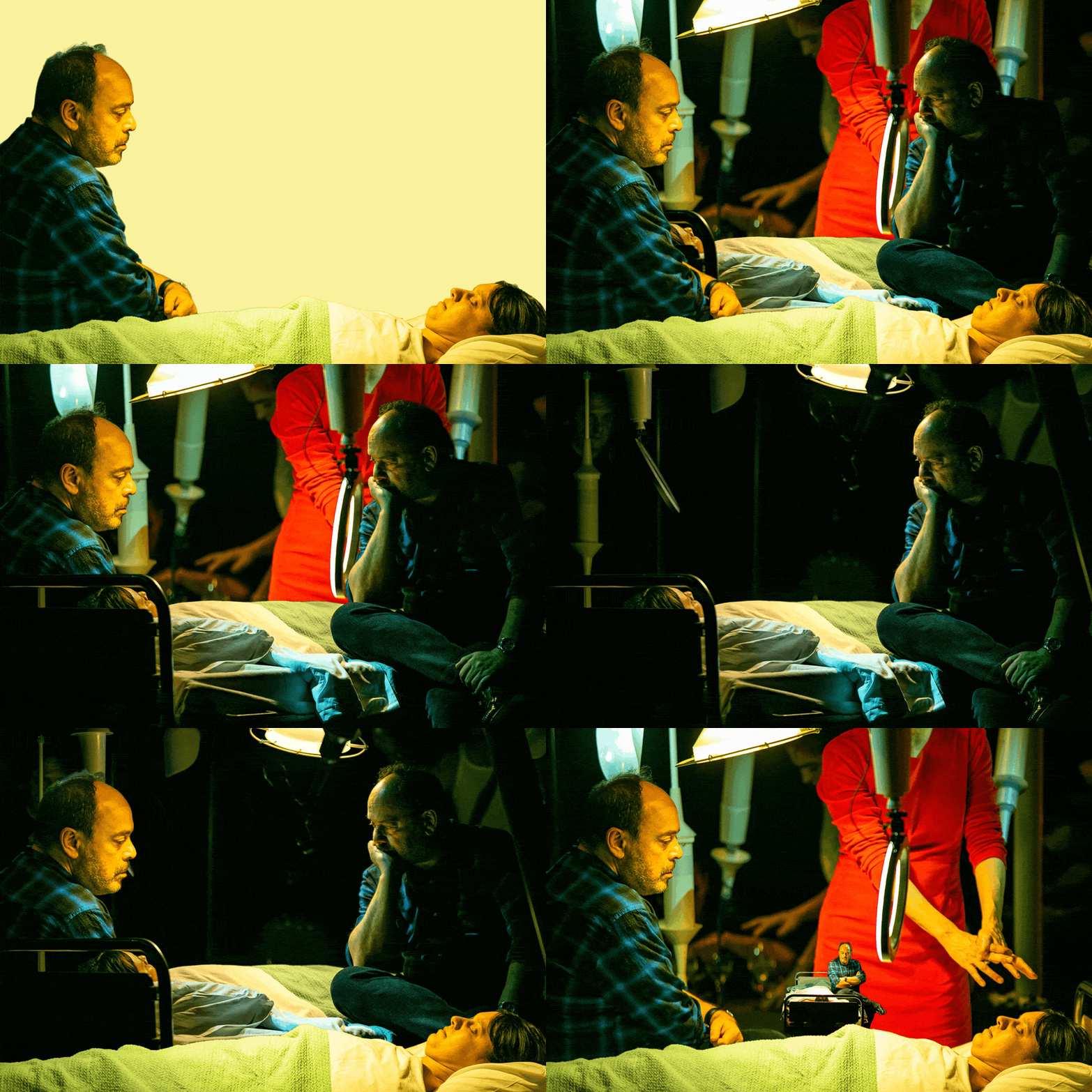
The image, collaged from photographs shot by Andreas Simopoulos, shows Yorgos in unceasing silent vigil over a comatose Maria as their body parts chat away. (In red is Angeliki, playing the woman’s liver.)


In 2022, this English translation would also be included in the Noon collection.


see also
coldness ⋮ complexity
documents ⋮ inaccurate


arkhæio
LIVER NOON


transpolia
I asked him ⋮ to dance more. Noon ⋮ lies ahead. This here ⋮ (from Brazil.)

kisses ⋮ tears

do kisses blacken tears

Δουκίσσης Πλακεντίας
(Doukíssis Plakentías)

A phonetic translation of sorts.

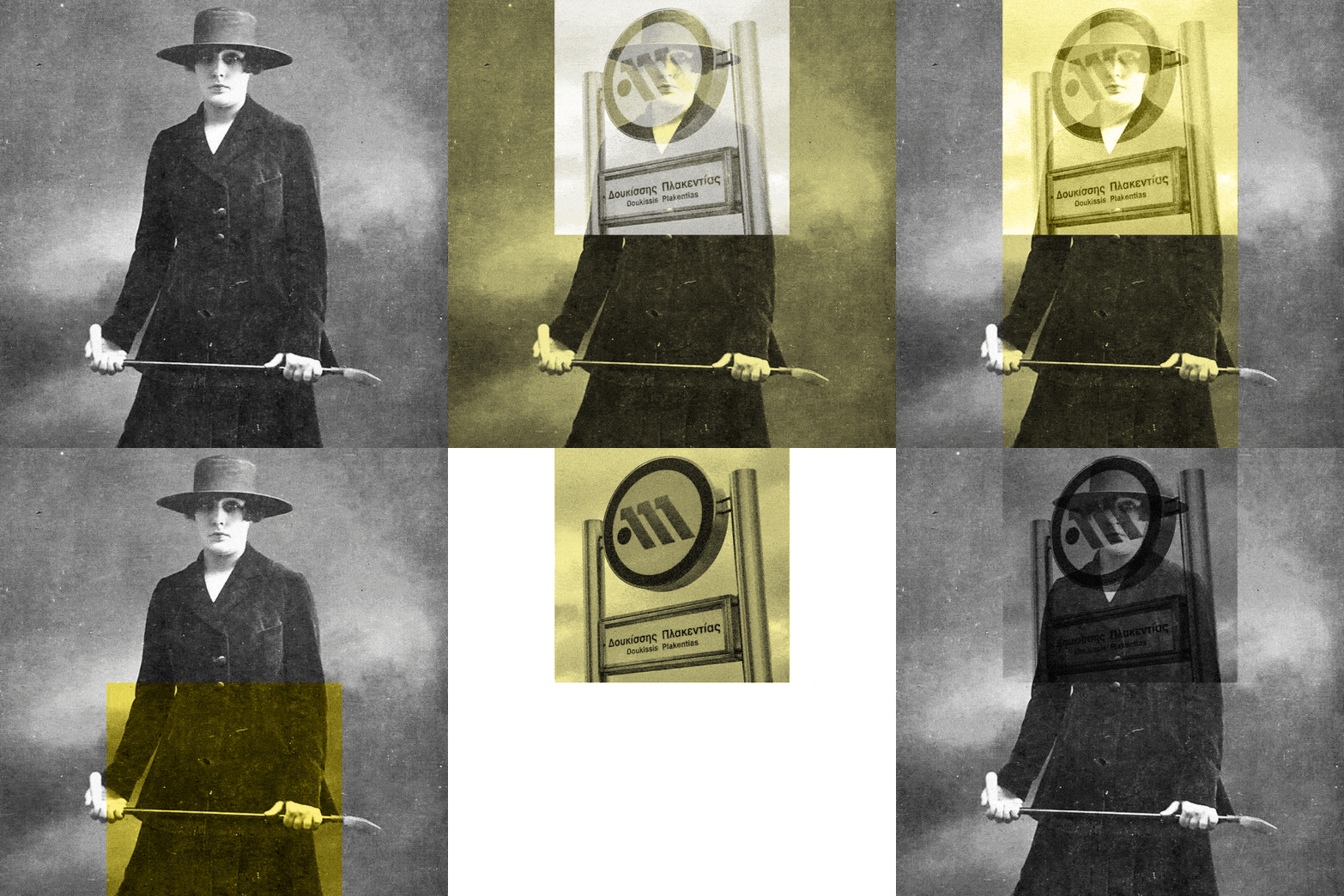
“Do kisses blacken tears” refers to the Duchess of Plaisance (Sophie de Marbois-Lebrun, 1785–1854) and is also an Athens metro station (built on land once hers) that took her name.


The images show (a) the sign at said station and (b) the actress Elli Afentaki performing as the French socialite in a 1916 play of her life.


see also
(this dubitandum lives alone)

hearts ⋮ touched

WHAT’S THIS THING THEY CALL LOVE

what’s this thing, oh this thing they call love?
oh this thing, what’s this thing…
secretly driving our hearts
longed for by all it has touched

what’s this thing, oh this thing they call love?
oh this thing, what’s this thing…
tears and laughter, sunshine and rain
our life’s end, its beginning again

oh no never
were there any lips that could
say it once
then not say it again for good…

what’s this thing, oh this thing they call love?
oh this thing, what’s this thing…
that makes us all sing the same tune:
I love you, I love you, I love you…

Sophia Loren & Tonis Maroudas

ΤΙ ΕΙΝ’ ΑΥΤΟ ΠΟΥ ΤΟ ΛΕΝΕ ΑΓΑΠΗ

τι είν’ αυτό που το λένε αγάπη;
τι είν’ αυτό, τι είν’ αυτό…
που κρυφά τις καρδιές οδηγεί
κι όποιος το ’νιωσε το νοσταλγεί

τι είν’ αυτό που το λένε αγάπη;
τι είν’ αυτό, τι είν’ αυτό…
γέλιο, δάκρυ, λιακάδα, βροχή
της ζωής μας και τέλος κι αρχή

ποτέ,
ποτέ κανένα στόμα
δεν το ’βρε
και δεν το ’πε ακόμα…

τι είν’ αυτό που το λένε αγάπη;
τι είν’ αυτό, τι είν’ αυτό…
που σε κάνει να λες το σκοπό
σ’ αγαπώ, σ’ αγαπώ, σ’ αγαπώ…

Sophia Loren longs after Alan Ladd across a table laid with wine (sipped), olives (toothpicked), cigarettes (stubbed). Tonis Maroudas strums and sings along, tenderly too.


Clip taken from Boy on a Dolphin (1957), directed by Jean Negulesco and shot on the island of Hydra (a Hollywood first for Greece).


Sophia Loren’s English-language (and presumably Greek-language) debut.


Music by Takis Morakis. Lyrics by Danae Stratigopoulou and Yannis Fermanoglou. Song first recorded by Keti Denis (no relation to Cathy Dennis, sadly) in 1955.


Movingly used (as cinematically sung by Loren and Maroudas) by Yorgos Lanthimos over the closing credits of his 2015 film The Lobster, over black.


The voice of Danae, who co-wrote (or perhaps wrote?) the Greek lyrics here, is heard earlier in The Lobster – see the dubitandum “only ⋮ outwardly” for more details (in list below).


The Lobster screenplay (written by Yorgos with Efthimis Filippou) translated from the Greek to be shot in English (their own English-language debut). Song lyrics translated for the love of it.


see also
fields ⋮ donkeys
fingers ⋮ dry
only ⋮ outwardly
stone ⋮ lobster


arkhæio
THE LOBSTER THE LOBSTER SCREENPLAY BOOK