before ⋮ death

Before he gets the chance to properly bloom, he wilts upon contact with a reality that is brutal and anything but benevolent. Today, a young man must come of age before his time! And this is an early passing of his youth. He must taste, as soon as possible, the forbidden fruit and be cast out in order to face down the world in which he is called upon to live. But it is a bumpy landing, more often than not. Most youths are not yet ready when forced to adapt, and so fall victim to all those avenues that promise them escape and redemption. And this is a premature death.

Stelios Lydakis

Πριν προλάβει καλά-καλά να ανθίσει μαραίνεται στην πρόσκρουσή της με μία πραγματικότητα τραχιά και καθόλου ευνοϊκή. Σήμερα ο νέος πρέπει να μεγαλώσει πριν την ώρα του! Και αυτός είναι ένας πρώιμος θάνατος της νιότης του. Πρέπει να δοκιμάσει, όσο γίνεται γρηγορότερα, τον απαγορευμένο καρπό και να υποστεί την έξωση για να ανταποκριθεί στον κόσμο που καλείται να ζήσει. Όμως η προσγείωση είναι ανώμαλη τις περισσότερες φορές. Πολλοί νέοι δεν είναι ώριμοι για την επιτακτική προσαρμογή κι έτσι γίνονται θύματα όλων των μέσων που τους υπόσχονται φυγή και λύτρωση. Και αυτό είναι ένας πρόωρος θάνατος.
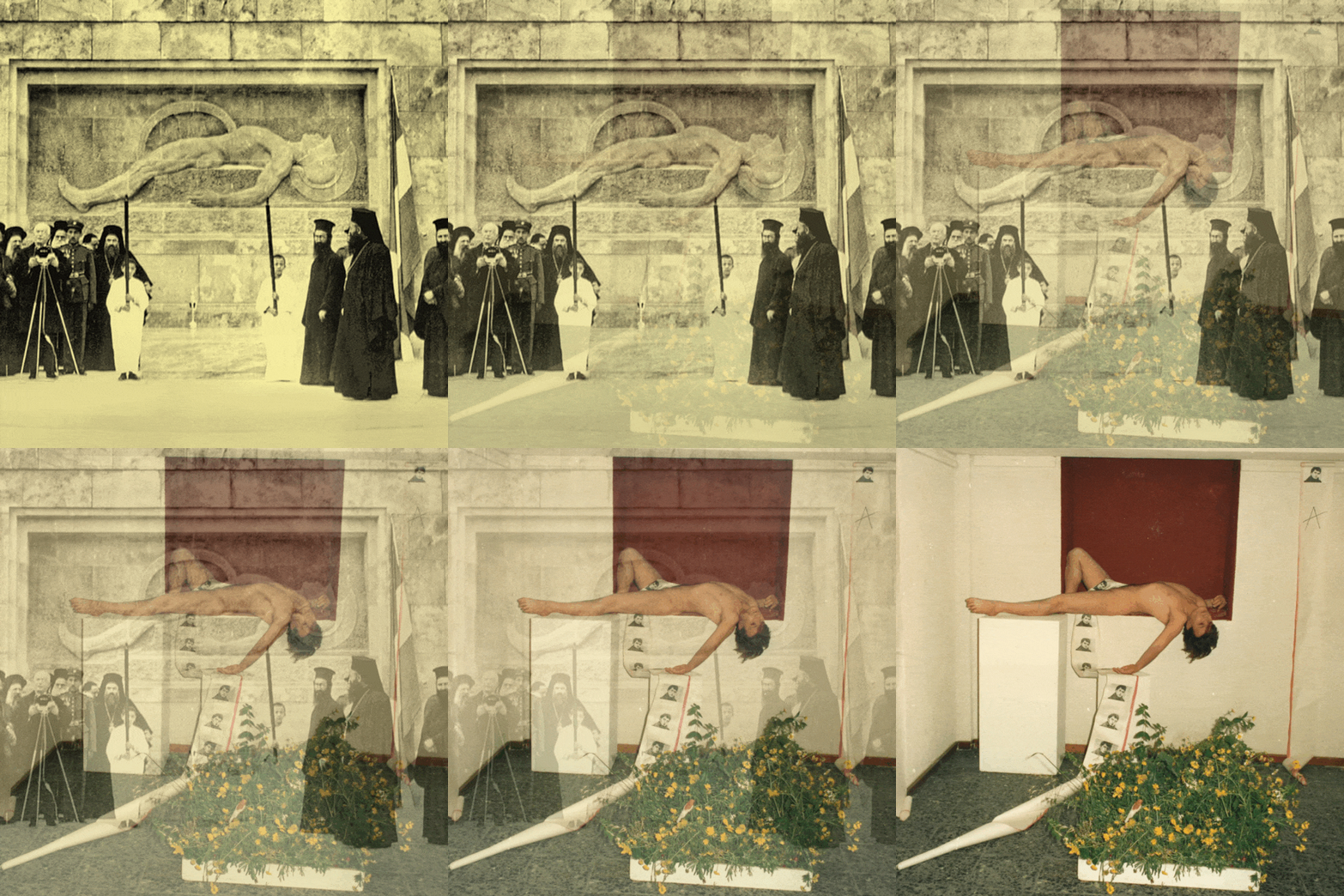
Extract from a review by Stelios Lydakis of the performance Memorial for Youths Who Died Too Soon by Costas Evangelatos (1987).


Translated for (and taken from) the essay “Our Army of Lovers” by Mare Spanoudaki that appeared in Issue One of Octopus, the EMΣT magazine.


The image shows the actor Takis Loukatos in Evangelatos’ performance, sprawled out in the vein of Phocion Roque’s fallen warrior relief at the Tomb of the Unknown Soldier on Syntagma Square in Athens. Flesh not stone rendered vulnerable.


see also
emotive ⋮ realm


arkhæio

HIV MEMORY


transpolia

But rejection ⋮ at night. Ghost boy ⋮ killer. It is ⋮ everything.

emotive ⋮ realm

Queer performativities emerged from a point of disconnect and deep-rooted schism from traditional (gay) codes and aesthetics, but this ‘emotive turn’ was only made possible once artists adopted irony, volatility, and ‘monstrosity’ as tools for overturning older ‘incarnations’ and aesthetic performances of the body.

[…]

Political strategies for the ‘normalisation’ of lesbian and gay lives in accordance with prevailing heteronormative values (monogamy, marriage, family) constitute a move away from the ‘freer’ queer biopolitics of the 1980s and ’90s, delineating a powerful line of resistance between the ‘diseased’ past and the ‘healthy’ present of a new existential mode within ‘heteronormative tyranny’ that seeks to present homosexuals as normal persons integrated into the ‘realm of dominant ideology.’

George Sampatakakis

Οι κουίρ παραστασιακότητες προέκυψαν σε ένα σημείο αποσύνδεσης και ριζικού σχίσματος από τους παραδοσιακούς (gay) κανόνες και αισθητικές, αλλά αυτή η «συγκινησιακή στροφή» κατέστη δυνατή μόνο όταν οι καλλιτέχνες υιοθέτησαν την ειρωνεία, την αστάθεια και την «τερατωδία» ως εργαλεία αναίρεσης των παλιών «σωματοποιήσεων» και αισθητικών επιτελέσεων του σώματος.

[…]

Οι πολιτικές στρατηγικές «κανονικοποίησης» των λεσβιακών και γκέι ζωών σύμφωνα με κυρίαρχες ετεροκανονικές αξίες (της μονογαμίας, του γάμου και της οικογένειας) συνιστούν μια απομάκρυνση από τις περισσότερο «ελεύθερες» κουίρ βιοπολιτικές του 1980-1990, ορίζοντας μια ισχυρή αντίσταση μεταξύ του «μολυσμένου» παρελθόντος και της «υγιούς» νέας κατάστασης της ύπαρξης μέσα στην «ετεροκανονική τυραννία», που θέλει να παρουσιάζει τους ομοφυλόφιλους ως κανονικούς και εναρμονισμένους στο «πεδίο της δεσπόζουσας ιδεολογίας».

Two extracts from the book HIV / AIDS: Theatre and Trauma in Greece (2021) by George Sampatakakis (pp. 35 & 123).


Translated for (and taken from) the essay “Our Army of Lovers” by Mare Spanoudaki that appeared in Issue One of Octopus, the EMΣT magazine.


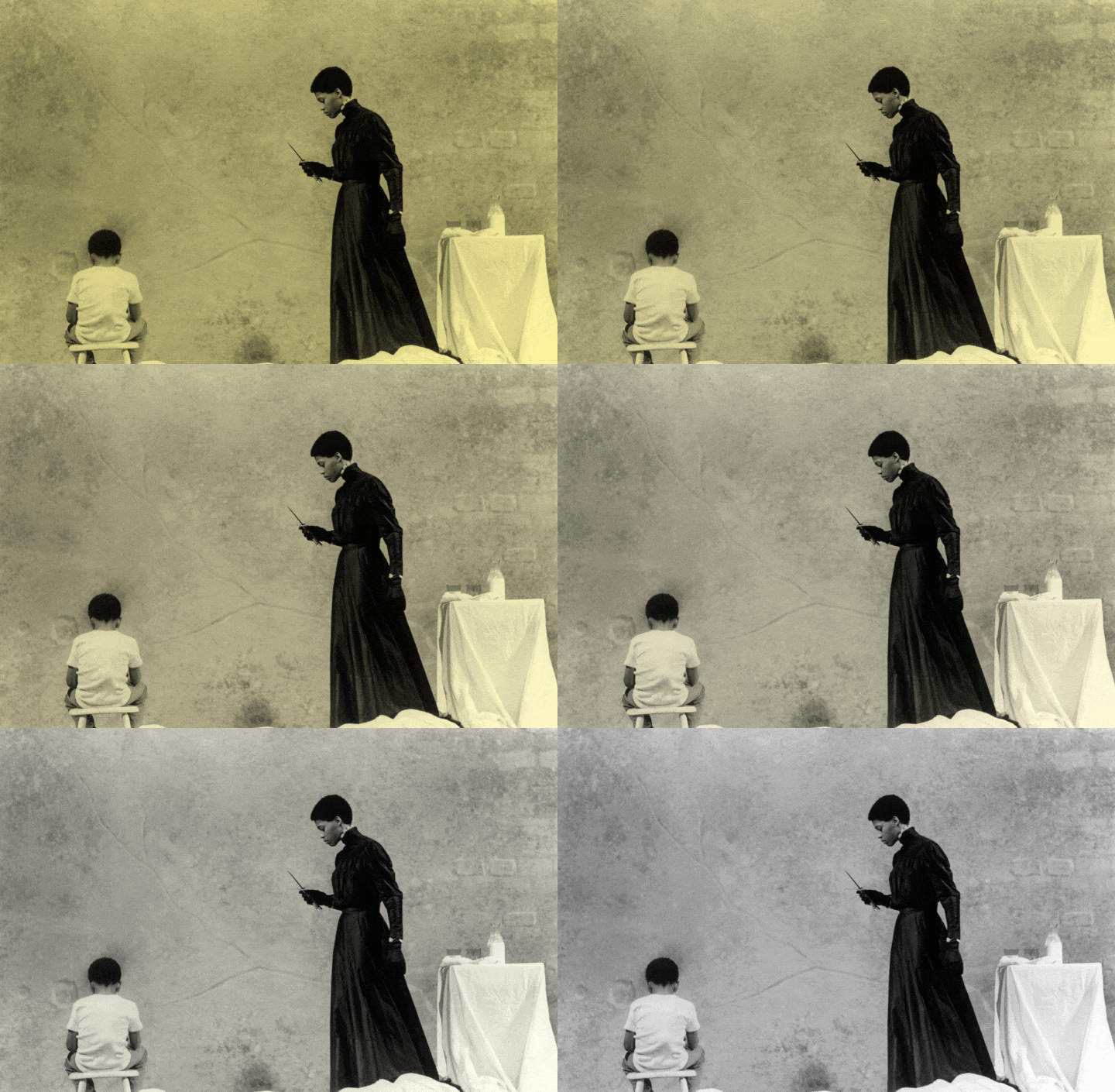
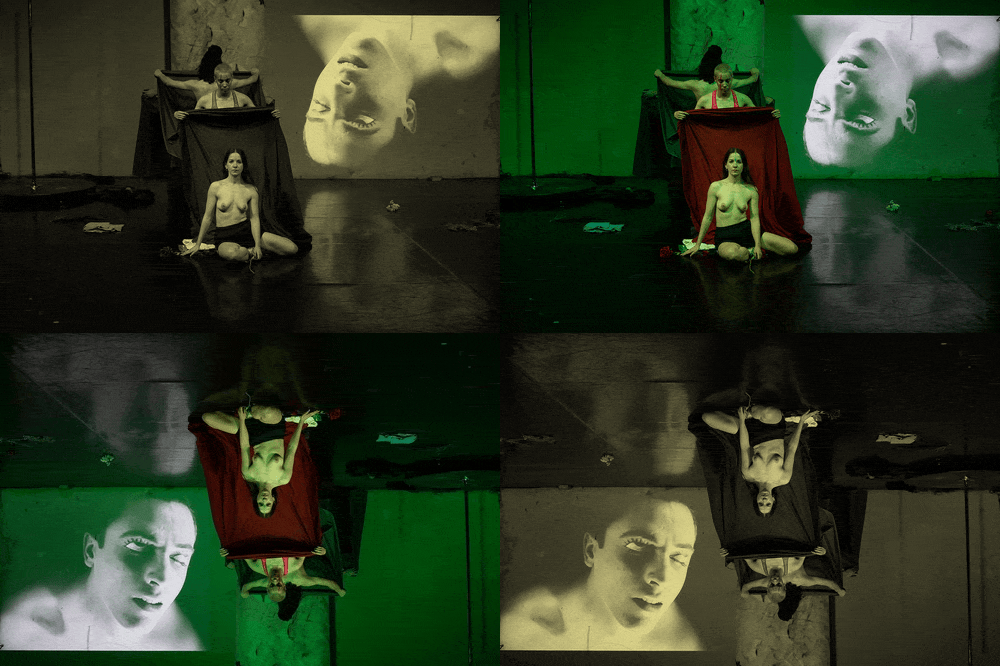
The image shows the performers Christina Karagianni, Christina Reinhardt, and Haris Doumouras in Nova Melancholia’s Sebastian (2024).


Performing with them (projected): moving images from Le Sang d’un poète (The Blood of a Poet) by Jean Cocteau.


One small part of a layering of sources to create a queer performative palimpsest.


see also
before ⋮ death


arkhæio
HIV MEMORY


transpolia
But rejection ⋮ at night. Ghost boy ⋮ killer. It is ⋮ everything.

tenderness ⋮ squeaks

Remainders,
nestled close,
milling about,
together pressed.

video made for the DIVERSITY FESTIVAL

Post-party balloons shot at Watermill.

This video was created in 2011 for the Diversity Festival – “We, the Other” [«Εμείς, ο άλλος»] – held in Athens and curated by its artistic directors Eleni Roumpani and Gerasimos Evangelatos.


It uses footage shot at the Watermill Center in the Hamptons (NY) the previous July, when a participant of Robert Wilson’s Summer Program, in the calm after the Annual Summer Benefit.


These white balloons were remainders, nestled close, milling about, together pressed. The Festival logo come to life.


K.BHTA kindly (sweetly) supported the Festival by letting his track “The Kid” be used – an early draft of music he had written for the Dimitris Papaioannou staged installation Inside that same year.


see also
(this dubitandum lives alone)

worthy ⋮ wait

crack on my back and it’s hard to move
going too fast and I have to prove
I’m worthy
I’m worthy

shaking my ass like a chipmunk
looking at you brings the funk back
are you with me?
you’re with me
you’re with me

hey babe, don’t you wait on me
don’t you wait on me

little too much is about to turn
again and again, when am I to learn
pretty baby
my baby

mother ship calls and I’m out the door
my favorite one, how you come for more
how you come
for more
you come for more

hey babe, don’t you wait on me
don’t you wait on me

WAIT ON ME by Σtella

A music video (unofficial, unreleased, unearthed).

Bats skim the sky and Parthenon starts to glow as cat watches on (one hopes happy).


Video created for the song “Wait on Me” off Σtella’s debut self-titled album on her Greek label Inner Ear Records in 2015. Rejected, never released.


Music and lyrics by Σtella. Shaking my ass like a chipmunk.


see also
deserts ⋮ overseas
marbled ⋮ beauty
pangs ⋮ raptures
razor ⋮ riffs


transpolia
A ballad ⋮ beloved.

enters ⋮ darkness

Medea, twice barbarian – in lineage and in love. […]

Now she withdraws deeper and deeper into the darkness that is love – love must contain darkness if the absence of the other is to remain unseen; the barbarian love of Medea must have contained great darkness since Jason was never with her: not now, and so not ever. But she was always there, she will be there till the end […]; she never emerged from her darkness – and her ultimate act of love towards Jason is to violently force him to face her inside the pain he feels for his murdered children. She is not to blame, she has no other means – there is no other emotion of his to use: his pain for his children is her final, her sole contrivance to yoke him into a most tortured and most true (for no other truth remains in their marriage) union with her. She does not care. Jason enters into darkness.

Yorgos Himonas

Δὺο φορὲς βάρβαρη ἡ Μήδεια – ἀπὸ καταγωγὴ κι ἀπὸ ἔρωτα. […]

Τώρα ἀπομακρύνεται ὅλο καὶ βαθύτερα στὸ σκοτάδι ποὺ εἶναι ὁ ἔρωτας – πρέπει νὰ ἔχει σκοτάδι ὁ ἔρωτας γιὰ νὰ μὴ φαίνεται ὅτι ὁ Ἄλλος λείπει, πρέπει νὰ ἔχει πολὺ σκοτάδι ὁ βάρβαρος ἔρωτας τῆς Μήδειας ἀφοῦ ὁ Ἰάσονας δὲν ἦταν ποτὲ μαζί της: δὲν εἶναι τώρα κι ἄρα δὲν ἦταν ποτέ. Ἀλλὰ ἐκείνη ἦταν ἀπὸ πάντα ἐκεῖ, θὰ εἶναι ἐκεῖ ὥς τὸ τέλος […]∙ δὲν βγῆκε ποτὲ ἀπὸ τὸ σκοτάδι της – καὶ ἡ ἔσχατη ἐρωτικὴ πράξη της πρὸς τὸν Ἰάσονα εἶναι νὰ τὸν ἀναγκάσει, μὲ τὴν βία, νὰ συναντηθεῖ μαζί της μέσα ἀπὸ τὸν πόνο του γιὰ τὰ σκοτωμένα του παιδιά. Δὲν φταίει αὐτὴ, δὲν ἔχει ἄλλον τρόπο, γιατὶ κανένα ἄλλο συναίσθημά του δὲν βρίσκει – δὲν ὑπάρχει, γιὰ νὰ τὸ χρησιμοποιήσει: ὁ πόνος του γιὰ τὰ παιδιά, εἶναι τὸ τελευταῖο, τὸ μοναδικὸ τέχνασμά της ποὺ θὰ τὸν ὑποτάξει στὴν πιὸ μαρτυρικὴ, στὴν πιὸ ἀληθινὴ (γιατὶ δὲν ἔμεινε καμμιὰ ἄλλη ἀλήθεια ἀπὸ τὸν γάμο τους) ἕνωσή του μαζί της. Δὲν τὴν ἐνδιαφέρει. Ὁ Ἰάσονας μπαίνει στὸ σκοτάδι.

From part two of Yorgos Himonas’ introduction to his 1989 modern Greek version of Euripides’ Medea.


Translated for (and taken from) the 2008 printed programme created for the stage work Medea2 by Dimitris Papaioannou.


The image shows Sheryl Sutton as Birdwoman in Robert Wilson’s 1977 stage work Deafman Glance (photographed by Peter Moore). Menacing in slow motion.


see also
fundamental ⋮ measure


arkhæio
MEDEA (TO THE POWER OF) TWO MEDEA MANUAL A (FOR ATHENS)


transpolia
The catharsis ⋮ of proportion. Today ⋮ forever more.

fundamental ⋮ measure

…the fundamental rule that governs and gives structure to Greek thought and Greek art [is] due measure. When considering this concept, we must fully comprehend the way in which this due measure is utilised and applied by Greek artists – for whom due measure means not constriction, curtailment, or inhibition; it means, above all else, danger: to make measured that which is beyond measure.

Greek tragedy is the sole literary form in the history of art that manages – at least with such clarity, such logic – to walk the agonisingly fine line between (and to combine) the cosmos and chaos, order and anarchy – and moreover to do so while placidly hiding its anguish behind the grand, robust forms of its structures…

Yorgos Himonas

…ὁ θεμελιώδης κανονισμός ποὺ διέπει καὶ οργανώνει την ελληνική σκέψη καὶ την ελληνική τέχνη [εἶναι] τὸ μέτρο. Μὲ τον όρο, νὰ εννοήσουμε πλήρως τὸν τρόπο χρήσης, ἐφαρμογῆς αύτοῦ τοῦ μέτρου από τὸν Ἕλληνα δημιουργό – γιὰ τον ὁποῖο μέτρο δὲν σημαίνει συμπίεση, ἀναχαίτιση, ἀπαγόρευση· σημαίνει προπάντων κίνδυνο: νὰ έπιβάλει μέτρο σ᾽ ἐκεἶνο ποὺ δὲν ἔχει μέτρο.

Ἡ ἑλληνικὴ τραγωδία εἶναι ὁ μοναδικός – τουλάχιστον τόσο καθαρά, τόσο λογικά – στὴν ἰστορία τῆς τέχνης λόγος ποὺ ἐπιτυγχάνει αὐτὴν τὴν ἀγωνιώδη άκροβασία (καὶ συνεργασία) ἀνάμεσα στὸν κόσμο καὶ στὸ χάος, στὴν τἀξη καὶ τὴν ἀναρχία – καὶ μάλιστα κρύβοντας ἀτάραχα τὴν ἀγωνία του, πίσω ἀπὸ τοὺς μεγάλους, ἁδροὺς ὄγκους τῶν κατασκευῶν του…

Text drawn from part one of Yorgos Himonas’ introduction to his iconic 1989 modern Greek version of Euripides’ Medea.


Translated for (and taken from) the 2008 printed programme created for the Athens performances of the stage work Medea2 by Dimitris Papaioannou.


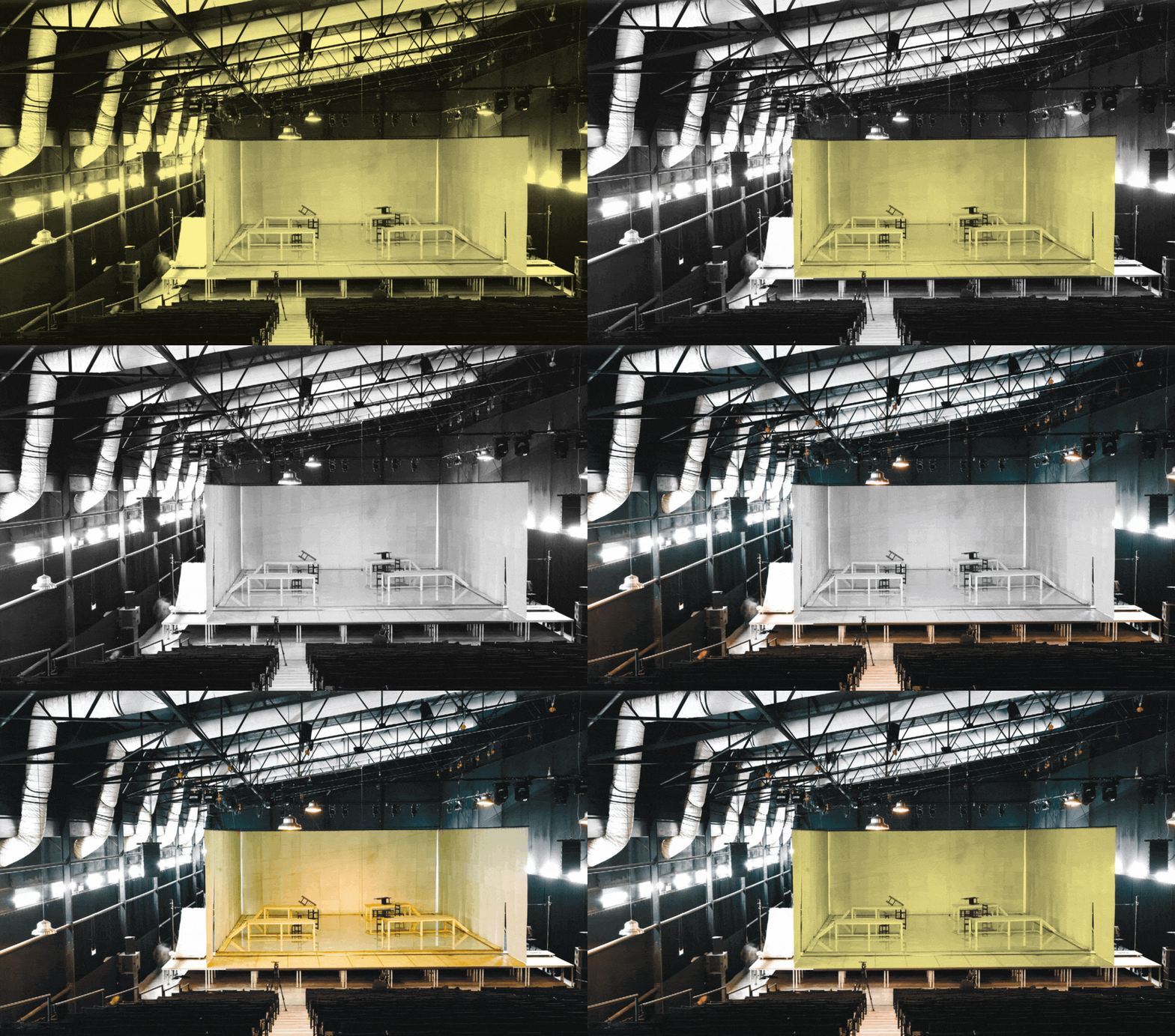
The image, shot by Alexandros Niagos, shows Nikos Alexiou’s masterfully measured (paper-walled, water-floored) set placed – most delicately – at the Athens Epidaurus Festival (nestled inside Peiraios 260’s Hall H).


Grand, robust, placid. Ready for the anguish.


see also
enters ⋮ darkness


arkhæio
MEDEA (TO THE POWER OF) TWO MEDEA MANUAL A (FOR ATHENS)


transpolia
The catharsis ⋮ of proportion. Today ⋮ forever more.

mountains ⋮ moons

CERCIS SILIQUASTRUM, JUDAS TREE

black mud, soft
wet and thick
white arms, hairy
fat and stiff
tree with little purple flowers
on branches soaring high

secretly we water it
with water, milk and sperm
so that there’s shade in early morn
at dawn in which the dog
can sit and lick most carefully
its belly and both ears

so that we too can lick ourselves
when you yourselves head off
can sit and stay out late just like
two mountains or two moons
can sit and say it cannot be
or can it be? who can it be?

it cannot be, or can it be? who can it be?
let it be us or else it cannot be nobody ever.

Efthimis Filippou

ΚΕΡΚΙΣ Η ΚΕΡΑΤΙΝΟΕΙΔΗΣ, ΚΟΥΤΣΟΥΠΙΑ

λάσπη μαύρη, μαλακή
και υγρή και πηχτή
χέρια άσπρα τριχωτά
και χοντρά και σκληρά
δέντρο με άνθη μωβ μικρά
και κλαδιά ως ψηλά
            
το ποτίζουμε κρυφά
γάλα, σπέρμα και νερά
να έχει ίσκιο το πρωί
την αυγή το σκυλί
για να γλείφεται καλά
στην κοιλιά, στα αυτιά
            
να γλειφόμαστε κι εμείς
όταν φεύγετε εσείς
να καθόμαστε ως αργά,
δυο φεγγάρια, δυο βουνά
και να λέμε δεν μπορεί,
ή μπορεί, ποιος μπορεί?
            
δεν μπορεί, ή μπορεί, ποιος μπορεί;
ή εμείς, ή κανείς δεν μπορεί ποτέ. 

Song lyrics written by Efthimis Filippou for Larry Gus (Panagiotis Melidis).


Song released on DFA Records (New York) in 2019 as a vinyl single.


Translated from the Greek to accompany the music video directed by Matvey Fiks and released in 2024.


Efthimis notes:


“The lyrics for ‘Cercis’ are about how a Judas tree was transported from Athens to the island of Hydra, where it was planted alongside some (deathless) agaves. No-one knows if this plant is still alive, or what condition it’s in. The lyrics for ‘Cercis’ express my love for Yorgos – this love also inspired Panagiotis, who set them to music.”


[«Οι στίχοι της “Κουτσουπιάς” περιγράφουν τη μεταφορά μιας κουτσουπιάς από την Αθήνα στην Ύδρα και τη φύτευσή της στον κήπο του Γιώργου δίπλα στους αθάνατους. Κανείς δεν ξέρει αν υπάρχει ακόμα ζωντανό αυτό το φυτό και σε τι κατάσταση βρίσκεται. Οι στίχοι της “Κουτσουπιάς” εκφράζουν την αγάπη μου στον Γιώργο που αποτέλεσε την έμπνευση και στον Παναγιώτη που τους μελοποίησε».]


see also
(this dubitandum lives alone)

marbled ⋮ beauty

Between two hills, beyond a river and beside a temple of luck, ancient Athenians ran their races. Once outside the city walls, today this stadium lies bang in the heart of a vast urban sprawl.

A place for all Athens (“Panathenaic”) and beautifully marbled (“Kallimarmaro”), the stadium was rebuilt by a Zappa (Evangelos not Frank) to host the first modern Olympic Games in 1896. Here too lies the finish line of the classic marathon, which sets out from a town some 26 miles outside Athens that gave the race (also run around the world) its name.

The river, now hidden under a road, still runs its course. And the city still runs its race. In the heat of the day, tourists come take victory laps around the stadium’s bottom track while locals run along the horseshoe rim at its top. In the cool of the night teenagers break in and bring the love, sitting on the steps to drink and kiss. Hearts beat faster here, breathless from sport or love or wonder.

“The Race” traces the pulse of this place. The blood-pumping thrill of the chase to get higher, faster, harder. And the desire to get far from it all: to escape, from yourself or with someone else.

The track inspired a loving video-look at all kinds of athletes as they train across the city of Athens. It’s got it all: a veritable alphabet of sports (archery, boxing, crossfit, dance, equestrian, fencing and golf), pole-dancers and ping-pong players, horse riders and rock climbers, contenders under water (rugby) and on wheels (skateboarding), sporting women and men in all their sweat-steaming, heart-racing beauty.

“The Race” is Σtella’s second release on Arbutus Records. Run with it.

thoughts on THE RACE, a song by Σtella

Video directed by Σtella.

Hearts beat faster here, breathless from sport or love or wonder.


Text written for the release of Σtella’s second single for her Canadian label Arbutus Records in 2019, off her third album The Break.


The video is directed by Σtella, who co-edited it with Isi Charbila.


Shot by Isi Charbila, Petros Ioannidis, and Yorgos Mufatsa Athanasiou across Athens in the spring of 2019.


It features sporting women and men in all their sweat-steaming, heart-racing beauty:


Anna Douka (archery)
Antonis Zarmakoupis (archery)
Christos Sainis (fencing)
Despina Georgiadou (fencing)
Dinos, Fotis, Jemal & Reni (skateboarding)
Fedon Martzoukos (rock climbing)
John Ziogos (crossfit)
Klimis Embeoglou (boxing)
Konstantinos Konstantinopoulos (table tennis)
Maria Ntasi (crossfit)
Mary Gerogiannopoulou (horse riding)
Natassa Efstathiadi (horse riding)
Nikos Efthymiadis (golf)
Pierre Magendie (pole dancing)
Yorgos Konstantinopoulos (table tennis)


see also:
deserts ⋮ overseas
pangs ⋮ raptures
razor ⋮ riffs
worthy ⋮ wait


transpolia
A ballad ⋮ beloved.

listing ⋮ sorrow

IMPLORATIO

The sea folded a sailor into her deep.
His mother —how could she know?— goes and lights
before the Virgin, at her icon, a tall candle
for his quick return and for kind skies—
one ear listing always to the wind.
She prays. She implores. Meanwhile
the likeness listens, solemn and in sorrow,
knowing he will never come, her longed-for son.

Constantine Cavafy

ΔΕΗΣΙΣ

Ἡ θάλασσα στὰ βάθη της πῆρ’ ἕνα ναύτη.—
Ἡ μάνα του, ἀνήξερη, πιαίνει κι’ ἀνάφτει
στὴν Παναγία μπροστὰ ἕνα ὑψηλὸ κερὶ
γιὰ νὰ ἐπιστρέψει γρήγορα καὶ νᾶν καλοὶ καιροὶ—
καὶ ὅλο πρὸς τὸν ἄνεμο στήνει τ’ αὐτί.
Ἀλλὰ ἐνῶ προσεύχεται καὶ δέεται αὐτή,
ἡ εἰκὼν ἀκούει, σοβαρὴ καὶ λυπημένη,
ξεύροντας πῶς δὲν θἄλθει πιὰ ὁ υἱὸς ποῦ περιμένει.

Personal and ongoing translation project – another English take on Cavafy (to add to the countless many). Translated for the love of it.


Choice of English words inevitably affected by the music of Lena Platonos, the voice of Yiannis Palamidas, and the visuals of Dimitris Papaioannou, from their 2010 staged work K.K. featuring thirteen poems by Constantine Cavafy.


Dimitris shot and edited this footage, setting three silhouettes (dressed in black, top to toe) against the sea, alongside an arm (mechanical) desperately plunging the depths.


Consider “listing ⋮ sorrow” alongside two other dubitanda – “agleam ⋮ bereft” and “whisper ⋮ waves” – to find three figures calling out to various seas (Aegean, Caspian, otherworldly), aching for loves (child or parent or spouse) beyond reach.


A triptych of longing (via Kitsopoulou and Cavafy and Səfərli):


waiting this whole night through
one ear listing always to the wind
whisper it, whisper, oh waves


These three translations informed one another (you can spot the ways).


see also
agleam ⋮ bereft
whisper ⋮ waves

gravities ⋮ glitched

A black-wrapped body toys with artefacts – cyan gel, smoke puff, bulb dangle, nylon sliver, perspectival mirror – against an industrial whiteness.

A photographic lens snatches instants and instances of movement – gravities and air flows and breaths made manifest, Bacon-esque distortions of bodily form, streak traces of light – as only it can.

A seemingly real-time editing process reanimates one-thousand-plus images before our eyes to make a post-engineered stop-motion choreography.

Three outlooks – a performer interacting with objects and space across time in illusory ways, captured by an active and shifting photographer in flashes that are then layered and cut anew by an editor – combined to create a sc(re)enic event.

The playful post-production process has ultimate power over the proceedings. Elements are isolated, resized and reframed, glitched and swiped and spliced, intensified, contrasted and collapsed. We hear the keyboard tap of the creator, correlations coughed into place. See windows into windows hiding windows over windows chasing windows.

Singular objects, from myriad places and moments, are conjured into the construct of a singular on-screen timeline and setting. Other bodies are recomposed from fragments of the same body, its chorus of movements multiplied, remixed and reimagined. Actions are set free from their own times and spaces to dance in concert.

Light and illusion, space and time made continuous across timeframes and perceptions, in parallel with actions, movements and positions.

L.I.S.T./ing – light and illusion, space and time, made motion.

thoughts on L.I.S.T./ING by Michalis Theophanous

A video dance piece.

A text written for the video dance work L.I.S.T./ing by Michalis Theophanous in 2021.


Conceived, directed, and performed by Michalis, photographs by Nikolas Louka were edited together by Arianna Balestrieri. The sound design is by K.BHTA.


See windows into windows hiding windows over windows chasing windows.


see also
(this dubitandum lives alone)

deserts ⋮ overseas

give me a coin
I’ll make a fortune
out of nothing at all
I’ll go through deserts
but you won’t see me crawl
and if I meet you on the way
I’ll be whole

somebody said
you had to leave
so you packed up your bag
went overseas
out to Libya land
you started off by making
holes in the sand

LIBYA by Σtella

A music video.

A blue layer of clouds (shot from above from a plane window) slowly turns into a yellow desert dreamscape

Blue-clouded sky becomes desert dreamscape.


Video created for the song “Libya” off Σtella’s debut self-titled album (on her Greek label Inner Ear Records) in 2015. Rejected by the label, accepted by the artist.


Music and lyrics by Σtella.


see also
marbled ⋮ beauty
pangs ⋮ raptures
razor ⋮ riffs
worthy ⋮ wait


transpolia
A ballad ⋮ beloved.