dubitanda (ever in doubt)
DUBITANDA dot com is an assemblage of THINGS (TO BE) DOUBTED or questioned, deliberated or considered. Fragments – all kinds, sources varied. Never certain but set here with hope.
agleam ⋮ bereft
away ⋮ again
before ⋮ death
broke ⋮ returned
coldness ⋮ complexity
coming ⋮ gently
constantly ⋮ faithful
crumpled ⋮ radiance
deserts ⋮ overseas
documents ⋮ inaccurate
emotive ⋮ realm
enters ⋮ darkness
falling ⋮ grace
fields ⋮ donkeys
fingers ⋮ dry
fundamental ⋮ measure
gravities ⋮ glitched
hearts ⋮ touched
higher ⋮ farther
human ⋮ connection
kisses ⋮ tears
kunst ⋮ carcinogen
liberating ⋮ cosmos
liliums ⋮ narcissi
listing ⋮ sorrow
look ⋮ there!
marbled ⋮ beauty
mountains ⋮ moons
neon ⋮ hieroglyphics
only ⋮ outwardly
pangs ⋮ raptures
personal ⋮ pleasure
pricked ⋮ bloomed
razor ⋮ riffs
sayings ⋮ spouted
seaweed ⋮ buttons
spanning ⋮ spots
sparrow ⋮ harried
stare ⋮ absorbed
stone ⋮ lobster
tenderness ⋮ squeaks
timeworn ⋮ tireless
tongues ⋮ dry
truth ⋮ wonderful
agleam ⋮ bereft
oh (sparkling) sea
(oh) my darling sea…
take me down into you
so i might drown
bereft of love, i want no more
to live here, on dry land
but you, you lie there so ever-still, darling sea
agleam, forever mirroring birds on high
but i, i am a wave.
…gentle calm waters…
oh (sparkling) sea
darling sea, it’s me
waiting this whole night through
to be saved by you
let some tempest take me, fold me down
into the darkest deep
but you, you lie there so ever-still, darling sea
agleam, forever mirroring – outwardly – birds on high
but i, i am a wave.
A song by Marina Satti
with lyrics by Lena Kitsopoulou
αχ θάλασσα
θάλασσά μου εσύ…
μέσα σου πάρε με
για να πνιγώ
χωρίς αγάπη δεν θέλω εδώ
να ζήσω στη στεριά
μα εσύ είσαι τόσο ατάραχη, θάλασσά μου
γυαλί που καθρεφτίζεις πουλιά
μα εγώ είμαι κύμα.
…ήσυχα νερά…
αχ θάλασσα
θάλασσά μου, εγώ
για ένα θαύμα σου
απόψε ζω
με μια τρικυμία να βυθιστώ
μεσ’ στο μαύρο βυθό
μα εσύ είσαι τόσο ατάραχη, θάλασσά μου
γυαλί που καθρεφτίζεις πάνω σου πουλιά
μα εγώ είμαι κύμα.
Translated for the love of it.
This is a 2024 song by Marina Satti that she dedicated to her father, who died that same year.
The music is by Marina Satti and Nikos Kodonas, with orchestration by Ermis.
The lyrics are by the actor, artist, director, and writer Lena Kitsopoulou.
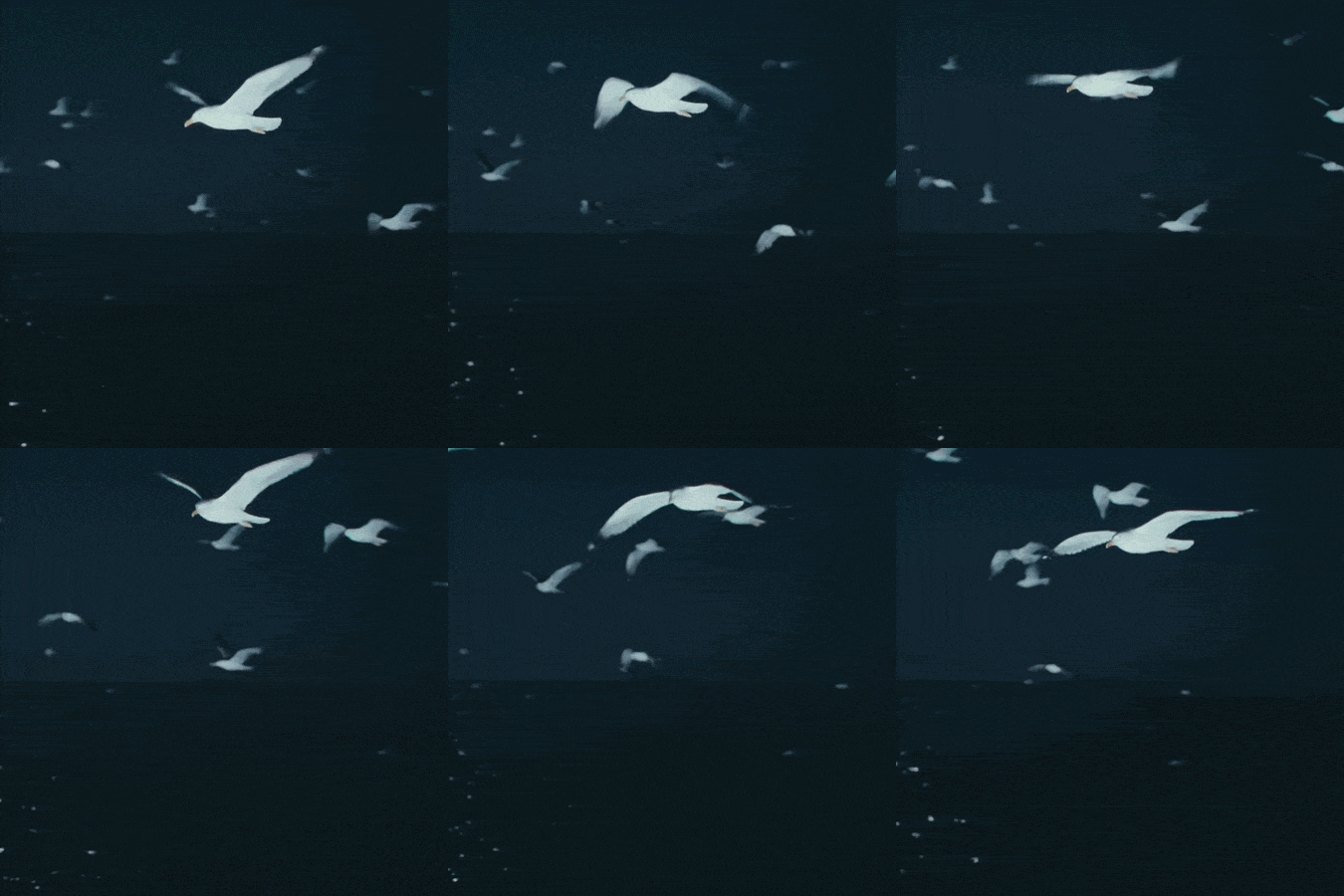
The extraordinary shot of gulls gliding over glittering dark seas is drawn from the atmospheric music video Σtella produced and directed for her song “Nomad” (edited by Isi Charbila, with Fanis Dalezios of Dolce Films behind the camera). This shot was spliced, fragmented, glitched, and looped to be set in dialogue with Satti here.
Consider “agleam ⋮ bereft” alongside two other dubitanda – “listing ⋮ sorrow” and “whisper ⋮ waves” – to find three figures calling out to various seas (Aegean, Caspian, otherworldly), aching for loves (child or parent or spouse) beyond reach.
A triptych of longing (via Kitsopoulou and Cavafy and Səfərli):
waiting this whole night through…
one ear listing always to the wind…
whisper it, whisper, oh waves…
These three translations informed one another (you can spot the ways).
see also
listing ⋮ sorrow
whisper ⋮ waves
away ⋮ again
Star of mine, moon of mine
My budding shoot of spring
To your side I’ll come again
To your side I’ll come one dawn
Just to have you kiss and fawn
And make me yours again
My darling one, my darling one
Away the night will take us soon
As will the stars and sky above
As will the cold, cold moon
As will the stars and sky above
As will the cold, cold moon
I’ll love you and live on in song
You’ll love me and live with the birds
I’ll love you and we’ll be made song
You’ll love me and we’ll be made birds
My darling one, my darling one
Away the night will take us soon
As will the stars and sky above
As will the cold, cold moon
As will the stars and sky above
As will the cold, cold moon
A song by Mikis Theodorakis
with lyrics by Yiannis Theodorakis
Αστέρι μου, φεγγάρι μου
Της άνοιξης κλωνάρι μου
Κοντά σου θα ’ρθω πάλι
Κοντά σου θα ’ρθω μιαν αυγή
Για να σου πάρω ένα φιλί
Και να με πάρεις πάλι
Αγάπη μου, αγάπη μου
Η νύχτα θα μας πάρει
Τ’ άστρα κι ο ουρανός
Το κρύο το φεγγάρι
Τ’ άστρα κι ο ουρανός
Το κρύο το φεγγάρι
Θα σ’ αγαπώ, θα ζω μες στο τραγούδι
Θα μ’ αγαπάς, θα ζεις με τα πουλιά
Θα σ’ αγαπώ, θα γίνουμε τραγούδι
Θα μ’ αγαπάς, θα γίνουμε πουλιά
Αγάπη μου, αγάπη μου
Η νύχτα θα μας πάρει
Τ’ άστρα κι ο ουρανός
Το κρύο το φεγγάρι
Τ’ άστρα κι ο ουρανός
Το κρύο το φεγγάρι

“Star of Mine, Moon of Mine” (“Αστέρι μου, φεγγάρι μου” / “Astéri mou, fengári mou”) is the love theme from the 1962 film Phaedra directed by Jules Dassin and starring Melina Mercouri.
The music is by Mikis Theodorakis, with lyrics by his brother Yiannis Theodorakis.
As Phaedra (of myth, made then-modern), Melina sings to her step son and darling one, played by Anthony Perkins.
They both live on in (celluloid and) song.
The original recording was laid over the film’s original trailer (and strangely fit).
This is one of five songs performed by George Davlas during the musical interlude that lies at the heart of the Efthimis Filippou play Etymologies.
For another two, see the dubitanda “higher ⋮ farther” and “sparrow ⋮ harried” (listed below).
For the remaining two, see the transpolia “On a rainy ⋮ day.” and “Two broken homes left ⋮ clandestine.” (buttons below).
Translated for use as surtitles at the 2024 Athens Epidaurus Festival performances of this play.
see also
higher ⋮ farther
sparrow ⋮ harried
arkhæio
ETYMOLOGIES
transpolia
On a rainy ⋮ day. Two broken homes left ⋮ clandestine.
before ⋮ death
Before he gets the chance to properly bloom, he wilts upon contact with a reality that is brutal and anything but benevolent. Today, a young man must come of age before his time! And this is an early passing of his youth. He must taste, as soon as possible, the forbidden fruit and be cast out in order to face down the world in which he is called upon to live. But it is a bumpy landing, more often than not. Most youths are not yet ready when forced to adapt, and so fall victim to all those avenues that promise them escape and redemption. And this is a premature death.
Stelios Lydakis
Πριν προλάβει καλά-καλά να ανθίσει μαραίνεται στην πρόσκρουσή της με μία πραγματικότητα τραχιά και καθόλου ευνοϊκή. Σήμερα ο νέος πρέπει να μεγαλώσει πριν την ώρα του! Και αυτός είναι ένας πρώιμος θάνατος της νιότης του. Πρέπει να δοκιμάσει, όσο γίνεται γρηγορότερα, τον απαγορευμένο καρπό και να υποστεί την έξωση για να ανταποκριθεί στον κόσμο που καλείται να ζήσει. Όμως η προσγείωση είναι ανώμαλη τις περισσότερες φορές. Πολλοί νέοι δεν είναι ώριμοι για την επιτακτική προσαρμογή κι έτσι γίνονται θύματα όλων των μέσων που τους υπόσχονται φυγή και λύτρωση. Και αυτό είναι ένας πρόωρος θάνατος.
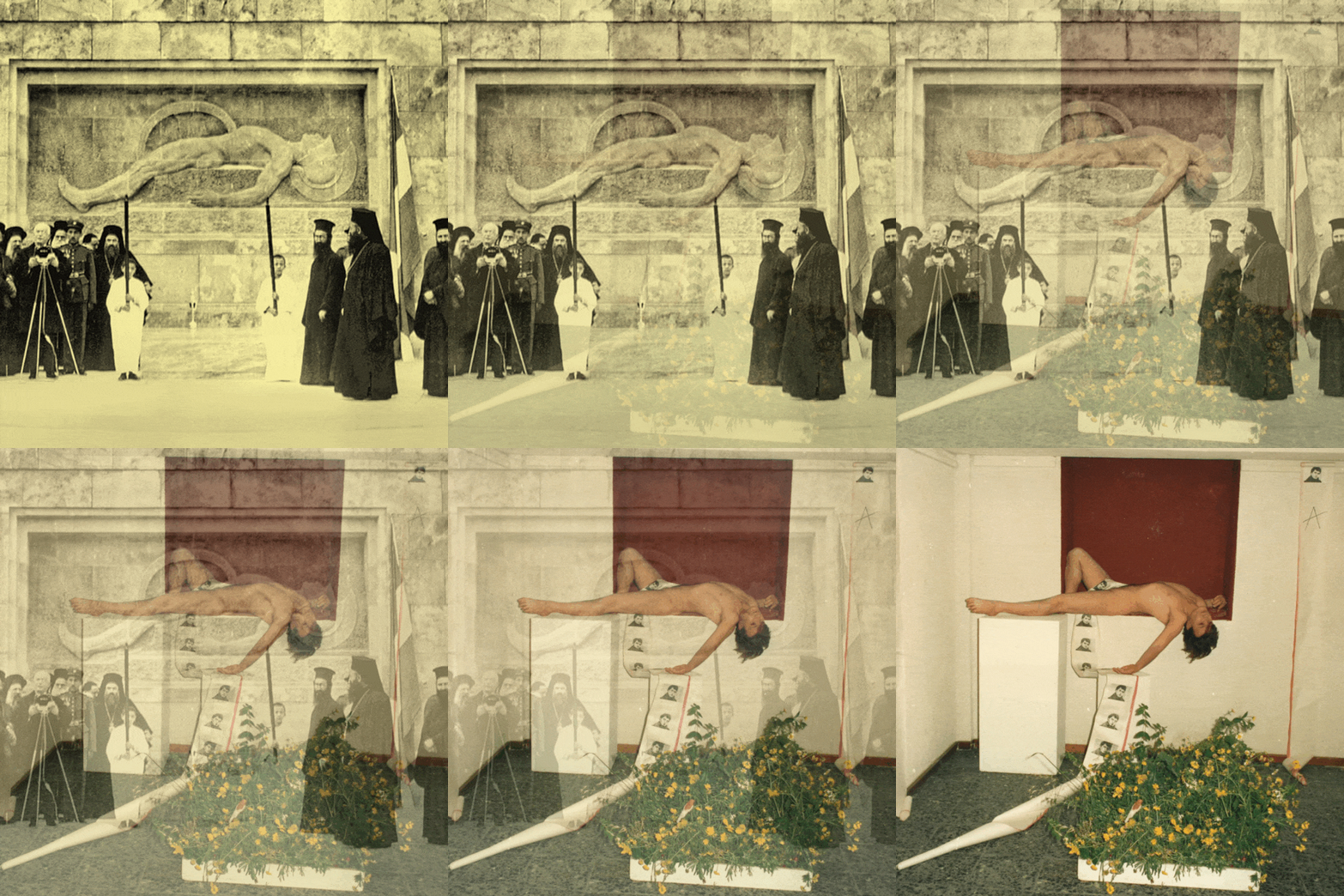
Extract from a review by Stelios Lydakis of the performance Memorial for Youths Who Died Too Soon by Costas Evangelatos (1987).
Translated for (and taken from) the essay “Our Army of Lovers” by Mare Spanoudaki that appeared in Issue One of Octopus, the EMΣT magazine.
The image shows the actor Takis Loukatos in Evangelatos’ performance, sprawled out in the vein of Phocion Roque’s fallen warrior relief at the Tomb of the Unknown Soldier on Syntagma Square in Athens. Flesh not stone rendered vulnerable.
see also
emotive ⋮ realm
arkhæio
transpolia
But rejection ⋮ at night. Ghost boy ⋮ killer. It is ⋮ everything.
broke ⋮ returned
Daybreak Christmas Eve her waters broke. An ambulance birth. Her joy brought tears. Christmas Day she is returned to find a festive cot inside her cell.
Yorgos Syrmas
Παραμονή ξημέρωμα έσπασαν τα νερά. Γέννησε στο ασθενοφόρο, πόση χαρά, την έπιασαν τα κλάματα. Ανήμερα τη γύρισαν στη Θήβα – βρήκε μια κούνια στολισμένη στο κελί της.
Twenty-six (Greek) words to tell a story, commissioned from Yorgos Syrmas by ελculture.gr to mark the holiday season in the run-up to (twenty-)twenty-six.
First published online on Christmas Eve in twenty-twenty-five.
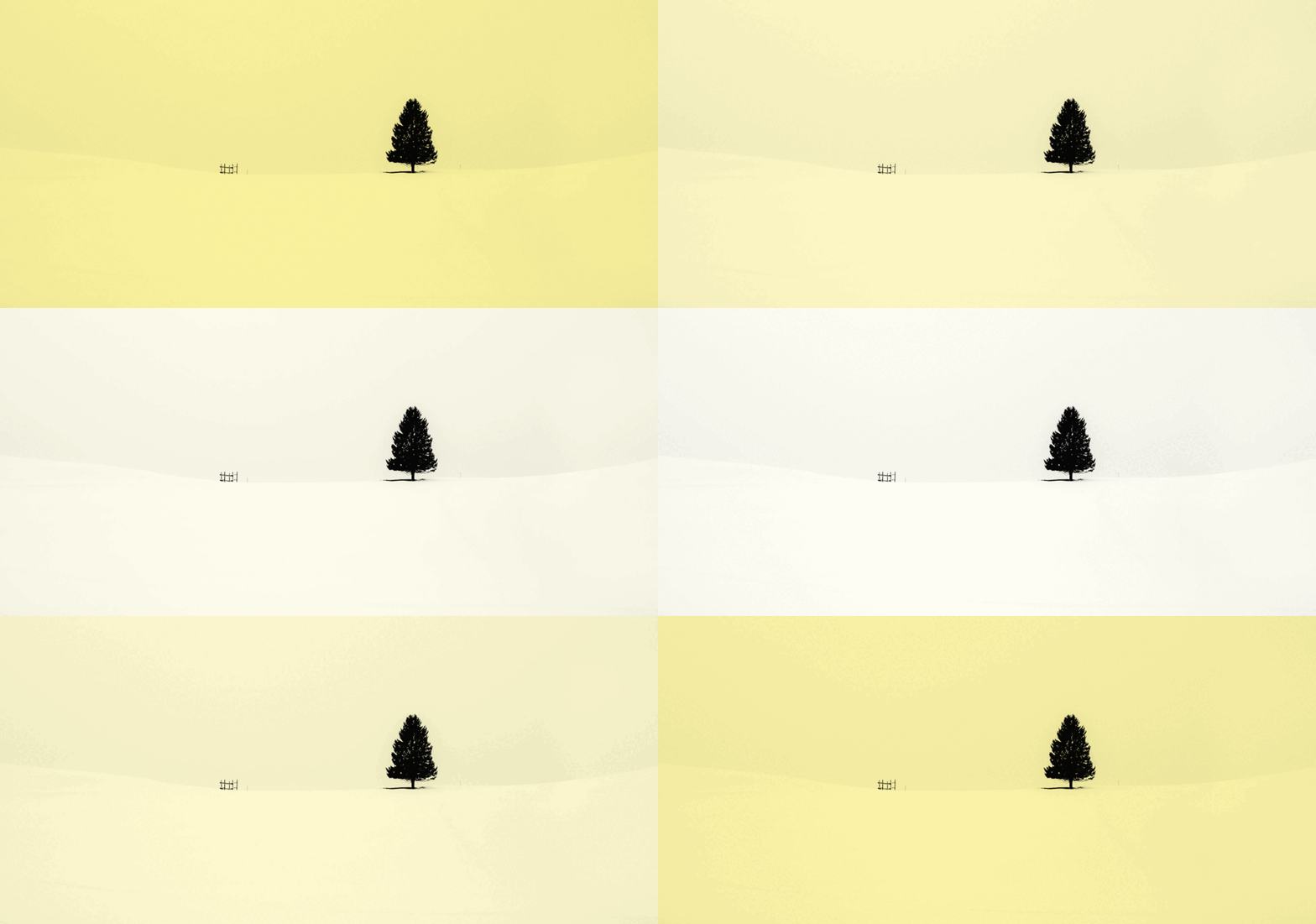
Image by Cristina Gottardi, selected by ελc to accompany all eight commissioned flash fictions: a bold, expectant form set in a blanket-blankness broken only by a cot of sorts.
Translated (using twenty-six English words) for the love of it (and for the love of him).
see also
pricked ⋮ bloomed
seaweed ⋮ buttons
arkhæio
TWENTY-SIX FOR TWENTY-SIX
coldness ⋮ complexity
He is a man of many laurels. From that beautiful city beset with reeds, set beside the sea – that is, Cannes. From the hol(l)y wood. From the upside-down forest, id est Venice. In place of words, I would rather string together many pointed, pungent, bitter laurel leaves into a wreath and crown him too in turn, this man I know so little yet understand so much.
What I understand from personal experience is that, no matter how much he has read, no matter how many films he has seen and how much music he has heard (and I am certain he has done such things in abundance), more than anything this artist has looked inside himself in ways tortuous, in ways agonising and sustained. To recover from such deep dives, once he rises worn and weary to the surface again, it tickles him to perform the following restorative exercise: to observe the tiniest of details in the people around him. And who has not felt uncomfortable when subjected to his seemingly mild and sweet brown-velvet gaze that flicks into piercing x-ray vision when turned on the person he is speaking to, or on the unsuspecting patrons of some establishment where he takes in the very nature of others as he takes his coffee.
This is how he has constructed such a personal style that pulverises its influences so completely; scholars studying this style of his meet only dead ends when seeking some provenance or some affinity. Only in painting can one perhaps find some correlation: in the tonal coldness of Edward Hopper’s colours or in the labyrinthine complexity of Hieronymus Bosch’s forms.
Distant. Not so much from an innate humility but rather the result of routine introspection – an outcome of his interiority. He is an avid diver. The physique of such solitary explorers is marked by a particular muscle tone, a tightly-wound readiness to spring into action, a call to the abyss. He does not much like labels. I asked him once: “How does it feel to be called a loghotékhnis?” [Greek akin to “wordsmith” or “litterateur.”] His answer: “These two words lóghos and tékhni [‘the word’ and ‘art’] stuck together leave me uneasy. I prefer the lightness of the word kímeno [‘text’]. There aren’t any nice [Greek] words to describe those who write. Senariográfos [‘screenwriter’] isn’t nice. Syngraféas [‘author’] isn’t nice either. Isn’t it tragic? To write, but for the words that describe what you do to be horrible? Whereas khoreftís, for example, now that’s a lovely word to describe those who dance – simple, with a nice ring to it, it’s a word that only makes them want to dance more.”
His language feels alien and yet is so simple, so familiar. Drained of every superfluous form, any pompous turn of phrase, all pretension, left relentless, unsparing, airless to the point where the words become invisible – where scenes, images and characters spring instead from the page, fully rounded and in full sound. Each piece of his writing ready to burst open like some budding enactment.
The appearance of plants and fruits and animals is something of a tonic for the reader – they leaven any human presence, which usually hides some unpleasant surprise.
There is a latent deity in the world of Efthimis Filippou: irony. Eating away at what is good but also undermining evil. Relativising things. Resituating them. Guiding you to a wry smile, to a sigh and an exclamation: I can breathe. And so, as you read or watch, love those things you hide away inside and, ultimately, love the darkness that lies inside others too. What did you ever gain by stowing it away? There she blows, look – there! Bursting out all over the place, out of every crevice, flooding us fully, sweeping both inwards and outwards, finding mimics, finding critics, and ever spreading – creeping like a spot of ink across a handkerchief. In the time of Seferis, this was ennui. In our own times, it is horror that creeps.
Certain Greek authors write so beautifully as to render themselves untranslatable. The texts of Efthimis Filippou prove promising for translation because they are written without any tricks, as natural as breathing. He has a way of hiding beauty – true art is to conceal art, as the Latin proverb goes. And his books had the good fortune to be published in the English so handsomely. They are addressed to those happy few of Stendahl.
I very much like the title Noon. A time when the light falls straight down and life’s details are intensified, overly so. But also a time when the hordes come out to play, as my mother used to say – entire battalions of dæmons.
Here tonight, in the tender embrace of Hyper Hypo, and with the propulsive backing of Alex Stavrakas, I feel those few are to be multiplied, perhaps even made many.
WHY READ EFTHIMIS FILIPPOU IN TRANSLATION? by Julia Tsiakiris
Είναι πολλές οι δάφνες του. Από την όμορφη πόλη με τους καλαμιώνες πλάι στη θάλασσα. Από το Ιερό Δάσος. Από τη Βενετία. Αντί για λόγια θα προτιμούσα να αρμαθιάσω σε μια κλωστή πολλά μυτερά, μυρωδάτα, πικρά φύλλα δάφνης και να τον στεφανώσω, και εγώ, που τον ξέρω τόσο λίγο αλλά τον καταλαβαίνω τόσο πολύ.
Εκείνο που καταλαβαίνω με τα εμπειρικά μου μέσα είναι ότι ο δημιουργός αυτός, όσο κι αν έχει διαβάσει, όσο κι αν έχει δει έργα στο σινεμά ή ακούσει μουσική —και είμαι σίγουρη ότι όλα αυτά τα έχει κάνει με το παραπάνω— πιο πολύ απ’ όλα όμως έχει κοιτάξει μέσα του βασανιστικά, επίπονα, και διαρκώς. Και, για να ξεκουραστεί από αυτές τις καταβυθίσεις, όταν ανέρχεται στην επιφάνεια κατάκοπος κάνει με πολύ κέφι μια άσκηση θεραπευτική που είναι να παρατηρεί γύρω του τις παραμικρές λεπτομέρειες των συνανθρώπων του. Και ποιος δεν έχει νιώσει άβολα μπροστά σε αυτό το φαινομενικά πράο και γλυκό βλέμμα από καστανό βελούδο που μετατρέπεται σε ακτίνες Χ όταν επικεντρώνεται στον συνομιλητή ή στους ανυποψίαστους θαμώνες του μαγαζιού όπου αυτός πίνει το καφεδάκι του ρουφώντας ταυτόχρονα τις προσωπικότητες των άλλων.
Έτσι έχτισε αυτό το τόσο προσωπικό ύφος που έχει κονιορτοποιήσει τις επιρροές, και ο μελετητής του ύφους αυτού βρίσκεται σε αδιέξοδο αν γυρέψει κάποια καταγωγή ή κάποια συγγένεια. Μόνο στη ζωγραφική μπορείς να πεις ότι βρίσκεις μια σχέση με τους τόνους ψυχρότητας από τα χρώματα του Edward Hopper ή με τη δαιδαλώδη πολυπλοκότητα των μορφών του Ιερώνυμου Μπος.
Απόμερος. Όχι τόσο από φυσική σεμνότητα όσο από την συχνή ενδοσκόπηση, την εσωτερικότητα. Είναι μανιώδης δύτης. Στον σωματότυπο αυτών των μοναχικών εξερευνητών του βυθού διαπιστώνουμε έναν ιδιαίτερο μυϊκό τόνο, μια συμπιεσμένη ετοιμότητα εκτόξευσης, ένα κάλεσμα της αβύσσου. Δεν του αρέσουν και πολύ οι χαρακτηρισμοί. Μια φορά που τον είχα ρωτήσει «Πώς σου φαίνεται αν σε αποκαλούν λογοτέχνη;» αποκρίθηκε: «Αυτά τα λόγος και τέχνη κολλημένα μου προκαλούν δυσφορία. Μου αρέσει πιο πολύ η ελαφρότητα της λέξης κείμενο… Δεν υπάρχουν ωραίες λέξεις γι’ αυτούς που γράφουν. Ούτε το σεναριογράφος είναι ωραίο ούτε το συγγραφέας. Δεν είναι τραγικό να γράφεις και οι λέξεις που περιγράφουν την ιδιότητά σου να είναι άσχημες; Ενώ για παράδειγμα το χορευτής είναι μια ωραία λέξη γι’ αυτούς που χορεύουν, εύηχη, απλή τους κάνει να θέλουν να χορέψουν κι άλλο».
Η γλώσσα του μοιάζει αγνώριστη, ενώ είναι τόσο απλή και οικεία. Στραγγισμένη από κάθε περιττό σχήμα, κάθε κορόνα, κάθε ακκισμό, άτεγκτη, αμείλικτη, αποπνικτική, τόσο ώστε να γίνονται αόρατες οι λέξεις και να ξεπηδούν από τη σελίδα οι σκηνές, οι εικόνες και τα πρόσωπα σαν τρισδιάστατα και με ήχους. Κάθε γραπτό του είναι έτοιμο να σκάσει σαν το μπουμπούκι μιας αναπαράστασης.
Ευεργετική για τον αναγνώστη είναι η παρουσία των φυτών, των καρπών και των ζώων, αυτά απαλύνουν λίγο την ανθρώπινη παρουσία που συνήθως κρύβει μια δυσάρεστη έκπληξη.
Λανθάνουσα θεότητα στο σύμπαν του Ευθύμη Φιλίππου η ειρωνεία. Υπονομεύει το καλό, υποσκάπτει και το κακό όμως. Σχετικοποιεί. Αναδιατάσσει. Οδηγεί προς ένα στραβό χαμόγελο και ένα επιφώνημα: ουφ, αναπνέω. Αγάπα λοιπόν, αναγνώστη ή θεατή, αυτό που κρύβεις μέσα σου, και, στην τελική, αγάπησε και τη σκοτεινιά των άλλων. Τόσο που την καταχώνιαζες, τι κέρδισες; Να τη, πετιέται, να τη. Βγαίνει από παντού, από κάθε κόχη, και μας κατακλύζει, λαβαίνει έκταση και προς τα μέσα, και έξω, βρίσκει μιμητές, βρίσκει τιμητές κι όλο απλώνεται, απλώνεται σαν μια στάλα μελάνι στο μαντίλι. Στον καιρό του Σεφέρη ήταν η πλήξη. Στον δικό μας καιρό απλώνεται η φρίκη.
Ορισμένοι Έλληνες συγγραφείς γράφουν τόσο ωραία που καθίστανται αμετάφραστοι. Τα κείμενα του Ευθύμη Φιλίππου είναι πρόσφορα στη μετάφραση γιατί είναι γραμμένα χωρίς κόλπα. Είναι φυσικά όπως η αναπνοή. Έχει τον τρόπο να κρύβει το ωραίο, τέχνη είναι να κρύβεις την τέχνη, που λέγαν και οι Λατίνοι. Και είχαν τύχη αγαθή τα βιβλία του να εκδοθούν και στα αγγλικά τόσο αισθητικά. Απευθύνονται στους ευτυχείς ολίγους, τους happy few του Σταντάλ.
Μου αρέσει πολύ ο τίτλος Noon. Μεσημέρι, η ώρα που το φως πέφτει κάθετα και οι λεπτομέρειες υπερμεγεθύνονται, αλλά και η ώρα που βγαίνουν τα φουσάτα, όπως έλεγε η μάνα μου, οι στρατιές των δαιμόνων.
Στην τρυφερή εδώ αγκαλιά του «Hyper Hypo» απόψε, και με την ωστική δύναμη του Αλέξη Σταύρακα, μου φαίνεται πως οι λίγοι αυτοί θα γίνουνε αρκετοί, αν όχι πολλοί.
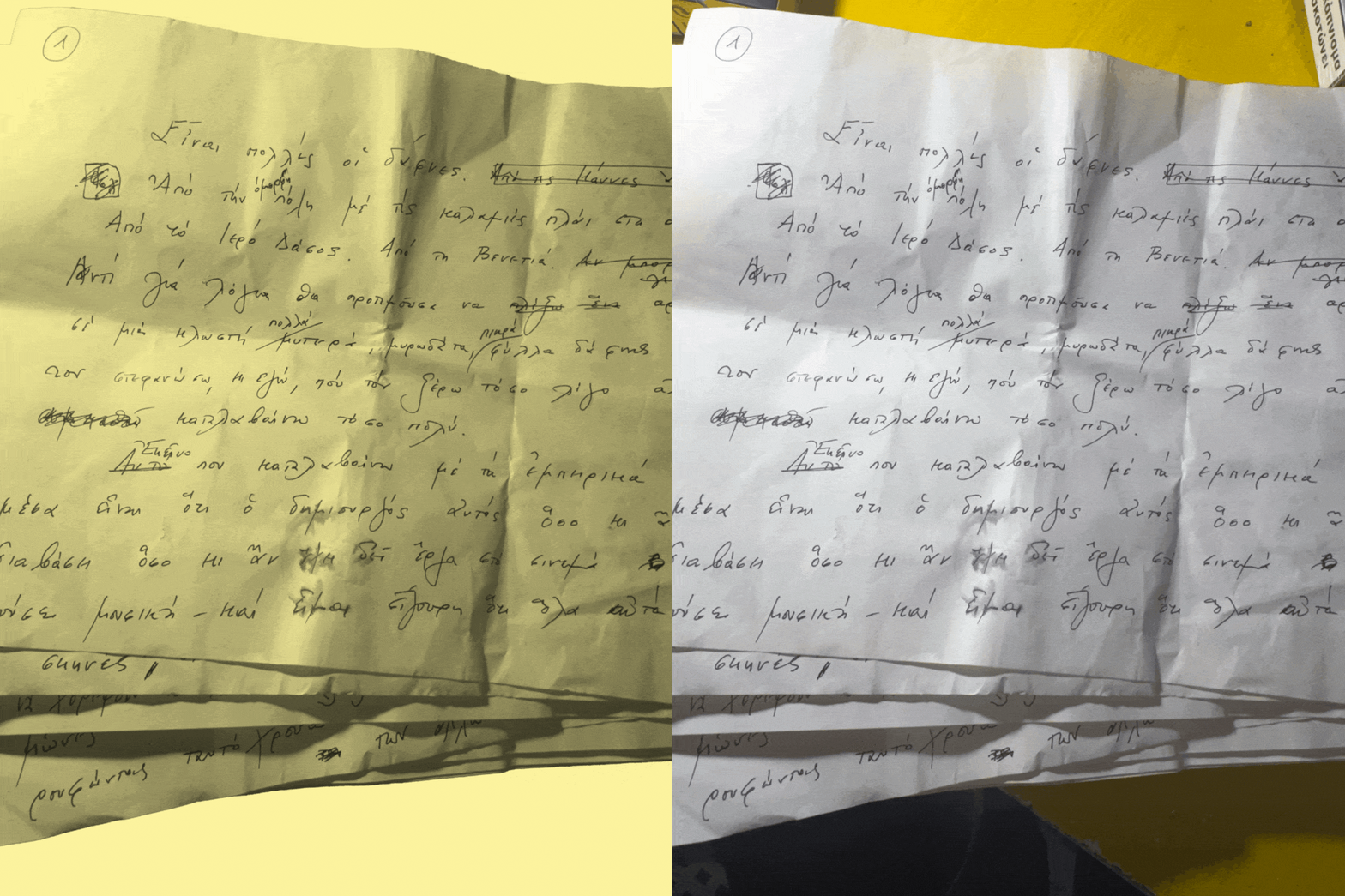
This insightful text (translated for the love of it) was written by Julia Tsiakiris, founder of To Rodakió Editions, to introduce the work of Efthimis Filippou – in person – at the book launch of his Noon book collection.
First published in 2022 by De Filmfreak (Amsterdam), this six-volume collector’s edition was subsequently taken on by Alex Stavrakas to be published by his Eris Press (London & New York) in 2025.
The Eris Press event was held at Hyper Hypo on Thursday, 27 February 2025 and hosted by the bookstore’s owners, Andreas Kokkinos and Stathis Mitropoulos.
Julia offered up a close life study of a writer who studies life closely. Her correlations of Efthimis’s work to the tonal coldness of Hopper and the labyrinthine complexity of Bosch feel apt and ring somehow true (at least to my translation experience).
Julia was joined by others. Angeliki Papoulia read extracts from the original Greek texts. Katerina Papanagiotou of MNP (Athens) talked us through the design process behind the publication. I spoke a bit about translation. Efthimis kept himself hidden away.
The image shows Julia’s handwritten notes on the night of the presentation. Words arrayed as entire battalions of dæmons.
see also
constantly ⋮ faithful
documents ⋮ inaccurate
arkhæio
NOON
transpolia
I asked him ⋮ to dance more. Noon ⋮ lies ahead. This here ⋮ (from Brazil.)
coming ⋮ gently
LONG DISTANCE
– Yes? Yes? Yes? Yes?
– Hey. Hey, can you hear me?
– Yes?
– Want to come over?
– Yes? Where? How do I get there?
– In 150 metres, turn right.
– Yes?
– In 120 metres, turn left. In 70 metres, make a u-turn.
– Yes?
– In 221 metres, turn right.
– Yes? Hang on… I’m lost.
– You’re on your way. Coming?
– Yes?
– In 180 metres, turn right. In 80 metres…
…turn right again. In 50 metres, go straight on.
– I’m at your door.
– Come up.
– It won’t open.
– Don’t force it. Push gently.
Dimitris Papaioannou
– Ναι; Ναι; Ναι; Ναι;
– Έλα. Έλα, μ’ ακούς;
– Ναι;
– Έρχεσαι άπο ’δω;
– Ναι; Που; Πως να ’ρθω;
– Στα 150 μέτρα, στρίψε δεξιά.
– Ναι;
– Στα 120 μέτρα, στρίψε αριστερά. Στα 70 μέτρα, κάνε αναστροφή.
– Ναι;
– Στα 221 μέτρα, στρίψε δεξιά.
– Ναι; Κάτσε… Χάθηκα.
– Έρχεσαι.
– Ναι;
– Στα 180 μέτρα, στρίψε δεξιά. Στα 80 μέτρα…
…στρίψε πάλι δεξιά. Στα 50 μέτρα συνέχισε ευθεία.
– Είμαι στην πόρτα σου.
– Ανέβα πάνω.
– Δεν ανοίγει.
– Δεν θέλει δύναμη. Σπρώξε μαλακά.
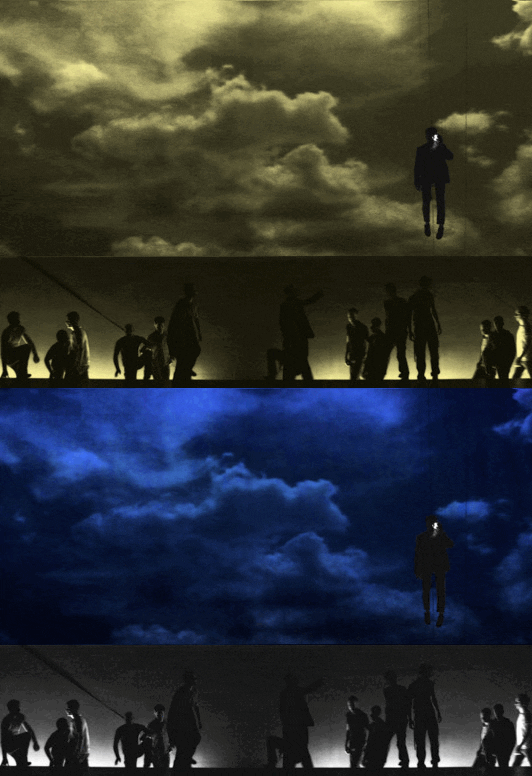
This disconnected dialogue reminds me of a journey once made to reach a door in Athens.
Compare with the fragment below, by the Persian poet Rumi (translated by Coleman Barks and Kadio Kolymva respectively):
I have lived on the lip of insanity,
wanting to know reasons, knocking on a door.
It opens. I’ve been knocking from the inside!
Για χρόνια χτυπούσα την πόρτα
κι είδα όταν άνοιξε
πως χτυπούσα από μέσα.
Translated for (and taken from) the 2007 subtitles made to accompany the digital versatile disc of the stage work Two by Dimitris Papaioannou, directed for the screen by Athina Rachel Tsangari.
The Rumi fragments appear in the DVD booklet.
The black-and-white image (now popping with a blue sky) was collaged by Dimitris to be the final (performance) image of this same booklet.
see also
human ⋮ connection
personal ⋮ pleasure
arkhæio
DIGITAL VERSATILE (TWO) DISC TWO TOME
constantly ⋮ faithful
On the warm and rainy night of 7 July 1994, a 44-year-old woman suffered a tragic accident. Losing control of the moped she was riding, this woman was seriously injured when she fell on a sharp object lying on the tarmac that pierced her liver. She was immediately taken to hospital, in a coma. All the days she was there, the man she loved more than anything else in her life was constantly by her side. A man of 62, plump and in good health. Each night, the man would lay down and sleep alongside her on the hospital bed. For those few hours, until dawn, it seemed like they were both in a coma, or like they were both just sleeping. The night nurses never woke him, they would only cover him up if some foot of his slipped out from under the white hospital blanket. This is the final conversation between the organs and limbs of the man and woman’s bodies, as recorded by medical equipment a little before she died of a heart attack on 18 July 1994. This re-enactment of the conversation stays completely faithful to the one that actually took place.
LIVER by Efthimis Filippou
Το βροχερό και ζεστό βράδυ της 7ης Ιουλίου του 1994, μια γυναίκα 44 ετών είχε ένα τραγικό ατύχημα. Το δίκυκλο στο οποίο επέβαινε έχασε την πορεία του και η γυναίκα τραυματίστηκε σοβαρά καθώς, πέφτοντας στο οδόστρωμα, ένα αιχμηρό αντικείμενο διαπέρασε το συκώτι της. Μεταφέρθηκε άμεσα στο νοσοκομείο σε κώμα. Όσες μέρες παρέμεινε εκεί, ήταν συνεχώς δίπλα της ο άντρας που αγάπησε όσο τίποτε άλλο στη ζωή της. Ένας άντρας 62 ετών, υγιής και εύσωμος. Κάθε βράδυ αυτός ο άντρας ξάπλωνε δίπλα της στο κρεβάτι του νοσοκομείου και κοιμόταν μαζί της. Αυτές τις λίγες ώρες, μέχρι να ξημερώσει, έμοιαζαν σαν να ήταν και οι δύο σε κώμα ή σαν να κοιμούνται απλώς και οι δύο. Οι νυχτερινές νοσοκόμες δεν τον ξυπνούσαν, μόνο τον σκέπαζαν αν τύχαινε κάποιο πόδι του να βγει έξω από την άσπρη νοσοκομειακή κουβέρτα. Αυτή είναι η τελευταία συζήτηση ανάμεσα στα όργανα και στα μέλη των σωμάτων του άντρα και της γυναίκας, όπως καταγράφηκε στα ιατρικά μηχανήματα λίγο πριν αυτή πεθάνει στις 18 Ιουλίου του 1994 από ανακοπή καρδιάς. Η αναπαραγωγή της συνομιλίας είναι απόλυτα πιστή στην πραγματική.

When organs and limbs talk (and act).
Excerpt from Liver by Efthimis Filippou (2020) – the story’s set-up.
Translated from the Greek to be performed on stage / on screen in English (with some German dialogue) at the Greek National Opera / on GNO TV.
Performed the Ictus Ensemble alongside Angeliki Papoulia and Christos Passalis, who also directed.
Maria Dourou and Yorgos Stefanakos made guest appearances as the 44-year-old woman and the 62-year-old man respectively.
The image, collaged from photographs shot by Andreas Simopoulos, shows Yorgos in unceasing silent vigil over a comatose Maria as their body parts chat away. (In red is Angeliki, playing the woman’s liver.)
In 2022, this English translation would also be included in the Noon collection.
see also
coldness ⋮ complexity
documents ⋮ inaccurate
transpolia
I asked him ⋮ to dance more. Noon ⋮ lies ahead. This here ⋮ (from Brazil.)
crumpled ⋮ radiance
THE CRIME OF LONELINESS
Every when the dusk falls dangerously,
your voice rouses inside to ravage me;
and when the night ousts every last sweet image,
there looms within me your sordid beauty
to wipe away God’s splendour from my eyes.
And it’s then that I give in to the crime of loneliness,
for years now have I readied it inside me,
and there is no more heavenly radiance,
no more cherubic choirs,
only a soliciting of spasms,
night cash crumpled.
Dinos Christianopoulos
ΤΟ ΕΓΚΛΗΜΑ ΤΗΣ ΜΟΝΑΞΙΑΣ
Κάθε ποὺ πέφτει ἐπικίνδυνα τὸ βράδυ,
ξυπνάει ἡ φωνή σου μέσα μου καὶ μὲ ρημάζει·
κι ὅταν ἡ νύχτα ὅλες τὶς γλυκιὲς εἰκόνες διώχνει,
προβάλλει ἐντός μου ἡ βρώμικη ὀμορφιά σου
καὶ σβήνει ἀπὸ τὰ μάτια μου τὴ λάμψη τοῦ Θεοῦ.
Καὶ τότε δίνομαι στὸ ἔγκλημα τῆς μοναξιᾶς,
ποὺ χρόνια τώρα μέσα μου τὸ ἑτοιμάζω,
καὶ πιὰ δὲν ἔχει οὐράνιο φεγγοβόλημα,
δὲν ἔχει πιὰ παιδικὲς χορωδίες,
μονάχα μιὰ προσπάθεια γιὰ σπασμούς,
νυχτερινὰ χαρτονομίσματα τσαλακωμένα.
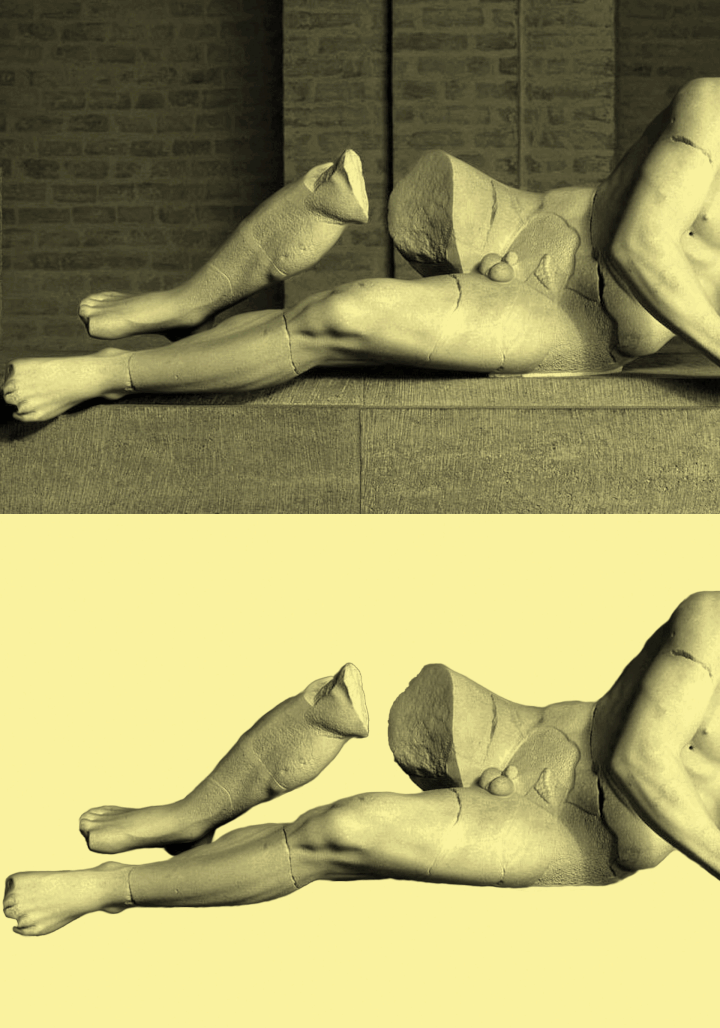
Poem taken from the collection Stranger Knees [ΞΕΝΑ ΓΟΝΑΤΑ] by Dinos Christianopoulos (1952–1957).
Personal and ongoing translation project.
The image shows a fallen early Classical (and so: unsmiling) warrior from the East Pediment of the Temple of Aphaia on the island of Aegina.
He now lives (ever breathing out his last breath) inside the Munich Glyptothek.
One knee strangely vacant.
see also
(this dubitandum lives alone)
deserts ⋮ overseas
give me a coin
I’ll make a fortune
out of nothing at all
I’ll go through deserts
but you won’t see me crawl
and if I meet you on the way
I’ll be whole
somebody said
you had to leave
so you packed up your bag
went overseas
out to Libya land
you started off by making
holes in the sand
LIBYA by Σtella
A music video.

Blue-clouded sky becomes desert dreamscape.
Video created for the song “Libya” off Σtella’s debut self-titled album (on her Greek label Inner Ear Records) in 2015. Rejected by the label, accepted by the artist.
Music and lyrics by Σtella.
see also
marbled ⋮ beauty
pangs ⋮ raptures
razor ⋮ riffs
worthy ⋮ wait
transpolia
A ballad ⋮ beloved.
documents ⋮ inaccurate
HAEMATA
Dimitris Kalafatis & Yorgos Simopoulos: A Correspondence (1990–1993)
Dimitris Kalafatis, a man of around 40, gashes his neck by accident in July 1989. The quite average wound that opens never heals. Yorgos Simopoulos is his closest friend at the time.
The letters exchanged between these two men over a three-year period (1990–1993) were found in pristine condition by Kalafatis’ daughter, Anna Kalafati. Their perfectly legible handwriting meant the documents could be read without any difficulty. All were written in black ballpoint pen, apart from two.
The subject matter of this written exchange does not provide a snapshot of the socio-political climate of the times in which it took place. Descriptions of places and events are often inaccurate. This may be due to the effects of certain prescription drugs or to an intentional misrepresentation of events, conversations, and dates, however neither scenario has been proven thus far.
The two men stopped corresponding suddenly in December 1993 for reasons unknown. Kalafatis died on 14 April 2001, Simopoulos four days later.
Efthimis Filippou
AIMATA
Αλληλογραφία: Δημήτρη Καλαφάτη–Γιώργου Σιμόπουλου (1990–1993)
Ο Δημήτρης Καλαφάτης, σαράντα περίπου ετών, σκίζει κατά λάθος τον λαιμό του τον Ιούλιο του 1989. Η μέτρια πληγή που δημιουργείται δεν κλείνει. Ο Γιώργος Σιμόπουλος είναι επιστήθιος φίλος του εκείνη την περίοδο.
Τα γράμματα που αντάλλαξαν οι δύο άντρες την τριετία 1990–1993 βρέθηκαν ανέπαφα από την κόρη του Καλαφάτη, την Άννα Καλαφάτη. Οι γραφικοί χαρακτήρες τους ήταν απόλυτα ευανάγνωστοι, συνεπώς δεν δυσκόλεψαν καθόλου την ανάγνωση των χειρόγραφων. Όλα ήταν γραμμένα με μαύρο στυλό διαρκείας, εκτός από δύο.
Η θεματολογία της γραπτής αυτής συνομιλίας δεν σκιαγραφεί τον πολιτικό ή τον κοινωνικό χαρακτήρα της εποχής όπου έλαβε χώρα και οι περιγραφές τόπων και περιστατικών πολλές φορές είναι ανακριβείς. Αυτό μπορεί να οφείλεται σε παρενέργειες κάποιας φαρμακευτικής αγωγής ή σε εσκεμμένη αλλοίωση γεγονότων, διαλόγων και ημερομηνιών, αλλά τίποτα από τα δύο δεν έχει εξακριβωθεί μέχρι σήμερα.
Η επικοινωνία των δύο αντρών σταμάτησε αιφνίδια τον Δεκέμβριο του 1993 για άγνωστους λόγους. Ο Καλαφάτης πέθανε στις 14 Απριλίου του 2001 και ο Σιμόπουλος τέσσερεις μέρες αργότερα.
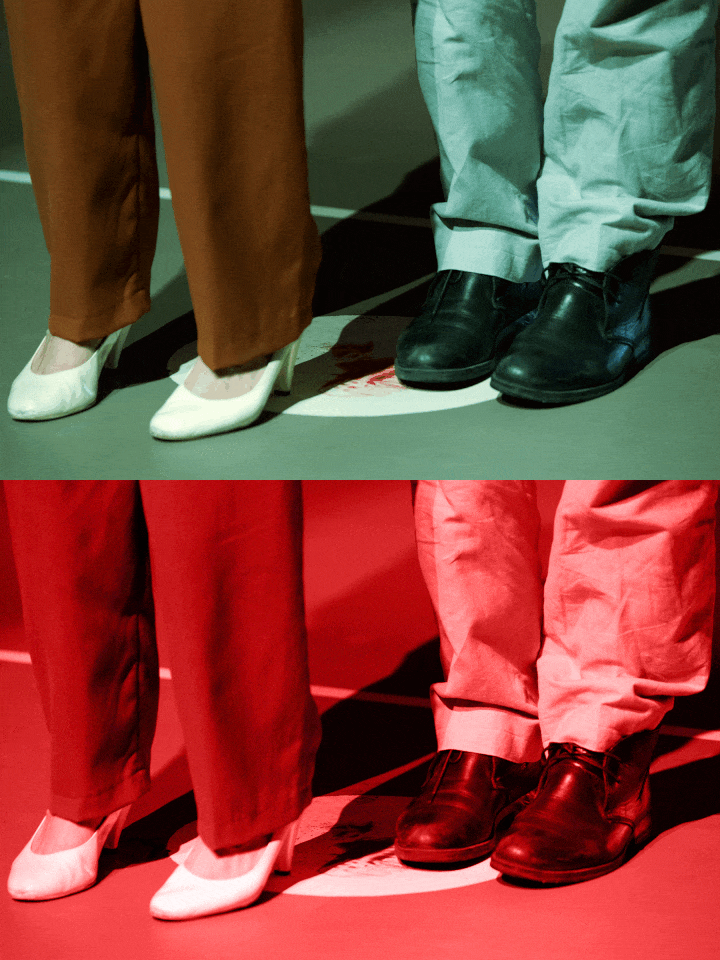
“Haemata” is blood and lots of it. Think haemorrhage and stigmata. Accent on the em.
Written by Efthimis Filippou in 2014 for the Vasistas theatre group.
Directed by Argyro Chioti to première as Emata / Bloods at Onassis Stegi.
Translated for the love of it. Later appeared as Haemata in the Noon book collection.
The image (shot by Vassilis Makris) shows blood underfoot. Blood that seeps suddenly.
These feet belong to Efthimis Theou – in black(red) shoes – and Eleni Vergeti – in white(red) shoes.
see also
coldness ⋮ complexity
constantly ⋮ faithful
transpolia
I asked him ⋮ to dance more. Noon ⋮ lies ahead. This here ⋮ (from Brazil.)