dubitanda (ever in doubt)
DUBITANDA dot com is an assemblage of THINGS (TO BE) DOUBTED or questioned, deliberated or considered. Fragments – all kinds, sources varied. Never certain but set here with hope.
agleam ⋮ bereft
away ⋮ again
before ⋮ death
broke ⋮ returned
coldness ⋮ complexity
coming ⋮ gently
constantly ⋮ faithful
crumpled ⋮ radiance
deserts ⋮ overseas
documents ⋮ inaccurate
emotive ⋮ realm
enters ⋮ darkness
falling ⋮ grace
fields ⋮ donkeys
fingers ⋮ dry
fundamental ⋮ measure
gravities ⋮ glitched
hearts ⋮ touched
higher ⋮ farther
human ⋮ connection
kisses ⋮ tears
kunst ⋮ carcinogen
liberating ⋮ cosmos
liliums ⋮ narcissi
listing ⋮ sorrow
look ⋮ there!
marbled ⋮ beauty
mountains ⋮ moons
neon ⋮ hieroglyphics
only ⋮ outwardly
pangs ⋮ raptures
personal ⋮ pleasure
pricked ⋮ bloomed
razor ⋮ riffs
sayings ⋮ spouted
seaweed ⋮ buttons
spanning ⋮ spots
sparrow ⋮ harried
stare ⋮ absorbed
stone ⋮ lobster
tenderness ⋮ squeaks
timeworn ⋮ tireless
tongues ⋮ dry
truth ⋮ wonderful
emotive ⋮ realm
Queer performativities emerged from a point of disconnect and deep-rooted schism from traditional (gay) codes and aesthetics, but this ‘emotive turn’ was only made possible once artists adopted irony, volatility, and ‘monstrosity’ as tools for overturning older ‘incarnations’ and aesthetic performances of the body.
[…]
Political strategies for the ‘normalisation’ of lesbian and gay lives in accordance with prevailing heteronormative values (monogamy, marriage, family) constitute a move away from the ‘freer’ queer biopolitics of the 1980s and ’90s, delineating a powerful line of resistance between the ‘diseased’ past and the ‘healthy’ present of a new existential mode within ‘heteronormative tyranny’ that seeks to present homosexuals as normal persons integrated into the ‘realm of dominant ideology.’
George Sampatakakis
Οι κουίρ παραστασιακότητες προέκυψαν σε ένα σημείο αποσύνδεσης και ριζικού σχίσματος από τους παραδοσιακούς (gay) κανόνες και αισθητικές, αλλά αυτή η «συγκινησιακή στροφή» κατέστη δυνατή μόνο όταν οι καλλιτέχνες υιοθέτησαν την ειρωνεία, την αστάθεια και την «τερατωδία» ως εργαλεία αναίρεσης των παλιών «σωματοποιήσεων» και αισθητικών επιτελέσεων του σώματος.
[…]
Οι πολιτικές στρατηγικές «κανονικοποίησης» των λεσβιακών και γκέι ζωών σύμφωνα με κυρίαρχες ετεροκανονικές αξίες (της μονογαμίας, του γάμου και της οικογένειας) συνιστούν μια απομάκρυνση από τις περισσότερο «ελεύθερες» κουίρ βιοπολιτικές του 1980-1990, ορίζοντας μια ισχυρή αντίσταση μεταξύ του «μολυσμένου» παρελθόντος και της «υγιούς» νέας κατάστασης της ύπαρξης μέσα στην «ετεροκανονική τυραννία», που θέλει να παρουσιάζει τους ομοφυλόφιλους ως κανονικούς και εναρμονισμένους στο «πεδίο της δεσπόζουσας ιδεολογίας».
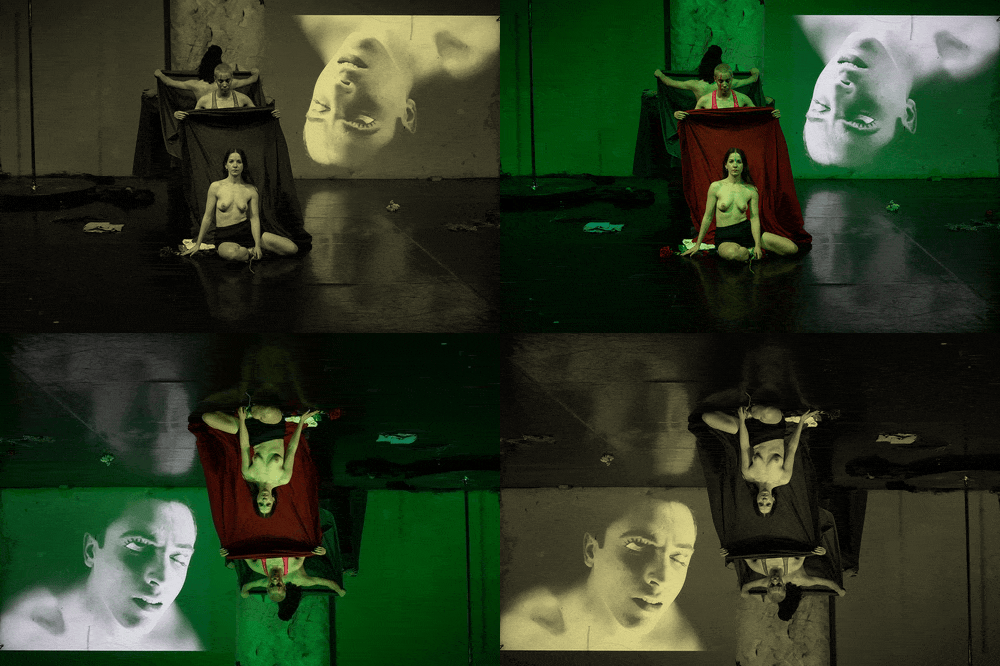
Two extracts from the book HIV / AIDS: Theatre and Trauma in Greece (2021) by George Sampatakakis (pp. 35 & 123).
Translated for (and taken from) the essay “Our Army of Lovers” by Mare Spanoudaki that appeared in Issue One of Octopus, the EMΣT magazine.
The image shows the performers Christina Karagianni, Christina Reinhardt, and Haris Doumouras in Nova Melancholia’s Sebastian (2024).
Performing with them (projected): moving images from Le Sang d’un poète (The Blood of a Poet) by Jean Cocteau.
One small part of a layering of sources to create a queer performative palimpsest.
see also
before ⋮ death
arkhæio
HIV MEMORY
transpolia
But rejection ⋮ at night. Ghost boy ⋮ killer. It is ⋮ everything.
enters ⋮ darkness
Medea, twice barbarian – in lineage and in love. […]
Now she withdraws deeper and deeper into the darkness that is love – love must contain darkness if the absence of the other is to remain unseen; the barbarian love of Medea must have contained great darkness since Jason was never with her: not now, and so not ever. But she was always there, she will be there till the end […]; she never emerged from her darkness – and her ultimate act of love towards Jason is to violently force him to face her inside the pain he feels for his murdered children. She is not to blame, she has no other means – there is no other emotion of his to use: his pain for his children is her final, her sole contrivance to yoke him into a most tortured and most true (for no other truth remains in their marriage) union with her. She does not care. Jason enters into darkness.
Yorgos Himonas
Δὺο φορὲς βάρβαρη ἡ Μήδεια – ἀπὸ καταγωγὴ κι ἀπὸ ἔρωτα. […]
Τώρα ἀπομακρύνεται ὅλο καὶ βαθύτερα στὸ σκοτάδι ποὺ εἶναι ὁ ἔρωτας – πρέπει νὰ ἔχει σκοτάδι ὁ ἔρωτας γιὰ νὰ μὴ φαίνεται ὅτι ὁ Ἄλλος λείπει, πρέπει νὰ ἔχει πολὺ σκοτάδι ὁ βάρβαρος ἔρωτας τῆς Μήδειας ἀφοῦ ὁ Ἰάσονας δὲν ἦταν ποτὲ μαζί της: δὲν εἶναι τώρα κι ἄρα δὲν ἦταν ποτέ. Ἀλλὰ ἐκείνη ἦταν ἀπὸ πάντα ἐκεῖ, θὰ εἶναι ἐκεῖ ὥς τὸ τέλος […]∙ δὲν βγῆκε ποτὲ ἀπὸ τὸ σκοτάδι της – καὶ ἡ ἔσχατη ἐρωτικὴ πράξη της πρὸς τὸν Ἰάσονα εἶναι νὰ τὸν ἀναγκάσει, μὲ τὴν βία, νὰ συναντηθεῖ μαζί της μέσα ἀπὸ τὸν πόνο του γιὰ τὰ σκοτωμένα του παιδιά. Δὲν φταίει αὐτὴ, δὲν ἔχει ἄλλον τρόπο, γιατὶ κανένα ἄλλο συναίσθημά του δὲν βρίσκει – δὲν ὑπάρχει, γιὰ νὰ τὸ χρησιμοποιήσει: ὁ πόνος του γιὰ τὰ παιδιά, εἶναι τὸ τελευταῖο, τὸ μοναδικὸ τέχνασμά της ποὺ θὰ τὸν ὑποτάξει στὴν πιὸ μαρτυρικὴ, στὴν πιὸ ἀληθινὴ (γιατὶ δὲν ἔμεινε καμμιὰ ἄλλη ἀλήθεια ἀπὸ τὸν γάμο τους) ἕνωσή του μαζί της. Δὲν τὴν ἐνδιαφέρει. Ὁ Ἰάσονας μπαίνει στὸ σκοτάδι.
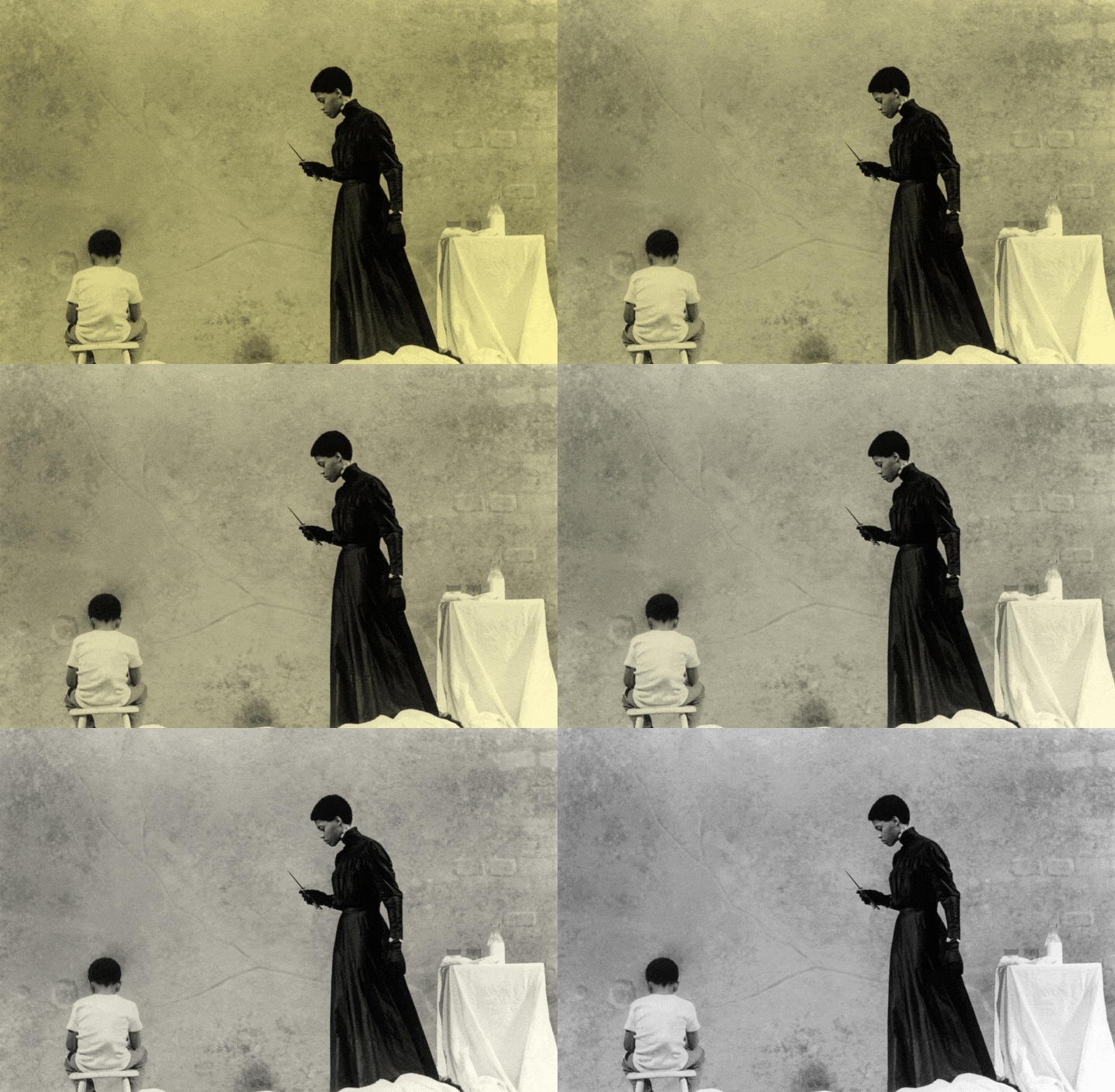
From part two of Yorgos Himonas’ introduction to his 1989 modern Greek version of Euripides’ Medea.
Translated for (and taken from) the 2008 printed programme created for the stage work Medea2 by Dimitris Papaioannou.
The image shows Sheryl Sutton as Birdwoman in Robert Wilson’s 1977 stage work Deafman Glance (photographed by Peter Moore). Menacing in slow motion.
see also
fundamental ⋮ measure
arkhæio
MEDEA (TO THE POWER OF) TWO MEDEA MANUAL A (FOR ATHENS)
transpolia
The catharsis ⋮ of proportion. Today ⋮ forever more.
falling ⋮ grace
THOUGHTS ON GRAVITY
THE VERY SHORT STORY OF AN ENORMOUS VINE THAT SPROUTED OUT OF NOWHERE AND IN THIS WAY BLOCKED THE BACK ENTRANCE OF A REGIONAL THEATRE FOR A SHORT TIME
: what those noh actors managed to achieve at that final performance/ was that on that night behind those masks there was no-one/ because while they themselves had arrived at the theatre quite late/ at a time entirely inadequate for them to prepare/ they had already nonetheless long since secured/ all that they required for their own disappearance/ because that night was the night of their disappearance/ and they had carefully planned for this night of disappearance from way back/ ever since childhood they had been planning for the night of disappearance/ day by day attaining the tools that would bring them ever closer to that night/ and even though they arrived at the theatre considerably delayed/ a turn of events for which they themselves were not at all responsible no/ forces entirely beyond their control were at play that night as they were temporarily denied access on account of force majeure/ because behind the building/ there had creeped and climbed completely out of the blue and in circumstances as yet unexplained/ an enormous wild vine/ that had enveloped the back entrance to the theatre/ blocking entry as a result for both actors and stagehands/ who were now forced exclusively to enter the theatre via the front entrance together with audiences and often/ precisely/ at the same time as them which was of course quite ridiculous yes and even though the noh actors arrived inside the theatre considerably delayed/ in the end they managed with quite spectacular ease/ to attain a state that was for them the ideal/ that was the state necessary for fulfilling their objectives/ because for these noh actors/ to be seen was not at all the objective no/ these noh actors never once said the way other actors say/ I exist only because you can see me/ instead they said/ I exist only because you cannot/ this reversal of the theatrical contract/ was core to all their abilities/ the noh actors raised their arms/ and you could not help but admire/ this perpetual upward motion/ that in its slowness/ simultaneously contained all possible variations of the movement yes the noh actors raised their arms/ with the greatest possible slowness/ and it took your breath away/ and when the noh actors fell/ they fell slowly/ and with grace/ the way/ trees fall/ even when falling/ they retained something of the grace of trees/ that always fall in ways most natural/ since this is something they cannot help/ as any and every tree/ even at the moment of its death/ retains its grace/ and is ever forced to fall in ways most natural/ a tree is never inelegant/ much like a noh actor/ the deaths of both/ are always executed with the greatest possible grace/ I saw a large pine tree painted on the wall/ the wooden noh stage exposed on its three sides supported only at its corners/ now seemed to hover in space at certain moments/ every entrance every exit shut/ in noh even the simplest of things take on an unfathomable depth and even the seemingly most insignificant objects/ take on an entirely different essence on stage and at once/ retain entire the element of transience/ the depth of things and transience are one and the same in noh/ here everything is transient and at the same time everything takes on an unfathomable depth even the simplest things take on this incredible depth and in the very same instant are transient and fragile on the cusp of being destroyed by the slightest shift of air and ready to tear down/ everything over the slightest thing yes exceptionally fragile yet utterly unassailable at the same time in this space are all things/
all things are in complete harmony with one another/ you would see the tree on that wall and at once see all trees see the bridge linking the preparation area to the main stage and see before you all bridges and all crossings hear one sound and so hear all sounds/ I lifted my gaze and saw the inner folds of the roof disappearing into their own darkness/ the first thing to disappear were the arms he said/ time is nothing more than a shift in position/ now I find myself/
now I find myself midway down the walkway and with each step I lose myself more and more/ you know you have refined an art to a fair degree when this art begins to extinguish you/ with each step he drew away from something but at the same time drew closer to something else he was well aware of that/ the tiniest of openings placed over his eyes were more than enough yes in fact in that moment he even thought them excessive/ he put on the mask of a demon and disappeared behind it I thought to myself/ I saw him before me disappearing behind the mask of a demon/ the art of disappearance is inextricably linked to beauty I thought to myself/ I traced his pacing with my gaze the music was different now becoming ever more austere ever more stark all things in noh are set at a distance from one another everything here is set apart noh is the theatre of distance the theatre of pacing I thought to myself all things here are set apart and are reaching for one another and amid the slowness and the stillness you see everything coexisting within one single unified movement noh is the theatre of distance I thought to myself and even though you sense that between even the most distant extremes/ there exists a connection so powerful/ that whatever might interpose itself within the distance between them is in essence altogether weak yes because this distance nullifies everything it encompasses and that is when all things want to reconnect and reach for one another through the darkness even across the greatest spans of distance/ the world is all things reaching out to one another through the darkness/ the start of the walkway he said marks the start of my disappearance/ my weight/
my weight in those moments seemed to dwindle dangerously/ all that I see from here on in is utterly unknown he said/ all things from here on in are now utterly unknown to me he said/ now I pass before the large pine tree/ look/
look/
I am now standing here for the first time across from you looking at you/ with the curiosity of a child gazing at snow/ or the eyes of someone/ who knows nothing of fire/ who has never before seen fire / and who suddenly sees a house aflame/ my sleeves are now empty/
my arms/
my arms he said–
.
Simon Riniotis
ΣΚΕΨΕΙΣ ΓΙΑ ΤΗ ΒΑΡΥΤΗΤΑ
Η ΠΟΛΥ ΣΥΝΤΟΜΗ ΙΣΤΟΡΙΑ ΕΝΟΣ ΓΙΓΑΝΤΙΑΙΟΥ ΚΛΗΜΑΤΟΣ ΠΟΥ ΞΕΦΥΤΡΩΣΕ ΑΠΟ ΤΟ ΠΟΥΘΕΝΑ ΚΑΙ ΕΜΠΟΔΙΣΕ ΕΤΣΙ ΓΙΑ ΛΙΓΟ ΤΗΝ ΠΙΣΩ ΕΙΣΟΔΟ ΕΝΟΣ ΠΕΡΙΦΕΡΕΙΑΚΟΥ ΘΕΑΤΡΟΥ
: αυτό που κατάφεραν οι ηθοποιοί τού νο σε εκείνη την τελευταία παράσταση/ ήταν ότι εκείνο το βράδυ πίσω από τις μάσκες δεν υπήρχε κανείς/ γιατί ενώ και οι ίδιοι έφτασαν στο θέατρο αργοπορημένοι/ και σε ώρα εντελώς ακατάλληλη για την προετοιμασία τους/ είχαν παρόλα αυτά εξασφαλίσει ήδη από καιρό/ όλα όσα τους ήταν απαραίτητα για την εξαφάνισή τους/ γιατί εκείνο το βράδυ ήταν το βράδυ της εξαφάνισης/ και το είχαν σχεδιάσει προσεχτικά εκείνο το βράδυ της εξαφάνισης από πολύ παλιά/ και ήδη από τα παιδικά τους χρόνια εκείνοι σχεδίαζαν το βράδυ της εξαφάνισης/ μέρα με τη μέρα αποκτούσαν τα εργαλεία τα οποία τους έφερναν όλο και πιο κοντά σε εκείνη τη νύχτα/ και παρότι έφτασαν στο θέατρο με σημαντική καθυστέρηση/ πράγμα για το οποίο καθόλου δεν ευθύνονταν οι ίδιοι/ αλλά δυνάμεις εντελώς εξωτερικές καθώς τους απαγορεύτηκε προσωρινά η πρόσβαση λόγω ανωτέρας βίας/ γιατί στο πίσω μέρος του κτηρίου/ είχε αναρριχηθεί εντελώς απροσδόκητα και κάτω από τις πιο αδιευκρίνιστες ακόμα συνθήκες/ ένα γιγαντιαίο άγριο κλήμα/ το οποίο είχε κυκλώσει την πίσω είσοδο του θεάτρου/ με αποτέλεσμα να εμποδίζει την είσοδο των ηθοποιών και των τεχνικών/ οι οποίοι τώρα ήταν αναγκασμένοι να εισέρχονται στο θέατρο μόνο από την μπροστινή είσοδο μαζί με τους θεατές και πολλές φορές/ εντελώς/ ταυτόχρονα με αυτούς πράγμα που φυσικά καταντούσε γελοίο ναι και παρόλο που οι ηθοποιοί του νο έφτασαν στο εσωτερικό του θεάτρου με σημαντική καθυστέρηση/ κατόρθωσαν εν τέλη με θεαματική ευκολία/ να προσεγγίσουν αυτή την ιδεώδη για αυτούς κατάσταση/ που ήταν η αναγκαία κατάσταση για την εκπλήρωση του σκοπού τους/ γιατί αυτοί οι ηθοποιοί του νο/ σε καμία περίπτωση δεν είχαν ως σκοπό τους τη θέαση όχι/ αυτοί οι ηθοποιοί του νο δεν έλεγαν όπως όλοι οι υπόλοιποι ηθοποιοί/ υπάρχω μόνο γιατί μπορείς να με δεις/ αλλά έλεγαν/ υπάρχω μόνο γιατί δεν μπορείς/ αυτή η αντιστροφή τής θεατρικής συνθήκης/ αποτελούσε τον πυρήνα όλων τους των δυνατοτήτων/ σήκωναν το χέρι οι ηθοποιοί του νο/ και δεν μπορούσες μόνο παρά να θαυμάσεις/ αυτή την αέναη κίνηση προς τα πάνω/ που μέσα στην βραδύτητά της/ συμπεριλάμβανε ταυτόχρονα όλες τις παραλλαγές τής κίνησης ναι σήκωναν το χέρι οι ηθοποιοί του νο/ με τη μεγαλύτερη βραδύτητα/ και σου κοβόταν η ανάσα/ και όταν έπεφταν οι ηθοποιοί του νο/ έπεφταν αργά/ και με χάρη/ όπως/ όταν πέφτει ένα δέντρο/ ακόμα και η πτώση τους/ διατηρούσε κάτι από τη χάρη των δέντρων/ τα οποία πέφτουνε πάντοτε με τη μεγαλύτερη φυσικότητα/ αφού δεν μπορούν να κάνουν και αλλιώς/ καθότι ένα οποιοδήποτε δέντρο/ ακόμα και τη στιγμή τού θανάτου του/ διατηρεί τη χάρη του/ και είναι αναγκασμένο να πέφτει πάντοτε με τη μεγαλύτερη φυσικότητα/ ένα δέντρο δεν είναι ποτέ αδέξιο/ όπως και ένας ηθοποιός του νο/ ο θάνατος και των δύο/ διεκπεραιώνεται πάντοτε με τη μεγαλύτερη δυνατή χάρη/ έβλεπα το μεγάλο πεύκο ζωγραφισμένο στον τοίχο/ την ξύλινη σκηνή του νο εκτεθειμένη από τις τρεις πλευρές της η οποία τώρα στηριζόμενη μόνο στις γωνίες της/ έμοιαζε ανά στιγμές να αιωρείται μέσα στο χώρο/ όλες οι είσοδοι και οι έξοδοι ήταν κλειστές/ στο νο ακόμα και τα πιο απλά πράγματα αποκτούν ασύλληπτο βάθος ακόμα και τα φαινομενικά πιο ασήμαντα αντικείμενα/ αποκτούν πάνω στη σκηνή εντελώς διαφορετική υπόσταση και ταυτόχρονα/ διατηρούν ακέραιο το στοιχείο της παροδικότητας/ το βάθος των πραγμάτων και η παροδικότητα είναι στο νο το ένα και το αυτό/ εδώ όλα είναι παροδικά και ταυτόχρονα όλα αποκτούν βάθος ασύλληπτο ακόμα και τα πιο απλά πράγματα αποκτούν απίστευτο βάθος και την ίδια πάλι στιγμή είναι παροδικά και εύθραυστα έτοιμα να καταστραφούν με την πιο μικρή κίνηση του αέρα έτοιμα να διαλύσουν/ με το παραμικρό τα πάντα εδώ είναι εξαιρετικά εύθραυστα και ταυτόχρονα εντελώς απροσπέλαστα όλα τα πράγματα/
όλα τα πράγματα βρίσκονται σε πλήρη αρμονία μεταξύ τους/ έβλεπες το δέντρο στον τοίχο και την ίδια στιγμή έβλεπες όλα τα δέντρα έβλεπες τη γέφυρα που ενώνει την αίθουσα της προετοιμασίας με την κεντρική σκηνή και έβλεπες μπροστά σου όλες τις γέφυρες και όλα τα περάσματα άκουγες έναν ήχο και είχες ακούσει όλους τους ήχους/ ανέβασα το βλέμμα μου πάνω και είδα τις εσωτερικές γωνίες της σκεπής να χάνονται μέσα στο ίδιο τους το σκοτάδι/ το πρώτο πράμα που εξαφανίστηκε ήταν τα χέρια μου είπε/ ο χρόνος δεν είναι τίποτε άλλο από την μετατόπιση της θέσης/ βρίσκομαι τώρα/
βρίσκομαι τώρα στη μέση του διαδρόμου και με κάθε μου βήμα χάνομαι όλο και περισσότερο/ καταλαβαίνεις ότι έχεις φτάσει μία τέχνη σε βαθμό ικανοποιητικό όταν αυτή η τέχνη αρχίζει να σε εξαφανίζει/ με κάθε του βήμα απομακρυνόταν από κάτι και την ίδια στιγμή πλησίαζε κάτι άλλο το γνώριζε αυτό καλά/ το ελάχιστο άνοιγμα που υπήρχε στη θέση των ματιών τού ήταν υπεραρκετό τού είχε φανεί μάλιστα εκείνη τη στιγμή μέχρι και υπερβολικό/ φόρεσε τη μάσκα τού δαίμονα και εξαφανίστηκε πίσω από αυτή σκέφτηκα/ τον έβλεπα μπροστά μου να εξαφανίζεται πίσω από τη μάσκα του δαίμονα/ η τέχνη της εξαφάνισης είναι άρρηκτα συνδεδεμένη με την ομορφιά σκέφτηκα/ ακολούθησα με το βλέμμα μου τον βηματισμό του η μουσική τώρα είχε αλλάξει γινότανε όλο και πιο αυστηρή όλο και πιο λιτή όλα τα πράγματα στο νο βρίσκονται σε απόσταση μεταξύ τους όλα τα πράγματα εδώ είναι χωρισμένα το νο είναι το θέατρο των αποστάσεων το θέατρο τού βηματισμού σκέφτηκα όλα τα πράγματα εδώ είναι χωρισμένα και αποζητάνε το ένα το άλλο και μέσα στην βραδύτητα και την ακινησία τα έβλεπες όλα να συνυπάρχουν σε μία ενιαία κίνηση το νο είναι το θέατρο των αποστάσεων σκέφτηκα και παρόλα αυτά καταλάβαινες ότι ακόμα και ανάμεσα στα πιο απομακρυσμένα άκρα/ υπάρχει μία σύνδεση τόσο ισχυρή/ που οτιδήποτε και να παραβληθεί στη μεταξύ τους απόσταση είναι στην ουσία του εντελώς αδύναμο ναι γιατί η απόσταση αυτή μηδενίζει όλα τα πράγματα που διέπει και όλα τότε θέλουν πάλι να συνενωθούν και αποζητάνε το ένα το άλλο μέσα στο σκοτάδι ακόμα και στις μεγαλύτερες αποστάσεις/ ο κόσμος είναι τα πράγματα που αποζητάνε το ένα το άλλο μέσα στο σκοτάδι/ η αρχή τού διαδρόμου είπε είναι η αρχή τής εξαφάνισής μου/ το βάρος μου/
το βάρος μου εκείνες τις στιγμές έμοιαζε να λιγοστεύει επικίνδυνα/ ό,τι βλέπω από εδώ και πέρα μού είναι παντελώς άγνωστο είπε/ όλα τα πράγματα από εδώ και πέρα μού είναι πλέον παντελώς άγνωστα είπε/ περνάω τώρα μπροστά από το μεγάλο πεύκο/ δείτε/
δείτε/
στέκομαι τώρα εδώ για πρώτη φορά απέναντί σας και σας κοιτάζω/ με την περιέργεια του παιδιού που κοιτάζει το χιόνι/ ή με τη ματιά του ανθρώπου/ που δεν ξέρει τί είναι φωτιά/ που δεν έχει κοιτάξει ποτέ του φωτιά/ και που ξαφνικά βλέπει ένα φλεγόμενο σπίτι/ τα μανίκια μου τώρα είναι άδεια/
τα χέρια μου/
τα χέρια μου είπε–
.
A complete performance text written by Simon Riniotis in 2023.
Translated for the love of it in 2026.
This English translation accompanied an application Simon made in partnership with the director Marilena Katranidou for a 2026 residency at Dimora Creative in Lomazzo, Italy.
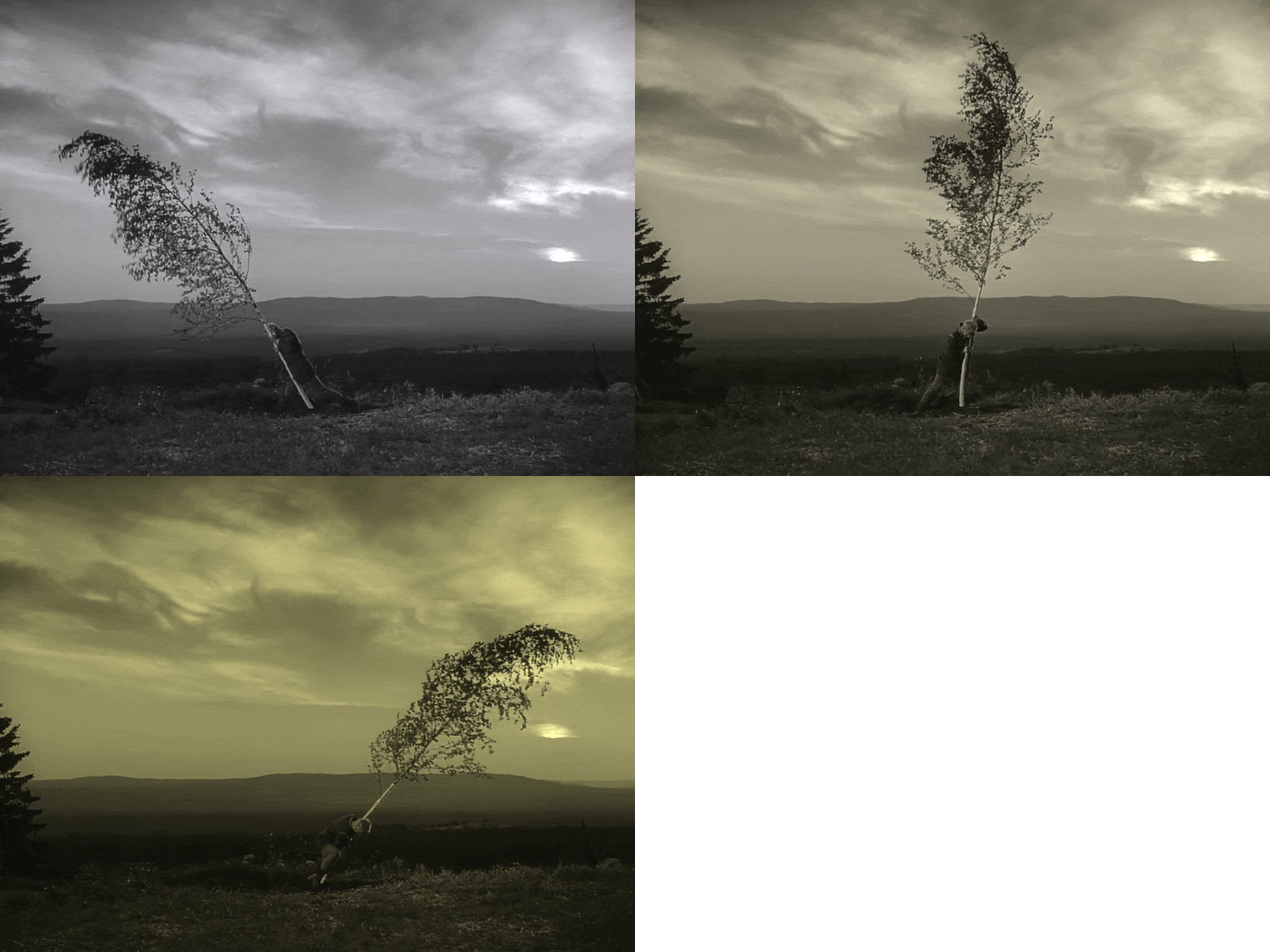
The looping scene (slowly seeping in and out of yellow) is taken from The Virgin Spring, a 1960 feature film by Ingmar Bergman.
Max von Sydow tussles here endlessly with gravity. The tall sapling shivers above him and in his grasp, ever graceful in its recurring fall (unable to exist otherwise).
This striking image (two bodies – arboreal and human – entwined) is movingly recreated live (also over and again) in Dimitris Papaioannou’s 2018 stage work Since She (Seit Sie), made for the Tanztheater Wuppertal Pina Bausch.
see also
(this dubitandum lives alone)
arkhæio
THOUGHTS ON GRAVITY
fields ⋮ donkeys
EXT. COUNTRY ROAD – DAY
A WOMAN drives. She is on a country road, with fields on either side. She reaches a deserted spot where three donkeys stand on the right side of the road. The woman pulls over, puts on a pair of gloves, gets out of the car, checks to see if there is anyone nearby or if she is being watched, runs towards the donkeys, shoots one of them many times over, runs back to the car and drives away.
pre-title scene, THE LOBSTER
written by Efthimis Filippou & Yorgos Lanthimos
ΕΞ. ΕΠΑΡΧΙΑΚΟΣ ΔΡΟΜΟΣ – ΜΕΡΑ
Μία ΓΥΝΑΙΚΑ οδηγεί σε έναν επαρχιακό δρόμο όπου αριστερά και δεξιά υπάρχουν χωράφια. Φτάνει σε ένα ερημικό σημείο όπου στο δεξί μέρος του δρόμου υπάρχουν τρεις γάιδαροι. Η γυναίκα σταματάει το αυτοκίνητο στην άκρη του δρόμου, φοράει στα χέρια της γάντια, κατεβαίνει από το αυτοκίνητο, κοιτάζει εάν υπάρχει κάποιος κοντά ή αν την παρακολουθούν, τρέχει προς τους γάιδαρους, πυροβολεί τον έναν από τους τρεις πολλές φορές, τρέχει ξανά προς το αμάξι και φεύγει.
Scene number one from the screenplay for The Lobster (2015), a feature film written by Efthimis Filippou and Yorgos Lanthimos, translated from the Greek (between 2011 and 2013) to be shot in English (in Ireland in 2014).
The translated English screenplay also appeared in The Lobster Screenplay Book published by A24 Films in 2022 (pp. 10–87).
Three sentences, two leads (Jacqueline Abrahams with donkey), one shot. No animals were harmed. Audiences were thrust into this world hard.
Incidentally, Jacqueline Abrahams was the film’s production designer.
see also
fingers ⋮ dry
hearts ⋮ touched
only ⋮ outwardly
stone ⋮ lobster
fingers ⋮ dry
In a barren, desolate, dry, dusty landscape surrounded by sea, a flock of goats stand on rocks, run, eat, walk, gaze, fight.
A little before nightfall. A stone-built house in the same landscape. […]
Feet heavy, the woman gets up and goes into the next room. On the bed lies a body, wrapped in a white sheet. She looks at it, oblivious to the passing of time. Then goes close and starts to unwind the sheet. First we see the face of a dead man, roughly her age, perhaps a little older. The pale, naked body is gradually revealed in its entirety. The woman rests her hand against his mouth. Opens it a little. Slips one of her fingers inside. Then another. Pulls both out again. They are dry. […]
The woman depicted on the icon looks a bit like her in some strange way. […]
excerpts from BLEAT by Yorgos Lanthimos
Σε ένα άγονο, έρημο, ξηρό, σκονισμένο τοπίο περιτριγυρισμένο από θάλασσα, κατσίκια στέκονται πάνω σε βράχια, τρέχουν, τρώνε, κοιτάνε, περπατάνε, παλεύουν.
Λίγο πριν νυχτώσει. Ένα πέτρινο σπίτι στο ίδιο τοπίο. […]
Με βαρύ βήμα η γυναίκα σηκώνεται και πάει στο διπλανό δωμάτιο. Επάνω στο κρεβάτι είναι ξαπλωμένο ένα ανθρώπινο σώμα, τυλιγμένο σε ένα άσπρο σεντόνι. Το κοιτάει χωρίς να καταλαβαίνει το χρόνο που περνάει. Πλησιάζει και αρχίζει να ξετυλίγει το σεντόνι. Στην αρχή διακρίνουμε το πρόσωπο ενός νεκρού άνδρα, περίπου στην ίδια ηλικία με αυτήν, ίσως λίγο μεγαλύτερος. Σταδιακά αποκαλύπτεται ολόκληρο το χλωμό, γυμνό του σώμα. Η γυναίκα ακουμπάει το χέρι της πάνω στο στόμα του. Το ανοίγει λίγο. Βάζει μέσα στο στόμα του το ένα της δάχτυλο. Μετά δύο. Τα βγάζει έξω. Είναι στεγνά. […]
H μορφή της γυναίκας στην εικόνα τής μοιάζει με έναν αλλόκοτο τρόπο. […]
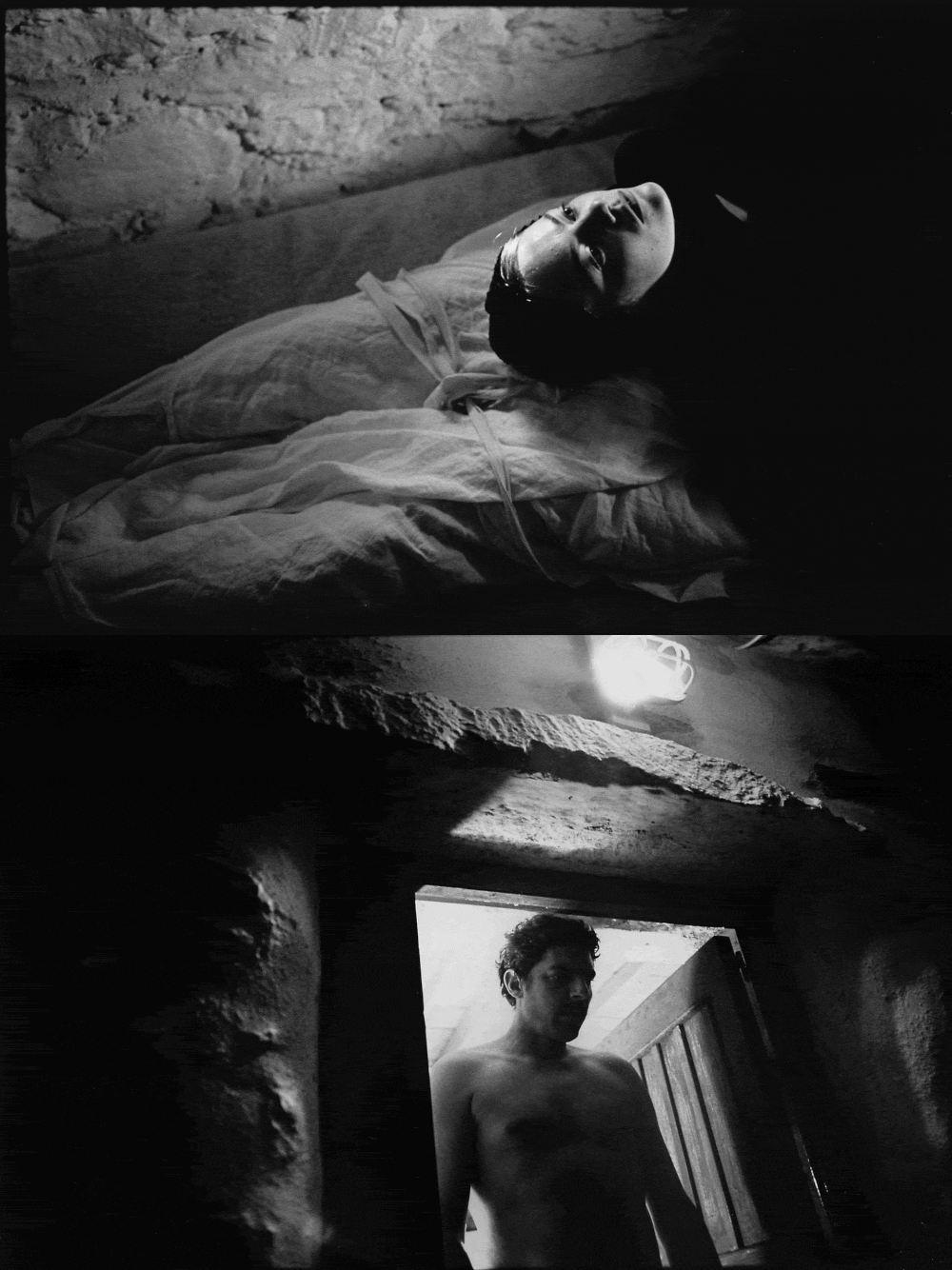
Excerpts from the screenplay for Bleat, a film written, directed and produced by Yorgos Lanthimos.
Commissioned by the Greek National Opera (GNO) and NEON for their joint programme titled The Artist on the Composer.
This, then, is the artist Yorgos on the composers Johann Sebastian Bach / Knut Nystedt and Toshio Hosokawa.
Translated from the Greek (in 2019) to be shot on black-and-white film in silence (on Tinos Island, Greece in 2021, during post-production for Poor Things).
The short looping video shows the only footage from the film released digitally (online).
Bleat will only ever be presented as a 35mm projection accompanied by a live music ensemble and choir.
The woman depicted on the icon really does look a bit like Emma Stone in some strange way.
see also
fields ⋮ donkeys
hearts ⋮ touched
only ⋮ outwardly
stone ⋮ lobster
truth ⋮ wonderful
arkhæio
BLEAT
fundamental ⋮ measure
…the fundamental rule that governs and gives structure to Greek thought and Greek art [is] due measure. When considering this concept, we must fully comprehend the way in which this due measure is utilised and applied by Greek artists – for whom due measure means not constriction, curtailment, or inhibition; it means, above all else, danger: to make measured that which is beyond measure.
Greek tragedy is the sole literary form in the history of art that manages – at least with such clarity, such logic – to walk the agonisingly fine line between (and to combine) the cosmos and chaos, order and anarchy – and moreover to do so while placidly hiding its anguish behind the grand, robust forms of its structures…
Yorgos Himonas
…ὁ θεμελιώδης κανονισμός ποὺ διέπει καὶ οργανώνει την ελληνική σκέψη καὶ την ελληνική τέχνη [εἶναι] τὸ μέτρο. Μὲ τον όρο, νὰ εννοήσουμε πλήρως τὸν τρόπο χρήσης, ἐφαρμογῆς αύτοῦ τοῦ μέτρου από τὸν Ἕλληνα δημιουργό – γιὰ τον ὁποῖο μέτρο δὲν σημαίνει συμπίεση, ἀναχαίτιση, ἀπαγόρευση· σημαίνει προπάντων κίνδυνο: νὰ έπιβάλει μέτρο σ᾽ ἐκεἶνο ποὺ δὲν ἔχει μέτρο.
Ἡ ἑλληνικὴ τραγωδία εἶναι ὁ μοναδικός – τουλάχιστον τόσο καθαρά, τόσο λογικά – στὴν ἰστορία τῆς τέχνης λόγος ποὺ ἐπιτυγχάνει αὐτὴν τὴν ἀγωνιώδη άκροβασία (καὶ συνεργασία) ἀνάμεσα στὸν κόσμο καὶ στὸ χάος, στὴν τἀξη καὶ τὴν ἀναρχία – καὶ μάλιστα κρύβοντας ἀτάραχα τὴν ἀγωνία του, πίσω ἀπὸ τοὺς μεγάλους, ἁδροὺς ὄγκους τῶν κατασκευῶν του…
Text drawn from part one of Yorgos Himonas’ introduction to his iconic 1989 modern Greek version of Euripides’ Medea.
Translated for (and taken from) the 2008 printed programme created for the Athens performances of the stage work Medea2 by Dimitris Papaioannou.
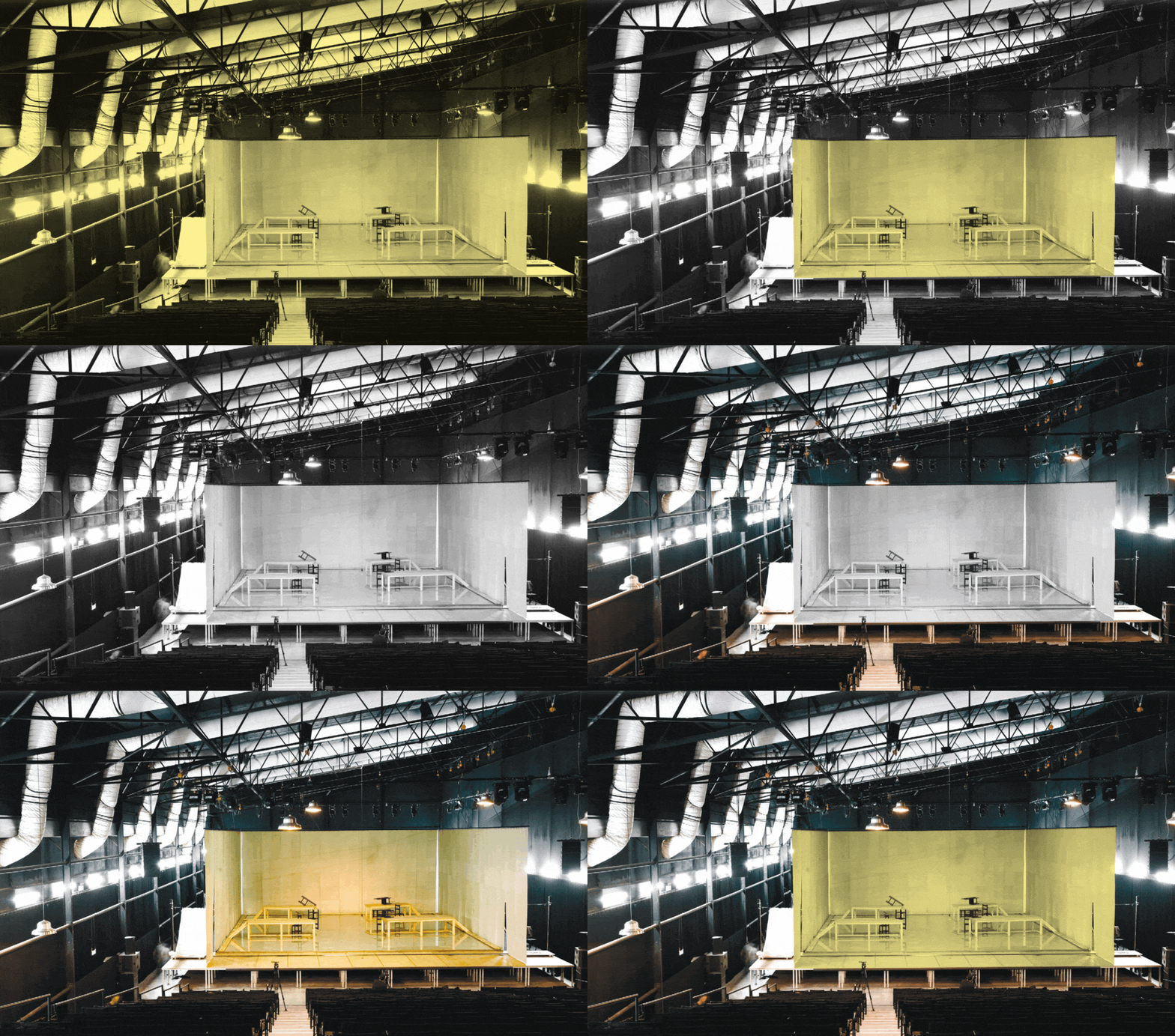
The image, shot by Alexandros Niagos, shows Nikos Alexiou’s masterfully measured (paper-walled, water-floored) set placed – most delicately – at the Athens Epidaurus Festival (nestled inside Peiraios 260’s Hall H).
Grand, robust, placid. Ready for the anguish.
see also
enters ⋮ darkness
arkhæio
MEDEA (TO THE POWER OF) TWO MEDEA MANUAL A (FOR ATHENS)
transpolia
The catharsis ⋮ of proportion. Today ⋮ forever more.
gravities ⋮ glitched
A black-wrapped body toys with artefacts – cyan gel, smoke puff, bulb dangle, nylon sliver, perspectival mirror – against an industrial whiteness.
A photographic lens snatches instants and instances of movement – gravities and air flows and breaths made manifest, Bacon-esque distortions of bodily form, streak traces of light – as only it can.
A seemingly real-time editing process reanimates one-thousand-plus images before our eyes to make a post-engineered stop-motion choreography.
Three outlooks – a performer interacting with objects and space across time in illusory ways, captured by an active and shifting photographer in flashes that are then layered and cut anew by an editor – combined to create a sc(re)enic event.
The playful post-production process has ultimate power over the proceedings. Elements are isolated, resized and reframed, glitched and swiped and spliced, intensified, contrasted and collapsed. We hear the keyboard tap of the creator, correlations coughed into place. See windows into windows hiding windows over windows chasing windows.
Singular objects, from myriad places and moments, are conjured into the construct of a singular on-screen timeline and setting. Other bodies are recomposed from fragments of the same body, its chorus of movements multiplied, remixed and reimagined. Actions are set free from their own times and spaces to dance in concert.
Light and illusion, space and time made continuous across timeframes and perceptions, in parallel with actions, movements and positions.
L.I.S.T./ing – light and illusion, space and time, made motion.
thoughts on L.I.S.T./ING by Michalis Theophanous
A video dance piece.
A text written for the video dance work L.I.S.T./ing by Michalis Theophanous in 2021.
Conceived, directed, and performed by Michalis, photographs by Nikolas Louka were edited together by Arianna Balestrieri. The sound design is by K.BHTA.
See windows into windows hiding windows over windows chasing windows.
see also
(this dubitandum lives alone)
hearts ⋮ touched
WHAT’S THIS THING THEY CALL LOVE
what’s this thing, oh this thing they call love?
oh this thing, what’s this thing…
secretly driving our hearts
longed for by all it has touched
what’s this thing, oh this thing they call love?
oh this thing, what’s this thing…
tears and laughter, sunshine and rain
our life’s end, its beginning again
oh no never
were there any lips that could
say it once
then not say it again for good…
what’s this thing, oh this thing they call love?
oh this thing, what’s this thing…
that makes us all sing the same tune:
I love you, I love you, I love you…
Sophia Loren & Tonis Maroudas
ΤΙ ΕΙΝ’ ΑΥΤΟ ΠΟΥ ΤΟ ΛΕΝΕ ΑΓΑΠΗ
τι είν’ αυτό που το λένε αγάπη;
τι είν’ αυτό, τι είν’ αυτό…
που κρυφά τις καρδιές οδηγεί
κι όποιος το ’νιωσε το νοσταλγεί
τι είν’ αυτό που το λένε αγάπη;
τι είν’ αυτό, τι είν’ αυτό…
γέλιο, δάκρυ, λιακάδα, βροχή
της ζωής μας και τέλος κι αρχή
ποτέ,
ποτέ κανένα στόμα
δεν το ’βρε
και δεν το ’πε ακόμα…
τι είν’ αυτό που το λένε αγάπη;
τι είν’ αυτό, τι είν’ αυτό…
που σε κάνει να λες το σκοπό
σ’ αγαπώ, σ’ αγαπώ, σ’ αγαπώ…
Sophia Loren longs after Alan Ladd across a table laid with wine (sipped), olives (toothpicked), cigarettes (stubbed). Tonis Maroudas strums and sings along, tenderly too.
Clip taken from Boy on a Dolphin (1957), directed by Jean Negulesco and shot on the island of Hydra (a Hollywood first for Greece).
Sophia Loren’s English-language (and presumably Greek-language) debut.
Music by Takis Morakis. Lyrics by Danae Stratigopoulou and Yannis Fermanoglou. Song first recorded by Keti Denis (no relation to Cathy Dennis, sadly) in 1955.
Movingly used (as cinematically sung by Loren and Maroudas) by Yorgos Lanthimos over the closing credits of his 2015 film The Lobster, over black.
The voice of Danae, who co-wrote (or perhaps wrote?) the Greek lyrics here, is heard earlier in The Lobster – see the dubitandum “only ⋮ outwardly” for more details (in list below).
The Lobster screenplay (written by Yorgos with Efthimis Filippou) translated from the Greek to be shot in English (their own English-language debut). Song lyrics translated for the love of it.
see also
fields ⋮ donkeys
fingers ⋮ dry
only ⋮ outwardly
stone ⋮ lobster
higher ⋮ farther
How much I love you, I can’t know
How much I love you, I can’t know
My love lies past all measure, free
Higher even than the sun
Oh higher even than the sun
Far farther than the eye can see…
At first, it was a tiny spark
A single drop of drizzling rain
This spark became a raging fire
This spark became a raging fire
This tiny drop, a sea entire…
The love that ties us tight as one
The love that ties us tight as one
Will never feel the slightest sting
For we are two refreshing sips
or we are two refreshing sips
Drawn from a single flowing spring…
At first, it was a tiny spark
A single drop of drizzling rain
This spark became a raging fire
This spark became a raging fire
This tiny drop, a sea entire…
A song by Apostolos Kaldaras
with lyrics by Christos Argyropoulos
Δεν ξέρω πόσο σ’ αγαπώ
Δεν ξέρω πόσο σ’ αγαπώ
Μέτρο δεν έχει η αγάπη
Είν’ απ’ τον ήλιο πιο ψηλά
Είν’ απ’ τον ήλιο πιο ψηλά
Και δεν τη φτάνει μάτι…
Ήταν μια σπίθα στην αρχή
Και μιας βροχής ψιχάλα
Κι έγιν’ η σπίθα πυρκαγιά
Κι έγιν’ η σπίθα πυρκαγιά
Και πέλαγος η στάλα…
Η αγάπη που μας έδεσε
Η αγάπη που μας έδεσε
Πόνο δε θα γνωρίσει
Είμαστε δυο σταλαγματιές
Είμαστε δυο σταλαγματιές
Από την ίδια βρύση…
Ήταν μια σπίθα στην αρχή
Και μιας βροχής ψιχάλα
Κι έγιν’ η σπίθα πυρκαγιά
Κι έγιν’ η σπίθα πυρκαγιά
Και πέλαγος η στάλα…

“How Much I Love You, I Can’t Know” (“Δεν ξέρω πόσο σ’ αγαπώ” / “How Much I Love You, I Can’t Know”) is a song by Apostolos Kaldaras, with lyrics by Christos Argyropoulos.
First recorded by Vicky Moscholiou in 1966.
The moving images show the singer lip-syncing lovingly along to this original recording for the Hellenic Broadcasting Corporation (ERT) in 1983.
This is one of five songs performed by George Davlas during the musical interlude that lies at the heart of the Efthimis Filippou play Etymologies.
For another two, see the dubitanda “away ⋮ again” and “sparrow ⋮ harried” (listed below).
For the remaining two, see the transpolia “On a rainy ⋮ day.” and “Two broken homes left ⋮ clandestine.” (buttons below).
Translated for use as surtitles at the 2024 Athens Epidaurus Festival performances of this play.
see also
away ⋮ again
sparrow ⋮ harried
arkhæio
ETYMOLOGIES
transpolia
On a rainy ⋮ day. Two broken homes left ⋮ clandestine.
human ⋮ connection
Isolated from all other human bodies, never consciously enjoying a blood connection with another body as does a female of the species with her foetus, nor even experiencing the outflow of blood, as she does, unless his body is subjected to violence, the male body is left solitary…
Yorgos Himonas
Αποκλεισμένος από το άλλο ανθρώπινο σώμα, μη έχοντας ποτέ καμιά ενσυνείδητη συγκοινωνία αίματος με το άλλο σώμα, όπως έχει η γυναίκα με το κύημά της – ούτε καν έξοδο αίματος, όπως εκείνη, παρά μονάχα όταν το σώμα του εκτεθεί στη βία, έχει ένα σώμα μοναχικό…
Excerpt from an article by Yorgos Himonas titled “The Desolate Loneliness of Men” («Η αβοήθητη μοναξιά του άντρα») first published in Prosopa, a section of the Greek Ta Nea newspaper.
Translated for (and taken from) the 2007 booklet made to accompany the DVD of the stage work Two by Dimitris Papaioannou, directed for the screen by Athina Rachel Tsangari.
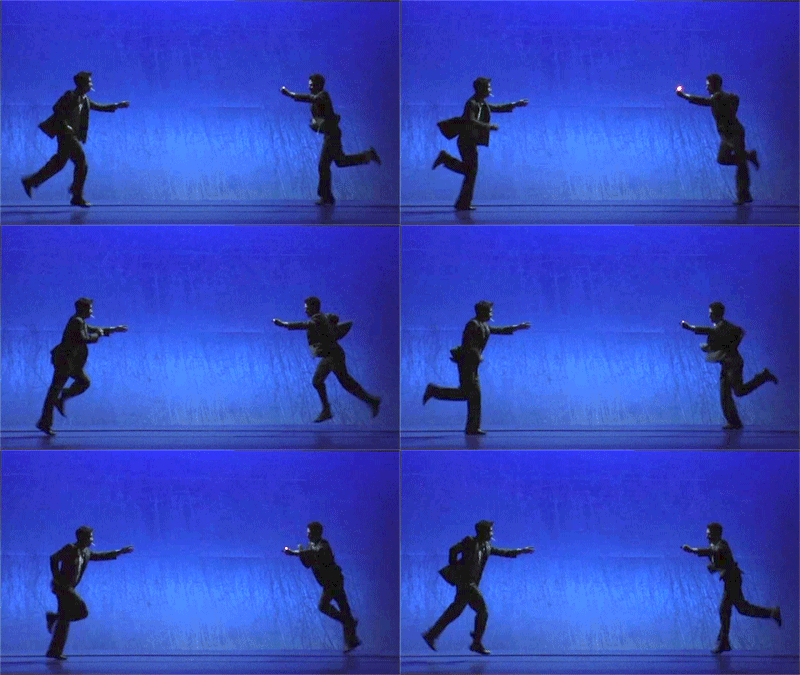
Looping image shows Nikos Dragonas and Yiannis Nikolaidis running and reaching endlessly to spark a touch. Taken from “TWO / DIRECTIONS” (a segment of Dimitris’ Two).
see also
coming ⋮ gently
personal ⋮ pleasure
arkhæio
DIGITAL VERSATILE (TWO) DISC TWO TOME