dubitanda (ever in doubt)
DUBITANDA dot com is an assemblage of THINGS (TO BE) DOUBTED or questioned, deliberated or considered. Fragments – all kinds, sources varied. Never certain but set here with hope.
agleam ⋮ bereft
away ⋮ again
before ⋮ death
broke ⋮ returned
coldness ⋮ complexity
coming ⋮ gently
constantly ⋮ faithful
crumpled ⋮ radiance
deserts ⋮ overseas
documents ⋮ inaccurate
emotive ⋮ realm
enters ⋮ darkness
falling ⋮ grace
fields ⋮ donkeys
fingers ⋮ dry
fundamental ⋮ measure
gravities ⋮ glitched
hearts ⋮ touched
higher ⋮ farther
human ⋮ connection
kisses ⋮ tears
kunst ⋮ carcinogen
liberating ⋮ cosmos
liliums ⋮ narcissi
listing ⋮ sorrow
look ⋮ there!
marbled ⋮ beauty
mountains ⋮ moons
neon ⋮ hieroglyphics
only ⋮ outwardly
pangs ⋮ raptures
personal ⋮ pleasure
pricked ⋮ bloomed
razor ⋮ riffs
sayings ⋮ spouted
seaweed ⋮ buttons
spanning ⋮ spots
sparrow ⋮ harried
stare ⋮ absorbed
stone ⋮ lobster
tenderness ⋮ squeaks
timeworn ⋮ tireless
tongues ⋮ dry
truth ⋮ wonderful
kisses ⋮ tears
do kisses blacken tears
Δουκίσσης Πλακεντίας
(Doukíssis Plakentías)
A phonetic translation of sorts.
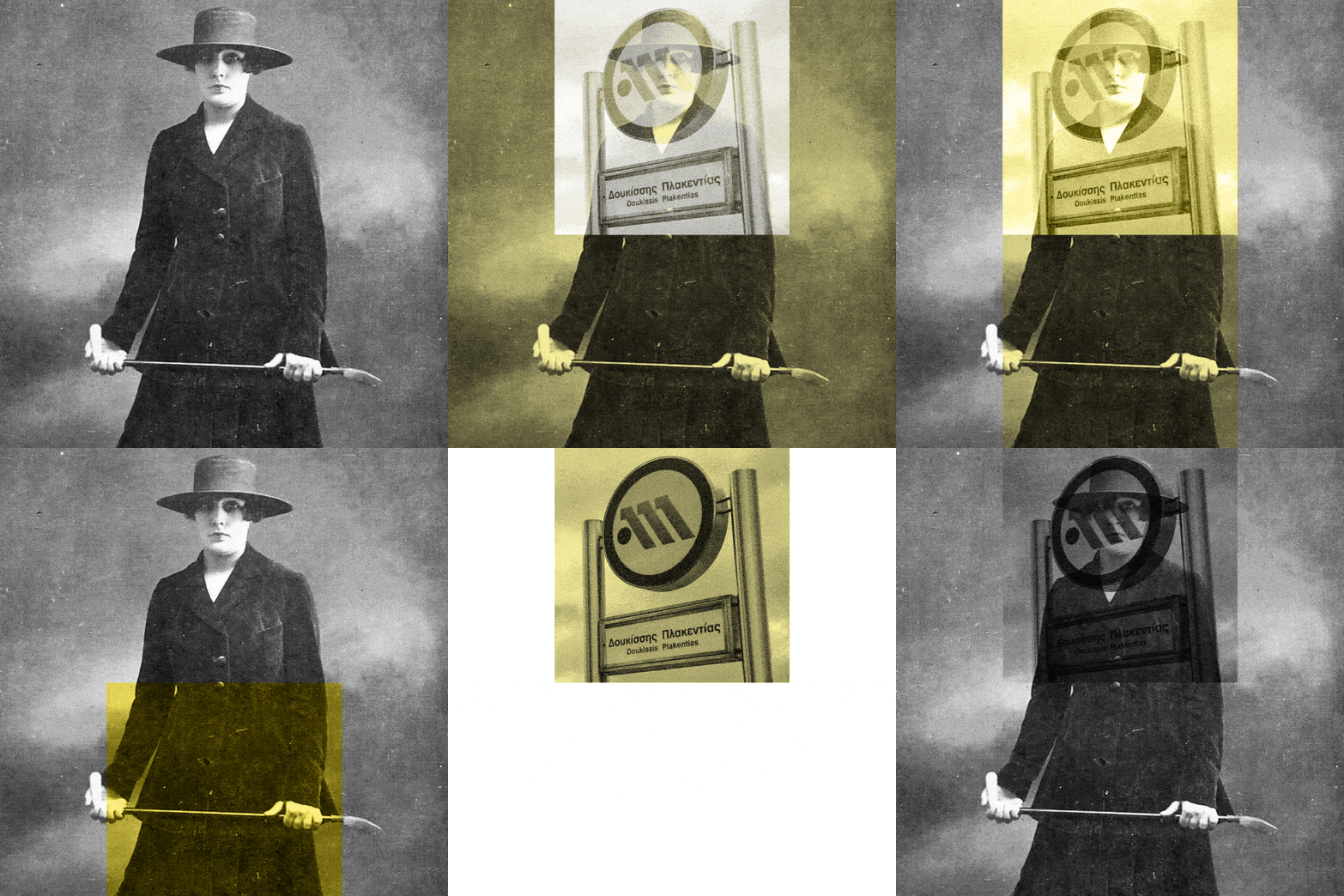
“Do kisses blacken tears” refers to the Duchess of Plaisance (Sophie de Marbois-Lebrun, 1785–1854) and is also an Athens metro station (built on land once hers) that took her name.
The images show (a) the sign at said station and (b) the actress Elli Afentaki performing as the French socialite in a 1916 play of her life.
see also
(this dubitandum lives alone)
kunst ⋮ carcinogen
PEOPLE (SORT OF) SAID:
A HAIKU PANORAMA
ABOUT ELENIT
animal babble
never seen anything worse
if this is art then
GEORGIA
ό,τι χειρότερο έχω παρακολουθήσει ποτέ στο θέατρο
δεν ήξερα τι είδα αν εκτυλίχθηκε στο τρελοκομείο ή κάπου αλλού
κοντοί παραμορφωμένοι τύποι που έκραζαν σε μια διάλεκτο κότας
αν αυτό είναι τέχνη τότε δεν μου κάνει
ΤΖΩΡΤΖΙΑ
really quite pleasant
made me laugh and think things through
as it held me tight
MARKOS
πολύ ευχάριστη παράσταση
διασκέδασα και με έκανε να σκεφτώ
ΜΑΡΚΟΣ
sound lights sets costumes
such attention to detail
freedom in chaos
CHRISTINA
υπέροχη παράσταση
όλα ήταν υπέροχα με τρομερή προσοχή στη λεπτομέρεια
η στιγμή που το κοινό συνειδητοποιεί ότι καλείται να συμμετέχει στο χάος και
αποενοχοποιείται το γέλιο του είναι απελευθερωτική
πέρα από τους άψογους επί σκηνής συντελεστές αξίζουν πολλά συγχαρητήρια και
σε όσους επιμελήθηκαν ήχο, φωτισμό, σκηνικά και κουστούμια
ΧΡΙΣΤΙΝΑ
stuffed full made me mad
learned to love simplicity
when it was over
HARA
μετά την παράσταση εκτίμησα την απλότητα
εκνευριστικό μπούκωμα από ερεθίσματα
ΧΑΡΑ
athens has not seen
movements and images made
so challengingly
LEONIDAS
δημιουργία εικόνα κίνηση
δύσκολη παράσταση
πρωτόγνωρη στο αθηναϊκό κοινό
ΛΕΩΝΙΔΑΣ
a pinched pretend blurred
triumph of confused foul art
barbican my arse (OR: boo a ha ha ha)
ONE-TWO-THREE
«ο δημιουργός που ταρακούνησε το μπάρμπικαν και
το παλαί ντε τοκυό»
μπουάχαχαχα
τσιμπάμε ωρέ κλεφτόπουλα;
ό,τι πιο θολοκουλτουριάρικο, συγχυσμένο και
καρακαταψωνισμένο παράγεται εντός ψωροκώσταινας θα
βρει στέγη στη… στέγη
ανακηρύσσεται πανηγυρικά σε μαικήνα των κακών τεχνών
ε δεν είναι και λίγο
ΕΝΑ-ΔΥΟ-ΤΡΙΑ
atmosphere like glue
jodorowsky lynch fever
with japanese subs
MANOS
υπήρχαν και κάποιες καλές στιγμές εντυπωσιακής εικονοπλασίας
υπήρχαν στιγμές που φωτισμός και
μουσική δημιουργούσαν μια καθηλωτική ατμόσφαιρα
αλλά για το ενενήντα πέντε τοις εκατό της παράστασης και
του χρόνου που παρακολουθούσα ένιωθα ότι
ήταν σαν να έβαλαν τον σεφερλή με τριάντα-εννιά πυρετό να
δει χοντορόφσκι και λιντς με ιαπωνικούς υπότιτλους και
να του είπαν καν᾽ το τώρα επιθεώρηση
αυτά
ΜΑΝΟΣ
one thing is for sure
no dance no sense no nothing
fake acting fake art
LINA
το σίγουρο είναι ότι δεν θα δείτε χορό
μόνο ακαταλαβίστικη φλυαρία, τίποτα το πρωτότυπο
δήθεν τέχνη, δήθεν θέατρο
μακριά
ΛΙΝΑ
worth a look this thing
cutting edgy pioneer
few are those who dare
PANAYIOTA
πρωτοπορία
αξίζει να δείτε τέτοια παράσταση γιατί
σε αυτή την χώρα λίγοι τολμούν
ΠΑΝΑΓΙΩΤΑ
got no idea
almost twigged but then was lost
pretty’s not enough
PANAYIOTIS
ειλικρινά δεν ξέρω τι είδα
φύγαμε με πονοκέφαλο
πλίνθοι και κέραμοι ατάκτως ερριμμένα
εκεί που νομίζεις ότι κάποιο νόημα έβγαλες, εκεί το χάνεις
το εύρημα με τους διάλογους, να μιλάνε ακαταλαβίστικα ώστε
να περνάνε τα αισθήματα στον θεατή, δεν λειτουργεί καθόλου
έχει δυο-τρεις στιγμές που αυτό που βλέπεις σε ικανοποιεί έστω αισθητικά
αλλά δεν είναι ικανές να σε αποζημιώσουν για όλο το υπόλοιπο
προσωπικά το έργο με έχασε όταν βγήκε ο ρόλος της νοικοκυράς με
καρέ μαλλί και μουστάκι, αντιγραφή των vermillions από τη σειρά legion
εκεί συνειδητοποίησα και γιατί ο σκηνοθέτης επέλεξε
ο πρωταγωνιστικός ρόλος να ακούγεται με auto-tune
οι ηθοποιοί είναι ήρωες που κατάφεραν να
υπηρετήσουν αυτό το «θέαμα» όσο καλύτερα μπορούσαν και
μόνο για αυτό χειροκρότησα στο τέλος και έβαλα δύο αστέρια
ΠΑΝΑΓΙΩΤΗΣ
what a show my god
genius exceptional
congratulations
EMMA
καταπληκτική παράσταση
ευφυής σκηνοθέτης, εξαιρετικοί συντελεστές
συγχαρητήρια σε όλους
ΕΜΜΑ
went wary but wait
singular special vision
left warmed by a dream
NIKOS
πήγα στην παράσταση διστακτικός
το θέαμα όμως ήταν τελικά πολύ ιδιαίτερο και
ξεχωριστό σε σχέση με ό,τι άλλο έχω παρακολουθήσει
έφυγα και αισθανόμουν ότι παρακολούθησα την τρέλα και
τη ζεστασιά ενός ονείρου
χαίρομαι που το είδα εν τέλει
ΝΙΚΟΣ
kunst carcinogen
call it meat but it’s still fish
under the glitter
SOPHOCLES
χορευτική περφόρμανς δεν το λες
εκτός κι αν στις έννοιες χορός και
περφόρμανς μπορεί στην βλαχοεντόπια μεταμοντέρνα ημιμάθεια
να βαφτίζουμε το ψάρι κρέας,
κολλώντας ταμπελάκια μεγαλείου «διεθνής»,
«σημαντικών» και τα λοιπά
είναι μια παράσταση δραματουργικά αντιδάνειο ανάμικτων στιγμιότυπων
παραστατικής δηθενιάς με γκλίτερ ωνασείου και επικοινωνιακής θολούρας
kunst καρκινογόνο υλικό κατεδαφίσεως της άκριτης μετακρίσης
που βιώνει η καλλιτεχνία των στενών ορίων
ΣΟΦΟΚΛΗΣ
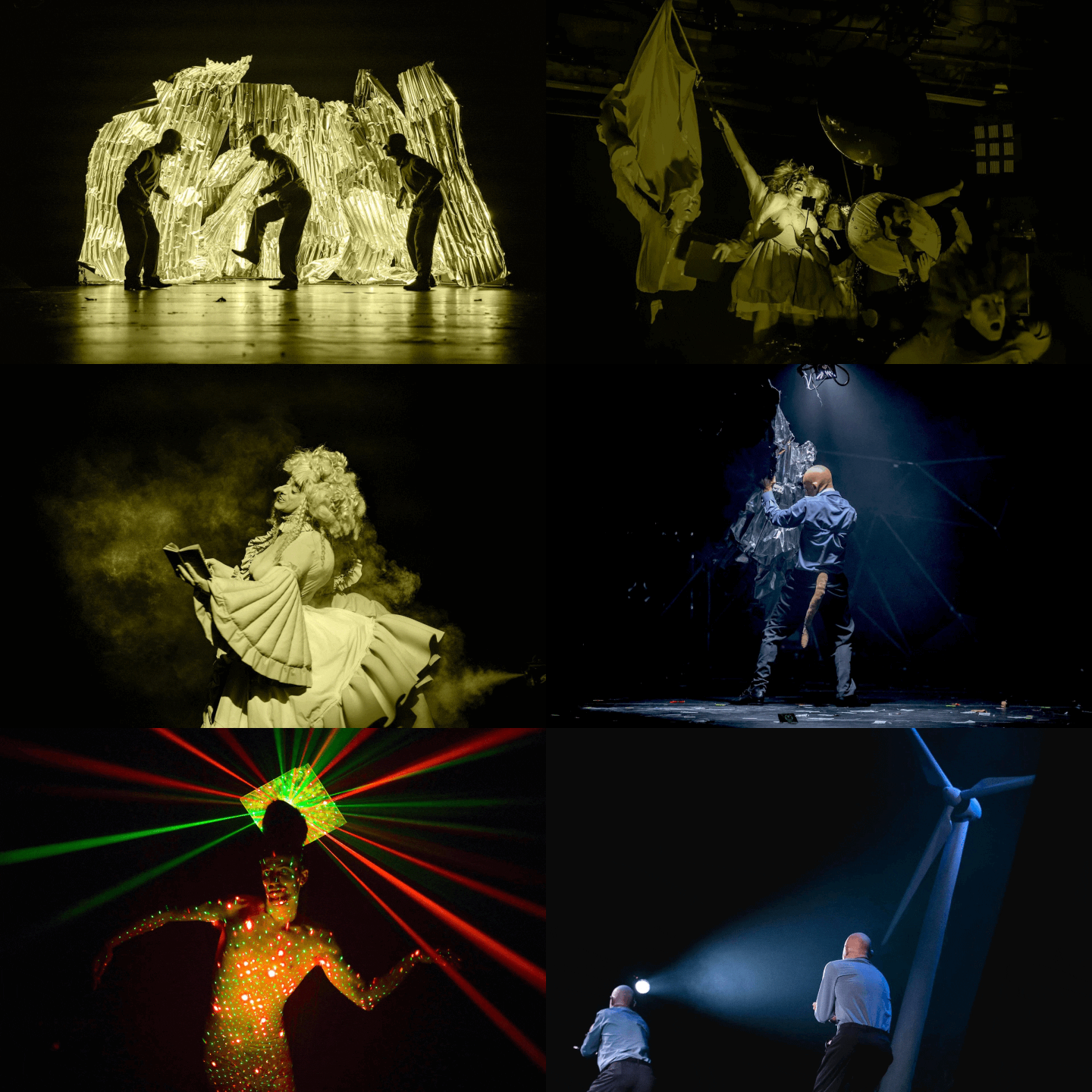
Text written in 2020 for the love of Elenit but specifically for Multiplex, a proposed but unrealised print project on the work of Euripides Laskaridis.
A translation-rooted exercise, taking (verbatim) all thirteen Greek audience reviews of the 2019 work Elenit posted on the (often vitriolic) Athinorama online entertainment guide and attempting to make English summaries out of them as haiku (a three-line format with seventeen syllables arranged in a five–seven–five pattern).
An attempt to filter a found mini-archive (as is, with its extremes) lovingly into a set textual form.
Photography by Andreas Simopoulos, Elina Giounanli, Geli Kalampaka, and Julian Mommert.
see also
(this dubitandum lives alone)
transpolia
The things ⋮ now behind.
liberating ⋮ cosmos
WHY DO I MAKE FILMS?
Ten years ago, Ciriaco Tiso and I wrote this little manifesto together. It is one I still subscribe to.
We Declare:
Cinema is not the work of big budgets.
Cinema is not the work of film stars.
Cinema is not spectacle made by multinational companies.
Cinema is not videotape recording.
Cinema is not films made to play on television.
Cinema is not the didactic sermons of specialists.
Cinema is not the work of gorgeous cinematography, perfectly framed shots, crystal clear and conventional soundtracks, lavish production design.
Cinema does not exist without film stock. And a film only exists when a filmmaker takes stock of things deep down inside and NOT when dumb decisions are taken by arts programmers and cultural string-pullers, by bullshit producers, business executives, and sundry officials, by bankers, bureaucrats, and subordinates.
Cinema is films that are our own.
Cinema is the rejection of jargon and semiotics.
Cinema is the place where you and I meet, where the Self embraces the Other.
Cinema is all the films never made but still ecstatically seen in the great big bang of existence.
Cinema is the liberating preoccupation of the marginalized seeking out their own cosmos.
Cinema is a place of damnation and intoxication.
Cinema is ongoing reflection on being.
Cinema is society propagating itself on the basis of just one condition: to allow Being and (cosmic) Time to emerge through the prism of contemplation.
Cinema is a point of conflictive convergence between the real and the inconceivable, the imaginary and the unachievable.
Cinema is at once the following promise and threat: the return of all that is elusive, the daring of all that is unexpected.
May 1987
Stavros Tornes
ΓΙΑΤΙ ΚΑΝΩ ΚΙΝΗΜΑΤΟΓΡΑΦΟ;
Πέρασαν δέκα χρόνια πού συντάξαμε μαζί με τον Τσιριάκο Τίζο τούτο το μικρό μανιφέστο. Ακόμα το πιστεύω.
Ισχυρισμός:
Ο κινηματογράφος δεν είναι το έργο των δισεκατομμυρίων.
Ο κινηματογράφος δεν είναι έργο αστέρων.
Ο κινηματογράφος δεν είναι το θέαμα των πολυεθνικών.
Ο κινηματογράφος δεν είναι εγγραφή βιντεοταινίας.
Ο κινηματογράφος δεν είναι οι ταινίες που παίζονται στην τηλεόραση.
Ο κινηματογράφος δεν είναι τα δασκαλέματα των ειδικών.
Ο κινηματογράφος δεν είναι έργο της όμορφης φωτογραφίας, του τέλειου πλαισίου, της καθαρής και κατά συνθήκη ηχητικής μπάντας της πλούσιας σκηνογραφίας.
Ο κινηματογράφος δεν υπάρχει χωρίς φιλμ. Αλλά φιλμ υπάρχει μόνο όταν ξεκινά από την απόφαση βαθιά μέσ’ απ’ τα σπλάχνα εκείνου που το κάνει και ΟXΙ από την ηλίθια αποφασιστικότητα των προγραμματιστών, χειριστών της κουλτούρας, παραγωγών της ψωλής, στελεχών επιχειρήσεων, λειτουργών διαφόρων, τραπεζιτών, γραφειοκρατών, βοηθητικών.
Ο κινηματογράφος είναι τα δικά μας φιλμ.
Ο κινηματογράφος είναι η άρνηση του τεχνικισμού και του σημειολογισμού.
Ο κινηματογράφος είναι ο τόπος που εσύ και εγώ γνωριζόμαστε, «εγώ» και άλλοι αγκαλιαζόμαστε.
Ο κινηματογράφος είναι όλα τα έργα που δεν έγιναν αλλά θεάθηκαν εκστατικά μέσα στην έκρηξη της ύπαρξης.
Ο κινηματογράφος είναι ή απελευθερωτική προσήλωση του περιθωρίου στην αναζήτηση του ατομικού του κόσμου.
Ο κινηματογράφος είναι ο χώρος της κατάρας και της μέθης.
Ο κινηματογράφος είναι αιώνια αναλογία του Είναι.
Ο κινηματογράφος είναι η κοινωνία που αναπαράγεται κάτω από μια μοναδική συνθήκη: να αφήσει να διαφανεί το είναι, ο Χρόνος (Κόσμος), πίσω από της πλευρές του λογισμού.
Ο κινηματογράφος είναι το σημείο συνάντησης-σύγκρουσης μεταξύ του πραγματικού και του αδιανόητου, του φανταστικού και του αδύνατου.
Ο κινηματογράφος είναι αυτή η υπόσχεση-απειλή: η επιστροφή του ασύλληπτου, η τόλμη του απρόβλεπτου.
Μάϊος 1987
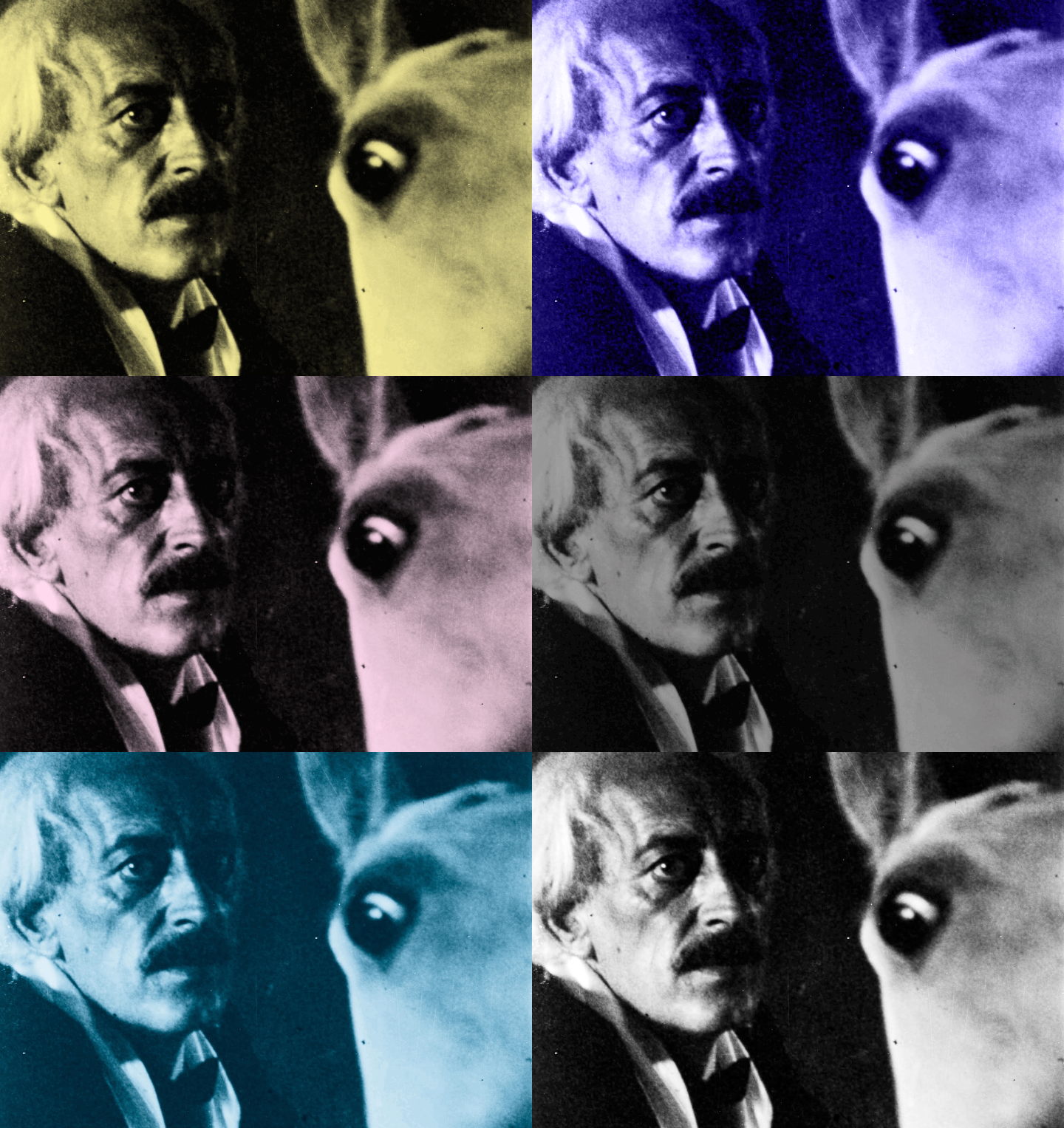
Translated from the Greek for (and taken from) the Thessaloniki Documentary Festival publication Manifestos (TiDF26).
The image shows Stavros Tornes in his 1982 Balamos. Eyes wide.
see also
(this dubitandum lives alone)
arkhæio
MANIFESTOS
liliums ⋮ narcissi
FICKLE SPRING
Ι
Bitter risen bread
Leaven steeped in red wine
Monument aflame
Warrior blood duplicate
The heroes have fallen, mother
Rising no more from the earth
All full with bones
Take, eat
Orders the general
Ripping the bitter bread
Thick pieces from thick hands
Rippling with veins
That have stripped life
From myriad beings
Throngs of lifebreath severed
Bread redolent
Crimson wine asteam in the mornlight
A fox snickers, incessant
Surly is this March
Drink from the blood that flows through my veins
Orders the general
Filthy combatants close in to drink
Yet to shake off the slaughter
Hooked on their shoulders like a black crow
Feathers gall black
Flying sky high
Genocide circling
Land demarking
Red snow falls, Sahara sent
Crow blinded as it flies
Falling with a thump, cawing on the redsoil
Umbra creeps over dark earth
Barbaric rumble of memory
The dawning breath of the maim mists the air
Missing a leg, missing an arm
The grave lies empty
Freedom calls on missing limbs
It got eaten by the dark, so say the news agencies
Ads for foaming liquid soap
On beautiful bodies
Slava! Slava! shudders the soil
Gospode, whispers the general
Feet burying the desiccated carcass of a fox
Bushy tail left unburied
Red tuft
Onto soil falls a little wet bitter bread
Soaked in red wine
The general falls to his knees
Licks the earth clean of the bitter bread
Moist with the red fluids of the departed
Soil in mouth
Soil and mouth
Mouth of soil frothing
Teeth gnashing hydrogen, carbon, oxygen
Ethanol has a whiff of spring
Fighters toss a lit match where he licks
Soil catches fire
Mouth at once alight
Gaze aflame
Eyeing the Caucasus
ΙΙ
Sprout-surging from black soil
The flowers of Tauris all bloom at once
Asters, lychnis coronaria, carnations, dahlias, roses, lilies, geraniums, orchids, violets, sunflowers, honeysuckles
Flowers of passion from the Crimea
Amaryllis, lisianthuses, anemones, gladioli, begonias, crocuses, crown imperials
Persephone’s asphodels
Hyacinths, narcissi, tulips
Black Sea-scented lavender
Camellias, hibisci, lilacs, magnolias, rhododendrons, freesias, gardenias, gerbera daisies, heliconias
Hortensias from Odessa
Irises, snapdragons, liliums, peonies, meadow buttercups, wayfarers, chrysanthemums, fleur-de-lis
Immortelles, everlasting like the dead
Laceleafs
Shellflowers
Sweetest death rises tall
Cherries thicken into lips more beautiful than any ever made
The honeyed hearts of humankind burst open with a bang
Krakatoa of sighs
The Euxine Sea
Kneads an extra-fragrant end-time prince
A golem of dark days
Smiling faintly, coming closer
Pacing slow toward the homes and to their riddled front doors
Landing up languid from the Caucasus
Thirteen brothers call out in Slavic tongue:
Mama, mama, mama
Svoboda!
Jacob grips tight the heel of Esau
Firstborn covetous
Birthed maim
Half twin
ΙΙΙ
My hands hold your blond head
And I stroke your chestnut beard
With my thick hands
My general…
My hand-veins swell with love
For those lips of yours I never tire to kiss
Love’s lexicon are the many sum hazel hairs on my body
Where you laid yourself down over and again
After battle
I hold your blond head, my love
For the last time
Grieving for the Caucasus took you as its prize
Those great mountains
Where the sun came up today
He got eaten by the dark, weep my hand-veins
Brimming with your blood
Foreign veins fought beside you
From neighbouring lands
For you
For me
Everywhere I looked, the two of us
I am left a broken twin in two equal parts
Forged of hollow bone
Gospode
With no general
With no friend
Our fickle spring got eaten by the dark
Broken down on the front lines
Crumbling like stale bread
Foundering
A sign of mourning
Your short-cropped head beside mine
Fighter clasping fighter
My final kiss on your lips
Lips locked on lips
The little fox we raised together
After killing its mother
Hungry intertwines my legs
Like mine yours
I so wanted to live a normal life
By your side
We were robbed, my darling
They tore us from our bed
Soiling our sheets with combat boots
Like ours
Brothers in arms
We were wrong
What remains:
The warmth of my chest clinging to the chill of yours
My heart beats monotone without your heart
My fair-haired boy, every last heartbeat of mine
Is for you
Meanwhile gifts from you
Are all my coming agonies
Victorious
I shall return to my homeland heavily defeated
A refugee
Orphaned of you
Manolis Tsipos
ΑΣΤΑΘΗΣ ΑΝΟΙΞΗ
Ι
Ψωμί ζυμωμένο πικρό
Προζύμι πνιγμένο σε κόκκινο κρασί
Φλογισμένο μνημείο
Αντίγραφο του αίματος των μαχητών
Έπεσαν οι ήρωες, μητέρα
Δεν αναδύονται πλέον από τη γη
Γέμισε κόκκαλα
Πάρτε φάτε
Προστάζει ο στρατηγός
Κόβει το πικρό ψωμί
Χοντρά κομμάτια από χοντρά χέρια
Συσπώνται οι φλέβες πάνω τους
Έχουν αφαιρέσει τη ζωή
Από τόσα πλάσματα
Πλήθος οι ανάσες που κόπηκαν
Μοσχοβολά το ψωμί
Αχνίζει το άλικο κρασί στο πρωινό φως
Μια αλεπού γελάει ακατάπαυστα
Δύστροπος ο φετινός Μάρτης
Πιείτε το αίμα που κυλά στις φλέβες μου
Προστάζει ο στρατηγός
Βρώμικοι μαχητές πλησιάζουν να πιούν
Δεν έχουν αποτινάξει τη σφαγή
Γαντζώθηκε στους ώμους τους σαν μαύρος κόρακας
Φτερά από μαύρο θράσος
Πετούν ψηλά στον ουρανό
Κυκλώνουν τη γενοκτονία
Σημειώνουν τον τόπο
Χιονίζει κόκκινο φερμένο από τη Σαχάρα
Τυφλώνεται ο κόρακας καθώς πετά
Πέφτει με γδούπο κράζοντας πάνω στο κοκκινόχωμα
Σέρνεται σκιά πάνω στη σκούρα γη
Ο βάρβαρος αχός της μνήμης
Ατμός η πρωινή ανάσα των σακατεμένων
Λείπει το πόδι, λείπει το χέρι
Κενός ο τάφος
Προσκλητήριο απόντων μελών η Ελευθερία
It got eaten by the dark, λένε τα ειδησεογραφικά πρακτορεία
Διαφημίσεις υγρού κρεμοσάπουνου
Πάνω σε όμορφα σώματα
Σλάβα! Σλάβα! ανατριχιάζει το χώμα
Γκόσποντε, ψιθυρίζει ο στρατηγός
Θάβει με τα πόδια του ένα στεγνό τομάρι αλεπούς
Η φουντωτή ουρά της παραμένει άθαφτη
Κόκκινος θύσανος
Πέφτει στο χώμα λίγο υγρό πικρό ψωμί
Βουτηγμένο στο κόκκινο κρασί
Πέφτει στα γόνατα ο στρατηγός
Γλύφει το χώμα να το καθαρίσει από το πικρό ψωμί
Νοτισμένο με το κόκκινο υγρό των κεκοιμημένων
Χώμα στο στόμα
Χώμα και στόμα
Στόμα χωμάτινο που αφρίζει
Τα δόντια αλέθουν υδρογόνο, άνθρακα και οξυγόνο
Μύρισε άνοιξη η αιθανόλη
Ρίχνουν οι μαχητές αναμμένο σπίρτο εκεί που γλύφει
Αρπάζει φωτιά το χώμα
Ανάβει μονομιάς το στόμα
Φλόγα στο βλέμμα
Βλέπει τον Καύκασο
ΙΙ
Ορμητικά βλασταίνουν μέσα από το μαύρο χώμα
Ανθίζουν όλα μαζί τα λουλούδια της Ταυρίδας
Αστέρες, λυχνίδια, γαρύφαλλα, ντάλιες, τριαντάφυλλα, κρίνοι, γεράνια, ορχιδέες, βιολέτες, ηλίανθοι, αγιοκλήματα
Λουλούδια του πάθους από την Κριμαία
Αμαρυλλίδες, λυσίανθοι, ανεμώνες, γλαδιόλες, μπιγκόνιες, κρόκοι, κορώνες αυτοκρατορικές
Ασφόδελοι της Περσεφόνης
Υάκινθοι, νάρκισσοι, τουλίπες
Λεβάντες που μυρίζουν Μαύρη Θάλασσα
Καμέλιες, ιβίσκοι, πασχαλιές, μανόλιες, ροδόδενδρα, φρέζες, γαρδένιες, ζέρμπερες, ελικόνιες
Ορτανσίες από την Οδησσό
Ίριδες, σκυλάκια, λίλιουμ, παιώνιες, νεραγκούλες, βιβούρνα, χρυσάνθεμα, λειριά
Αμάραντοι, όπως οι πεθαμένοι
Ανθούρια
Μολουσέλες
Ορθώνεται ο γλυκύτερος θάνατος
Πυκνώνονται κεράσια και γίνονται τα πιο όμορφα χείλη που φτιάχτηκαν ποτέ
Σπάζουν με κρότο γλυκασμένες οι καρδιές των ανθρώπων
Κρακατόα στεναγμών
Ο Εύξεινος Πόντος
Πλάθει τον ευωδέστερο πρίγκιπα του τέλους
Γκόλεμ του σκοτεινού καιρού
Πλησιάζει χαμογελώντας ελάχιστα
Βαδίζει αργά προς τις διάτρητες πόρτες των σπιτιών
Νωθρά καταφθάνει από τον Καύκασο
Σε γλώσσα Σλαβική φωνάζουν δεκατρία αδέλφια:
Μάμα, μάμα, μάμα
Σβομπόντα!
Ο Ιακώβ γραπώνει τη φτέρνα του Ησαύ
Φθονεί τα πρωτοτόκια
Γεννιέται ανάπηρος
Μισός δίδυμος
ΙΙΙ
Κρατώ το ξανθό σου κεφάλι στα χέρια μου
Χαϊδεύω το καστανό μούσι στο πρόσωπο
Με τα χοντρά μου χέρια
Στρατηγέ μου
Οι φλέβες των χεριών μου φουσκώνουν από έρωτα
Για τα χείλη σου που δεν χορταίνω να φιλώ
Λεξικό της αγάπης όλες μαζί οι πολλές καστανές τρίχες στο σώμα μου
Εκεί όπου ξάπλωσες τόσες φορές
Μετά τη μάχη
Κρατώ το ξανθό σου κεφάλι, αγάπη μου
Για τελευταία φορά
Θρηνώ γιατί σε κέρδισε ο Καύκασος
Το μεγάλο βουνό
Απ’ όπου ανέτειλε σήμερα ο ήλιος
He got eaten by the dark, κλαίνε οι φλέβες στα χέρια μου
Γεμάτες με το αίμα σου
Πολέμησαν ξένες δίπλα σου
Από γειτονική πατρίδα
Για σένα
Για μένα
Εμάς τους δύο έβλεπα παντού
Απόμεινα δίδυμος σπασμένος σε δύο ίσα κομμάτια
Φτιαγμένος από κούφιο κόκκαλο
Γκόσποντε
Δίχως στρατηγό
Δίχως φίλο
Φαγώθηκε από το σκοτεινό η ασταθής μας άνοιξη
Χωνεύτηκε στις γραμμές του μετώπου
Θρυμματίστηκε σαν το ξερό ψωμί
Παραπαίει
Σε ένδειξη πένθους
Το κοντοκουρεμένο κεφάλι μου δίπλα στο δικό σου
Μαχητής αγκαλιάζει μαχητή
Το τελευταίο μου φιλί στα χείλη σου
Χείλη κολλούν σε χείλη
Το αλεπουδάκι που μεγαλώσαμε μαζί
Αφού σκοτώσαμε τη μάνα του
Πεινασμένο μπερδεύεται στα πόδια μου
Όπως εγώ στα δικά σου
Ήθελα τόσο πολύ να ζήσω ζωή κανονική
Δίπλα σου
Μας έκλεψαν, καλέ μου
Μας έβγαλαν από το κρεβάτι μας με βία
Λέρωσαν τα σεντόνια μας με τις αρβύλες τους
Όμοιες με τις δικές μας
Αδέρφια
Κάναμε λάθος
Αυτό που μένει:
Η θέρμη του στήθους μου κολλημένη στο κρύο του δικού σου
Καρδιά που χτυπά μονότονα δίχως τη δική σου καρδιά
Όλοι οι χτύποι που απέμειναν, ξανθέ μου
Είναι για σένα
Δώρα δικά σου
Τα μελλοντικά μου βάσανα
Νικητής
Θα επιστρέψω στη χώρα μου βαριά ηττημένος
Πρόσφυγας
Ορφανός από εσένα
This poem was written by Manolis Tsipos in the spring of 2025 (March).
It was translated from the Greek for the love of it that same spring (April).
Note the (word) garden that blooms at its heart.
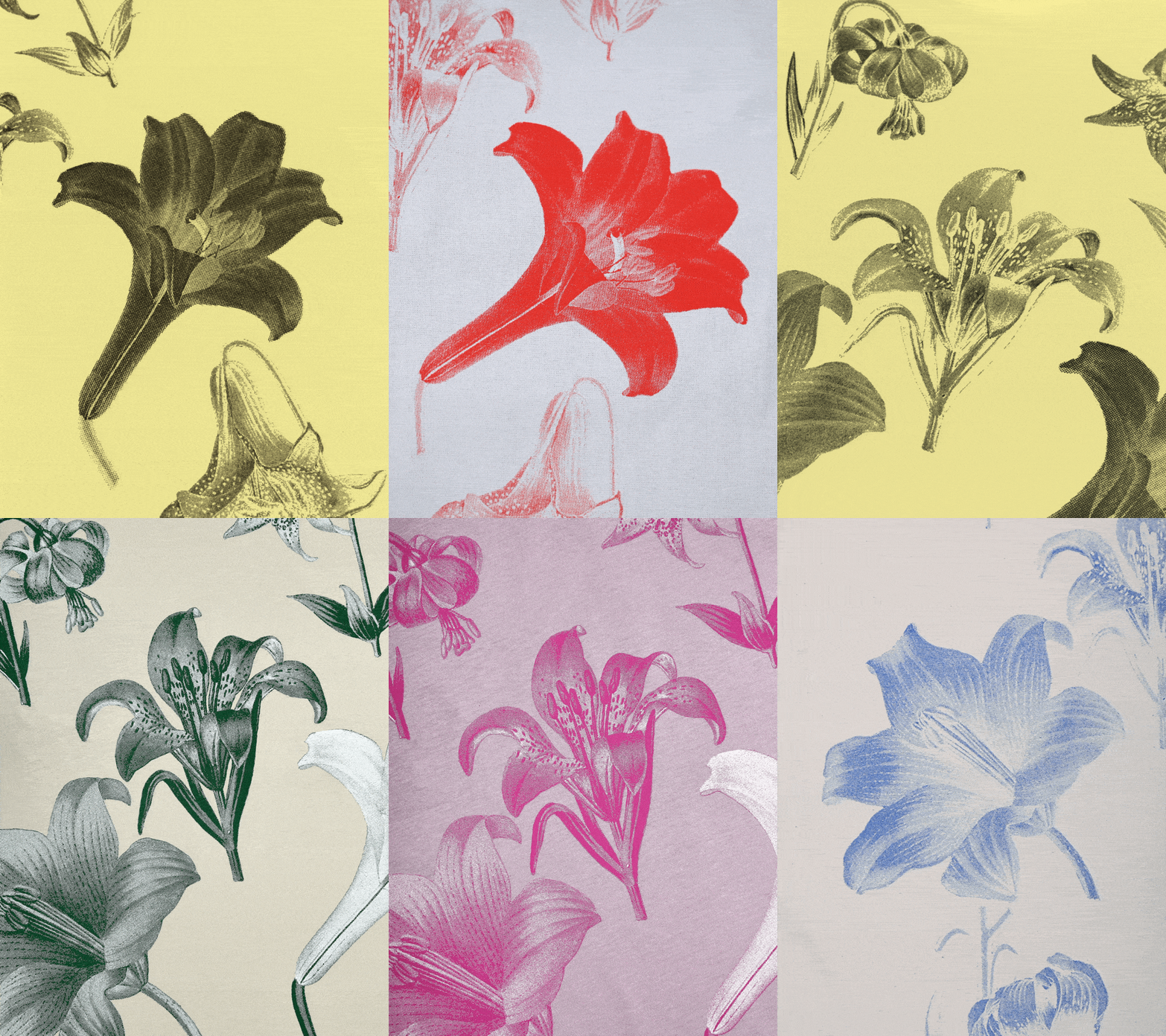
The image shows a different lush garden created by Ralou OK for Niáta. Various lovely lilies – διάφορα (μη-διάφανα) κρίνα – silkscreened and sewn to be worn on back and breast.
see also
(this dubitandum lives alone)
listing ⋮ sorrow
IMPLORATIO
The sea folded a sailor into her deep.
His mother —how could she know?— goes and lights
before the Virgin, at her icon, a tall candle
for his quick return and for kind skies—
one ear listing always to the wind.
She prays. She implores. Meanwhile
the likeness listens, solemn and in sorrow,
knowing he will never come, her longed-for son.
Constantine Cavafy
ΔΕΗΣΙΣ
Ἡ θάλασσα στὰ βάθη της πῆρ’ ἕνα ναύτη.—
Ἡ μάνα του, ἀνήξερη, πιαίνει κι’ ἀνάφτει
στὴν Παναγία μπροστὰ ἕνα ὑψηλὸ κερὶ
γιὰ νὰ ἐπιστρέψει γρήγορα καὶ νᾶν καλοὶ καιροὶ—
καὶ ὅλο πρὸς τὸν ἄνεμο στήνει τ’ αὐτί.
Ἀλλὰ ἐνῶ προσεύχεται καὶ δέεται αὐτή,
ἡ εἰκὼν ἀκούει, σοβαρὴ καὶ λυπημένη,
ξεύροντας πῶς δὲν θἄλθει πιὰ ὁ υἱὸς ποῦ περιμένει.
Personal and ongoing translation project – another English take on Cavafy (to add to the countless many). Translated for the love of it.
Choice of English words inevitably affected by the music of Lena Platonos, the voice of Yiannis Palamidas, and the visuals of Dimitris Papaioannou, from their 2010 staged work K.K. featuring thirteen poems by Constantine Cavafy.
Dimitris shot and edited this footage, setting three silhouettes (dressed in black, top to toe) against the sea, alongside an arm (mechanical) desperately plunging the depths.
Consider “listing ⋮ sorrow” alongside two other dubitanda – “agleam ⋮ bereft” and “whisper ⋮ waves” – to find three figures calling out to various seas (Aegean, Caspian, otherworldly), aching for loves (child or parent or spouse) beyond reach.
A triptych of longing (via Kitsopoulou and Cavafy and Səfərli):
waiting this whole night through…
one ear listing always to the wind…
whisper it, whisper, oh waves…
These three translations informed one another (you can spot the ways).
see also
agleam ⋮ bereft
whisper ⋮ waves
look ⋮ there!
Να τη! Χαράζει η αυγή
κι όλα τ’ αστέρια τ’ ουρανού
σβήνουνε ένα-ένα.
Και να! Η αηδόνα κελαηδά, εκεί ψηλά στα δέντρα·
κλαίει το παιδί της και θρηνεί,
κλαίει θρηνεί κάθε πρωί
ξανά, ξανά, ξανά:
Ίτυ, Ίτυ (γλυκέ μου), Ίτυ (γιε μου), Ίτυ, Ίτυ…
Να κι οι βοσκοί μες στα βουνά μαζί με τα κοπάδια·
ακούγεται η φλογέρα, βελάζουνε τ’ αρνιά,
ξυπνούν και τα πουλάρια· αργά και νυσταγμένα,
πάνε μαζί δυο-δυο να φαν’ χορτάρια τρυφερά.
Πιάνουν δουλειά κ’ οι κυνηγοί, ζώα πολλά να σφάξουν,
ενώ δυο κύκνοι πλέουνε στα ήρεμα νερά…
Και ’κει! Πιο πέρα – βγαίνουνε οι βάρκες στ’ ανοιχτά·
φυσά τ’ αεράκι απαλά, χαϊδεύει τα πανιά.
Κι οι ναύτες ρίχνουν τα κουπιά κι αρχίζουν το τραγούδι:
«Αύρα, φύσα Αύρα, φύσα, πάρε με
που ’χω γυναίκα και παιδί και περιμένουν».
Φουσκώνουν τα πανιά μεμιάς, με φόρα παν’ οι πλώρες…
Μα αυτά είναι έγνοιες αλλωνών.
Εμάς το καθήκον
–μα κι ο έρωτας, ο πόθος–
μας θέλουν εδώ…
parados from the lost play
PHAETHON by Euripides
ἤδη μὲν ἀρτιφανὴς
Ἀὼς ἱ[ππεύει] κατὰ γᾶν,
ὑπὲρ δ᾽ ἐμᾶς κεφαλᾶς
Πλειά[δων πέφευγε χορός],
μέλπει δ᾽ἐν δένδρεσι λεπτὰν ἀηδὼν ἁρμονίαν
ὀρθρευομένα γόοις
Ἴτυν Ἴτυν πολυθρόνον.
σύριγγας δ᾽ οὐριβάται
κινοῦσιν ποιμνᾶν ἐλάται,
ἔγρονται δ᾽εἰς βοτάναν
ξανθᾶν πώλων συζυγίαι·
ἤδη δ᾽εἰς ἔργα κυναγοὶ στείχουσιν θηροφόνοι,
παγαῖς τ᾽ἐπ᾽ Ὠκεανοῦ
μελιβόας κύκνος ἀχεῖ.
ἄκατοι δ᾽ ἀνάγονται ὑπ᾽εἰρεσίας
ἀνέμων τ᾽ εὐαέσσιν ῥοθίοις,
ἀνὰ δ᾽ ἱστία ν[αῦται] ἀειράμενοι
ἀχοῦσιν ῾[Ἕπου,] πότνι᾽ αὔρ[α],
[ἡμῖν ὑπ᾽] ἀκύμονι πομπᾷ
σιγώντων ἀνέμων
[ποτὶ τέκνα] τε καὶ φιλίας ἀλόχους.᾽
σινδών δὲ πρότονον ἐπὶ μέσον πελάζει.
τὰ μὲν οὖν ἑτέροισι μέριμνα πέλει,
[…]
ἐμὲ καὶ τὸ δίκαιον ἄγει καὶ ἔρως…
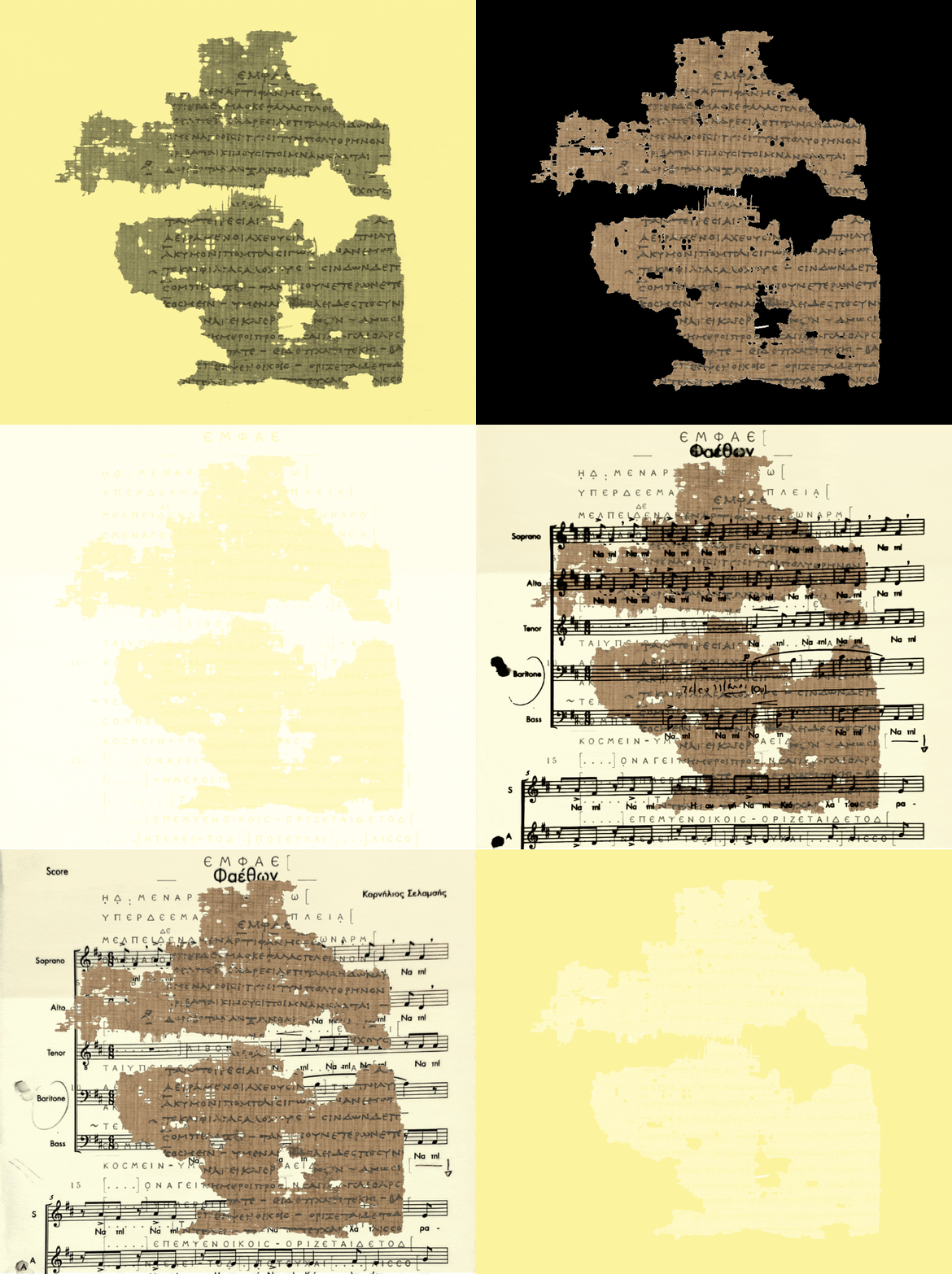
A fragment from the lost Euripides play Phaethon (circa 420 BCE), found in 1901 by the German archaeologist Otto Rubensohn at Al Ashmunein (ancient Hermopolis) in Egypt – a dawn chorus that rose over (and from) the earth.
Translated for (and taken from) the theatre / archaeology performance Fragments: Euripides created by Efthimis Theou in 2025 for the National Theatre of Greece as part of its “Introducing Greece’s Ancient Hidden-Gem Theatres” initiative organised in partnership with the Diazoma Association.
The composer Kornilios Selamsis set this new modern Greek translation of the ancient text to music for five voices (the five performer-archaeologists of Fragments: Euripides).
You can hear the opening line of this music (“look, there!”) in the video that lives inside the dubitandum “timeworn ⋮ timeless” (see below).
The moving image overlays three elements:
(one)
Berlin Papyrus number 9711 (written by an unknown ancient hand in the third century BCE).
(two)
A 1907 transcription of the ancient text (edited and published by Ulrich von Wilamowitz-Moellendorff and Wilhelm Schubart).
(three)
An excerpt from the modern score written by Kornilios Selamsis in 2025 (with handwritten notes by Fragments: Euripides director and performer Efthimis Theou).
A new English translation of the fragment is currently being prepared, to accompany the new modern Greek translation.
see also
timeworn ⋮ tireless
arkhæio
FRAGMENTS (EURIPIDES) FRAGMENTS (EURIPIDES) GATHERED
transpolia
Boughs ⋮ like ink (Egyptian).
marbled ⋮ beauty
Between two hills, beyond a river and beside a temple of luck, ancient Athenians ran their races. Once outside the city walls, today this stadium lies bang in the heart of a vast urban sprawl.
A place for all Athens (“Panathenaic”) and beautifully marbled (“Kallimarmaro”), the stadium was rebuilt by a Zappa (Evangelos not Frank) to host the first modern Olympic Games in 1896. Here too lies the finish line of the classic marathon, which sets out from a town some 26 miles outside Athens that gave the race (also run around the world) its name.
The river, now hidden under a road, still runs its course. And the city still runs its race. In the heat of the day, tourists come take victory laps around the stadium’s bottom track while locals run along the horseshoe rim at its top. In the cool of the night teenagers break in and bring the love, sitting on the steps to drink and kiss. Hearts beat faster here, breathless from sport or love or wonder.
“The Race” traces the pulse of this place. The blood-pumping thrill of the chase to get higher, faster, harder. And the desire to get far from it all: to escape, from yourself or with someone else.
The track inspired a loving video-look at all kinds of athletes as they train across the city of Athens. It’s got it all: a veritable alphabet of sports (archery, boxing, crossfit, dance, equestrian, fencing and golf), pole-dancers and ping-pong players, horse riders and rock climbers, contenders under water (rugby) and on wheels (skateboarding), sporting women and men in all their sweat-steaming, heart-racing beauty.
“The Race” is Σtella’s second release on Arbutus Records. Run with it.
thoughts on THE RACE, a song by Σtella
Video directed by Σtella.
Hearts beat faster here, breathless from sport or love or wonder.
Text written for the release of Σtella’s second single for her Canadian label Arbutus Records in 2019, off her third album The Break.
The video is directed by Σtella, who co-edited it with Isi Charbila.
Shot by Isi Charbila, Petros Ioannidis, and Yorgos Mufatsa Athanasiou across Athens in the spring of 2019.
It features sporting women and men in all their sweat-steaming, heart-racing beauty:
Anna Douka (archery)
Antonis Zarmakoupis (archery)
Christos Sainis (fencing)
Despina Georgiadou (fencing)
Dinos, Fotis, Jemal & Reni (skateboarding)
Fedon Martzoukos (rock climbing)
John Ziogos (crossfit)
Klimis Embeoglou (boxing)
Konstantinos Konstantinopoulos (table tennis)
Maria Ntasi (crossfit)
Mary Gerogiannopoulou (horse riding)
Natassa Efstathiadi (horse riding)
Nikos Efthymiadis (golf)
Pierre Magendie (pole dancing)
Yorgos Konstantinopoulos (table tennis)
see also:
deserts ⋮ overseas
pangs ⋮ raptures
razor ⋮ riffs
worthy ⋮ wait
transpolia
A ballad ⋮ beloved.
mountains ⋮ moons
CERCIS SILIQUASTRUM, JUDAS TREE
black mud, soft
wet and thick
white arms, hairy
fat and stiff
tree with little purple flowers
on branches soaring high
secretly we water it
with water, milk and sperm
so that there’s shade in early morn
at dawn in which the dog
can sit and lick most carefully
its belly and both ears
so that we too can lick ourselves
when you yourselves head off
can sit and stay out late just like
two mountains or two moons
can sit and say it cannot be
or can it be? who can it be?
it cannot be, or can it be? who can it be?
it cannot be, or can it be? who can it be?
it cannot be, or can it be? who can it be?
it cannot be, or can it be? who can it be?
let it be us or else it cannot be nobody ever.
Efthimis Filippou
ΚΕΡΚΙΣ Η ΚΕΡΑΤΙΝΟΕΙΔΗΣ, ΚΟΥΤΣΟΥΠΙΑ
λάσπη μαύρη, μαλακή
και υγρή και πηχτή
χέρια άσπρα τριχωτά
και χοντρά και σκληρά
δέντρο με άνθη μωβ μικρά
και κλαδιά ως ψηλά
το ποτίζουμε κρυφά
γάλα, σπέρμα και νερά
να έχει ίσκιο το πρωί
την αυγή το σκυλί
για να γλείφεται καλά
στην κοιλιά, στα αυτιά
να γλειφόμαστε κι εμείς
όταν φεύγετε εσείς
να καθόμαστε ως αργά,
δυο φεγγάρια, δυο βουνά
και να λέμε δεν μπορεί,
ή μπορεί, ποιος μπορεί?
δεν μπορεί, ή μπορεί, ποιος μπορεί;
δεν μπορεί, ή μπορεί, ποιος μπορεί;
δεν μπορεί, ή μπορεί, ποιος μπορεί;
δεν μπορεί, ή μπορεί, ποιος μπορεί;
ή εμείς, ή κανείς δεν μπορεί ποτέ.
Song lyrics written by Efthimis Filippou for Larry Gus (Panagiotis Melidis).
Song released on DFA Records (New York) in 2019 as a vinyl single.
Translated from the Greek to accompany the music video directed by Matvey Fiks and released in 2024.
Efthimis notes:
“The lyrics for ‘Cercis’ are about how a Judas tree was transported from Athens to the island of Hydra, where it was planted alongside some (deathless) agaves. No-one knows if this plant is still alive, or what condition it’s in. The lyrics for ‘Cercis’ express my love for Yorgos – this love also inspired Panagiotis, who set them to music.”
[«Οι στίχοι της “Κουτσουπιάς” περιγράφουν τη μεταφορά μιας κουτσουπιάς από την Αθήνα στην Ύδρα και τη φύτευσή της στον κήπο του Γιώργου δίπλα στους αθάνατους. Κανείς δεν ξέρει αν υπάρχει ακόμα ζωντανό αυτό το φυτό και σε τι κατάσταση βρίσκεται. Οι στίχοι της “Κουτσουπιάς” εκφράζουν την αγάπη μου στον Γιώργο που αποτέλεσε την έμπνευση και στον Παναγιώτη που τους μελοποίησε».]
see also
(this dubitandum lives alone)
neon ⋮ hieroglyphics
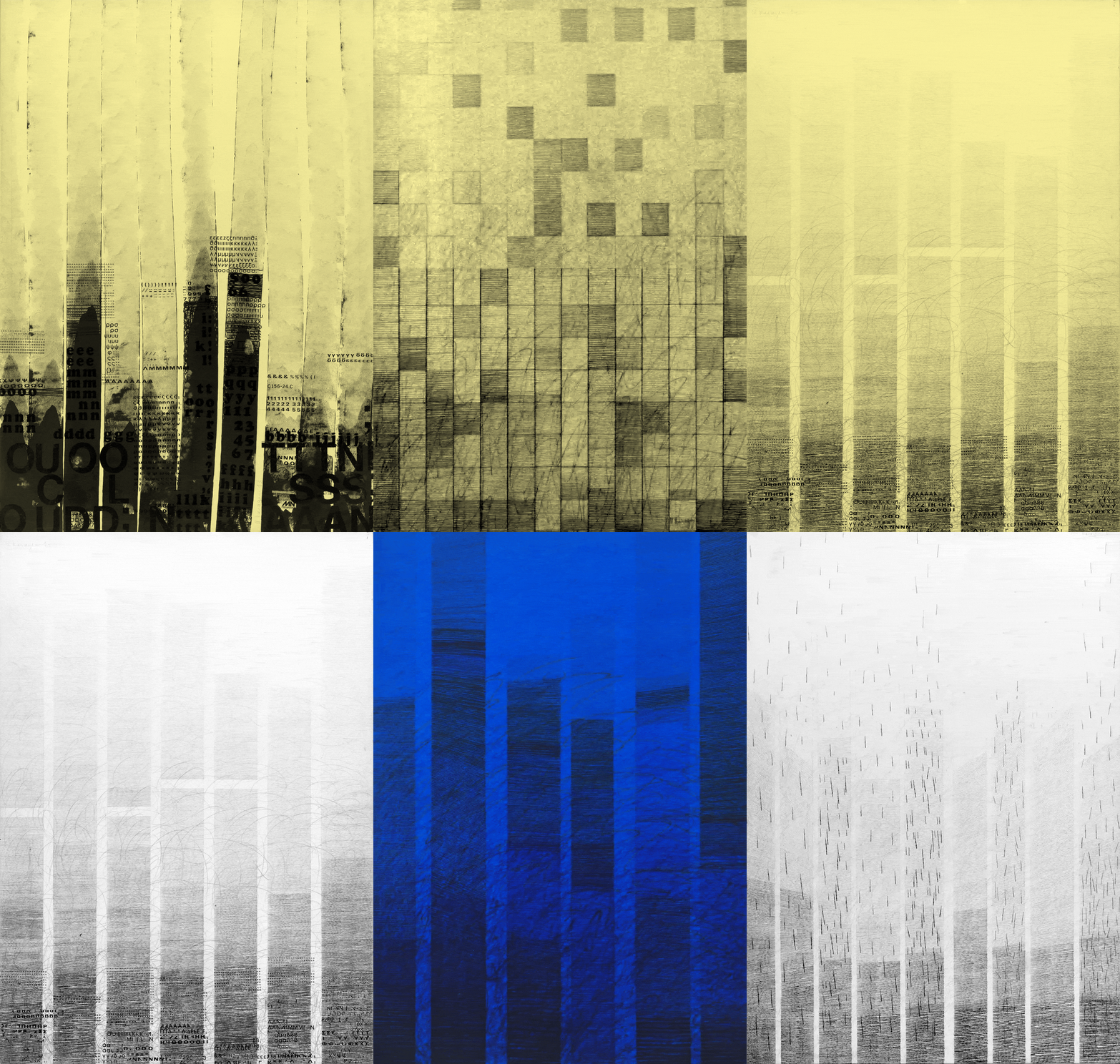
The Manuscripts body of work, embarked upon in 1974, is one of the most important series in Niki Kanagini’s output. It revolves around a stable and lasting axis: the systematic interrogation of writing as a visual, artistic act. The artist approaches writing not as a vehicle for meaning but as a realm of gesture, rhythm, and materiality to develop a personal, non-readable form of visual language.
As dissected by the poet Manto Aravantinou, “Kanagini’s painted manuscripts offer up an opportunity for communication that is both seductive and mysterious, the tenor of which lies beyond the alphabet and precedes syntax.”
Kanagini divides these works into Manuscripts, where abstract compositions dominate, and Illustrated Manuscripts, where her writing exists alongside recognisable figurative forms. What she describes as her “obsession” with the notion of writing “as a symbol of recording human thought” can be traced all the way back to early works created during her student years in London, where her engagement with the modernist, typographic, and experimental approaches of the time laid the groundwork for her later linguistic explorations.
As she herself notes: “I find a plaque of hieroglyphics and a modern neon sign equally fascinating.”
Manto Aravanitou and Niki Kanagini punctuating a text by Tina Pandi
Η ενότητα Χειρόγραφα, που ξεκινά από το 1974, αποτελεί μία από τις σημαντικότερες σειρές έργων της Νίκης Καναγκίνη. Συγκροτείται γύρω από έναν σταθερό και διαρκή άξονα: τη συστηματική διερεύνηση της γραφής ως εικαστικής πράξης. Η καλλιτέχνιδα προσεγγίζει τη γραφή όχι ως φορέα νοήματος, αλλά ως πεδίο χειρονομίας, ρυθμού και υλικότητας, αναπτύσσοντας μια προσωπική, μη αναγνώσιμη μορφή οπτικής γλώσσας.
Όπως αναλύει η ποιήτρια Μαντώ Αραβαντινού: «Τα ζωγραφικά χειρόγραφα της Καναγκίνη, μου προσφέρουν τη δυνατότητα μιας σαγηνευτικής όσο και μυστηριώδους επικοινωνίας, που το στίγμα της βρίσκεται πέρα απ’ το αλφάβητο και πριν απ’ το συντακτικό».
Η Καναγκίνη διακρίνει τα έργα της σε Χειρόγραφα, όπου κυριαρχεί η αφηρημένη σύνθεση, και σε Εικονογραφημένα Χειρόγραφα, στα οποία η γραφή συνυπάρχει με αναγνωρίσιμα εικονιστικά στοιχεία. Η «εμμονή» όπως την ονομάζει η ίδια πάνω στην ιδέα τη γραφής «ως σύμβολο καταγραφής της ανθρώπινης σκέψης», ανιχνεύεται ήδη σε πρώιμα έργα της περιόδου των σπουδών της στο Λονδίνο, όπου η επαφή με τον μοντερνισμό, την τυπογραφία και τις πειραματικές προσεγγίσεις της εποχής διαμόρφωσε το έδαφος για τις μετέπειτα γλωσσικές της διερευνήσεις.
Όπως σημειώνει η ίδια: «Με γοητεύει το ίδιο μια πλάκα με ιερογλυφικά και μια σύγχρονη επιγραφή νέον».
Translated for (and taken from) the Niki Kanagini retrospective titled An Ode to Things.
This exhibition was held at the National Museum of Contemporary Art Athens (EMΣT) in 2026 and curated by Tina Pandi.
The images show examples of Kanagini’s Manuscripts dating to the 1970s. The artist was born in 1933 and died in 2008.
see also
(this dubitandum lives alone)
arkhæio
ODE TO THINGS
transpolia
All ⋮ in and of itself. An opportunity⋮ precedes syntax. I find a plaque ⋮ fascinating. The migratory moves ⋮ immense.
only ⋮ outwardly
ALL DEAD INSIDE
Long ago, when you still loved me,
one early morning you asked me,
just in passing as we chatted:
what is life, what can it be…
So I turned to you and whispered:
wine for many is the key,
some seek glory, others riches
but my love, it’s you for me.
…some seek glory, others riches
but my love, it’s you for me…
Since your heart now loves another
and has turned its back on me
I am told you often wonder
how this heart of mine still beats.
Like there were not many of us,
many others just like me:
dead and buried on the inside,
only living outwardly.
…dead and buried on the inside,
only living outwardly…
Attik
ΑΠΟ ΜΕΣΑ ΠΕΘΑΜΕΝΟΙ
Τον καιρό που μ’ αγαπούσες
με ρωτάς ένα πρωί
στην κουβέντα μας απάνω:
τι ’ναι άραγε η ζωή…
Τότε γύρισα και σου είπα:
γι’ άλλους είναι το κρασί,
γι’ άλλους δόξα, γι’ άλλους πλούτη
μα για μένα είσαι εσύ.
…γι’ άλλους δόξα, γι’ άλλους πλούτη
μα για μένα είσαι εσύ…
Τώρα που άλλαξε η καρδιά σου
κι έναν άλλον αγαπάς
απορείς μου λεν ακόμα
η δική μου πώς χτυπά.
Μήπως τάχα σαν κι εμένα
δεν είν’ άνθρωποι πολλοί:
από μέσα πεθαμένοι
και απόξω ζωντανοί.
…από μέσα πεθαμένοι
και απόξω ζωντανοί…
Music and lyrics written in 1925 (or possibly 1917) by Attik (Kleon Triantafyllou) in Kislovodsk (Russia) and dedicated to a certain Nikos Kokólin.
Movingly (once again) used by Yorgos Lanthimos in his 2015 film The Lobster: loners hunted down in the Irish woods (shot in 2014) to the plaintive tones of Danae (recorded in 1965, accompanied by the Belarusian jazz pianist Lev).
See the dubitandum “hearts ⋮ touched” (in list below) for details on how Danae is further connected to this film.
The Lobster screenplay (written by Yorgos with Efthimis Filippou) was translated from the Greek to be shot in English (their English-language debut). Song lyrics translated for the love of it.
see also
fields ⋮ donkeys
fingers ⋮ dry
hearts ⋮ touched
stone ⋮ lobster