dubitanda (ever in doubt)
DUBITANDA dot com is an assemblage of THINGS (TO BE) DOUBTED or questioned, deliberated or considered. Fragments – all kinds, sources varied. Never certain but set here with hope.
agleam ⋮ bereft
away ⋮ again
before ⋮ death
broke ⋮ returned
coldness ⋮ complexity
coming ⋮ gently
constantly ⋮ faithful
crumpled ⋮ radiance
deserts ⋮ overseas
documents ⋮ inaccurate
emotive ⋮ realm
enters ⋮ darkness
falling ⋮ grace
fields ⋮ donkeys
fingers ⋮ dry
fundamental ⋮ measure
gravities ⋮ glitched
hearts ⋮ touched
higher ⋮ farther
human ⋮ connection
kisses ⋮ tears
kunst ⋮ carcinogen
liberating ⋮ cosmos
liliums ⋮ narcissi
listing ⋮ sorrow
look ⋮ there!
marbled ⋮ beauty
mountains ⋮ moons
neon ⋮ hieroglyphics
only ⋮ outwardly
pangs ⋮ raptures
personal ⋮ pleasure
pricked ⋮ bloomed
razor ⋮ riffs
sayings ⋮ spouted
seaweed ⋮ buttons
spanning ⋮ spots
sparrow ⋮ harried
stare ⋮ absorbed
stone ⋮ lobster
tenderness ⋮ squeaks
timeworn ⋮ tireless
tongues ⋮ dry
truth ⋮ wonderful
tenderness ⋮ squeaks
Remainders,
nestled close,
milling about,
together pressed.
video made for the DIVERSITY FESTIVAL
Post-party balloons shot at Watermill.
This video was created in 2011 for the Diversity Festival – “We, the Other” [«Εμείς, ο άλλος»] – held in Athens and curated by its artistic directors Eleni Roumpani and Gerasimos Evangelatos.
It uses footage shot at the Watermill Center in the Hamptons (NY) the previous July, when a participant of Robert Wilson’s Summer Program, in the calm after the Annual Summer Benefit.
These white balloons were remainders, nestled close, milling about, together pressed. The Festival logo come to life.
K.BHTA kindly (sweetly) supported the Festival by letting his track “The Kid” be used – an early draft of music he had written for the Dimitris Papaioannou staged installation Inside that same year.
see also
(this dubitandum lives alone)
timeworn ⋮ tireless
Beyond the known works of Euripides that survive complete, a smattering of more than 1,000 lines drawn from the rest of the tragedian’s oeuvre have come down to us: snippets written on pieces of papyrus buried beneath the ground of Egypt, or carved as Greek stone inscriptions, or occasionally dropped into the back-and-forth of a philosophical dialogue. There exist isolated scenes, scattered lines, or even just solitary words from works that are not widely known – such works as the revenge drama Ino or the existential play Polyidus, one hundred lines of which (many completely new) were unearthed from the soil fill of a tomb in the necropolis of Philadelphia, close by the River Nile, in 2022.
The Fragments: Euripides project is a poetic take on this material that, though fragmentary, still possesses great lyrical and dramatic power. It is an intensely musical and narrative-driven reformulation that incorporates these fragments of lost tragedies and satyr plays “as is,” set alongside the often-eventful tales of their discovery and excavation from the earth, the impression left by that echoing resonance of (actors’) voices not heard in thousands of years, and the potent tension of trying to glimpse and describe a long-gone world through its timeworn remains.
The performance will see a curious and existential archaeological excavation set on stage, except the finds of this dig are not remnants of pots or statuary or architecture but rather lines of verse – words spoken by actors, broken in pieces. Five performer-archaeologists, up on stage, will enact the nigh-on ritualistic process that is an archaeological excavation – including all the stereotypical behaviours and relationships it engenders, the almost choreographed movements of bodies through space it entails, and the singular vocabulary it employs – as it unfolds over the course of a single day. This peculiar dig will bring new findings to light and present them to its audience: entire dialogues or monologues drawn from the lost works of Euripides, as well musical compositions and actions created from the most fragmentary remains of these plays.
The work will also draw narrative materials from the excavation histories of the ancient theatres at which it is presented, thus enriching the performance text with true stories telling of the tireless manual work – sifting through and exploring the soil – that goes into archaeological research and discovery, actively and contextually incorporating the sites themselves into the theatrical praxis while also imparting something of their history to audiences.
Efthimis Theou
Πέρα από τα γνωστά εξ’ ολοκλήρου σωζόμενα έργα του Ευριπίδη, έχουν φτάσει ως εμάς και πάνω από 1000 στίχοι από το υπόλοιπο έργο του συγγραφέα: στίχοι γραμμένοι πάνω σε κομμάτια παπύρου θαμμένα στο έδαφος της Αιγύπτου, χαραγμένοι σε λίθινες επιγραφές στην Ελλάδα ή ενταγμένοι μέσα σε περιστασιακές αναφορές στις κουβέντες ενός φιλοσοφικού διαλόγου. Μια μεμονωμένη σκηνή, λίγες διάσπαρτες γραμμές ή και μια μόνο λέξη από έργα εν πολλοίς άγνωστα στο κοινό, όπως η ιστορία εκδίκησης της «Ινώς» και ο υπαρξιακός «Πολύειδος» – εκατό στίχοι από τα οποία βρέθηκαν για πρώτη φορά το 2022 στη νεκρόπολη της Φιλαδέλφειας κοντά στον Νείλο.
Η παράσταση «Θραύσματα: Ευριπίδης» θα είναι μια ποιητική προσέγγιση αυτού του αποσπασματικού, αλλά μεγάλης λυρικής και θεατρικής δύναμης υλικού. Μια έντονα μουσική και αφηγηματική ανασύνθεσή του που θα μεταφέρει αυτούσια κομμάτια από τις χαμένες τραγωδίες και τα σατυρικά δράματα, την περιπετειώδη πολλές φορές ιστορία της ανακάλυψής τους, αλλά και την αίσθηση που αφήνει ο απόηχος των φωνών όλων αυτών που έχουν πάψει να μιλάνε εδώ και χιλιετίες, την ένταση του να προσπαθείς να δεις και να περιγράψεις έναν κόσμο περασμένο, μέσα από τα φθαρμένα απομεινάρια του.
Για την παράσταση, θα στηθεί επί σκηνής μια παράδοξη και υπαρξιακή αρχαιολογική ανασκαφή που τα ευρήματά της δεν θα είναι αυτή τη φορά αγγεία, αγάλματα, ή αρχιτεκτονήματα, αλλά ποιητικοί στίχοι, λόγια ηθοποιών σπασμένα σε μικρά κομμάτια. Πέντε ερμηνευτές/αρχαιολόγοι θα πραγματοποιήσουν στη σκηνή τη σχεδόν τελετουργική διαδικασία μιας αρχαιολογικής ανασκαφής –με τις στερεοτυπικές συμπεριφορές και σχέσεις, τη σχεδόν χορογραφημένη κινησιολογία των σωμάτων στον χώρο, και την ιδιαίτερη γλώσσα– όπως εξελίσσεται κατά τη διάρκεια μιας ημέρας. Μέσα από αυτή την παράδοξη ανασκαφή είναι που θα έρθουν στο φως τα νέα ευρήματα και θα παρουσιαστούν στη σκηνή: ολόκληρες στιχομυθίες ή μονόλογοι από τα χαμένα έργα του Ευριπίδη, και μουσικές συνθέσεις και δράσεις βασισμένες στα πιο θραυσματικά αποσπάσματά του.
Η παράσταση θα αντλήσει, επίσης, αφηγηματικό υλικό από την ιστορία των ανασκαφών των αρχαίων θεάτρων όπου θα παρουσιαστεί το έργο, εμπλουτίζοντας έτσι το κείμενο με πραγματικές ιστορίες επίμονης αρχαιολογικής έρευνας και ανακάλυψης, ενσωματώνοντας ενεργά τους ίδιους τους αρχαιολογικούς χώρους στη θεατρική συνθήκη και μεταφέροντας, ταυτόχρονα, στο κοινό κάτι από την ιστορία τους.
This text (an extract) was written by Efthimis Theou during the writing and rehearsal process for Fragments: Euripides, his 2025 theatre / archaeology performance created for the National Theatre of Greece (NTG) as part of its “Introducing Greece’s Ancient Hidden-Gem Theatres” initiative organised in partnership with the Diazoma Association.
It was translated to accompany an application for the 2025 edition of the Nocturne Festival in Halifax, Canada (that year themed “Ground”). They were very supportive and kindly declined.
The video (shot for the NTG by Grigoris Panopoulos) shows the original cast of five performer-archaeologists – Efthimis Theou, Electra Nikolouzou, Katerina Papandreou, Yorgos Kritharas and Yorgos Syrmas – working tirelessly away, sifting through and exploring the soil on this peculiar dig.
They also sing – “look, there!” – a fragmentary choral ode written for the piece by Kornilios Selamsis.
Eleni Vergeti joined the performance-excavation team in 2026.
see also
look ⋮ there!
arkhæio
FRAGMENTS (EURIPIDES) FRAGMENTS (EURIPIDES) GATHERED
transpolia
Boughs ⋮ like ink (Egyptian).
tongues ⋮ dry
A collection of ritual texts, parables, and performances from one of the most singular voices in contemporary theatre.
A conference where linguists reveal the “true” origins of Greek words.
A midnight rite on the Elefsina waterfront where two siblings graft their parents’ bodies onto their own.
A laboratory of mourning that turns letters to the dead into perfume.
A cool, lethal tale about a man forewarned – by machine and committee – that he will be stabbed.
In { Etymologies and Other Rites }, language, family, and fate are laid bare on the slab. Efthimis Filippou – acclaimed screenwriter of Dogtooth, The Lobster, and The Killing of a Sacred Deer – moves between lecture, cabaret, and liturgy with a poker face that leaves space for awe. His stage world is one of rituals disguised as bureaucracies, where saints and civil servants coexist, where grief becomes procedure and humour a form of prayer. Songs flare, knives appear, miracles are audited like minutes from a meeting.
The result is hilarious, brutal, and unexpectedly tender – a theatre of reason and revelation, where etymology proves to be another form of storytelling, and where the stories we tell about words, parents, and gods are the stories that make us. Taken together, these four works form a darkly luminous cycle about belief and substitution – of tongues, bodies, and meanings – played out between the sacred and the absurd.
Includes: Etymologies (a play), Big and Small Ships (a ritual performance), Eau de Cologne (a choral device), and George (a narrative).
ON A { PHANTOM BOOK } by ERIS Press
Efthimis Filippou is a Greek writer, playwright, and screenwriter known for his audacious blending of the bureaucratic with the mythic. He has gained broad international recognition through his collaboration with director Yorgos Lanthimos, co-writing the scripts for Dogtooth, Alps, The Lobster, The Killing of a Sacred Deer, and, more recently, Kinds of Kindness. His work is characterised by a dry, deadpan voice that fuses satire, ritual, and emotional violence. In { Etymologies and Other Rites }, he extends that sensibility into a hybrid territory of lecture, cabaret, and liturgy.
A book blurb and bio written and released online by ERIS Press ahead of the proposed publication of a { phantom book } gathering together English translations of four texts by Efthimis Filippou:
Big and Small Ships (a ritual performance);
Eau de Cologne (a choral device);
Etymologies (a play); and
George (a narrative).
{ Etymologies and Other Rites } was not published on 3 March 2026, as announced. It sadly fell through (how to reach agreement with the goddess of contention?) but lives on spectrally here.
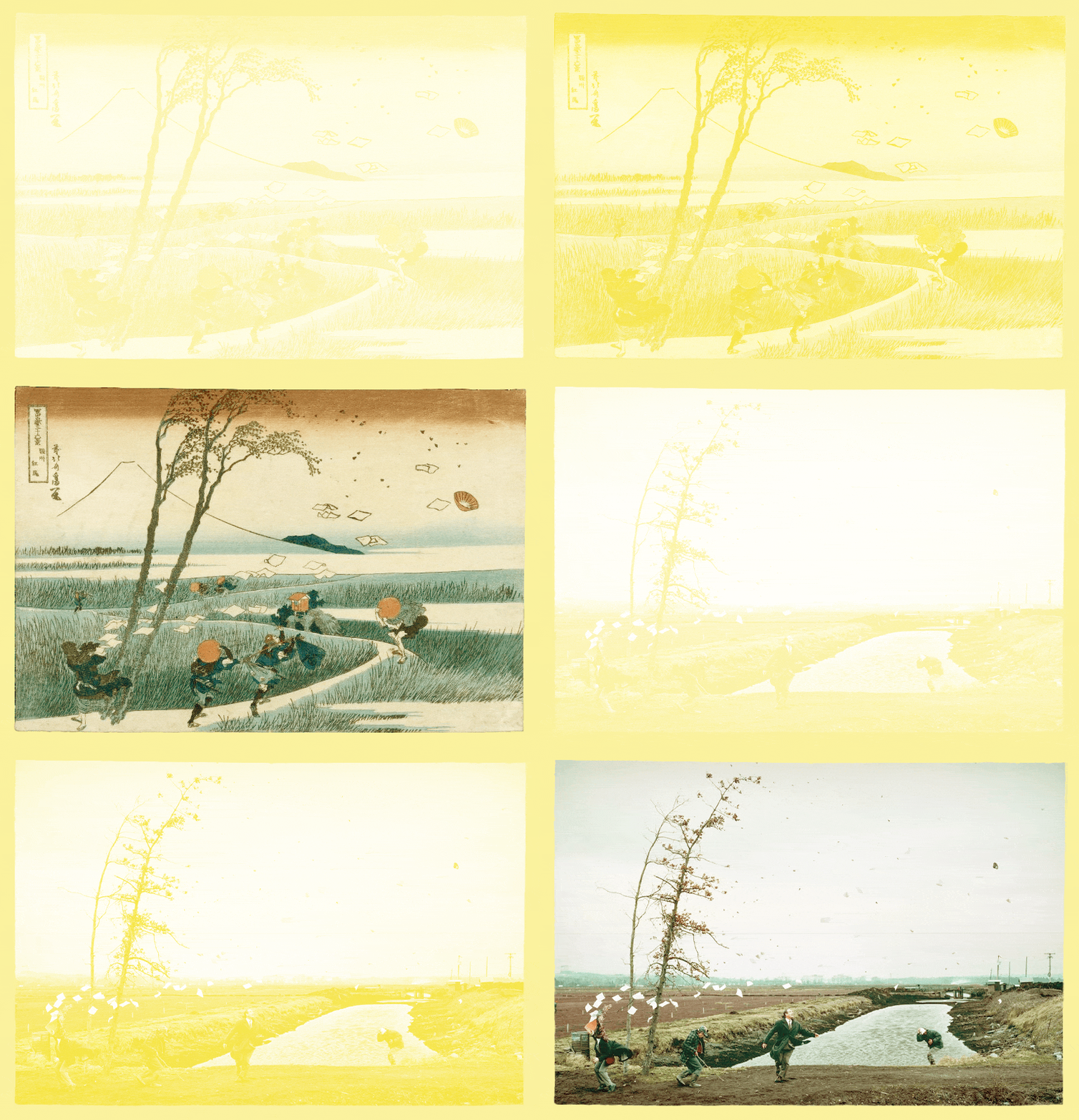
The static/animated graphic interchange format file embraces the images behind the ERIS-envisioned cover: A Sudden Gust of Wind (after Hokusai) by Jeff Wall (1993) inspired by Yejiri Station, Province of Suruga by Katsushika Hokusai (circa 1832).
A sheaf of papers blown away (across centuries).
Perhaps a revealing rite in itself – a disappearance forewarned, letters scattered to the wind, the pages of this { phantom book } whipped from reach.
see also
(this dubitandum lives alone)
arkhæio
BIG AND SMALL SHIPS EAU DE COLOGNE ETYMOLOGIES GEORGE GEORGE PLAYS LONG RITES
truth ⋮ wonderful
This is it. The moment of truth.
Isn’t it wonderful?
Efthimis Filippou & Yorgos Lanthimos
Έφτασε η κρίσιμη στιγμή.
Δεν είναι καταπληκτικό;
Teaser (isn’t it wonderful?) for the 2024 feature film Kinds of Kindness written by Efthimis Filippou and Yorgos Lanthimos, and directed by the latter.
Screenplay translated from the Greek to be shot in English.
see also
fingers ⋮ dry
fields ⋮ donkeys
hearts ⋮ touched
only ⋮ outwardly
stone ⋮ lobster
arkhæio
KINDS OF KINDNESS
wandering ⋮ adrift
water / birth / babe / floating with eyes open / without remembrance but with knowledge / DROWNING IN A TEASPOON OF WATER / little one / first in first dive first swim / armbands, grandmas, grandpas / sea pebbles for toys, sea urchins for food / dive under / holding our breath, a contest, counting up / one two three four five six seven eight nine ten and on / water in our ears / two pebbles clacked near eardrums, heads waggled / daddy / dinghy, towel, hugged tight / sea-rinsed peach / brother / bathtub for a homeland, bare in the water / mummy / the water, you and me, us three / out in the rain, mouths open, heads cricked skyward / DROWNING IN A TEASPOON OF WATER / a little later / rivers lakes boats isles riverboats caiques nets masks flippers / dives off high rocks / caves low in said rocks / sea strata / sandy shore and shingle / fishes and frogs / even later / bathtub still a homeland / warm water, on the cusp of sleep / dive under / whole world underwater / no fish live on land nor flowers in sand (this is a song) / tap / morning / hands and eyes and mouth all washed with water / first breath / first life / soap toothpaste / someone waters lemon trees, plants in flower, the vegetable patch / DROWNING IN A TEASPOON OF WATER / water fight summertime water pistols / splashing in fountain in square / black fish in bowl / bad luck / aquarium / a glass of water quick a glass of water / later still / the sea, night / no moon / phytoplankton from phyto and plankton meaning plant and wandering adrift / every move a luminescence / water brims stars, stars fringe body / a wellspring of dreams in actuality / DROWNING IN A TEASPOON OF WATER
Dimitra Kolokytha
νερό / γέννηση / μωρό / επιπλέω και ανοίγω τα μάτια / δεν θυμάμαι αλλά γνωρίζω / ΠΝΙΓΟΜΑΙ ΣΕ ΜΙΑ ΚΟΥΤΑΛΙΑ ΝΕΡΟ / παιδί / η πρώτη βουτιά το πρώτο κολύμπι / μπρατσάκια , γιαγιάδες και παππούδες / οι πέτρες παιχνίδια, οι αχινοί φαγητό / μακροβούτι / κρατάμε την αναπνοή όσο πιο πολύ μπορούμε και μετράμε / ένα, δύο, τρία, τέσσερα, πέντε, έξι, εφτά, οκτώ, εννιά, δέκα… / νερό στα αυτιά / χτυπάμε δυνατά δύο πέτρες κοντά στο αυτιά και κουνάμε το κεφάλι / μπαμπάς / βάρκα φουσκωτή, πετσέτα και αγκαλιά / ροδάκινο πλυμένο στην θάλασσα / αδερφός / η μπανιέρα ο τόπος μας , γυμνοί μέσα στο νερό / μαμά / το νερό, εσύ και εγώ , εμείς / βγαίνουμε έξω στην βροχή και ανοίγουμε το στόμα μας με το κεφάλι προς τον ουρανό / ΠΝΙΓΟΜΑΙ ΣΕ ΜΙΑ ΚΟΥΤΑΛΙΑ ΝΕΡΟ / αργότερα / ποτάμια λίμνες καράβια νησιά ποταμόπλοια καΐκια δίχτυα μάσκες και βατραχοπέδιλα / βουτιά από ψηλά βράχια / σπηλιές μέσα στα βράχια / στρώματα θαλάσσης / άμμος και βότσαλα / ψάρια και βατράχια / λίγο πιο μετά / ν μπανιέρα συνεχίζει να είναι ο τόπος μας / ζεστό νερό, παραλίγο ύπνος / κατάδυση / ο κόσμος κάτω από το νερό / στην στεριά δεν ζει το ψάρι ούτε ο ανθός στην αμμουδιά (τραγούδι) / βρύση / πρωί / πλένω χέρια πλένω μάτια πλένω στόμα πλένω με νερό / η πρώτη αναπνοή / η πρώτη ζωή / σαπούνι οδοντόκρεμα / κάποιος ποτίζει λεμονιές και λουλούδια και λαχανικά / ΠΝΙΓΟΜΑΙ ΣΕ ΜΙΑ ΚΟΥΤΑΛΙΑ ΝΕΡΟ / μπουγέλο καλοκαίρι νεροπίστολα / βουτιά στο σιντριβάνι στην πλατεία / μαύρο ψάρι μες στην γυάλα / γρουσουζιά / ενυδρείο / ένα ποτήρι νερό γρήγορα ένα ποτήρι νερό… / ακόμα πιο μετά / θάλασσα, νύχτα / χωρίς φεγγάρι / φυτοπλαγκτόν «φυτό» και «πλαγκτός» που σημαίνει ταξιδευτής-περιπλανώμενος / κάθε κίνηση και λάμψη / αστέρια μέσα στο νερό ,αστέρια γύρω από το σώμα / πηγή ονείρων στην αλήθεια / ΠΝΙΓΟΜΑΙ ΣΕ ΜΙΑ ΚΟΥΤΑΛΙΑ ΝΕΡΟ
Text written by the actor and artist Dimitra Kolokytha to accompany a final project video she created in 2021 for a diploma in Performance Theory and Practice at the University of Patras (Lifelong Learning Center).
Translated from the Greek in 2025 for the love of it.
Watch Dimitra do anything but drown in these waters (all depths):
arching, arcing, baring, breathing, bubbling, choking, circling, cupping, deepening, departing, disappearing, dipping, diving, dribbling, dripping, exploring, flippering, floating, glittering, leafing, looming, pausing, peering, poking, reflecting, refracting, reaching, resting, rippling, rushing, sculling, seeking, shimmering, sinking, slicing, slipping, smiling, sparkling, staring, stepping, stretching, surfacing, surrendering, swirling, tiptoeing, tumbling, upending, wafting, warping
through her selfhood.
see also
(this dubitandum lives alone)
whisper ⋮ waves
Whisper, whispering waves…
I have hope – hope that you know and can tell me:
My life’s one love is way out there, drilling deep for oil
Will he return to me from the sea’s embrace?
I just put our baby to bed
Moonlight streams in silver, bathes her cradle
Send me quiet word of him (how else am I to know?)
Whisper it, whisper, oh waves…
This night goes on (and on), the moon roams far away
A distant breeze sweeps over the Caspian sea-blue
Oh waters, hurry, please… I long for my love
Waves, break the good news (how my heart races!)
Swathes of blue, give my love safe passage
Let him come again, smooth-browed, resplendent
For the sons of Absheron, of our golden land
Oftentimes return in gleaming glory
Whisper, whispering waves…
I have hope – hope that you know and can tell me:
My life’s one love is way out there, drilling deep for oil
Will he return to me from the sea’s embrace?
I just put our baby to bed
Moonlight streams in silver, bathes her cradle
Send me quiet word of him (how else am I to know?)
Whisper it, whisper, oh waves…
An Azerbaijani song sung by Şövkət Ələkbərova
Pıçıldaşın, pıçıldaşın, ləpələr
Bəlkə mənə bir sözünüz var sizin
Buruq qazır mənim ömür yoldaşım
Qayıdırmı qucağından denizin?
Körpemizi yatırmışam indice
Beşiyine Ay nurunu sepeler
Sevgilimden xeber verib gizlice
Pıçıldaşın, pışıldaşın, lepeler
Gece keçir Ay dolanıb üfüqde
Göy Xezerin sinesinde meh esir
Ah tez olun darıxıram, ey sular
Müjde verin seven qelbim telesir
Mavi sular sevgilime yol verin
O qayıtsın alnı açıq üzü ağ
Çünki qızıl Abşeronun oğlunda
Bir adetdir zeferlerle qayıtmaq
Pıçıldaşın, pıçıldaşın, ləpələr
Bəlkə mənə bir sözünüz var sizin
Buruq qazır mənim ömür yoldaşım
Qayıdırmı qucağından denizin?
Körpemizi yatırmışam indice
Beşiyine Ay nurunu sepeler
Sevgilimden xeber verib gizlice
Pıçıldaşın, pışıldaşın, lepeler
Translated for the love of it.
This Azerbaijani song – “Whisper, Waves” [“Pıçıldaşın, Ləpələr”] – was recorded by the legendary singer Şövkət Ələkbərova (1922–1993), likely during the 1960s.
The music is by Andrey Babayev (1923–1964).
The lyrics are by the poet İslam Səfərli (1923–1974).
Discovered during team research for the Opening Ceremony of the First European Games held in Baku, on the shores of the Caspian, in 2015 – that is, for a work titled Origins, conceived and directed by Dimitris Papaioannou (in which this song did not appear, but its beauty is hard to forget. How my heart races!).
The image – snapped on said shores of the Caspian on 13 March 2017 (early afternoon) – slowly fades into full colour from yellow. “Full colour” here means a panoply of greys, with but the faintest bruise of sky-blue breaking through (near the top).
Consider “whisper ⋮ waves” alongside two other dubitanda – “agleam ⋮ bereft” and “listing ⋮ sorrow” – to find three figures calling out to various seas (Aegean, Caspian, otherworldly), aching for loves (child or parent or spouse) beyond reach.
A triptych of longing (via Kitsopoulou and Cavafy and Səfərli):
waiting this whole night through…
one ear listing always to the wind…
whisper it, whisper, oh waves…
These three translations informed one another (you can spot the ways).
see also
agleam ⋮ bereft
listing ⋮ sorrow
worthy ⋮ wait
crack on my back and it’s hard to move
going too fast and I have to prove
I’m worthy
I’m worthy
shaking my ass like a chipmunk
looking at you brings the funk back
are you with me?
you’re with me
you’re with me
hey babe, don’t you wait on me
hey babe, don’t you wait on me
don’t you wait on me
little too much is about to turn
again and again, when am I to learn
pretty baby
my baby
mother ship calls and I’m out the door
my favorite one, how you come for more
how you come
for more
you come for more
hey babe, don’t you wait on me
hey babe, don’t you wait on me
don’t you wait on me
WAIT ON ME by Σtella
A music video (unofficial, unreleased, unearthed).
Bats skim the sky and Parthenon starts to glow as cat watches on (one hopes happy).
Video created for the song “Wait on Me” off Σtella’s debut self-titled album on her Greek label Inner Ear Records in 2015. Rejected, never released.
Music and lyrics by Σtella. Shaking my ass like a chipmunk.
see also
deserts ⋮ overseas
marbled ⋮ beauty
pangs ⋮ raptures
razor ⋮ riffs
transpolia
A ballad ⋮ beloved.