dubitanda (ever in doubt)
DUBITANDA dot com is an assemblage of THINGS (TO BE) DOUBTED or questioned, deliberated or considered. Fragments – all kinds, sources varied. Never certain but set here with hope.
agleam ⋮ bereft
away ⋮ again
before ⋮ death
broke ⋮ returned
coldness ⋮ complexity
coming ⋮ gently
constantly ⋮ faithful
crumpled ⋮ radiance
deserts ⋮ overseas
documents ⋮ inaccurate
emotive ⋮ realm
enters ⋮ darkness
falling ⋮ grace
fields ⋮ donkeys
fingers ⋮ dry
fundamental ⋮ measure
gravities ⋮ glitched
hearts ⋮ touched
higher ⋮ farther
human ⋮ connection
kisses ⋮ tears
kunst ⋮ carcinogen
liberating ⋮ cosmos
liliums ⋮ narcissi
listing ⋮ sorrow
look ⋮ there!
marbled ⋮ beauty
mountains ⋮ moons
neon ⋮ hieroglyphics
only ⋮ outwardly
pangs ⋮ raptures
personal ⋮ pleasure
pricked ⋮ bloomed
razor ⋮ riffs
sayings ⋮ spouted
seaweed ⋮ buttons
spanning ⋮ spots
sparrow ⋮ harried
stare ⋮ absorbed
stone ⋮ lobster
tenderness ⋮ squeaks
timeworn ⋮ tireless
tongues ⋮ dry
truth ⋮ wonderful
pangs ⋮ raptures
Σtella makes her Sub Pop debut with the mesmerizing Up and Away, an old-school pop paean to the pangs and raptures of love. From the Greek folk-inflected get-go, we’re caught in Σtella’s world – and she delivers.
For her fourth album, the singer-songwriter joined forces with artist and producer Tom Calvert (aka Redinho). Theirs was a match made in Athens and the results are heavenly. Tom caught one of Σtella’s gigs on a visit to the city. He reached out, they started hanging out, and the pair soon clicked creatively. Both mention chemistry when asked about their collaboration and it’s clear, from what we hear, they had it in spades. The meld is seamless.
Σtella’s songs have always riffed on American and Greek mid-century pop but Up and Away doubles down on the vintage aesthetic. Tom says he styled the record “as if it was a rare gem from the ’60s found in a box of records in Athens,” and Σtella notes she was ready for a more “deeply Greek touch – it felt comfortable and right, smoothly fusing with the pop.” The bouzouki appears on a full five tracks played by Christos Skondras who, she says, “was brilliant at improvising,” while Sofia Labropoulou on the kanun “brought an insane amount of dreaminess to the last two songs. Having these amazing musicians play for Up and Away – I couldn’t be more grateful.”
While not exclusively a confessional artist, Σtella is always intimate – when she sings, it’s personal. She says she writes “about things I feel passion for. Stories about me, about others, about all that’s there in love and war.” Though she won’t be drawn on more private inspirations for this album (“There were one or two interesting things going on in my life, but we won’t be going into those…”), Σtella will say she was “in a very emotional state at the time, which came through in the lyrics and vocals.” And it’s true, her honeyed voice – layered in those unmistakable harmonies of hers – thrillingly runs the gamut from tender to terse, by turns bracing and smitten, aching and forlorn.
But it’s the lyrics that feel key. Across her output, Σtella has proven herself a strong storyteller, and Up and Away is no exception (the guise of the medieval bard she assumes on the cover is telling). Past releases have been studded with gem-like vignettes – a diverse array of stories set tightly together to form non-linear narratives unified by emotion. Her latest feels singular in that it seems to trace a longer-form tale across songs, with each track escalating the record’s erotic arc. Rollicking album opener “Up and Away” launches us headlong into an all-consuming affair. She’s caught, she shivers, thrilled by a new beginning, the sweetness of her vocals offset by vertiginous, blistering blasts of bouzouki. And so the sensual scene is set.
Languorous “Nomad” sees her fall deeper, groove slower into love. Imbued with a tender urge to understand the other, and tinged with sadness, the song ends with the rhythmic thrum of cicadas – nature too is calling out, courting a mate. “Manéros,” meanwhile, is a foreboding instrumental interlude threaded with driving virtuoso runs of improvised bouzouki shimmers. An 1881 study defines the manéros form as “a ballad of erotic passion bursting from a heart on fire, or a deeply charged lament for the loss of one’s beloved.” Consider this a spoiler for what’s to come.
“Charmed” opens with a disarming sixties “shoop” and lolls delightfully along, its feel-good surface bop hiding more melancholy truths – and insecurities. Not so “Another Nation,” which boasts all the strut and swagger of an artist happy to be stepping out. Here’s how love can feel: as joyous and beautiful and ridiculous as a flamingo galumphing forward to take flight. Boisterous “Black and White” drives home the vagaries of love (“you redirected, you changed your mind”) with a cyclical guitar riff at the song’s heart mirroring the lover’s spiraling complaint.
And then it hits: “Titanic” relays the relationship’s end in ways unexpectedly hopeful, plucking a constellation of endearing bygone names (John Borie, Laura Mae, and the like) from a list of the sunken liner’s survivors. With a breezy whistle, and propelled by bouncing staccato strums, Σtella makes it safe to shore, alone.
The album’s final three tracks are left to deal with the aftermath. Heartfelt “The Truth Is” leaps forward to a time where she feels “alright, but still I miss you every night.” Unable to justify why they’re apart, most everything falls away as the song builds to an emotional climax that has no need of words, with Σtella’s affecting voice left to melt into the bouzouki as she gives us an ever-surging series of sensational “ooos” that compellingly make her case.
Infectiously bassline-led “Who Cares” takes a more petulant, finger-pointing approach before toppling cheerfully into a boozy coping mechanism (“in a bottle we all fell”). But it’s mellow and reflective outro “Is It Over” that perhaps best distills Up and Away’s core concerns: the conflicting and conflicted emotions inherent in love, that live on in ways we can’t always understand or control. Love is like this record: when it’s over, you feel it still for time to come.
thoughts on UP AND AWAY, an album by Σtella
This video is (very) unofficial.
Text written for the release of Σtella’s fourth album Up and Away on her U.S. label Sub Pop Records in 2022.
Video created for the album’s title track for the fun of it using footage from the film Mermaids and Rascals (1968), directed by Yiannis Dalianis and choreographed by Yiannis Flery.
The woman in orange is Mary Chronopoulou. The man in white is Lakis Komninos. The man in blue Vangelis Seilinos. The woman in green is Nora Valsami. The woman in black is Marinella.
Music by Σtella & Redinho. Lyrics by Σtella.
see also
deserts ⋮ overseas
marbled ⋮ beauty
razor ⋮ riffs
worthy ⋮ wait
transpolia
A ballad ⋮ beloved.
personal ⋮ pleasure
During the sexual act, […] all bodies retreat into themselves,
withdrawing into that most unadulterated form of all personal silences: pleasure.
Yorgos Himonas
Kατά την ερωτική του δράση, […] το κάθε σώμα αποχωρεί,
αποσύρεται στην πιο απόλυτη δική του σιωπή, που είναι η ηδονή.
Excerpt from an article by Yorgos Himonas titled “The Desolate Loneliness of Men” [«Η αβοήθητη μοναξιά του άντρα»] first published in Prosopa, a section of the Greek Ta Nea newspaper.
Translated for (and taken from) the 2007 booklet made to accompany the DVD of the stage work Two by Dimitris Papaioannou, directed for the screen by Athina Rachel Tsangari.
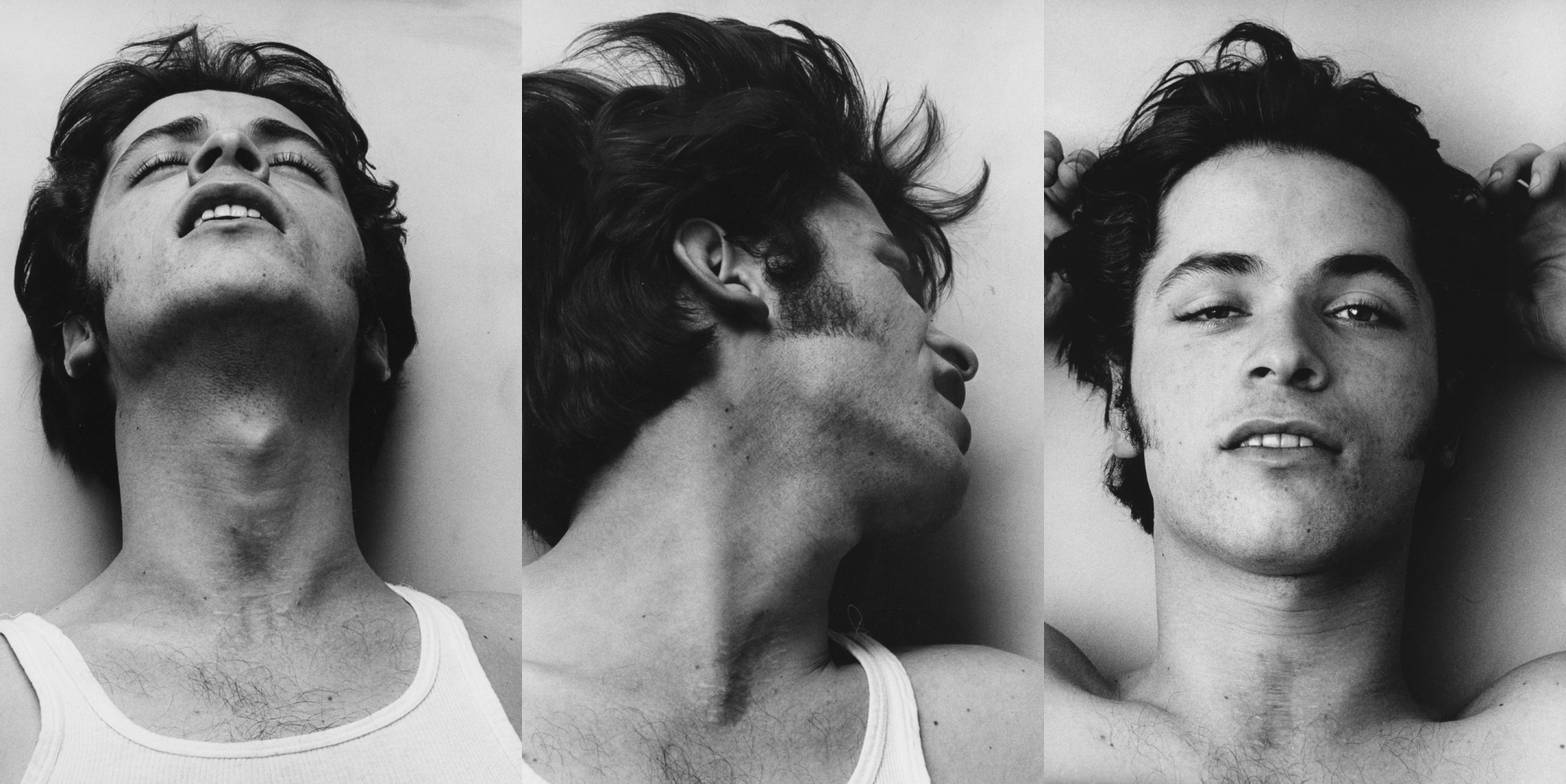
Images by Peter Hujar – Orgasmic Man I, II & III (1969). Eyes glazed.
see also
coming ⋮ gently
human ⋮ connection
arkhæio
DIGITAL VERSATILE (TWO) DISC TWO TOME
pricked ⋮ bloomed
ΤΜ014 / 1989-06-28 / 00:01:27–00:03:37
[…] I did something this afternoon something secret everyone had gone for a nap I got told to go take a nap too by mum that is she said I should go nap and auntie would come by after she said auntie would come and we’d all swing by the snack bar and I said sure mum let’s all go get ice-cream after so I go and pretend I’m sleeping lay down on my bed lay like I was out cold and pressed my face deep into the pillows like I do at night but I couldn’t sleep of course because I couldn’t stop thinking about it actually it was all I could think about non-stop since yesterday non-stop seriously non-stop like this morning when I was eating breakfast I was thinking about it then too but of course he wouldn’t let me out which is just typical and so I just sat and watched TV cos it was so hot so there I was waiting in bed till they both started snoring cos I knew that when they start snoring they never wake up and when the snoring started I waited just a little longer and got up real slow so as not to wake them I passed by their open door they were sleeping on their backs with the fan on full I hadn’t put my flip-flops on so that I wouldn’t make a sound I was barefoot no flip-flops I pulled half the beads aside super carefully so that they wouldn’t bang together and make noise and slipped into the kitchen and then let them go again super carefully and the curtain swayed a bit but didn’t make any noise I went over to the door and opened it super super soft and closed it behind me super super soft then made my way down the steps it was really very hot I took the path but the paving was so hot that I ended up walking on the grass which was cool under my feet the street was deserted there was no-one about everyone must’ve been shut away at home sleeping the whole neighbourhood was taking a siesta like my parents were doing that’s what I was thinking I was the only one awake I walked over to the acacia tree and things felt better there cos there was a little shade I had a good look and I’m pretty sure I found the same thorn from yesterday this big thorn sat alongside some smaller ones [silence] I think I figured out which thorn it was I put my finger on it and pressed I pressed it and it pricked me it hurt a little I pressed a little harder and blood just bloomed a little more blood than yesterday I let my finger hang loose and the blood trickled down and a little of it dripped to the ground and a tiny bit of blood flowed round the edges of my fingernail and I saw that there was this perfect bead of blood left on the thorn and then I pressed my finger against the thorn again and it was like yesterday maybe even a little better today but yes it felt good like yesterday so very good […]
●REC by Yorgos Syrmas
ΤΜ014 / 1989-06-28 / 00:01:27–00:03:37
[…] έκανα κάτι κρυφά το μεσημέρι είχανε πέσει για ύπνο μού είχανε πει να πέσω κι εγώ για ύπνο η μαμά μού το είχε πει να πέσω για ύπνο και θα έρθει η θεία πιο μετά θα έρθει η θεία να πάμε στο αναψυκτήριο ναι μαμά τής λέω να πάρουμε παγωτό πάω κι έκανα ότι κοιμόμουν έπεσα στο κρεβάτι μου δήθεν ξερή έπεσα και έχωσα τη μούρη μου στο μαξιλάρι όπως το χώνω κάθε βράδυ αλλά εννοείται δεν κοιμήθηκα το σκεφτόμουν συνέχεια από χτες συνέχεια συνέχεια και το πρωί που έτρωγα το πρωινό πάλι το σκεφτόμουνα αλλά δεν με άφηνε ο άλλος να βγω έξω και έβλεπα τηλεόραση γιατί είχε πολλή ζέστη περίμενα στο κρεβάτι να περάσει λίγο η ώρα να αρχίσουν τα ροχαλητά που τους έχω καταλάβει όταν αρχίζουνε όταν αρχίζουνε να ροχαλίζουνε δεν ξυπνάνε ποτέ ακούω τα ροχαλητά περίμενα και λίγο ακόμα όχι πολύ και σηκώθηκα πολύ αργά για να μην τους ξυπνήσω πέρασα από την πόρτα τους κοιμόντουσαν ανάσκελα με τον ανεμιστήρα στο δυνατό δεν είχα βάλει σαγιονάρες μην κάνω θόρυβο ξυπόλυτη ήμουν δεν είχα βάλει σαγιονάρες μάζεψα τις μισές λουρίδες πολύ πολύ προσεκτικά μη χτυπήσουν μεταξύ τους και κάνουν θόρυβο πέρασα μέσα στην κουζίνα και τις ξανάφησα πολύ πολύ προσεκτικά λίγο κουνήθηκε η κουρτίνα αλλά δεν έκανε καθόλου θόρυβο πήγα στην πόρτα και άνοιξα την πόρτα πάρα πάρα πολύ σιγά την έκλεισα πάρα πάρα πολύ σιγά κατέβηκα τα σκαλιά έκανε πάρα πολλή ζέστη πήγα από το μονοπάτι και οι πέτρες ήταν ζεστές και μετά πήγα από το γρασίδι που ήτανε δροσερό στον δρόμο δεν υπήρχε κανένας θα ήταν όλοι στα σπίτια τους και θα κοιμόντουσαν όλοι στη γειτονιά σαν τους γονείς μου αυτό σκέφτηκα μόνο εγώ ήμουν ξύπνια πήγα στη γαζία κάπως καλύτερα ήταν γιατί είχε και λίγο ίσκιο κοίταξα νομίζω βρήκα το αγκάθι αυτό που ήταν και εχτές ήτανε ένα μεγάλο δίπλα σε κάτι πιο μικρά [σιωπή] νομίζω το κατάλαβα ποιο ήταν το αγκάθι έβαλα πάνω το δάχτυλό μου πίεσα πίεσα και με τρύπησε πόνεσε λίγο πίεσα λίγο ακόμα κι έτρεξε λίγο αίμα πιο πολύ από εχτές μετά το γύρισα προς τα κάτω το δάχτυλο και το αίμα έτρεξε και έπεσε λίγο κάτω και λίγο αίμα έτρεξε πάνω στο δάχτυλο και χώθηκε μέσα στο νύχι μου και πάνω στο αγκάθι είδα που είχε μείνει λίγο αίμα και το ξαναπίεσα μετά το δάχτυλο στο αγκάθι και ήτανε έτσι όπως χτες λίγο καλύτερα ήταν σήμερα αλλά ήτανε πάλι όπως χτες ωραία […]
First documented recording of the voice of Myrsíni Myloná.
Taken from the translation-in-progress of Yorgos Syrmas’ debut crime novel ●REC, published in the original Greek by Ikaros Books in 2025.
Yorgos was named Best Debut Author at the Public Book Awards 2026 for ●REC, and was shortlisted in the same category at the Anagnóstis [Reader] Literary Awards that same year.
Sample translation into English selected by the Hellenic Foundation for Books and Culture to be supported by its GreekLit programme in 2026.
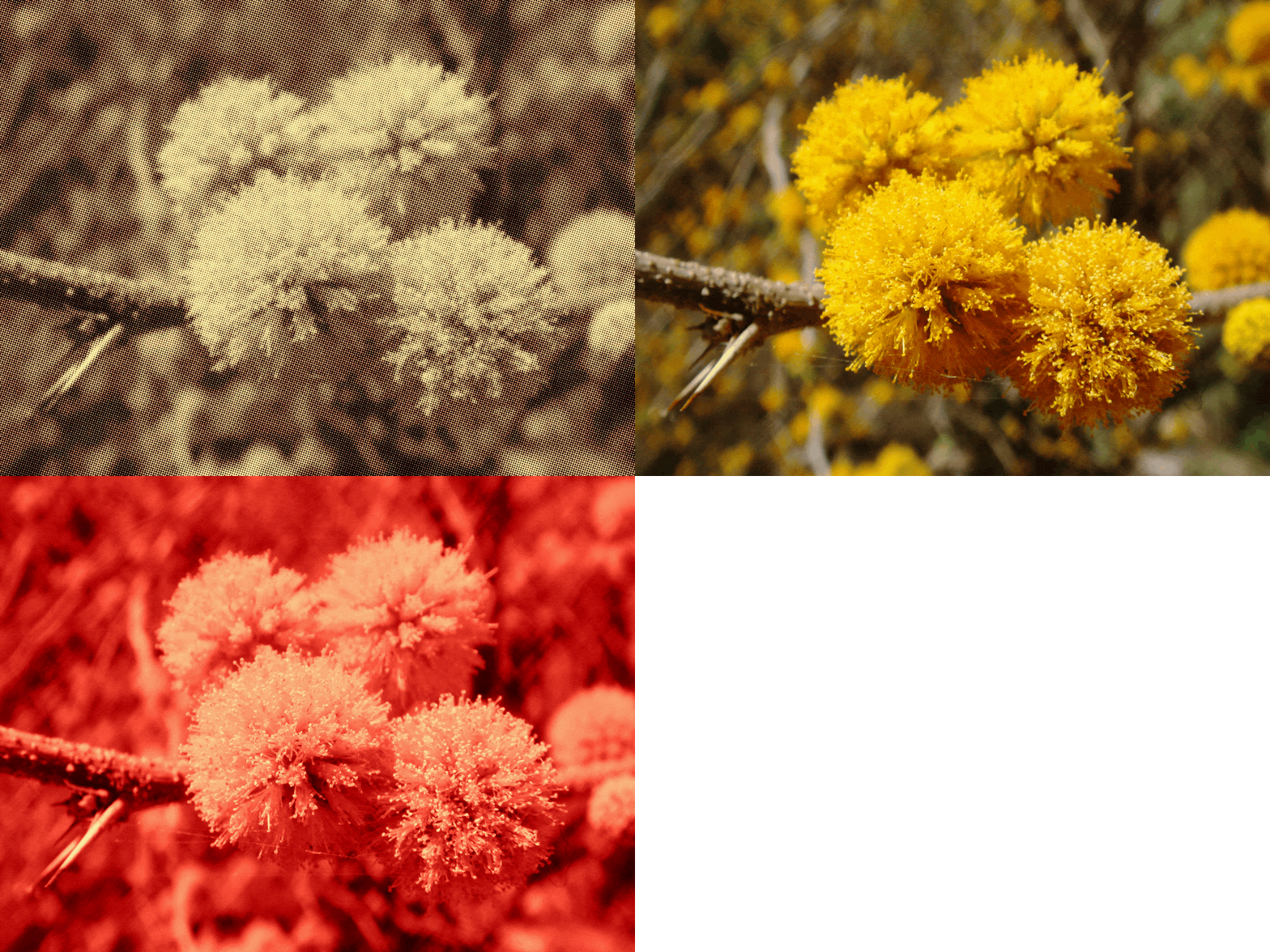
Image by Miwasatoshi, pricked and bloomed into blood red.
see also
broke ⋮ returned
seaweed ⋮ buttons
arkhæio
REC TWENTY-SIX FOR TWENTY-SIX
razor ⋮ riffs
Σtella was born beside the sea and raised by a Canadian nanny who waterskied topless.
She writes songs that walk a razor thin line between happy and sad. Keeps things simple: naked arrangements, spacey synths, earworm riffs, sparkly smooth vocals.
People have been talking about her:
Bold, streamlined pop
[said Paste Magazine].
Enticing
[said Clash Magazine].
Her lyrics are moody and compelling on their own,
but I was buying whatever she was selling
as soon as I heard her blend
of video game-flavored electro-pop
paired with deep lady vocals. Swoon
[said Bitch Media].
Σtella’s honey-rich vocals
overlie a crisp, no-frills backing
that has echoes of classic ’60s pop
[said The Line of Best Fit].
The fact that her range
is on the lower end of the spectrum
gives Σtella this regal quality to her music,
similar to what Annie Lennox did for the Eurythmics
[said Earmilk].
With dirt under her fingernails,
a whole decade of grit in her voice,
and an endless supply of bass licks,
the Athens-based singer-songwriter
will get any room moving
[said MTV Iggy].
Σtella is always working on new music.
thoughts on being Σtella
A (little) bio.
Taken from a bio text written for the Greek pop artist Σtella in 2018.
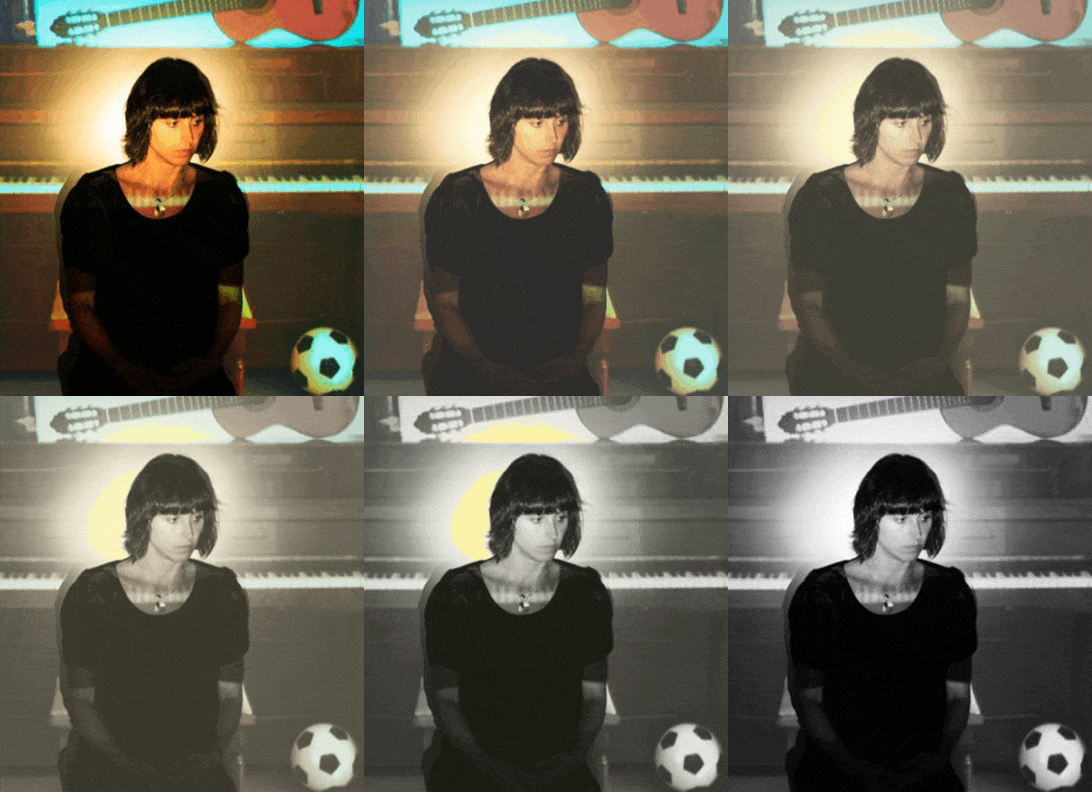
The projector-light image shows Σtella in the guise of piano saint, with guitar and football.
Σtella really always is working on new music.
The Canadian nanny who waterskied topless is really true too.
see also
deserts ⋮ overseas
marbled ⋮ beauty
pangs ⋮ raptures
worthy ⋮ wait
transpolia
A ballad ⋮ beloved.
sayings ⋮ spouted
SELECT PROVERBS BY EDWARD TAYLOR (1991–2024)
As butter melts in heat,
so the bread hardens.
Banana falls down, no matter.
Melon falls down, it’s over.
Play basketball on a tennis court
and you’re bound to lose.
Seas in summer are warm,
but cold in winter.
Sleeping parrots have no need of knives.
You never ever know
who will wear your jacket
once you’re dead and gone.
Walk on sand and you’ll be late.
ED
You know, I really like thinking up proverbs and sayings that are all my own.
Often these proverbs make no sense and I get a thrill from people’s expressions
when they hear them, acting like they understand when really they don’t understand at all.
I’m also thrilled by the idea that one of these proverbs I’ve created might live on,
still spouted by people one hundred years from now.
Efthimis Filippou
ΕΠΙΛΕΓΜΕΝΑ ΓΝΩΜΙΚΑ ΤΟΥ ΕΝΤΟΥΑΡΝΤ ΤΕΪΛΟΡ (1991–2024)
Όσο το βούτυρο λιώνει από τη ζέστη
τόσο το ψωμί σκληραίνει.
Αν πέσει μια μπανάνα στο έδαφος δεν πειράζει,
αν πέσει όμως ένα καρπούζι τότε πειράζει.
Καταδικασμένος όποιος παίζει μπάσκετ
σε ένα γήπεδο του τένις.
Το καλοκαίρι η θάλασσα είναι ζεστή
ενώ τον χειμώνα κρύα.
Ένα μαχαίρι είναι άχρηστο
σε έναν παπαγάλο που κοιμάται.
Όταν πεθάνεις κανείς δεν ξέρει
ποιος θα φοράει το μπουφάν σου μετά.
Αν περπατάς στην άμμο
είσαι αργοπορημένος στα ραντεβού.
ΕΝΤ
Ξέρετε μου αρέσει πολύ να δημιουργώ μόνος μου
παροιμίες και γνωμικά. Πολλές φορές αυτές οι παροιμίες
δεν βγάζουν νόημα και με ενθουσιάζει το ύφος όλων όσων
τις ακούν, που συμπεριφέρονται πάντα σαν να τις καταλαβαίνουν
ενώ δεν καταλαβαίνουν τίποτα. Επίσης, με ενθουσιάζει η ιδέα
ότι μπορεί να μείνει για πάντα μία από αυτές τις παροιμίες
που έχω δημιουργήσει και να τη λένε οι άνθρωποι εκατό χρόνια μετά.

A selection of sayings taken from the film Rosebush Pruning (2026), all written by Efthimis Filippou to be spoken by a character called Ed.
Inspired by Marco Bellocchio’s Fists in the Pocket (1965), this feature was directed by Karim Aïnouz.
Spurious proverbs and heartfelt words all translated for (and pruned from) the screenplay.
see also
(this dubitandum lives alone)
arkhæio
ROSEBUSH PRUNING
transpolia
Banana falls ⋮ over.
seaweed ⋮ buttons
●1
Day would break in three hours.
She stepped under the shower and let the hot water beat down hard.
After a time, she thought of him.
She turned to face the mirror – the green of her eyes had dimmed and her red hair seemed black and longer now, like seaweed gripping a rock.
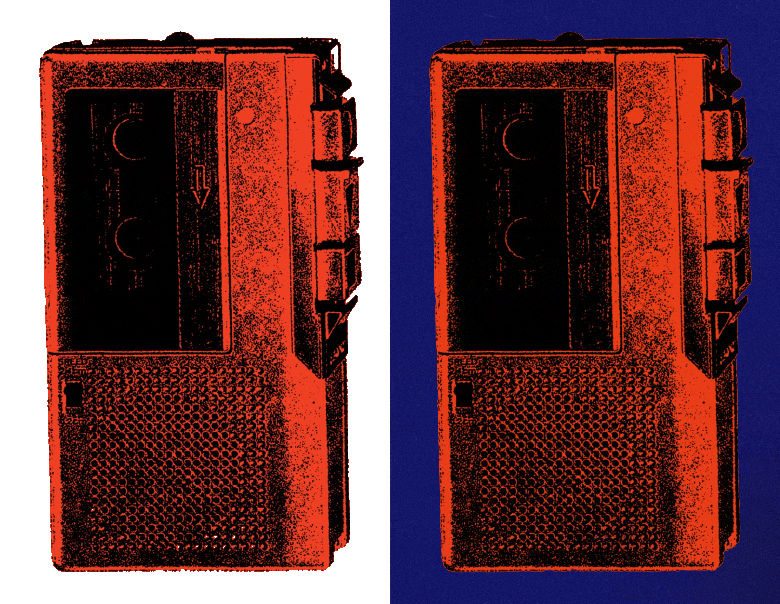
On the shelf under the mirror, the grey battered plastic shone in the harsh light. She reached out her hand and fingered the small buttons. Closed her eyes. And pressed REC.
●REC by Yorgos Syrmas
●1
Σε τρεις ώρες ξημέρωνε.
Στάθηκε κάτω από το ντουζ κι άφησε το καυτό νερό να τρέξει με πίεση.
Κάποια στιγμή τον σκέφτηκε.
Γύρισε στον καθρέφτη – το πράσινο στα μάτια της είχε θολώσει, τα κόκκινα μαλλιά της έδειχναν μαύρα και μακρύτερα τώρα, σαν φύκια κολλημένα σε βράχο.
Πάνω στο ράφι του καθρέφτη, το ταλαιπωρημένο γκρίζο πλαστικό γυάλιζε στο σκληρό φως. Άπλωσε το χέρι της και χάιδεψε τα μικρά κουμπιά. Έκλεισε τα μάτια. Και
πάτησε REC.
Chapter One. Thursday, 15 November 2012.
Taken from the translation-in-progress of Yorgos Syrmas’ debut crime novel ●REC, published in the original Greek by Ikaros Books in 2025.
Yorgos was named Best Debut Author at the Public Book Awards 2026 for ●REC, and was shortlisted in the same category at the Anagnóstis [Reader] Literary Awards that same year.
Sample translation into English selected by the Hellenic Foundation for Books and Culture to be supported by its GreekLit programme in 2026.
Image taken from the book cover designed by Laios Papazoglou. Dictaphone rendered primary.
see also
broke ⋮ returned
pricked ⋮ bloomed
arkhæio
REC TWENTY-SIX FOR TWENTY-SIX
spanning ⋮ spots
#7 THE CLOSE-UP AS PLOT TWIST
In place of overvaluing closeness: the spanning of distance. In place of history: genealogy. The close-up not as some tool for understanding or for empathy but as a means of recognition. Close reading and the anatomy of the image as an antidote to phantasmagoria. In place of twists: only turns. The lines that link our blind spots delineate – quite unexpectedly – the face of our common future.
Geli Mademli
#7 ΤΟ CLOSE-UP ΩΣ PLOT TWIST
Αντί της υπεραξία της εγγύτητας, η διάνυση της απόστασης. Αντί της ιστορίας, η γενεαλογία. Το κοντινό πλάνο όχι ως εργαλείο κατανόησης ή ενσυναίσθησης, αλλά ως μέσο αναγνώρισης. Η κοντινή ανάγνωση και η ανατομία της εικόνας ως αντίδοτο στη φαντασμαγορία. Αντί της ανατροπής, η τροπή. Οι γραμμές που ενώνουν τα τυφλά μας σημεία σχηματίζουν απρόσμενα το πρόσωπο του κοινού μας μέλλοντος.
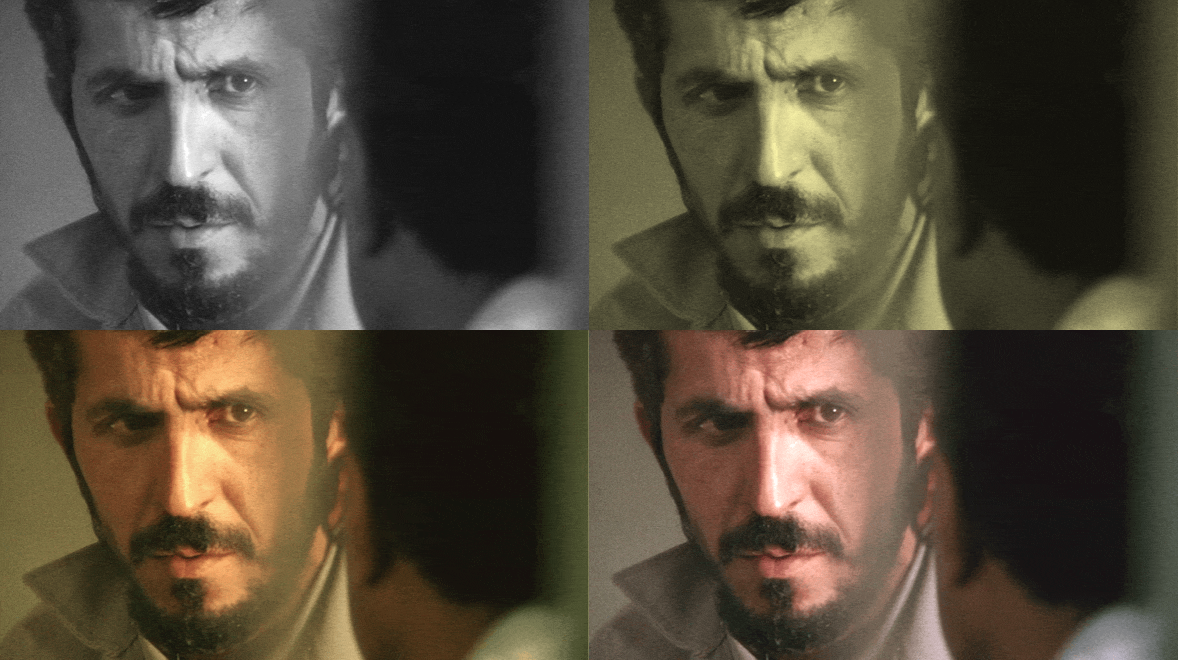
Translated for (and taken from) an essay by Geli Mademli titled “Kinds of Close-Ups: Proximity as a Plan of Action” («Είδη κοντινών: Η εγγύτητα ως πλάνο εργασίας») written in 2025 for Plot Twist – Beyond the Sixth Sense, a special edition published for the Thessaloniki International Film Festival (TIFF66).
The flicking film still shows cinephile Hossain Sabzian (as himself) in the Abbas Kiarostami film Close-Up (1990). A flicker of confusion, a tentative hope.
In place of twists: only turns.
see also
(this dubitandum lives alone)
arkhæio
PLOT TWIST
sparrow ⋮ harried
And so you’ll leave me
You’ll move on past me
And soon forget me
And I’ll be left here (astray)
Wasting away
in some sad corner…
A watch now stopped
A ship now wrecked
A sparrow ever harried
by a blizzard…
A watch now stopped
A ship now wrecked
A sparrow ever harried
by a blizzard…
And when it comes
That hour
My darkest hour
Feel no hurt, feel no pain
Just leave me here, alone (again)
out in the cold…
A watch now stopped
A ship now wrecked
A sparrow ever harried
by a blizzard…
A watch now stopped
A ship now wrecked
A sparrow ever harried
by a blizzard…
by a blizzard…
by a blizzard…
A song by Mimis Plessas
with lyrics by Lefteris Papadopoulos
Κι εσύ θα φύγεις
Και θα περάσεις
Και θα ξεχάσεις
Κι εγώ θα μείνω
Να αργοσβήνω
Σε μια γωνιά…
Ένα ρολόι σταματημένο
Ένα καράβι ναυαγισμένο
Ένα σπουργίτι κυνηγημένο
Απ’ τον χιονιά…
Ένα ρολόι σταματημένο
Ένα καράβι ναυαγισμένο
Ένα σπουργίτι κυνηγημένο
Απ’ τον χιονιά…
Όταν σημάνει
Εκείνη η ώρα
Η μαύρη ώρα
Μη νιώσεις πόνο
Κι άσε με μόνο
Στην παγωνιά…
Ένα ρολόι σταματημένο
Ένα καράβι ναυαγισμένο
Ένα σπουργίτι κυνηγημένο
Απ’ τον χιονιά…
Ένα ρολόι σταματημένο
Ένα καράβι ναυαγισμένο
Ένα σπουργίτι κυνηγημένο
Απ’ τον χιονιά…
Απ’ τον χιονιά…
Απ’ τον χιονιά…

“And So You’ll Leave Me” (“Κι εσύ θα φύγεις” / “Ki esí tha fíghis”) is a song from the 1970 film Sunday’s Dream directed by Odysseas Kostoletos.
The music is by Mimis Plessas, with lyrics by Lefteris Papadopoulos.
The moving images show Tolis Voskopoulos performing the song for Niki Triantafyllidi.
The pair play parting lovers here, Ángelos and Margaríta.
We gaze sadly at her gazing sadly at him gazing sadly through (not into) a mirror.
He is lost (stopped, wrecked, harried). His eyes never meet hers or ours or his (reflected) own.
This is one of five songs performed by George Davlas during the musical interlude that lies at the heart of the Efthimis Filippou play Etymologies.
For another two, see the dubitanda “away ⋮ again” and “higher ⋮ farther” (listed below).
For the remaining two, see the transpolia “On a rainy ⋮ day.” and “Two broken homes left ⋮ clandestine.” (buttons below).
Translated for use as surtitles at the 2024 Athens Epidaurus Festival performances of this play.
A dubitandum dedicated to the late Viví (mother of the man I love), who endlessly adored Tolis Voskopoulos.
see also
away ⋮ again
higher ⋮ farther
arkhæio
ETYMOLOGIES
transpolia
On a rainy ⋮ day. Two broken homes left ⋮ clandestine.
stare ⋮ absorbed
A man in the apartment across the way opens the fridge, a woman slices bread on a board. Are they real people? Or people pretending to be people? Set inside the frame of this lit window, their movements are no longer absorbed in their tasks; they seem instead to be playing a role for the sake of some voyeur. It seems these ingenious little beings are so cunning that they can trick the very business they’re attending to. In which case they must be laughing at me too, for watching them. Or maybe they’re offering to enter into an agreement with their audience: we’ll let you stare at us so long as you keep your window bare too.
Vassilis Karabostolis
“Part III – The Nights”, Handcrafted City: Athens Amid Yeses and Nos
Ένας άνδρας στο αντικρυνό διαμέρισμα ανοίγει το ψυγείο, μία γυναίκα κόβει ψωμί πάνω στο ξύλο. Είναι άνθρωποι ή κάποιοι που τους μιμούνται; Μέσα στο φωτισμένο κάδρο του παραθύρου, οι κινήσεις τους παύουν να είναι προσηλωμένες στο σκοπό τους και μοιάζουν να υπηρετούν ένα ρόλο για χάρη κάποιων που κρυφοκοιτάνε. Αυτά τα μικροσκοπικά και πολυμήχανα όντα είναι, φαίνεται, τόσο πονηρά, που μπορούν να κοροϊδεύουν τις ίδιες τους τις ασχολίες. Τότε θα γελάνε και με μένα που τους παρακολουθώ. Εκτός αν προτείνουν ένα συμβόλαιο με τους θεατές τους: σας αφήνουμε να μας παρατηρείτε υπό τον όρο να αφήσετε και σεις ανοιχτό το παράθυρό σας.
An excerpt from part three (“The Nights” / «Οι νύχτες») of the 1995 Vassilis Karabostolis book titled Handcrafted City: Athens Amid Yeses and Nos [Χειροποίητη πόλη: Η Αθήνα ανάμεσα στο ναι και το όχι] (Athens: Alexandria Press, third edition, pp. 187–188).
On how life becomes performance, and performance life.
Translated for (and taken from) the 2011 programme book for Dimitris Papaioannou’s Inside.
Meanwhile, peek inside the frame of this lit window:
Inside captured in a single take (by Stelios Kammitsis and Thodoris Michopoulos) on its final night (15 May 2011), looping (living on) endlessly.
Do it as a kind of meditation. And maybe keep your window bare too.
see also
(this dubitandum lives alone)
arkhæio
DOCUMENTING INSIDE INSIDE
transpolia
I come ⋮ cover up.
stone ⋮ lobster
Αυτό εδώ που πας να διαβάσεις
είναι
για ανθρώπους που πρέπει
να έχουν κάποιο κοινό χαρακτηριστικό,
να βρουν ένα ταίρι
μην τους μετατρέψουν
σε κάποιο ζώο
της επιλογής τους
ζώο άλλο απ’ αυτό που ήδη είναι.
πολύ λίγα πράγματα
μπορούν να σε κάνουν να γελάς και
ταυτόχρονα να σου φέρνουν εμετό.
δεμένος αυτός με χειροπέδες στη ζώνη του και
με τα ρούχα του όλα σούπερ ταιριαστά
μπαίνει αυτή και κάθεται και του λέει
να μην το πάρει κατάκαρδα
γιατί απλά έτσι είναι οι κανόνες·
σουρεάλ κι αστείο μαζί.
κι όταν το σώμα της κείτεται αφύσικα στο έδαφος
απ’ την απόπειρα αυτοκτονίας που έκανε επειδή
είναι μες στην απόγνωση
και μες τη μοναξιά και δεν θα βρει ποτέ
τον έρωτα που χρειάζεται για να ζήσει (κυριολεκτικά μιλώ)
αρρωσταίνουμε και είναι αστείο.
όταν σκοτώνει τον σκύλο με κλοτσιές
για να αποδείξει
πως δεν τη νοιάζει τίποτα
είναι άκαρδη και θέλει να τον τεστάρει, να δει αν είναι
αρκετός, αντάξιός της
είναι όλο τραγελαφικό
και είναι αστείο.
όταν χτυπάει στο τραπέζι το κεφάλι του
ξανά και ξανά για να ανοίξει η μύτη του
να δει να τρέχει αίμα, να της μοιάσει
ώστε να βρει αυτός ελπίδα και αυτή συντροφιά
καταλαβαίνεις που το πάω.
μια στο τόσο
εμφανίζεται κάποιος
που βλέπει τα πράγματα όπως είναι,
σουρεάλ και αρρωστημένα και τραγελαφικά και
αστεία.
χαίρομαι που τα βλέπει έτσι. που τα βλέπουν έτσι.
έχουν μια σκοπιά
(ο γιώργος και ο ευθύμης – για τους συγγραφείς μιλώ)
κι αυτός μια ματιά
(ο γιώργος – είναι και ο σκηνοθέτης)
που μου έχουν αλλάξει το τρόπο που βλέπω
που κατανοώ
κι αυτό δεν ισχύει μόνο για μένα, αλλιώς
δεν θα ήσουν και εσύ εδώ
να το διαβάζεις όλο αυτό.
δεν είναι σουρεάλ;
δεν είναι αστείο;
δεν είναι αληθινό;
όταν μιλώ σπασμένα ελληνικά
ή γράφω ένα ποίημα
ή γελάω με κάτι που θα ’πρεπε να μου ραγίσει την καρδιά
ή κλαίω με μια διαφήμιση
στην προσπάθειά μου κι εγώ
να μοιραστώ κάποιο κοινό χαρακτηριστικό
να συναντηθούμε κάπου στη μέση
να μη γίνω κάποιο ζώο
νιώθω σαν ζώο πιο πολύ από ποτέ
και ίσως μερικές φορές
να είναι καλύτερα έτσι.
είναι όμως κι εκείνο το άλογο με τα πανέμορφα μαλλιά.
αστείο. σκέτο.
αυτό είναι «ο αστακός».
Emma Stone
what you are about to read
is
about people who must share a trait,
find a mate
or they will be turned
into an animal
of their choosing
from the animals they already are.
there is very little
that can make you laugh and
retch all at once.
he is handcuffed to his belt and
has all matching clothes
she comes in and sits and tells him
not to let it get him down
for these are the rules
surreal, and funny.
and when her body lies contorted on the ground
from a suicide attempt because
she’s desperate
and lonely and she’s never going to find
the love she needs to live (this is literal)
we are sick and it is funny.
when she kicks the dog to death
to prove
she does not care at all
she is heartless and wants to test him, see if he’s
up to snuff
it is grotesque
and it is funny.
when he bangs his head on the table
over and over to break his nose
to watch it bleed and be like her
so he can find hope, and she, companionship
you know what I am saying.
once in a while
somebody comes along
that sees things as they are,
surreal and sick and grotesque and
funny.
I am glad he does. they do.
they have a vantage
(yorgos and efthimis – I am talking about the writers)
and he the eyes
(yorgos – he is also the director)
that have changed the way I see
and understand
and that’s not just me or else
you wouldn’t be here
reading this.
isn’t it surreal?
isn’t it funny?
isn’t it true?
when I speak broken greek
or write a poem
or laugh at something that should break my heart
or cry at a commercial
to try to share a trait
to meet in the middle
to not become an animal
I feel more animal than ever
and maybe sometimes
that’s better.
and then there’s the horse with the beautiful hair.
just funny.
this is “the lobster.”
The actor and producer Emma Stone wrote this poem as a foreword to The Lobster Screenplay Book published by A24 Films in 2022 (pp. 6–7).
It is incisive and animal and aware. And it is funny.
Poem translated into Greek for the love of it. Greek translation edited by Yorgos Syrmas.
The Lobster screenplay – written by Efthimis Filippou and Yorgos Lanthimos, and directed by the latter – was translated from the Greek to be shot in English (their English-language debut).
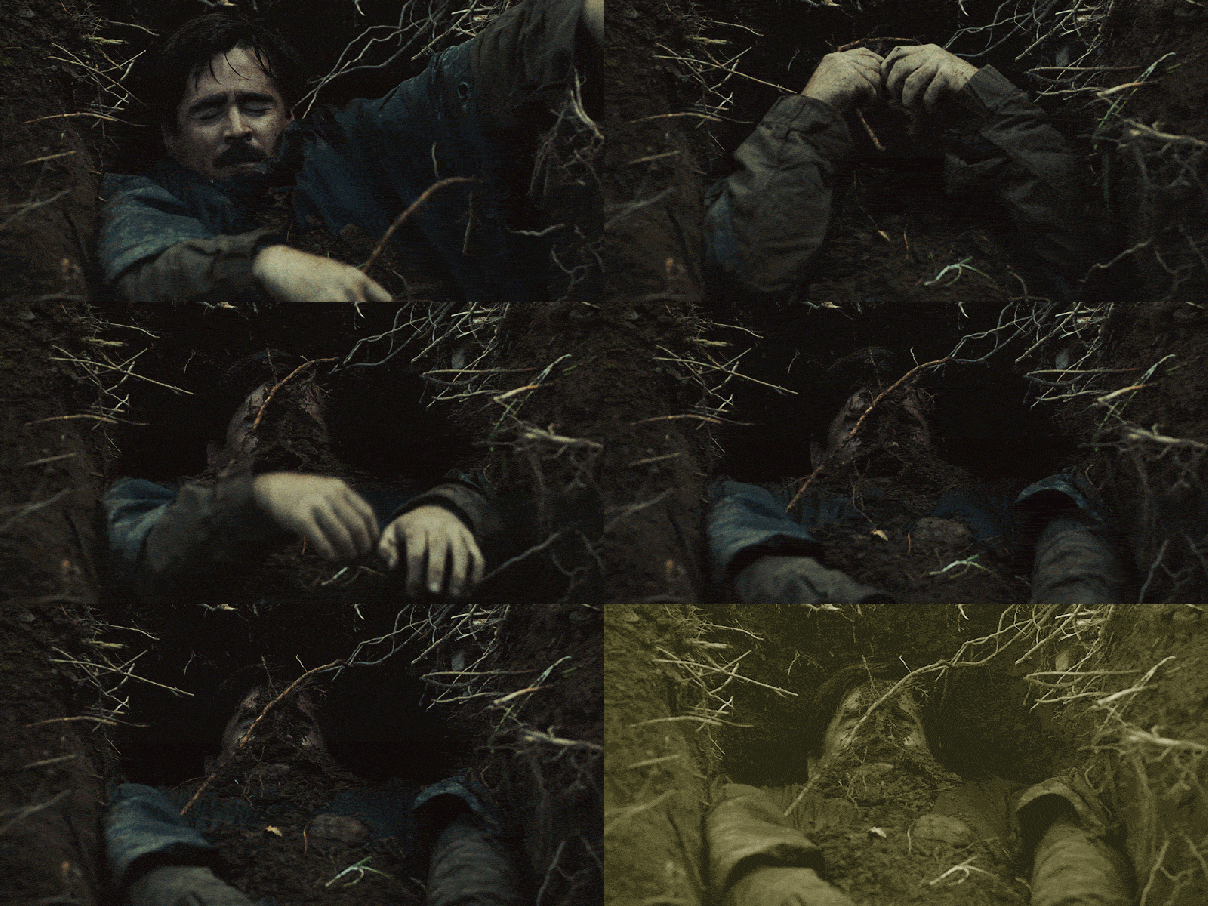
The moving image shows Colin Farrell as David, trying out his own grave. A still image from this scene appears on the cover of the screenplay book.
see also
fields ⋮ donkeys
fingers ⋮ dry
hearts ⋮ touched
only ⋮ outwardly