wandering ⋮ adrift

water / birth / babe / floating with eyes open / without remembrance but with knowledge / DROWNING IN A TEASPOON OF WATER / little one / first in first dive first swim / armbands, grandmas, grandpas / sea pebbles for toys, sea urchins for food / dive under / holding our breath, a contest, counting up / one two three four five six seven eight nine ten and on / water in our ears / two pebbles clacked near eardrums, heads waggled / daddy / dinghy, towel, hugged tight / sea-rinsed peach / brother / bathtub for a homeland, bare in the water / mummy / the water, you and me, us three / out in the rain, mouths open, heads cricked skyward / DROWNING IN A TEASPOON OF WATER / a little later / rivers lakes boats isles riverboats caiques nets masks flippers / dives off high rocks / caves low in said rocks / sea strata / sandy shore and shingle / fishes and frogs / even later / bathtub still a homeland / warm water, on the cusp of sleep / dive under / whole world underwater / no fish live on land nor flowers in sand (this is a song) / tap / morning / hands and eyes and mouth all washed with water / first breath / first life / soap toothpaste / someone waters lemon trees, plants in flower, the vegetable patch / DROWNING IN A TEASPOON OF WATER / water fight summertime water pistols / splashing in fountain in square / black fish in bowl / bad luck / aquarium / a glass of water quick a glass of water / later still / the sea, night / no moon / phytoplankton from phyto and plankton meaning plant and wandering adrift / every move a luminescence / water brims stars, stars fringe body / a wellspring of dreams in actuality / DROWNING IN A TEASPOON OF WATER

Dimitra Kolokytha

νερό / γέννηση / μωρό / επιπλέω και ανοίγω τα μάτια / δεν θυμάμαι αλλά γνωρίζω / ΠΝΙΓΟΜΑΙ ΣΕ ΜΙΑ ΚΟΥΤΑΛΙΑ ΝΕΡΟ / παιδί / η πρώτη βουτιά το πρώτο κολύμπι / μπρατσάκια , γιαγιάδες και παππούδες / οι πέτρες παιχνίδια, οι αχινοί φαγητό / μακροβούτι / κρατάμε την αναπνοή όσο πιο πολύ μπορούμε και μετράμε / ένα, δύο, τρία, τέσσερα, πέντε, έξι, εφτά, οκτώ, εννιά, δέκα… / νερό στα αυτιά / χτυπάμε δυνατά δύο πέτρες κοντά στο αυτιά και κουνάμε το κεφάλι / μπαμπάς / βάρκα φουσκωτή, πετσέτα και αγκαλιά / ροδάκινο πλυμένο στην θάλασσα / αδερφός / η μπανιέρα ο τόπος μας , γυμνοί μέσα στο νερό / μαμά / το νερό, εσύ και εγώ , εμείς / βγαίνουμε έξω στην βροχή και ανοίγουμε το στόμα μας με το κεφάλι προς τον ουρανό / ΠΝΙΓΟΜΑΙ ΣΕ ΜΙΑ ΚΟΥΤΑΛΙΑ ΝΕΡΟ / αργότερα / ποτάμια λίμνες καράβια νησιά ποταμόπλοια καΐκια δίχτυα μάσκες και βατραχοπέδιλα / βουτιά από ψηλά βράχια / σπηλιές μέσα στα βράχια / στρώματα θαλάσσης / άμμος και βότσαλα / ψάρια και βατράχια / λίγο πιο μετά / ν μπανιέρα συνεχίζει να είναι ο τόπος μας / ζεστό νερό, παραλίγο ύπνος / κατάδυση / ο κόσμος κάτω από το νερό / στην στεριά δεν ζει το ψάρι ούτε ο ανθός στην αμμουδιά (τραγούδι) / βρύση / πρωί / πλένω χέρια πλένω μάτια πλένω στόμα πλένω με νερό / η πρώτη αναπνοή / η πρώτη ζωή / σαπούνι οδοντόκρεμα / κάποιος ποτίζει λεμονιές και λουλούδια και λαχανικά / ΠΝΙΓΟΜΑΙ ΣΕ ΜΙΑ ΚΟΥΤΑΛΙΑ ΝΕΡΟ / μπουγέλο καλοκαίρι νεροπίστολα / βουτιά στο σιντριβάνι στην πλατεία / μαύρο ψάρι μες στην γυάλα / γρουσουζιά / ενυδρείο / ένα ποτήρι νερό γρήγορα ένα ποτήρι νερό… / ακόμα πιο μετά / θάλασσα, νύχτα / χωρίς φεγγάρι / φυτοπλαγκτόν «φυτό» και «πλαγκτός» που σημαίνει ταξιδευτής-περιπλανώμενος / κάθε κίνηση και λάμψη / αστέρια μέσα στο νερό ,αστέρια γύρω από το σώμα / πηγή ονείρων στην αλήθεια / ΠΝΙΓΟΜΑΙ ΣΕ ΜΙΑ ΚΟΥΤΑΛΙΑ ΝΕΡΟ
Text written by the actor and artist Dimitra Kolokytha to accompany a final project video she created in 2021 for a diploma in Performance Theory and Practice at the University of Patras (Lifelong Learning Center).


Translated from the Greek in 2025 for the love of it.


Watch Dimitra do anything but drown in these waters (all depths):


arching, arcing, baring, breathing, bubbling, choking, circling, cupping, deepening, departing, disappearing, dipping, diving, dribbling, dripping, exploring, flippering, floating, glittering, leafing, looming, pausing, peering, poking, reflecting, refracting, reaching, resting, rippling, rushing, sculling, seeking, shimmering, sinking, slicing, slipping, smiling, sparkling, staring, stepping, stretching, surfacing, surrendering, swirling, tiptoeing, tumbling, upending, wafting, warping


through her selfhood.


see also
(this dubitandum lives alone)

kunst ⋮ carcinogen

PEOPLE (SORT OF) SAID:
A HAIKU PANORAMA

ABOUT ELENIT


animal babble

never seen anything worse

if this is art then

GEORGIA

ό,τι χειρότερο έχω παρακολουθήσει ποτέ στο θέατρο
δεν ήξερα τι είδα αν εκτυλίχθηκε στο τρελοκομείο ή κάπου αλλού
κοντοί παραμορφωμένοι τύποι που έκραζαν σε μια διάλεκτο κότας
αν αυτό είναι τέχνη τότε δεν μου κάνει

ΤΖΩΡΤΖΙΑ


really quite pleasant
made me laugh and think things through
as it held me tight

MARKOS

πολύ ευχάριστη παράσταση
διασκέδασα και με έκανε να σκεφτώ

ΜΑΡΚΟΣ


sound lights sets costumes

such attention to detail

freedom in chaos

CHRISTINA

υπέροχη παράσταση
όλα ήταν υπέροχα με τρομερή προσοχή στη λεπτομέρεια
η στιγμή που το κοινό συνειδητοποιεί ότι καλείται να συμμετέχει στο χάος και
αποενοχοποιείται το γέλιο του είναι απελευθερωτική
πέρα από τους άψογους επί σκηνής συντελεστές αξίζουν πολλά συγχαρητήρια και
σε όσους επιμελήθηκαν ήχο, φωτισμό, σκηνικά και κουστούμια

ΧΡΙΣΤΙΝΑ


stuffed full made me mad
learned to love simplicity
when it was over

HARA

μετά την παράσταση εκτίμησα την απλότητα
εκνευριστικό μπούκωμα από ερεθίσματα

ΧΑΡΑ


athens has not seen
movements and images made
so challengingly

LEONIDAS

δημιουργία εικόνα κίνηση
δύσκολη παράσταση
πρωτόγνωρη στο αθηναϊκό κοινό

ΛΕΩΝΙΔΑΣ


a pinched pretend blurred
triumph of confused foul art
barbican my arse (OR: boo a ha ha ha)

ONE-TWO-THREE

«ο δημιουργός που ταρακούνησε το μπάρμπικαν και
το παλαί ντε τοκυό
»
μπουάχαχαχα
τσιμπάμε ωρέ κλεφτόπουλα;
ό,τι πιο θολοκουλτουριάρικο, συγχυσμένο και
καρακαταψωνισμένο παράγεται εντός ψωροκώσταινας θα
βρει στέγη στη… στέγη
ανακηρύσσεται πανηγυρικά σε μαικήνα των κακών τεχνών
ε δεν είναι και λίγο

ΕΝΑ-ΔΥΟ-ΤΡΙΑ


atmosphere like glue
jodorowsky lynch fever
with japanese subs

MANOS

υπήρχαν και κάποιες καλές στιγμές εντυπωσιακής εικονοπλασίας
υπήρχαν στιγμές που φωτισμός και
μουσική δημιουργούσαν μια καθηλωτική ατμόσφαιρα
αλλά για το ενενήντα πέντε τοις εκατό της παράστασης και
του χρόνου που παρακολουθούσα ένιωθα ότι
ήταν σαν να έβαλαν τον σεφερλή με τριάντα-εννιά πυρετό να
δει χοντορόφσκι και λιντς με ιαπωνικούς υπότιτλους και
να του είπαν καν᾽ το τώρα επιθεώρηση
αυτά

ΜΑΝΟΣ


one thing is for sure
no dance no sense no nothing
fake acting fake art

LINA

το σίγουρο είναι ότι δεν θα δείτε χορό
μόνο ακαταλαβίστικη φλυαρία, τίποτα το πρωτότυπο
δήθεν τέχνη, δήθεν θέατρο
μακριά

ΛΙΝΑ


worth a look this thing
cutting edgy pioneer
few are those who dare

PANAYIOTA

πρωτοπορία
αξίζει να δείτε τέτοια παράσταση γιατί
σε αυτή την χώρα λίγοι τολμούν

ΠΑΝΑΓΙΩΤΑ


got no idea
almost twigged but then was lost
pretty’s not enough

PANAYIOTIS

ειλικρινά δεν ξέρω τι είδα
φύγαμε με πονοκέφαλο
πλίνθοι και κέραμοι ατάκτως ερριμμένα
εκεί που νομίζεις ότι κάποιο νόημα έβγαλες, εκεί το χάνεις
το εύρημα με τους διάλογους, να μιλάνε ακαταλαβίστικα ώστε
να περνάνε τα αισθήματα στον θεατή, δεν λειτουργεί καθόλου
έχει δυο-τρεις στιγμές που αυτό που βλέπεις σε ικανοποιεί έστω αισθητικά
αλλά δεν είναι ικανές να σε αποζημιώσουν για όλο το υπόλοιπο
προσωπικά το έργο με έχασε όταν βγήκε ο ρόλος της νοικοκυράς με
καρέ μαλλί και μουστάκι, αντιγραφή των vermillions από τη σειρά legion
εκεί συνειδητοποίησα και γιατί ο σκηνοθέτης επέλεξε
ο πρωταγωνιστικός ρόλος να ακούγεται με auto-tune
οι ηθοποιοί είναι ήρωες που κατάφεραν να
υπηρετήσουν αυτό το «θέαμα» όσο καλύτερα μπορούσαν και
μόνο για αυτό χειροκρότησα στο τέλος και έβαλα δύο αστέρια

ΠΑΝΑΓΙΩΤΗΣ


what a show my god
genius exceptional
congratulations

EMMA

καταπληκτική παράσταση
ευφυής σκηνοθέτης, εξαιρετικοί συντελεστές
συγχαρητήρια σε όλους

ΕΜΜΑ


went wary but wait
singular special vision
left warmed by a dream

NIKOS

πήγα στην παράσταση διστακτικός
το θέαμα όμως ήταν τελικά πολύ ιδιαίτερο και
ξεχωριστό σε σχέση με ό,τι άλλο έχω παρακολουθήσει
έφυγα και αισθανόμουν ότι παρακολούθησα την τρέλα και
τη ζεστασιά ενός ονείρου
χαίρομαι που το είδα εν τέλει

ΝΙΚΟΣ


kunst carcinogen
call it fish but it’s still meat
under the glitter

SOPHOCLES

χορευτική περφόρμανς δεν το λες
εκτός κι αν στις έννοιες χορός και
περφόρμανς μπορεί στην βλαχοεντόπια μεταμοντέρνα ημιμάθεια
να βαφτίζουμε το ψάρι κρέας,
κολλώντας ταμπελάκια μεγαλείου «διεθνής»,
«σημαντικών» και τα λοιπά
είναι μια παράσταση δραματουργικά αντιδάνειο ανάμικτων στιγμιότυπων
παραστατικής δηθενιάς με γκλίτερ ωνασείου και επικοινωνιακής θολούρας
kunst καρκινογόνο υλικό κατεδαφίσεως της άκριτης μετακρίσης
που βιώνει η καλλιτεχνία των στενών ορίων

ΣΟΦΟΚΛΗΣ

Text written in 2020 for Multiplex, a proposed but unrealised print project on the work of Euripides Laskaridis.


A translation-rooted exercise, taking (verbatim) all thirteen Greek audience reviews of the 2019 work Elenit posted on the (often vitriolic) Athinorama online entertainment guide and attempting to make English summaries out of them as haiku (a three-line format with seventeen syllables arranged in a five–seven–five pattern).


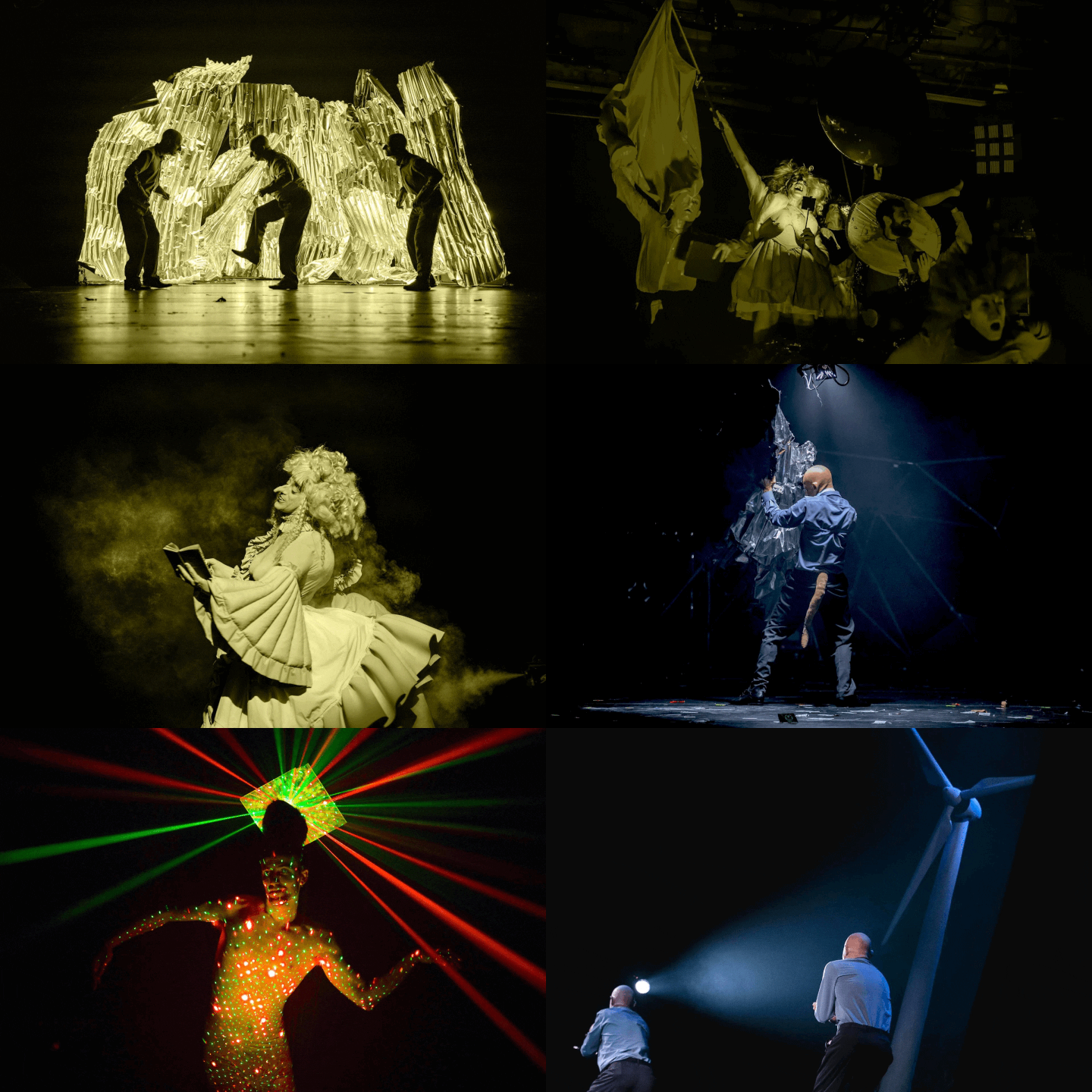
Photography by Andreas Simopoulos, Elina Giounanli, Geli Kalampaka, and Julian Mommert.


see also
(this dubitandum lives alone)


transpolia
The things ⋮ now behind.

liberating ⋮ cosmos

WHY DO I MAKE FILMS?

Ten years ago, Ciriaco Tiso and I wrote this little manifesto together. It is one I still subscribe to.

We Declare:


Cinema is not the work of big budgets.


Cinema is not the work of film stars.


Cinema is not spectacle made by multinational companies.


Cinema is not videotape recording.


Cinema is not films made to play on television.


Cinema is not the didactic sermons of specialists.


Cinema is not the work of gorgeous cinematography, perfectly framed shots, crystal clear and conventional soundtracks, lavish production design.


Cinema does not exist without film stock. And a film only exists when a filmmaker takes stock of things deep down inside and NOT when dumb decisions are taken by arts programmers and cultural string-pullers, by bullshit producers, business executives, and sundry officials, by bankers, bureaucrats, and subordinates.


Cinema is films that are our own.


Cinema is the rejection of jargon and semiotics.


Cinema is the place where you and I meet, where the Self embraces the Other.


Cinema is all the films never made but still ecstatically seen in the great big bang of existence.


Cinema is the liberating preoccupation of the marginalized seeking out their own cosmos.


Cinema is a place of damnation and intoxication.


Cinema is ongoing reflection on being.


Cinema is society propagating itself on the basis of just one condition: to allow Being and (cosmic) Time to emerge through the prism of contemplation.


Cinema is a point of conflictive convergence between the real and the inconceivable, the imaginary and the unachievable.


Cinema is at once the following promise and threat: the return of all that is elusive, the daring of all that is unexpected.


May 1987

Stavros Tornes

ΓΙΑΤΙ ΚΑΝΩ ΚΙΝΗΜΑΤΟΓΡΑΦΟ;

Πέρασαν δέκα χρόνια πού συντάξαμε μαζί με τον Τσιριάκο Τίζο τούτο το μικρό μανιφέστο. Ακόμα το πιστεύω.
 
Ισχυρισμός:
 
Ο κινηματογράφος δεν είναι το έργο των δισεκατομμυρίων.

Ο κινηματογράφος δεν είναι έργο αστέρων.

Ο κινηματογράφος δεν είναι το θέαμα των πολυεθνικών.

Ο κινηματογράφος δεν είναι εγγραφή βιντεοταινίας.

Ο κινηματογράφος δεν είναι οι ταινίες που παίζονται στην τηλεόραση.

Ο κινηματογράφος δεν είναι τα δασκαλέματα των ειδικών.

Ο κινηματογράφος δεν είναι έργο της όμορφης φωτογραφίας, του τέλειου πλαισίου, της καθαρής και κατά συνθήκη ηχητικής μπάντας της πλούσιας σκηνογραφίας.

Ο κινηματογράφος δεν υπάρχει χωρίς φιλμ. Αλλά φιλμ υπάρχει μόνο όταν ξεκινά από την απόφαση βαθιά μέσ’ απ’ τα σπλάχνα εκείνου που το κάνει και ΟXΙ από την ηλίθια αποφασιστικότητα των προγραμματιστών, χειριστών της κουλτούρας, παραγωγών της ψωλής, στελεχών επιχειρήσεων, λειτουργών διαφόρων, τραπεζιτών, γραφειοκρατών, βοηθητικών.

Ο κινηματογράφος είναι τα δικά μας φιλμ.

Ο κινηματογράφος είναι η άρνηση του τεχνικισμού και του σημειολογισμού.

Ο κινηματογράφος είναι ο τόπος που εσύ και εγώ γνωριζόμαστε, «εγώ» και άλλοι αγκαλιαζόμαστε.

Ο κινηματογράφος είναι όλα τα έργα που δεν έγιναν αλλά θεάθηκαν εκστατικά μέσα στην έκρηξη της ύπαρξης.

Ο κινηματογράφος είναι ή απελευθερωτική προσήλωση του περιθωρίου στην αναζήτηση του ατομικού του κόσμου.

Ο κινηματογράφος είναι ο χώρος της κατάρας και της μέθης.

Ο κινηματογράφος είναι αιώνια αναλογία του Είναι.

Ο κινηματογράφος είναι η κοινωνία που αναπαράγεται κάτω από μια μοναδική συνθήκη: να αφήσει να διαφανεί το είναι, ο Χρόνος (Κόσμος), πίσω από της πλευρές του λογισμού.

Ο κινηματογράφος είναι το σημείο συνάντησης-σύγκρουσης μεταξύ του πραγματικού και του αδιανόητου, του φανταστικού και του αδύνατου.

Ο κινηματογράφος είναι αυτή η υπόσχεση-απειλή: η επιστροφή του ασύλληπτου, η τόλμη του απρόβλεπτου.

Μάϊος 1987

Translated from the Greek for (and taken from) the Thessaloniki Documentary Festival publication Manifestos (TiDF26).


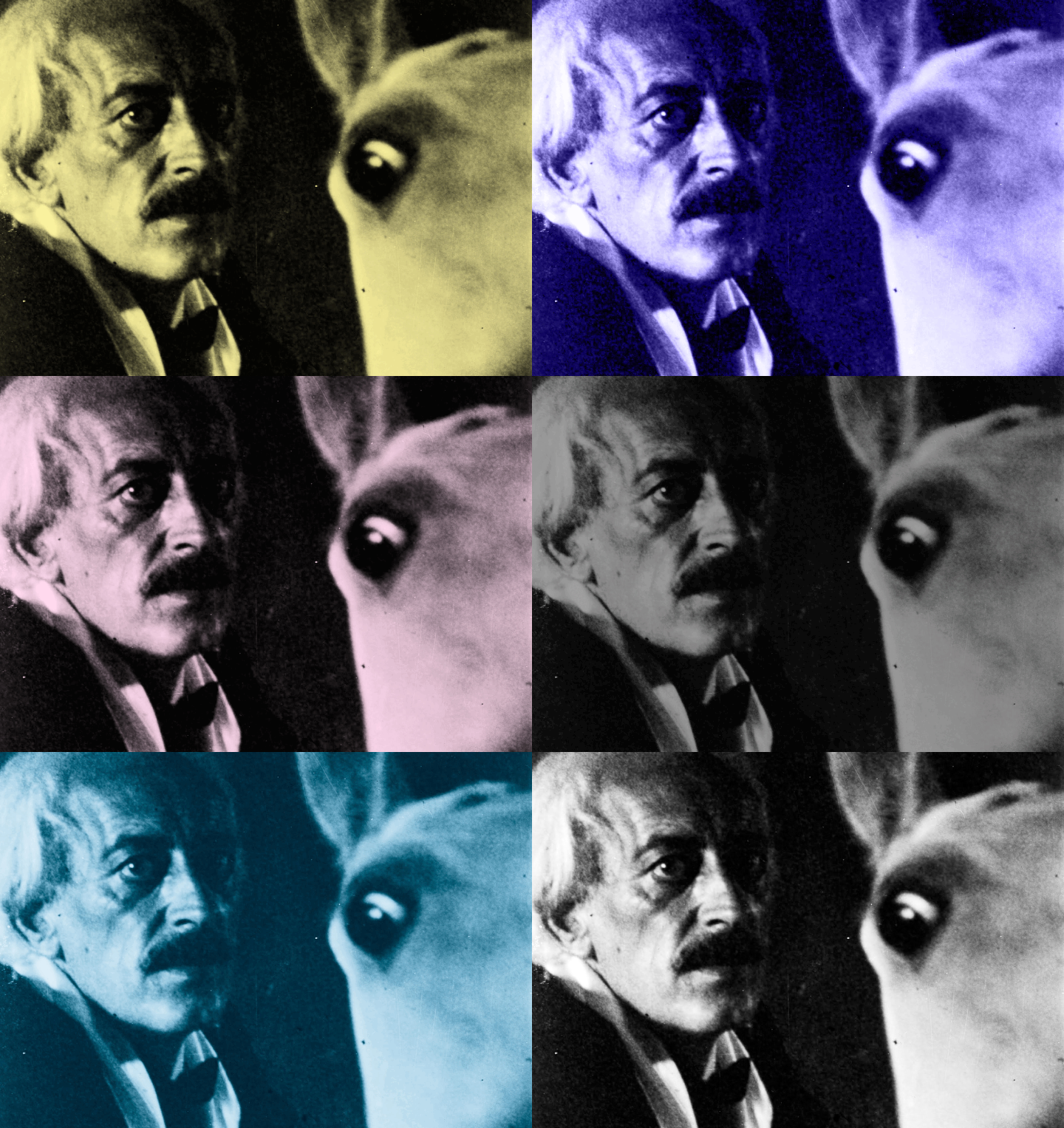
The image shows Stavros Tornes in his 1982 Balamos. Eyes wide.


see also
(this dubitandum lives alone)


arkhæio
MANIFESTOS

pangs ⋮ raptures

Σtella makes her Sub Pop debut with the mesmerizing Up and Away, an old-school pop paean to the pangs and raptures of love. From the Greek folk-inflected get-go, we’re caught in Σtella’s world – and she delivers.

For her fourth album, the singer-songwriter joined forces with artist and producer Tom Calvert (aka Redinho). Theirs was a match made in Athens and the results are heavenly. Tom caught one of Σtella’s gigs on a visit to the city. He reached out, they started hanging out, and the pair soon clicked creatively. Both mention chemistry when asked about their collaboration and it’s clear, from what we hear, they had it in spades. The meld is seamless.

Σtella’s songs have always riffed on American and Greek mid-century pop but Up and Away doubles down on the vintage aesthetic. Tom says he styled the record “as if it was a rare gem from the ’60s found in a box of records in Athens,” and Σtella notes she was ready for a more “deeply Greek touch – it felt comfortable and right, smoothly fusing with the pop.” The bouzouki appears on a full five tracks played by Christos Skondras who, she says, “was brilliant at improvising,” while Sofia Labropoulou on the kanun “brought an insane amount of dreaminess to the last two songs. Having these amazing musicians play for Up and Away – I couldn’t be more grateful.”

While not exclusively a confessional artist, Σtella is always intimate – when she sings, it’s personal. She says she writes “about things I feel passion for. Stories about me, about others, about all that’s there in love and war.” Though she won’t be drawn on more private inspirations for this album (“There were one or two interesting things going on in my life, but we won’t be going into those…”), Σtella will say she was “in a very emotional state at the time, which came through in the lyrics and vocals.” And it’s true, her honeyed voice – layered in those unmistakable harmonies of hers – thrillingly runs the gamut from tender to terse, by turns bracing and smitten, aching and forlorn.

But it’s the lyrics that feel key. Across her output, Σtella has proven herself a strong storyteller, and Up and Away is no exception (the guise of the medieval bard she assumes on the cover is telling). Past releases have been studded with gem-like vignettes – a diverse array of stories set tightly together to form non-linear narratives unified by emotion. Her latest feels singular in that it seems to trace a longer-form tale across songs, with each track escalating the record’s erotic arc. Rollicking album opener “Up and Away” launches us headlong into an all-consuming affair. She’s caught, she shivers, thrilled by a new beginning, the sweetness of her vocals offset by vertiginous, blistering blasts of bouzouki. And so the sensual scene is set.

Languorous “Nomad” sees her fall deeper, groove slower into love. Imbued with a tender urge to understand the other, and tinged with sadness, the song ends with the rhythmic thrum of cicadas – nature too is calling out, courting a mate. “Manéros,” meanwhile, is a foreboding instrumental interlude threaded with driving virtuoso runs of improvised bouzouki shimmers. An 1881 study defines the manéros form as “a ballad of erotic passion bursting from a heart on fire, or a deeply charged lament for the loss of one’s beloved.” Consider this a spoiler for what’s to come.

“Charmed” opens with a disarming sixties “shoop” and lolls delightfully along, its feel-good surface bop hiding more melancholy truths – and insecurities. Not so “Another Nation,” which boasts all the strut and swagger of an artist happy to be stepping out. Here’s how love can feel: as joyous and beautiful and ridiculous as a flamingo galumphing forward to take flight. Boisterous “Black and White” drives home the vagaries of love (“you redirected, you changed your mind”) with a cyclical guitar riff at the song’s heart mirroring the lover’s spiraling complaint.

And then it hits: “Titanic” relays the relationship’s end in ways unexpectedly hopeful, plucking a constellation of endearing bygone names (John Borie, Laura Mae, and the like) from a list of the sunken liner’s survivors. With a breezy whistle, and propelled by bouncing staccato strums, Σtella makes it safe to shore, alone.

The album’s final three tracks are left to deal with the aftermath. Heartfelt “The Truth Is” leaps forward to a time where she feels “alright, but still I miss you every night.” Unable to justify why they’re apart, most everything falls away as the song builds to an emotional climax that has no need of words, with Σtella’s affecting voice left to melt into the bouzouki as she gives us an ever-surging series of sensational “ooos” that compellingly make her case.

Infectiously bassline-led “Who Cares” takes a more petulant, finger-pointing approach before toppling cheerfully into a boozy coping mechanism (“in a bottle we all fell”). But it’s mellow and reflective outro “Is It Over” that perhaps best distills Up and Away’s core concerns: the conflicting and conflicted emotions inherent in love, that live on in ways we can’t always understand or control. Love is like this record: when it’s over, you feel it still for time to come.

thoughts on UP AND AWAY, an album by Σtella

This video is (very) unofficial.

Text written for the release of Σtella’s fourth album Up and Away on her U.S. label Sub Pop Records in 2022.


Video created for the album’s title track for the fun of it using footage from the film Mermaids and Rascals (1968), directed by Yiannis Dalianis and choreographed by Yiannis Flery.
 
The woman in orange is Mary Chronopoulou. The man in white is Lakis Komninos. The man in blue Vangelis Seilinos. The woman in green is Nora Valsami. The woman in black is Marinella.


Music by Σtella & Redinho. Lyrics by Σtella.


see also
deserts ⋮ overseas
marbled ⋮ beauty
razor ⋮ riffs
worthy ⋮ wait


transpolia
A ballad ⋮ beloved.

crumpled ⋮ radiance

THE CRIME OF LONELINESS


Every when the dusk falls dangerously,

your voice rouses inside to ravage me;

and when the night ousts every last sweet image,

there looms within me your sordid beauty

to wipe away God’s splendour from my eyes. 

And it’s then that I give in to the crime of loneliness,
for years now have I readied it inside me,

and there is no more heavenly radiance,
no more cherubic choirs,
only a soliciting of spasms,
night cash crumpled.

Dinos Christianopoulos

ΤΟ ΕΓΚΛΗΜΑ ΤΗΣ ΜΟΝΑΞΙΑΣ

Κάθε ποὺ πέφτει ἐπικίνδυνα τὸ βράδυ,
ξυπνάει ἡ φωνή σου μέσα μου καὶ μὲ ρημάζει·
κι ὅταν ἡ νύχτα ὅλες τὶς γλυκιὲς εἰκόνες διώχνει,
προβάλλει ἐντός μου ἡ βρώμικη ὀμορφιά σου
καὶ σβήνει ἀπὸ τὰ μάτια μου τὴ λάμψη τοῦ Θεοῦ.

Καὶ τότε δίνομαι στὸ ἔγκλημα τῆς μοναξιᾶς,
ποὺ χρόνια τώρα μέσα μου τὸ ἑτοιμάζω,
καὶ πιὰ δὲν ἔχει οὐράνιο φεγγοβόλημα,
δὲν ἔχει πιὰ παιδικὲς χορωδίες,
μονάχα μιὰ προσπάθεια γιὰ σπασμούς,
νυχτερινὰ χαρτονομίσματα τσαλακωμένα.

Poem taken from the collection Stranger Knees [ΞΕΝΑ ΓΟΝΑΤΑ] by Dinos Christianopoulos (1952–1957).


Personal and ongoing translation project.


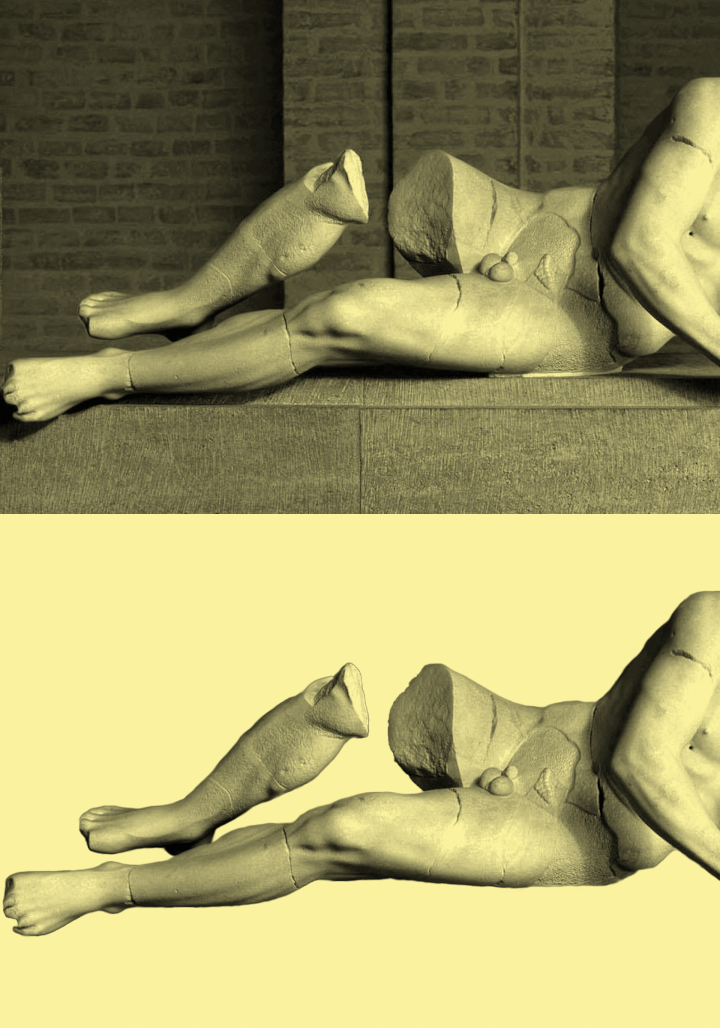
The image shows a fallen early Classical (and so: unsmiling) warrior from the East Pediment of the Temple of Aphaia on the island of Aegina.


He now lives (ever breathing out his last breath) inside the Munich Glyptothek.


One knee strangely vacant.


see also
(this dubitandum lives alone)

razor ⋮ riffs

Σtella was born beside the sea and raised by a Canadian nanny who waterskied topless.

She writes songs that walk a razor thin line between happy and sad. Keeps things simple: naked arrangements, spacey synths, earworm riffs, sparkly smooth vocals.

People have been talking about her:

Bold, streamlined pop
[said Paste Magazine].

Enticing
[said Clash Magazine].

Her lyrics are moody and compelling on their own,
but I was buying whatever she was selling
as soon as I heard her blend
of video game-flavored electro-pop
paired with deep lady vocals. Swoon
[said Bitch Media].

Σtella’s honey-rich vocals
overlie a crisp, no-frills backing
that has echoes of classic ’60s pop
[said The Line of Best Fit].

The fact that her range
is on the lower end of the spectrum
gives Σtella this regal quality to her music,
similar to what Annie Lennox did for the Eurythmics
[said Earmilk].

With dirt under her fingernails,
a whole decade of grit in her voice,
and an endless supply of bass licks,
the Athens-based singer-songwriter
will get any room moving
[said MTV Iggy].

Σtella is always working on new music.

thoughts on being Σtella

A (little) bio.

Taken from a bio text written for the Greek pop artist Σtella in 2018.


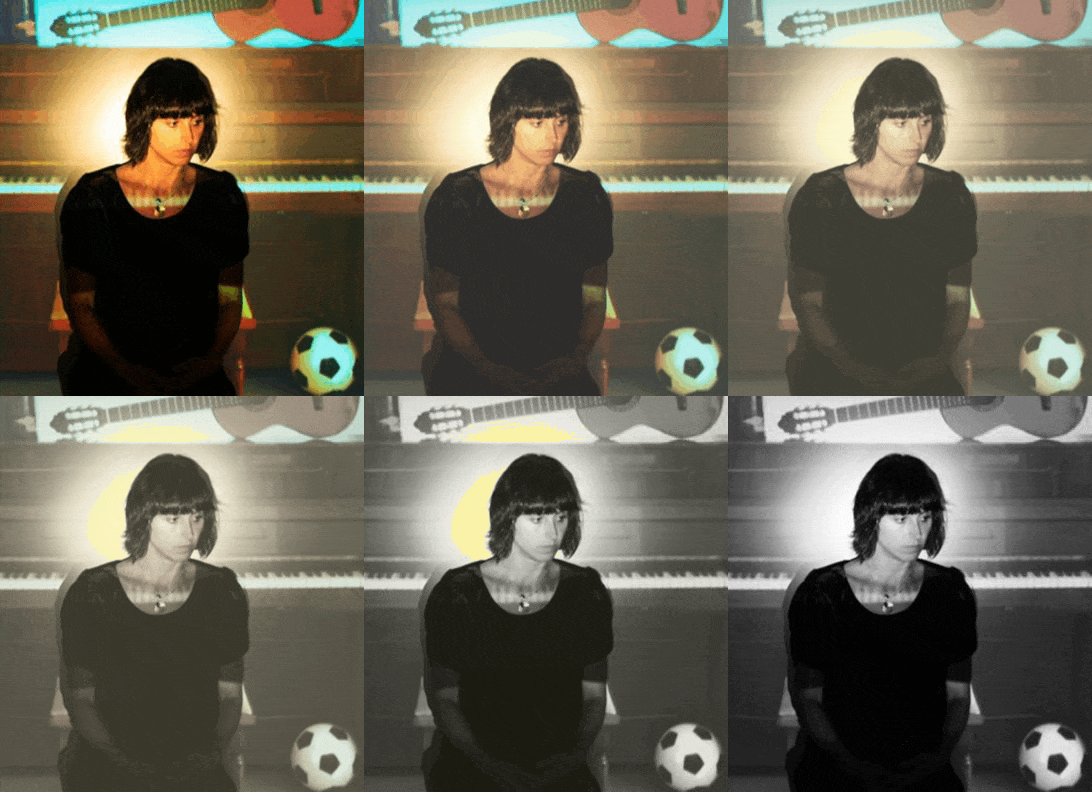
The projector-light image shows Σtella in the guise of piano saint, with guitar and football.


Σtella really always is working on new music.


The Canadian nanny who waterskied topless is really true too.


see also
deserts ⋮ overseas
marbled ⋮ beauty
pangs ⋮ raptures
worthy ⋮ wait


transpolia
A ballad ⋮ beloved.